

Do Babies Need Knee Pads for Crawling? Pros, Cons & When to Use
Do babies need knee pads for crawling?
Most babies do not need knee pads to learn how to crawl. Crawling is a natural developmental milestone, and healthy babies typically adapt well to different indoor surfaces as they build strength, balance, and coordination.
It's also normal for parents to notice temporary knee redness, mild skin marks, or brief sensitivity after crawling, especially during the first few weeks. These changes usually result from repeated contact with the floor rather than injury.
That said, infant crawling knee pads can provide extra comfort for some babies. They may be helpful on hardwood floors, tile, rough carpets, or other firm surfaces where repeated friction causes irritation. Rather than being an essential baby item, they are an optional form of baby crawling protection that may improve comfort for certain children.
Infant Crawling Knee Pads vs Socks Which Protect Better
⏱ 6 min read
Infant crawling knee pads are designed to cushion delicate knees during early movement, while socks primarily keep feet warm and may offer limited traction. Understanding when each option helps—and when neither is necessary—can help parents create a safe, comfortable crawling environment without interfering with natural development.
Watching your baby crawl for the first time is exciting, but it's common to wonder whether hard floors, slippery surfaces, or rough carpets could make crawling uncomfortable. Knowing when protection is useful—and when babies simply need room to explore—can make choosing the right accessories much easier.
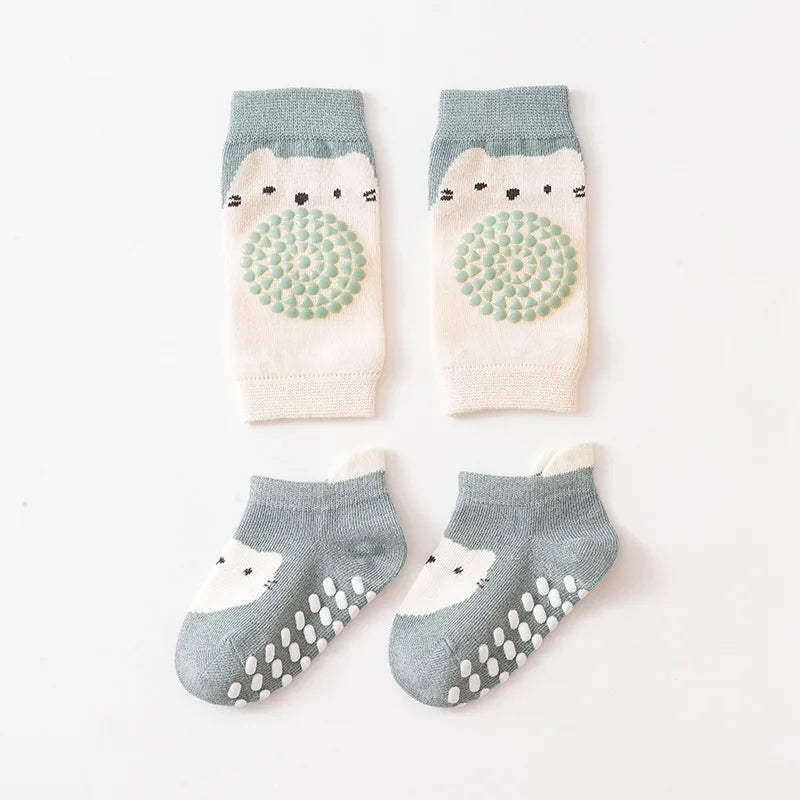
Infant crawling knee pads designed for crawling safety on hardwood floors — See it in action
How crawling helps babies develop strength and coordination
Crawling is an important stage of early development because it strengthens the shoulders, arms, core muscles, hips, and legs while improving balance and coordination. As babies move across different surfaces, they also develop body awareness and sensory processing skills.
Experiencing a variety of safe floor textures is part of normal development. Clean hardwood, laminate, carpet, rugs, and play mats all provide different feedback that helps babies learn how to shift weight, maintain balance, and coordinate movement.
Because of this, avoiding all contact with the floor is generally unnecessary. The goal of crawling safety for babies is to provide a clean, secure environment while allowing natural movement and exploration.
What are infant crawling knee pads?
Infant crawling knee pads are soft, flexible sleeves designed specifically for babies who are beginning to crawl. Unlike socks or pants, they focus protection directly over the knees without covering the entire leg.
Most baby knee pads for crawling include:
- Breathable stretch fabric for comfort
- Light foam or padded knee sections
- Silicone or textured grip patterns to reduce slipping
- Elastic construction that stays in place without restricting movement
They're intended to provide optional cushioning and reduce friction on firm surfaces. While some families find them useful, they are not considered a required item for healthy crawling development.
When do baby knee pads help during crawling?
Baby knee pads may be helpful in certain situations where additional comfort or protection is beneficial.
- Hardwood and tile floors: Extra cushioning may reduce friction during long crawling sessions.
- Cold floors: Some babies appear more comfortable with an additional fabric layer.
- Rough carpets: Padding may lessen irritation from coarse fibers.
- Sensitive skin: Babies who develop repeated redness may benefit from reduced rubbing.
- Outdoor play: Clean patios, decks, or other supervised outdoor surfaces may warrant additional knee protection.
Every baby responds differently. Some crawl comfortably without accessories, while others seem happier with a small amount of cushioning.
Parents focused on overall crawling safety often pair knee protection with items from Health & Safety collections to create a safer play environment.
When babies do not need crawling knee pads
Many babies crawl happily without knee pads, particularly when the home environment is clean, dry, and free from hazards.
In many households, normal crawling on hardwood, laminate, vinyl, or carpet does not require additional protective gear. Temporary knee redness is common and does not necessarily mean a baby needs padding.
Knee pads are also not required to reach normal crawling milestones. Babies naturally strengthen their muscles through regular movement, and most pediatric experts encourage opportunities for supervised floor play instead of relying on accessories.
Benefits and drawbacks of baby knee pads
Benefits of crawling knee pads
- May reduce friction on hard or rough surfaces.
- Can provide additional comfort during longer crawling sessions.
- Some designs improve grip on smooth flooring.
- May help protect sensitive skin from repeated rubbing.
Potential drawbacks of crawling knee pads
- Poorly fitted designs may slide down or bunch behind the knee.
- Thick materials may become warm during extended wear.
- Very tight elastic may restrict comfort.
- Some babies simply prefer crawling without extra clothing.
Fit, fabric quality, and breathability are more important than extra padding. Knee pads should always allow babies to move freely.
Knee pads vs socks vs baby clothes: which option is better?
Knee pads vs socks for babies
| Feature | Infant Crawling Knee Pads | Socks |
|---|---|---|
| Knee protection | Light cushioning over the knees | No direct knee protection |
| Foot warmth | No | Yes |
| Grip | Often includes anti-slip features | Depends on sock design |
| Best use | Hard or rough crawling surfaces | Keeping feet warm indoors |
Socks can improve foot comfort, especially if they include grip patterns, but they do not protect the knees from repeated contact with the floor.
Knee pads vs baby clothes
Soft leggings, pants, and footed pajamas provide a thin fabric barrier that may reduce minor skin irritation during crawling. However, they generally offer less cushioning than dedicated crawling knee pads.
For many families, comfortable clothing combined with a clean play area provides all the protection a baby needs. Knee pads become an optional addition rather than a replacement for everyday baby clothes.
How to protect your baby's knees without knee pads
You can support crawling safety for babies without using knee pads by focusing on the environment instead.
- Keep floors clean and free of sharp debris.
- Use soft play mats in frequently used play areas.
- Maintain a comfortable indoor floor temperature.
- Dress babies in flexible clothing that allows unrestricted movement.
- Provide plenty of supervised tummy time and floor play.
Many parents exploring mobility support also browse Mobility & Training products to encourage healthy development.
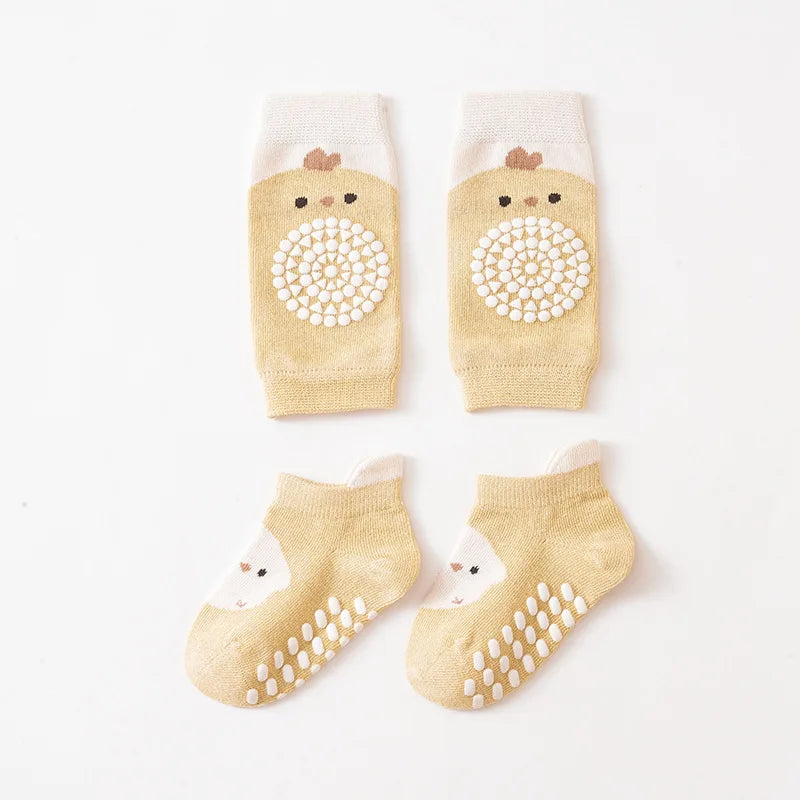
Comparing crawling knee pads with socks for different crawling environments — See it in action
How to choose safe crawling accessories if you buy knee pads
If you decide to purchase infant crawling knee pads, look for features that prioritize comfort and freedom of movement.
- Choose breathable, lightweight fabrics.
- Select the correct size to avoid slipping or excessive tightness.
- Check that grip patterns are secure but not bulky.
- Ensure padding is flexible rather than stiff.
- Watch your baby crawl to confirm the knee pads stay comfortably in place.
Accessories should support natural movement instead of changing the way babies crawl.
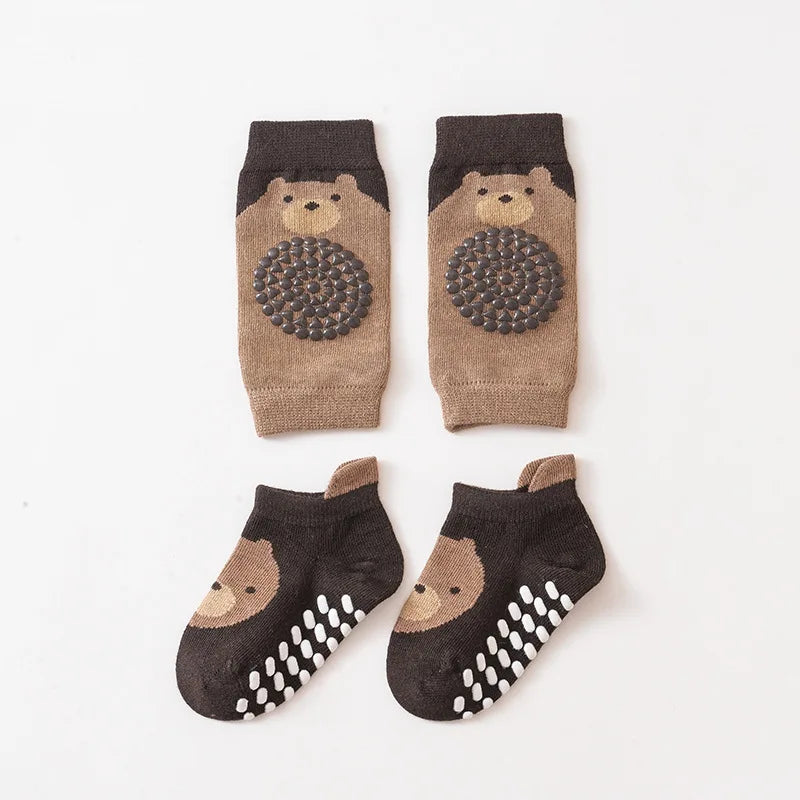
Optional crawling knee pads can provide added comfort on some surfaces — See it in action
Frequently Asked Questions
Are knee pads bad for babies learning to crawl?
No. Properly fitted knee pads are generally safe and should not interfere with normal crawling. They should remain optional and never restrict natural movement.
Can babies crawl safely on hardwood floors without knee pads?
Yes. Most babies crawl safely on hardwood floors without knee pads. A clean surface, supervision, and appropriate clothing are usually sufficient.
Do babies need knee pads every time they crawl?
No. Many babies never use knee pads. They are most useful when additional comfort is needed on firm or rough surfaces.
Can knee pads affect crawling development?
Well-fitting knee pads should not slow normal development. Babies continue building strength and coordination through regular crawling.
What can I use instead of baby knee pads?
Play mats, comfortable leggings, soft pants, and maintaining a clean crawling area are practical alternatives for everyday baby crawling protection.
Related Guide: Best Non Slip Baby Socks Compared for Safer Crawling





