

Baby Walking Toys Indoor for Small Homes That Really Work
Can infant learning to walk be successful in a small home?
Yes. Infant learning to walk can be safely encouraged in apartments and compact homes with an open practice area, supportive baby walking toys indoor, and consistent daily supervision. A sturdy wooden push walker, a compact activity center walker, and a clutter-free walking path help develop balance, coordination, leg strength, and confidence without requiring a large playroom.
⏱ 7 min read
Infant Learning to Walk: Best Indoor Setups for Small Homes
Infant learning to walk is an exciting developmental milestone that often brings equal parts joy and concern for parents. Limited floor space doesn't have to delay your baby's progress. Whether you live in a small apartment, condo, or cozy house, thoughtful furniture placement, safe flooring, and the right baby walking toys indoor can create an effective environment for learning. With a few practical adjustments, everyday living spaces can become safe practice zones that encourage steady, confident first steps while supporting healthy gross motor development.
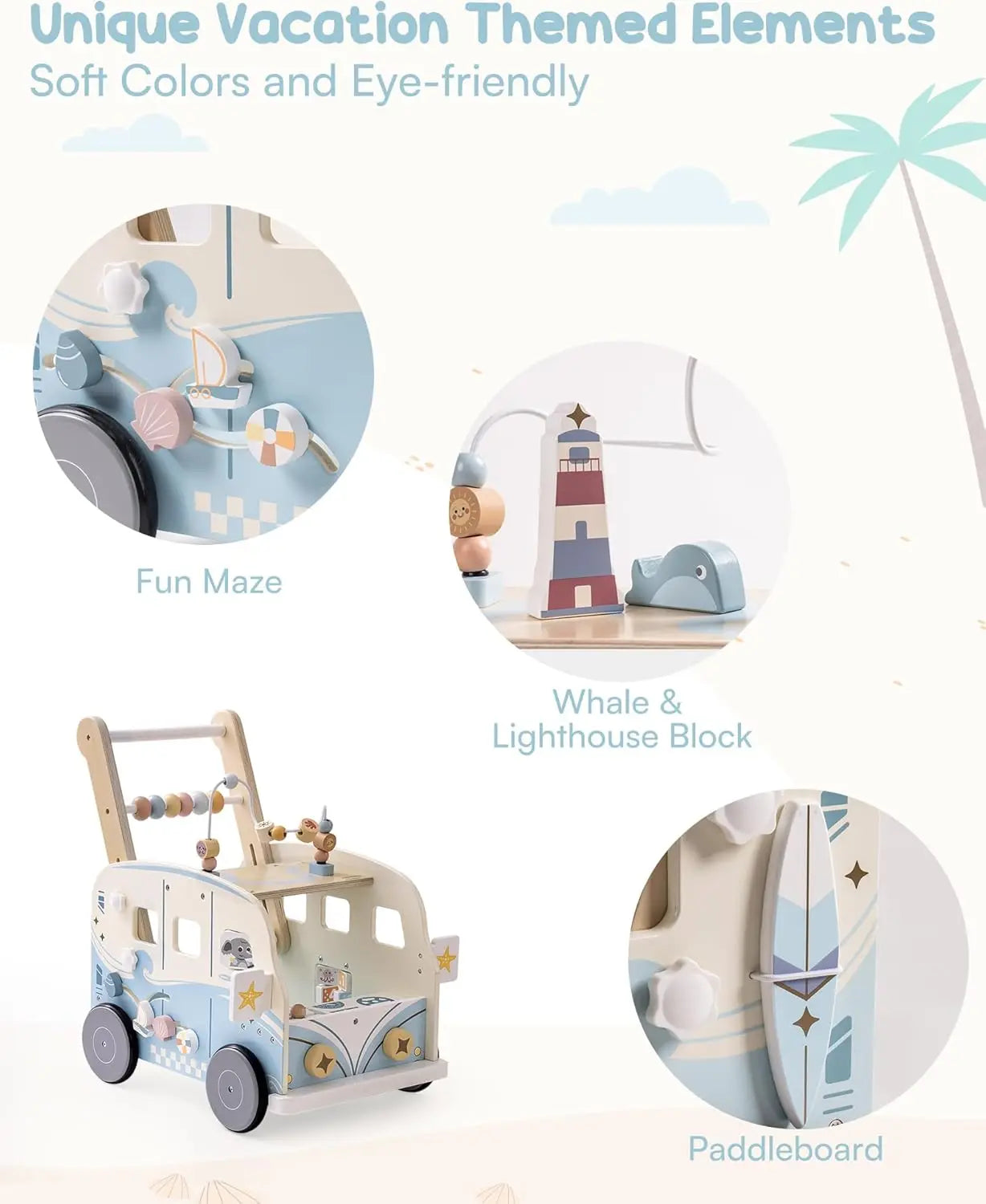
Infant learning to walk with a wooden push walker and indoor baby walking toy — See it in action
Explore smart picks from Baby Growth & Learning and Mobility & Training.
Why infant learning to walk matters more than you think
Infant learning to walk involves much more than taking independent steps. During this stage, babies strengthen their muscles, improve balance, refine coordination, and develop body awareness. Every attempt to stand, cruise along furniture, or push a walker helps build the foundation for future physical skills while encouraging curiosity and independent exploration.
- Develops balance, coordination, and body control.
- Strengthens leg, hip, and core muscles.
- Encourages confidence through independent movement.
- Supports spatial awareness and problem-solving during exploration.
- Promotes healthy gross motor development through daily practice.
For families living in smaller homes, consistent practice often happens in shared living areas. Choosing compact equipment that stores easily allows your baby to practice regularly without creating unnecessary clutter.
Common small-home challenges parents face
Limited space doesn't prevent healthy walking development, but it does require thoughtful planning. Identifying common obstacles makes it easier to create a safe and comfortable practice environment.
- Limited open floor space for uninterrupted walking practice.
- Furniture corners and narrow pathways that restrict movement.
- Slippery hardwood or tile flooring.
- Toys and household items creating trip hazards.
- Minimal storage for larger baby equipment.
A dedicated walking lane, non-slip flooring, and compact mobility toys can transform even a small living room or hallway into a safe area where babies gain confidence while parents maintain an organized home.
Best indoor setups for small homes
Infant learning to walk is most successful indoors when your setup prioritizes safety, stability, and simplicity. A combination of a wooden push walker, a compact activity center walker, soft flooring, and an uncluttered practice path gives babies room to develop balance and coordination without overwhelming limited living space.
Look for walking equipment that is lightweight enough to move when needed, yet stable enough to support early standing and cruising. Compact designs also make daily cleanup and storage much easier for apartment living.
- Non-slip foam play mats or interlocking floor tiles.
- Stable wooden push walker with controlled wheel movement.
- Compact activity center that doubles as a play station.
- Corner guards and furniture padding for added protection.
- Open walking lane free from loose rugs and obstacles.
You can find space-friendly mobility tools inside Mobility & Training and soft play accessories in Baby Care Essentials.
How a wooden push walker builds confidence
A wooden push walker helps support infant learning to walk by providing a stable surface that encourages babies to stand, push forward, and practice controlled movement. Compared with lightweight walkers, a well-designed wooden model typically offers better stability, helping little ones develop balance, coordination, and proper walking posture while exploring at their own pace.
The best wooden push walkers are designed with a wide wheelbase, comfortable handle height, and smooth-rolling wheels that move steadily across indoor flooring. Rather than rushing the walking process, they encourage gradual skill development and allow babies to build confidence with every step.
Who it's best for
- Babies who can pull to stand independently.
- Early cruisers beginning to take supported steps.
- Families looking for a long-lasting alternative to traditional seated walkers.
Key features to compare
- Wide, stable frame that resists tipping.
- Controlled wheel movement for smoother indoor use.
- Rounded corners and child-safe finishes.
- Built-in toy storage that adds stability and keeps favorite toys nearby.
Pros and limitations
- Pros: Excellent stability, encourages natural posture, durable construction, suitable for compact homes.
- Limitations: Performs best on relatively even indoor surfaces and may require supervision on highly polished floors.
Our top pick is the Wooden Baby Walker, designed for small spaces and smooth indoor flooring.
For additional ways to create a safer practice environment, pair your walker with soft flooring ideas from Health & Safety to reduce slips and provide extra cushioning during early walking practice.
Browse expert picks from Baby Growth & Learning.
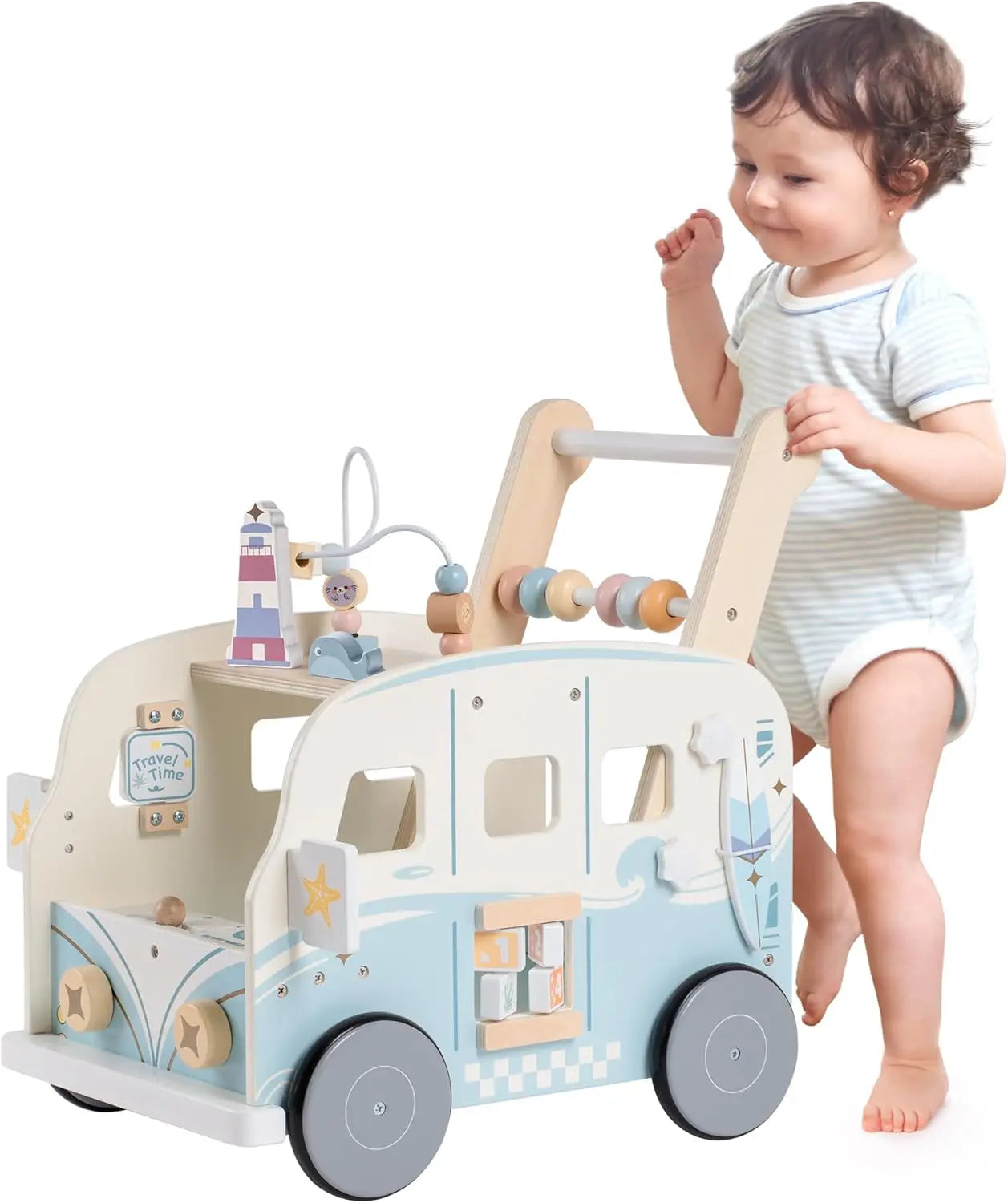
Wooden push walker for infant learning to walk — See it in action
Why an activity center walker boosts balance
An activity center walker combines interactive play with supported standing practice, making it an excellent option for babies who enjoy exploring while developing mobility. Lights, textures, buttons, and movable toys encourage longer periods of standing and gentle weight shifting, both of which help strengthen muscles used for walking.
Compact activity walkers are especially practical in apartments because they provide entertainment and developmental value without requiring dedicated playrooms. Many fold away easily when not in use, making them ideal for homes with limited storage.
Who it's best for
- Babies transitioning from sitting to supported standing.
- Children motivated by sensory play and interactive activities.
- Families seeking multifunctional toys for smaller living spaces.
Key features to compare
- Compact or foldable frame.
- Interactive removable activity panel.
- Stable base with smooth indoor wheels.
- Adjustable features that accommodate growth.
Pros and limitations
- Pros: Combines learning and movement, saves space, keeps babies engaged during practice.
- Limitations: Interactive features should complement—not replace—active supervised walking opportunities.
Add sensory stimulation with toys from Sensory Toys to keep your baby engaged while developing balance and coordination.
Choosing the right indoor baby walking toy
The best indoor baby walking toy matches your child's developmental stage while fitting comfortably into your available living space. Prioritize stability over speed, and select toys that encourage upright posture, controlled movement, and independent exploration instead of relying on momentum.
Look for rounded edges, non-slip or controlled wheels, compact dimensions, durable construction, and easy storage. These features improve safety while making daily practice convenient for busy families.
Compare popular indoor walking toy options
| Walking Toy | Recommended Stage | Best Flooring | Primary Strength | Space Needed |
|---|---|---|---|---|
| Wooden push walker | Pull-to-stand to early walking | Hardwood, laminate, foam mats | Maximum stability and posture support | Small to medium |
| Activity center walker | Supported standing | Most indoor flooring | Interactive play plus balance practice | Small |
| Ride-on walker | Confident walkers | Open indoor spaces | Balance, steering, and coordination | Medium |
Space-saving layout guide
- Create a clear walking lane approximately 6–8 feet long beside a wall or sturdy sofa.
- Use foam tiles or non-slip play mats to improve traction and soften minor falls.
- Position the push walker at one end of the practice area for supported walking sessions.
- Place an activity center nearby to encourage standing breaks and independent play.
- Keep pathways free of cords, loose rugs, and unnecessary furniture during practice.
Store extra toys in bins from Baby Care Tips & Advice to keep floors organized and maintain a safe walking environment throughout the day.
Safety tips for first steps
A safe environment allows babies to focus on learning new movement patterns without unnecessary hazards. Before each walking session, spend a few minutes checking the practice area to ensure it remains clear, secure, and appropriate for your child's current abilities.
- Install corner guards on tables, TV stands, and other sharp furniture edges.
- Secure rugs with anti-slip pads or temporarily remove loose rugs.
- Use safety gates to block stairways and restrict access to unsafe rooms.
- Keep electrical cords, pet bowls, and small objects away from walking paths.
- Choose supportive footwear or allow barefoot practice on clean, non-slip indoor surfaces when appropriate.
- Always supervise walking sessions and stay close enough to assist if needed.
Remember that every baby develops at an individual pace. Encourage practice through short, enjoyable sessions rather than trying to accelerate milestones.
Extra protection tools are available inside Health & Safety.

Indoor baby walking toy for infant learning to walk — See it in action
Start with the trusted Wooden Baby Walker and explore more from Mobility & Training.
Frequently asked questions
What are the best baby walking toys for indoor use?
Stable push walkers, compact activity walkers, and sit-to-stand toys are among the best choices for indoor use because they encourage natural movement while fitting comfortably into smaller living spaces.
At what age should babies start using a push walker?
Most babies are ready between 9 and 12 months, once they can pull themselves to a standing position and support their weight. Follow your baby's developmental readiness rather than a specific age.
Are wooden push walkers safe on hardwood floors?
Yes, provided the walker has quality wheels with controlled movement and your floors are free from obstacles. Adding non-slip play mats along practice areas can provide additional traction.
What is the safest alternative to a traditional baby walker?
A push walker is generally considered a safer alternative because babies remain in control of their movement while practicing standing, balance, and walking instead of sitting in a wheeled frame.
How can I help my baby practice walking in a small apartment?
Create a clear walking lane, remove trip hazards, use non-slip flooring, and schedule several short supervised practice sessions each day instead of one long session.
Which walking toys work best on carpet?
Push walkers with larger, sturdy wheels usually perform better on low-pile carpet. Thick carpeting may increase resistance, so many families prefer foam mats or smooth flooring for early walking practice.
Do push walkers help babies walk sooner?
Push walkers do not guarantee earlier walking, but they can support balance, confidence, and coordination when used alongside supervised floor play and plenty of opportunities for independent movement.
What safety features should I look for in an indoor walking toy?
Choose a model with a wide stable base, rounded edges, controlled wheel movement, durable construction, and a size that fits comfortably within your available indoor space.
Related Guide: Developmental Toys for Toddlers That Support Early Walkers





