

Infant Restless at Bedtime? Tools That Work Best
Why is my infant restless at bedtime?
Infant restless at bedtime often happens when babies are overstimulated late in the day or lack consistent calming cues. Gentle routines, soft sound, and soothing nursery lighting help signal sleep by lowering sensory input and creating predictability, which can reduce fussiness and help babies settle faster.
Infant Restless at Bedtime? Tools That Work Best
⏱ 7 min read
Infant restless at bedtime can turn what should be a calm, loving routine into an exhausting nightly struggle. If your baby seems overtired yet wired, cries when laid down, or startles easily, you’re not alone. Many parents discover that the issue isn’t lack of effort—it’s too much stimulation without the right calming signals.
Which baby sleep tools actually calm instead of overstimulate? Let’s walk through what works, why it works, and how to choose the right support for your baby’s bedtime routine.

Gentle cues help infant restless at bedtime feel safe and predictable 💡 See it in action
Why Babies Get Restless at Bedtime
Infant restless at bedtime usually isn’t defiance—it’s biology. As the day goes on, babies absorb sights, sounds, and sensations faster than they can process them. Without clear wind-down signals, their nervous system stays alert even when they’re exhausted.
- Too much light late in the evening
- Inconsistent bedtime routines
- Sudden silence after a noisy day
- Over-handling when baby needs predictability
That’s why tools that gently transition stimulation—rather than abruptly removing it—tend to work best.
Is Your Baby Overstimulated at Bedtime?
Infant restless at bedtime often shows up as short naps, sudden crying when laid down, or stiff body movements. These signs indicate your baby’s brain hasn’t shifted into rest mode yet.
- Arching back or flailing arms
- Crying when lights go off
- Needing constant motion to calm
- Waking shortly after being put down
Parents browsing Baby Care Essentials often look for tools that calm without adding new stimulation—and that’s exactly where music and light combinations shine.
How Music Lights for Baby Sleep Calm the Nervous System
Infant restless at bedtime improves when babies receive consistent, gentle cues that sleep is coming. Soft music paired with slow-moving light helps babies focus without overwhelming their senses.
- Steady rhythm mimics a heartbeat
- Low-volume sound reduces startle reflex
- Slow visuals prevent sensory overload
- Repetition builds sleep associations
Parents who shop from Sensory Toys often prefer options designed specifically for sleep—not play—so stimulation decreases instead of increases.
Soothing Nursery Lighting That Signals Sleep
Infant restless at bedtime is closely linked to lighting. Bright overhead lights tell the brain to stay alert, while warm, dim lighting encourages melatonin release.
| Lighting Type | Effect on Baby |
|---|---|
| Bright white light | Increases alertness |
| Warm amber glow | Encourages calm |
| Slow-moving light patterns | Provides gentle focus |
Many parents pair lighting with tools from Sleep & Comfort collections to maintain consistency across naps and nighttime sleep.
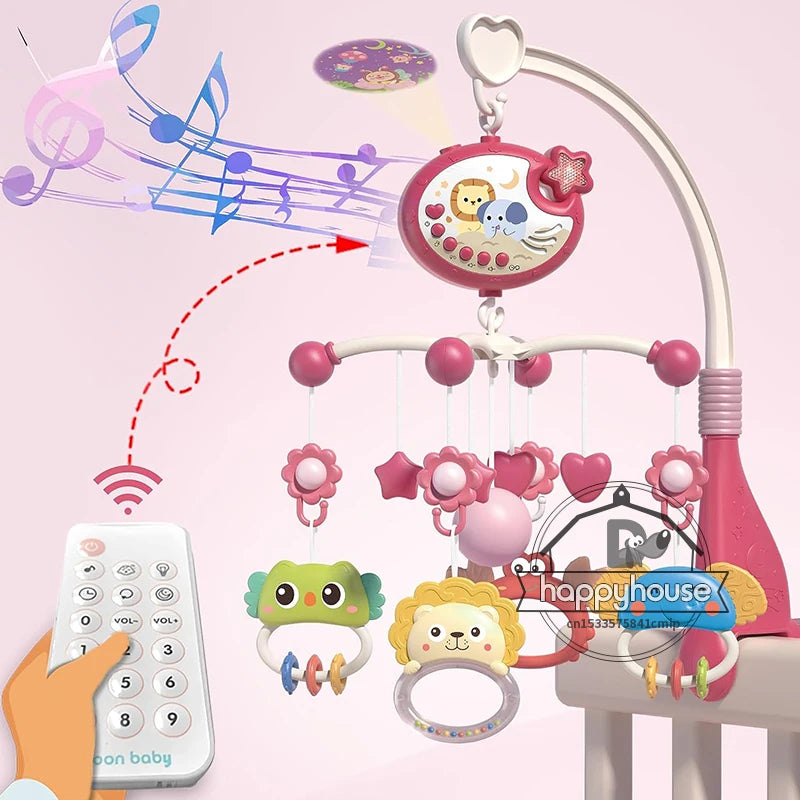
Soothing nursery lighting helps baby overstimulated bedtime routines 💡 See it in action
Why a Musical Crib Mobile Works Better Than Rocking Alone
Infant restless at bedtime improves when babies learn to self-soothe. A musical crib mobile provides comfort without requiring constant parental movement.
A well-designed musical baby crib mobile combines gentle melodies with slow rotation, giving babies something predictable to focus on while their body relaxes. Unlike rocking, it doesn’t stop abruptly when you step away.
- Promotes independent settling
- Reduces night wakings
- Creates consistent sleep cues
Many parents report noticeable improvement within days of introducing a musical baby crib mobile, especially for babies sensitive to sudden changes.

Music lights for baby sleep ease infant restless at bedtime 💡 See it in action
How to Build a Bedtime Routine That Actually Works
Infant restless at bedtime decreases when routines stay predictable. Tools work best when paired with the same sequence each night.
- Dim lights 30 minutes before sleep
- Quiet feeding or cuddling
- Turn on music lights
- Lay baby down drowsy but calm
Parents often combine sleep tools with calming options from Massage & Relaxation to support the transition from play to rest.
Quick Bedtime Questions Parents Ask
How long does it take for sleep tools to work?
Most parents notice improvement within 3–7 nights as babies begin associating music and lighting with sleep.
Can music lights overstimulate my baby?
When designed for sleep, soft volume and slow movement calm rather than excite.
Should I use these tools for naps too?
Yes. Consistency across naps and bedtime strengthens sleep cues and reduces fussiness.
Related Guide: Infant Restless at Night Solutions That Fit Your Baby





