

Interactive Grocery Checkout Toy Set: Top 5 Picks
Which interactive grocery checkout toy set is best for realistic learning play?
An interactive grocery checkout toy set helps kids learn early math, social skills, and confidence through pretend shopping. The best sets combine a toy checkout counter, responsive toy grocery scanner, play money, and role-play accessories that feel realistic, durable, and age-appropriate, keeping children engaged longer while supporting learning through play.
Interactive Grocery Checkout Toy Set Which Is Best
Interactive grocery checkout toy set play transforms everyday pretend shopping into meaningful learning moments. Parents often wonder which set truly supports math skills, sharing, and communication—without overwhelming kids or breaking easily. This guide compares popular options, highlights must-have features, and helps you decide which toy checkout fits your child’s age, space, and play style best.
⏱ 7 min read
Which toy keeps kids focused longer while actually teaching useful skills? Many parents are surprised how a simple checkout game can reduce screen time and spark independent play.

Interactive grocery checkout toy set with toy checkout and toy grocery scanner — 💡 See it in action
Why Kids Love Grocery Store Checkout Toys
Children naturally copy what they see. Grocery shopping is familiar, social, and full of routines kids recognize. A grocery store checkout toy lets them step into grown-up roles, making play feel meaningful rather than random.
- They enjoy scanning items and hearing feedback
- They practice taking turns as cashier and customer
- They feel proud counting coins and giving change
- They stay engaged longer than with passive toys
What Matters Most in an Interactive Grocery Checkout Toy Set?
An interactive grocery checkout toy set should balance fun with durability and learning value. The right features depend on your child’s age and how they like to play.
Realistic Toy Checkout Features That Hold Attention
Interactive elements keep kids engaged beyond the first day.
- Working toy grocery scanner with light or sound
- Buttons that respond when pressed
- Cash drawer that opens and closes smoothly
- Clear display for pretend totals
Accessories That Expand Play Scenarios
More accessories mean more ways to play and learn.
- Play money and coins for early math
- Groceries with labels or prices
- Reusable bags or baskets
- Credit card or receipt role-play pieces
Parents browsing Baby Growth & Learning often look for toys that grow with their child rather than being outgrown quickly.
Interactive Grocery Checkout Toy Set Comparison
| Feature | Basic Toy Checkout | Mid-Level Set | Advanced Interactive Set |
|---|---|---|---|
| Toy Grocery Scanner | Manual | Sound only | Sound + light response |
| Play Money Included | Coins only | Coins + bills | Full money set |
| Learning Depth | Imaginative play | Early math | Math + social skills |
| Longevity | Short-term | Medium | Long-term |
Best Overall Interactive Grocery Checkout Toy Set
The interactive grocery checkout toy set stands out for combining realistic play with learning-focused design. It includes a responsive toy checkout, engaging toy grocery scanner, and durable accessories that support repeated play without frustration. Parents appreciate how it balances fun with educational value, making it suitable for daily independent or shared play.
- Encourages early math through counting and totals
- Builds communication and confidence
- Feels realistic without being complicated
You can explore this option directly here: interactive grocery checkout toy set.

Toy checkout and grocery store checkout toy for realistic pretend play — 💡 See it in action
Choosing the Right Set by Age and Skill Level
Not all kids play the same way. Matching the set to their development keeps play enjoyable.
Ages 2–3: Simple and Sturdy
Look for large buttons, fewer accessories, and sturdy parts. At this stage, kids focus on imitation rather than counting accuracy.
Ages 4–5: Interactive and Social
Kids enjoy scanning items, pretending to pay, and role-switching. A grocery store checkout toy with sound feedback works well.
Ages 6+: Learning-Focused Play
Older kids benefit from full money sets and basic math challenges. Parents interested in skill-building toys often browse Sensory Toys to complement role-play learning.
Learning Benefits Parents Notice Over Time
Many parents report unexpected improvements after regular play.
- Stronger number recognition and counting
- Better turn-taking and patience
- Improved language and social confidence
- Longer independent play sessions
One parent shared that after two weeks, their child began counting items during real grocery trips, showing how pretend play transfers into daily life.
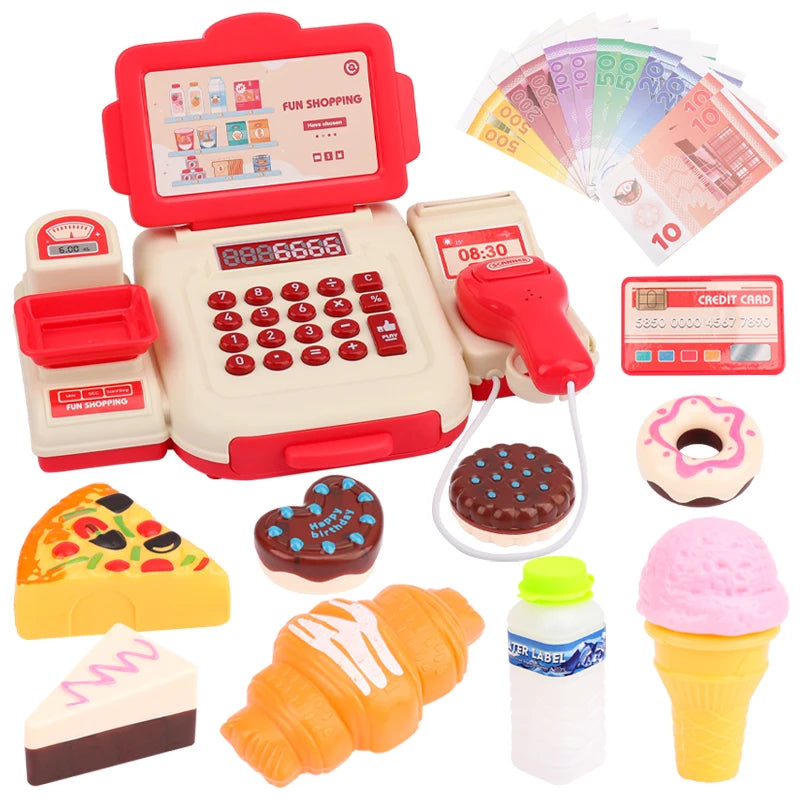
Interactive grocery checkout toy set supporting early math play — 💡 See it in action
Frequently Asked Questions
Is an interactive grocery checkout toy set educational?
Yes. It supports early math, communication, and social skills by letting kids practice counting, turn-taking, and role-play in a familiar, low-pressure setting.
What age is best for a toy grocery scanner?
Most toy grocery scanners are suitable from age three and up, with simpler versions for toddlers and more interactive models for preschool and early school-age children.
How long do kids typically play with a toy checkout?
High-quality interactive sets often stay in rotation for months or even years, especially when accessories and roles can change as the child grows.
Related Guide: Interactive Toy Buying Guide for Smart Playtime Choices





