

Why Some Toys Stay Engaging for Years—and Others Don't
Do interactive play toys really keep kids engaged longer?
Interactive play toys often keep children engaged longer because they encourage active participation instead of passive entertainment. Toys that offer open-ended play, role-playing, problem-solving, and opportunities to create new stories have greater replay value than toys with only one way to play. Well-designed interactive play toys also support screen free activities for preschoolers, strengthen pretend play development, and encourage interactive games for family that continue to evolve as children grow.
Interactive Play Toys Compared: Which Keep Kids Engaged Longer
Interactive play toys do more than entertain—they help children build creativity, language, problem-solving, and social skills through active play. Unlike toys that lose their appeal after a few uses, the best interactive play toys encourage children to invent new scenarios, collaborate with others, and revisit the same toy in different ways. This guide explains what actually keeps kids engaged over time, compares different toy types, and helps parents choose toys with lasting replay value.
⏱ 9 min read
Interactive play toys encourage screen free activities for preschoolers and spark pretend play development. See it in action.
Why Engagement Matters in Preschool Play
Many parents notice their child moving from one toy to another within minutes. This usually isn't because a child has a short attention span—it is often because the toy offers little opportunity to explore beyond its first use.
Long-lasting engagement happens when children can experiment, make choices, solve problems, and create their own stories. These experiences strengthen executive function, communication, creativity, and emotional regulation while making independent play easier.
Collections like Baby Growth & Learning and Sensory Toys are often chosen by families looking to encourage hands-on learning without screens.
What Actually Makes a Toy Engaging Long Term?
The science behind sustained play
What actually makes a toy engaging long term is its ability to offer new experiences without requiring constant novelty. Children naturally seek manageable challenges that match their developmental stage. Toys that allow experimentation, decision-making, and creativity tend to hold attention longer because every play session feels slightly different.
Why replay value matters
Replay value describes how many different ways a toy can be used over weeks or months. A toy with high replay value grows alongside a child's imagination instead of providing only one correct outcome.
Intrinsic motivation vs. novelty
Bright lights and sounds may attract attention initially, but intrinsic motivation keeps children returning to a toy. Pretend kitchens, building toys, stores, and role-play sets invite children to create their own goals, making engagement last far beyond the excitement of something new.
Why Do Kids Lose Interest in Some Toys So Quickly?
Novelty fades
Many toys are exciting for the first few days simply because they're new. Once every button has been pressed or every sound has been heard, interest naturally declines.
Limited challenge and fixed outcomes
Toys with only one way to play rarely encourage children to return repeatedly. When every activity ends the same way, children quickly master the experience and move on.
Developmental mismatch
A toy that's too simple becomes boring, while one that's too difficult can feel frustrating. Matching toys to a child's interests and developmental stage helps maintain motivation and confidence.
Characteristics of Toys That Stay Engaging Over Time
The best toys that keep kids engaged longer allow children to invent their own stories instead of following a script.
Skill progression
Children should discover new ways to use a toy as their language, math, motor, and social skills develop.
Creativity and imagination
Interactive toys that encourage pretend play let children become chefs, doctors, cashiers, mechanics, teachers, or parents. These imaginative roles create nearly endless opportunities for replay.
Adaptability across ages
Many high-quality role-play toys remain enjoyable because older preschoolers naturally create more complex scenarios than younger children, extending the toy's usefulness.
Open-Ended Play vs. Track Sets: Which Holds Attention Longer?
Single-solution vs. flexible play
Track sets often provide a clear objective, while open-ended play encourages children to invent unlimited possibilities. For long-term engagement, flexible play usually wins because there is no single "correct" ending.
When track sets remain engaging
Track sets can still provide excellent value when they include expandable layouts, construction challenges, or opportunities for collaborative problem-solving.
Choosing based on play style
If your child enjoys storytelling and role-playing, pretend play toys typically provide greater replay value. Children who enjoy engineering challenges may continue enjoying modular track systems that can be redesigned repeatedly.
Side-by-Side Comparison: Which Interactive Play Toys Last Longer?
| Toy Type | Replay Value | Best For | Potential Limitations |
|---|---|---|---|
| Pretend Play Sets | Excellent | Imagination, language, social skills | Require storage space |
| Role-Based Toys (Store, Kitchen, Doctor) | Excellent | Screen free activities for preschoolers | Several accessories to organize |
| Building Toys | High | Creativity and problem-solving | May require supervision for younger children |
| Sensory Boards | Moderate | Fine motor development | Less storytelling potential |
| Electronic Light-Up Toys | Low to Moderate | Short bursts of entertainment | Replay value often decreases after novelty fades |
What Are Interactive Toys and How Do They Respond to Kids?
Interactive toy meaning
Interactive toys are toys that react to a child's actions. This response may be mechanical, electronic, or entirely imaginative through role-play.
Responsive vs. passive toys
Responsive toys provide feedback when children perform actions, while passive toys rely almost entirely on imagination. Both can support healthy development when they encourage active participation rather than passive observation.
Examples of responsive play
Examples include toys that scan pretend groceries, respond to buttons, play realistic sounds, encourage conversations, or let children solve everyday challenges through role-playing.
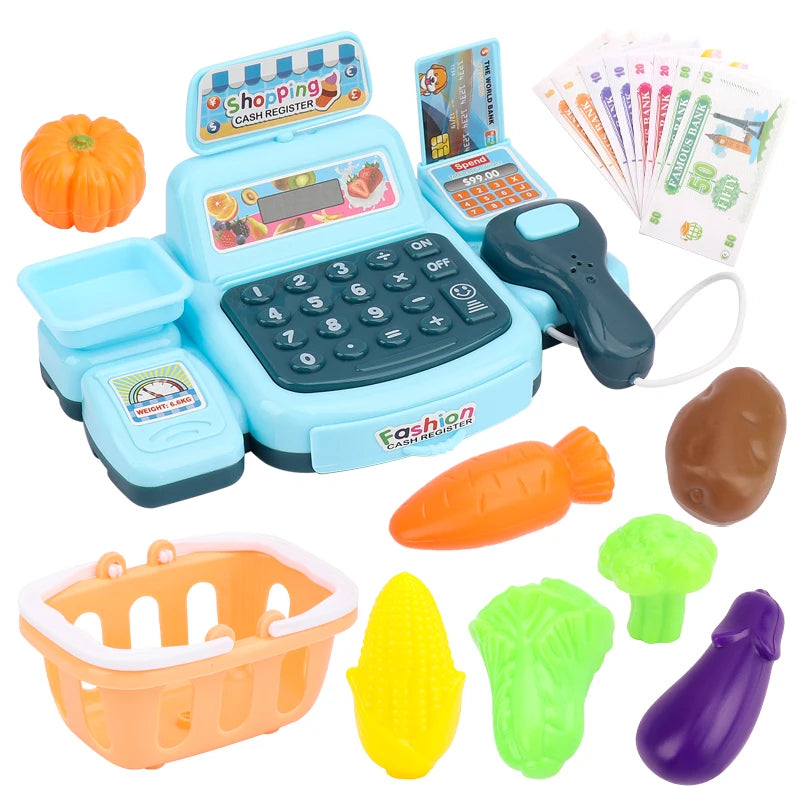
Simulation Cashier Toy: Why This Interactive Play Toy Stands Out
A simulation cashier set demonstrates why role-based toys consistently rank among the toys that keep kids engaged longer. Children naturally imitate shopping experiences they've observed with parents, making each play session feel familiar while allowing new stories to develop.
- Supports pretend play development using everyday situations.
- Encourages counting, communication, and early money concepts.
- Promotes turn-taking between siblings and friends.
- Offers excellent replay value through different shopping scenarios.
You can explore a popular example here: Simulation Cashier Toy .

Role-based interactive play toys turn daily routines into screen free activities for preschoolers. See it in action.
Do Responsive Interactive Toys Stay Interesting Longer?
Adaptive feedback
The best interactive toys that respond to how kids play can maintain interest by providing different responses as children explore new actions.
Limits of electronics
Electronics alone don't guarantee long-term engagement. If every response is predictable, children often lose interest after repeated use.
Balancing technology and imagination
The strongest designs combine simple responsive features with opportunities for imaginative storytelling, allowing children—not the toy—to direct play.
Interactive Toys for Family Play
Shared play strengthens engagement
Interactive toys for family activities become more engaging because parents and siblings introduce new ideas, vocabulary, and challenges.
Cooperative vs. competitive play
Preschoolers often benefit more from cooperative pretend play than competitive games. Working together encourages communication, empathy, and creative thinking.
Keeping family activities fresh
Simple changes—switching roles, creating new shopping lists, adding stuffed animals as customers, or inventing holiday-themed scenarios—can dramatically extend replay value.
Families who enjoy shared routines often browse Baby Care Essentials or Mom Essentials to simplify daily life and make room for quality play.
How Parents Can Choose Toys with High Long-Term Engagement
A simple evaluation checklist
- Can children play differently every time?
- Does the toy encourage imagination instead of memorization?
- Can siblings or parents easily join the activity?
- Will it remain interesting as skills improve?
- Is it durable enough for repeated use?
Questions to ask before buying
Instead of asking whether a toy is entertaining today, ask whether it will still inspire new ideas six months from now. This mindset helps avoid purchases that quickly end up forgotten.
Supporting independent play
Many parents pair pretend play toys with items from Mobility & Training to encourage active movement alongside imaginative play and support balanced development.

Interactive play toys that support pretend play development and family interaction. See it in action.
Frequently Asked Questions
What actually makes a toy engaging long term?
Toys with high replay value, open-ended play, age-appropriate challenges, and opportunities for creativity typically remain engaging much longer than toys with only one fixed activity.
What are interactive toys?
Interactive toys encourage children to actively participate through physical actions, role-play, problem-solving, or responsive features that react to their behavior.
What is the meaning of an interactive toy?
An interactive toy is any toy that responds to a child's actions, decisions, or imagination instead of simply being observed.
Do kids get bored with track sets faster than free-play toys?
Not always. Expandable track systems can remain engaging for children who enjoy construction. However, open-ended pretend play generally offers greater replay value because there are virtually unlimited ways to play.
How can parents tell if a toy has good replay value?
Look for toys that support multiple activities, encourage storytelling, allow children to make decisions, and continue offering new challenges as they grow.
Are responsive interactive toys better than traditional toys?
Both can be excellent choices. Responsive features can increase engagement, but traditional pretend play toys often provide equal or greater long-term developmental benefits because children create the experience themselves.
Related Guide: Interactive Toy Buying Guide for Smart Playtime Choices





