

What Makes a Toy Engaging Long Term? 7 Proven Fixes
Why are kids bored with toys so quickly?
Kids bored with toys often feel this way because play becomes repetitive and lacks challenge. When toys don’t evolve with a child’s imagination, interest fades fast. Pretend play development—especially with role playing toys like a pretend grocery store—adds variety, problem-solving, and social interaction that keeps kids engaged longer.
Kids Bored With Toys: How to Reignite Interest Fast
⏱ 6 min read
If your child seems excited about a new toy one day and completely uninterested the next, you’re not alone. Many parents struggle with kids bored with toys, even when the playroom is full. The good news? The issue often isn’t too few toys—it’s how kids play with them. With the right approach, you can turn everyday play into meaningful, long-lasting fun.
Explore smarter play ideas that build skills and keep kids engaged.

Pretend grocery shopping sparks imagination and solves kids bored with toys 💡 See it in action
Why Kids Get Bored With Toys So Fast
Kids bored with toys usually aren’t being picky or difficult. Their brains are wired to seek novelty, challenge, and social interaction. When a toy only does one thing, interest drops once it’s mastered.
- Overly passive toys limit creativity
- No room for imagination or storytelling
- Lack of challenge as kids grow
- Solo-only play with no social element
This is why open-ended, role play toys consistently outperform single-function gadgets in long-term engagement.
How Pretend Play Development Reignites Curiosity
Direct answer: Kids bored with toys regain interest when play feels meaningful. Pretend play development allows children to act out real-life roles, practice decision-making, and create new scenarios every time they play. This constant variation keeps their minds active and invested.
Pretend play supports:
- Language and communication skills
- Early math through counting and sorting
- Emotional intelligence and confidence
- Longer independent play sessions
Collections like Baby Growth & Learning and Sensory Toys are designed around these principles, helping toys stay relevant as kids grow.
Pretend Grocery Store Toy vs Toy Cashier Set: What Keeps Kids Engaged?
| Feature | Toy Cashier Set | Pretend Grocery Store Toy |
|---|---|---|
| Play Variety | Limited transactions | Full shopping scenarios |
| Pretend Play Development | Basic role play | Advanced storytelling |
| Longevity | Short-term interest | Grows with the child |
| Family Interaction | Mostly solo | Interactive games for family |
While a simple toy cashier set is fun at first, a full pretend grocery store toy creates endless scenarios—customer, cashier, stocker—making it far more engaging over time.
Learn how parents use it to turn boredom into creative play.
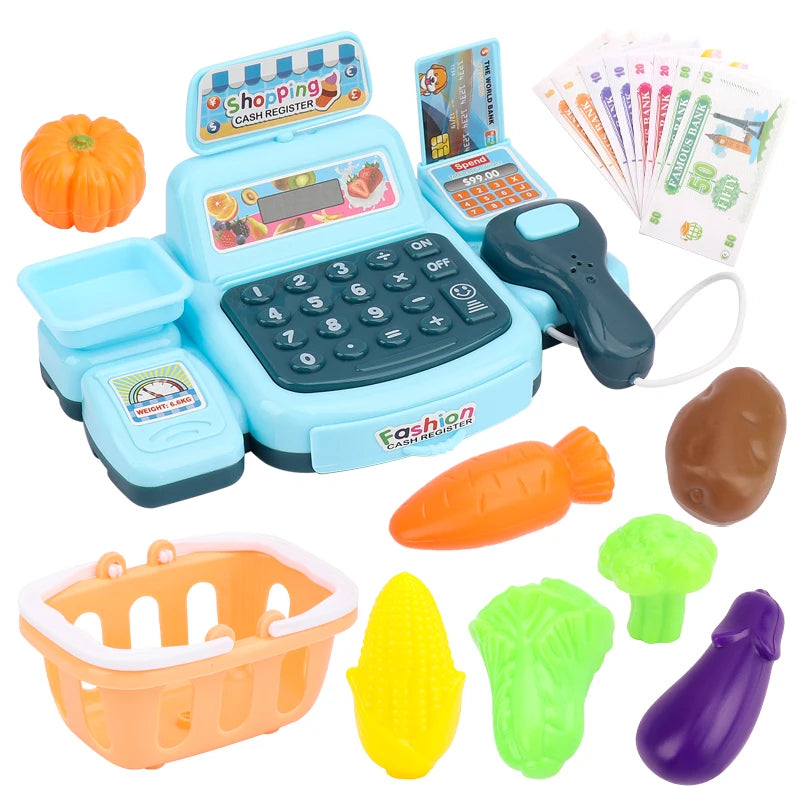
Role playing toys encourage pretend play development and longer focus 💡 See it in action
Step-by-Step: How to Reignite Interest Fast
- Rotate roles: Let kids switch between cashier, shopper, and manager.
- Add challenges: Create shopping lists or budgets.
- Join briefly: Model creative play, then step back.
- Connect to real life: Recreate trips they’ve seen with you.
This approach works especially well with a pretend grocery checkout toy, which naturally supports multiple roles and evolving play.
Interactive Games for Family Bonding
Kids bored with toys often re-engage when parents or siblings participate. Grocery role play is perfect for interactive games for family time.
- Take turns being the cashier
- Practice polite conversations
- Count change together
- Turn cleanup into restocking fun
Parents report longer attention spans and fewer screen-time requests when pretend grocery shopping becomes a shared routine.
Why a Grocery Checkout Toy Keeps Kids Engaged
Kids bored with toys respond better to play that feels real. A grocery checkout toy combines pretend play development, role playing toys, and interactive games for family use. Because scenarios constantly change, kids stay interested longer while building confidence, math skills, and social awareness.
- Realistic buttons and scanner sounds
- Multiple accessories for varied play
- Encourages independent and social play
- Easy setup for busy parents
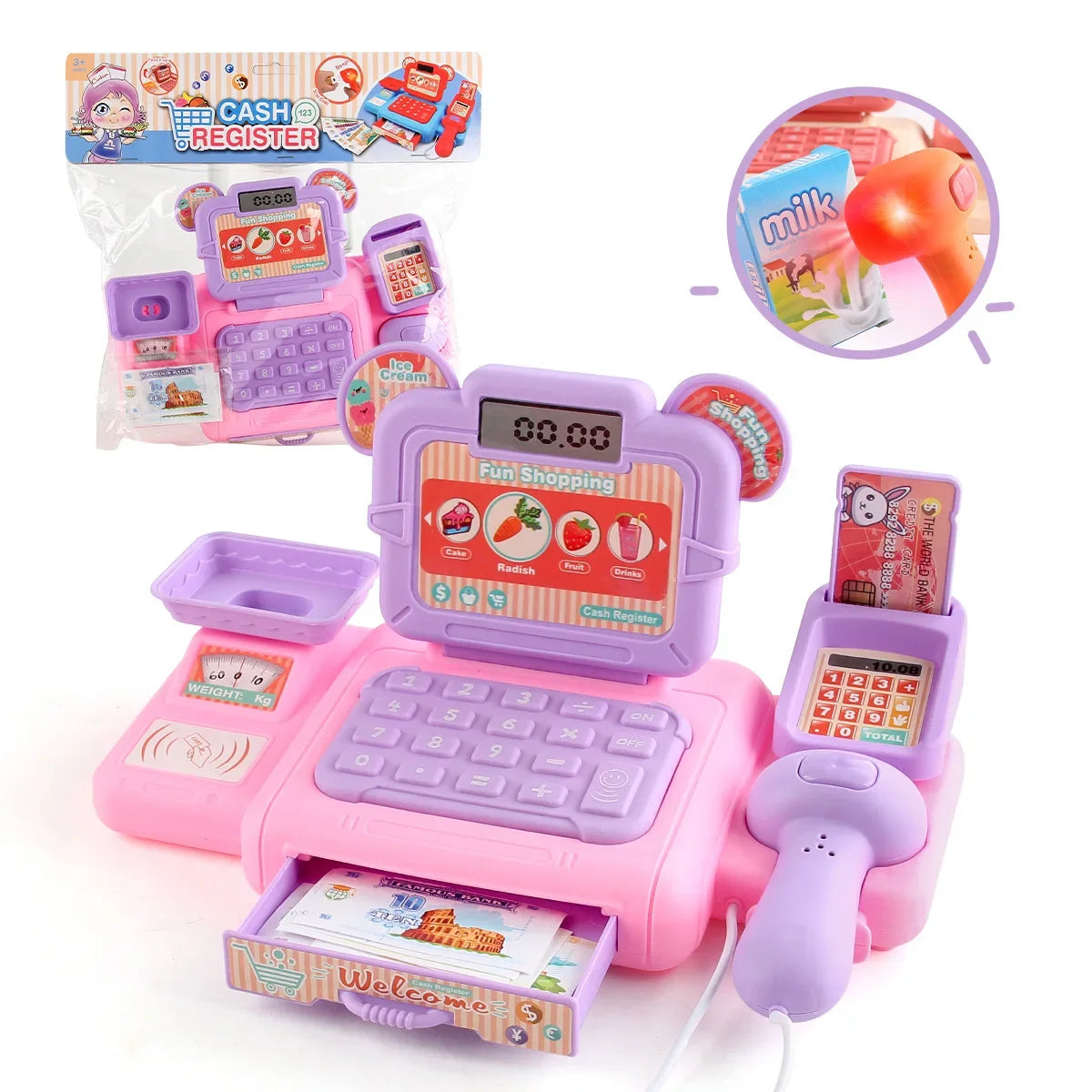
A grocery checkout toy turns kids bored with toys into confident role players 💡 See it in action
Try the simulation cashier toy today—parents love how long kids stay engaged.
Frequently Asked Questions
Is it normal for kids to get bored with toys quickly?
Yes. Kids bored with toys is common, especially when toys lack variety. Open-ended role play toys help maintain interest by allowing children to create new scenarios each time.
At what age does pretend grocery shopping work best?
Pretend grocery shopping typically works well from ages 3–7, adapting easily as children develop language, math, and social skills.
Do pretend play toys really support learning?
Absolutely. Pretend play development supports problem-solving, communication, and confidence, making learning feel natural and enjoyable.
Related Guide: Screen Free Play Ideas That Boost Daily Learning





