

Why Does a Kite Need a Tail? The Science Explained
Does a long or short tail improve kite stability?
A long kite tail generally improves kite stability by adding drag behind the sail, helping the kite stay pointed into the wind and reducing unwanted spinning or wobbling. A short tail creates less drag, making the kite more responsive and agile but also less forgiving in changing wind conditions. The best choice depends on the kite's design, wind strength, and whether your priority is stable recreational flying or quick maneuverability.
Long Tail vs Short Tail: Which Improves Kite Stability?
Choosing between a long and short kite tail is really about understanding how a kite stays balanced in flight. While a longer tail often provides smoother, steadier performance, a shorter tail can improve responsiveness for experienced flyers. Knowing how lift, drag, weight, and line tension work together helps you select the right setup for safer launches, fewer crashes, and more enjoyable flying, whether you're spending a relaxing afternoon at the beach or introducing children to their first kite.
⏱ 7 min read
Explore simple flying tips that make outdoor play calmer, safer, and more enjoyable for flyers of every age.
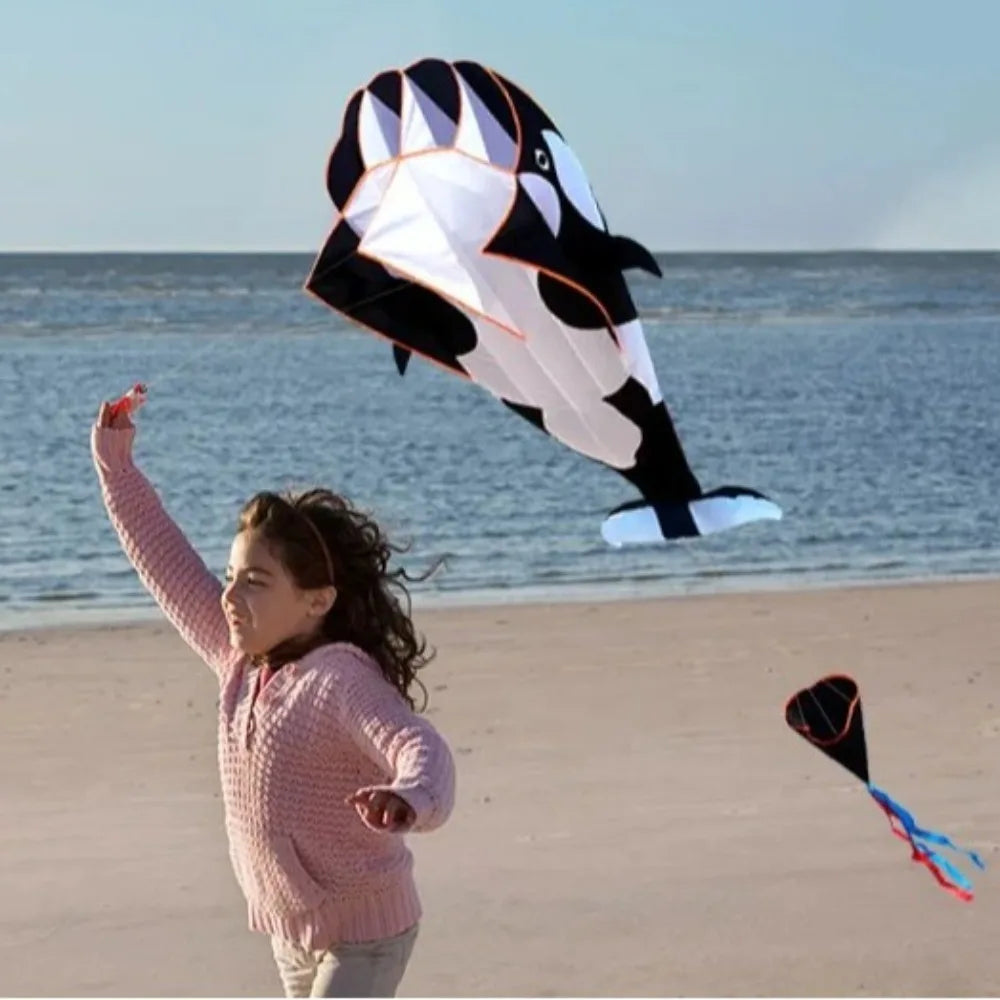
Long and short kite tails influence stability, balance, and overall flight performance.
Why Kites Need Balance to Fly Well
Every stable kite flight depends on four forces working together: lift , weight , drag , and line tension . Lift is created as wind flows over the kite's surface, allowing it to rise. Weight constantly pulls the kite downward, while drag resists the airflow and helps slow unwanted movement. Line tension connects the flyer to the kite, maintaining the proper flying angle and allowing small steering adjustments.
Lift, weight, drag and tension
Good kite stability comes from keeping these four forces in balance. When lift and drag are properly matched to the kite's weight and the pull of the flying line, the kite naturally faces into the wind and climbs smoothly. A tail contributes additional drag behind the kite, helping keep the center of drag behind the sail and improving directional stability without requiring constant corrections from the flyer.
What happens when balance is lost
If one force overpowers the others, flight quickly becomes unpredictable. Too little drag can cause the kite to spin, loop, or dive during gusts. Excessive weight may prevent the kite from climbing, while uneven line tension can make it lean to one side. Understanding these basic aerodynamic forces makes troubleshooting much easier and explains why a properly sized tail often transforms an unstable kite into one that flies smoothly in changing wind conditions.
For beginners, families, and casual flyers, a balanced kite means fewer crashes, easier launches, and more time enjoying the experience instead of constantly adjusting the flying line. Building a solid understanding of kite stability also makes it easier to recognize whether a flight problem comes from wind conditions, kite design, or the need for a longer or shorter tail.
Long Tail vs Short Tail Explained Through Kite Design
The difference between a long and short kite tail comes down to the balance between stability and maneuverability. A longer tail produces more aerodynamic drag behind the kite, reducing side-to-side oscillation and helping it maintain a consistent heading. A shorter tail creates less drag, allowing the kite to respond more quickly to steering inputs and changes in wind direction.
Neither option is universally better. For recreational flying, a long tail is often the easier choice because it smooths out sudden gusts and makes launches more forgiving. Short tails are better suited to experienced flyers using well-balanced kites in steady wind, where quick turns and faster responses are desirable.
| Tail Type | Flight Characteristics | Best Conditions |
|---|---|---|
| Long Tail | Stable, smooth, and resistant to wobbling | Beginners, children, gusty or variable wind |
| Short Tail | Agile, responsive, and quicker to turn | Experienced flyers, light to moderate steady wind |
Does a Kite Need a Tail in Every Situation?
Does a kite need a tail? The answer depends on its design, the wind conditions, and the type of flying you plan to do. Many traditional diamond kites rely on a tail to improve directional stability, while some modern designs, such as delta or parafoil kites, are engineered to fly well without one. Even so, adding an appropriate tail can often improve control when conditions become unpredictable.
Light wind
In gentle, steady breezes, a very long or heavy tail can create unnecessary drag, making it harder for the kite to climb. If the kite already flies smoothly, using a shorter, lighter tail—or no tail on designs intended to fly without one—may improve altitude and efficiency.
Strong wind
When the wind becomes gusty or turbulent, a longer tail usually helps stabilize the kite by reducing rapid swings and unwanted rotation. The additional drag keeps the kite aligned with the airflow, making launches easier and helping maintain a smoother flight path despite changing wind speeds.
Poorly designed kites
A tail can compensate for minor imbalances in construction or uneven weight distribution, but it cannot completely fix a poorly designed or damaged kite. If a kite persistently dives, loops, or pulls strongly to one side despite proper tail adjustments, inspect the frame, sail symmetry, and bridle before assuming the tail is the problem.
- Improves directional stability in changing wind.
- Helps reduce spinning, looping, and sudden dives.
- Makes launching easier for beginners and families.
- Provides better visual tracking while the kite is in the air.
Why a Kite With Long Tail Feels More Stable
A kite with a long tail feels more stable because the added length creates controlled aerodynamic drag behind the sail. This drag acts like a natural stabilizer, encouraging the kite to remain pointed into the wind instead of swinging from side to side. The result is a smoother, more predictable flight path that is especially helpful for beginners, children, and anyone flying in variable wind conditions.
Long tails also dampen oscillations caused by sudden gusts. Rather than allowing the kite to wobble or spin rapidly, the flexible tail trails behind and absorbs some of the changing airflow. This reduces abrupt movements and gives the flyer more time to make gentle corrections instead of reacting to every shift in the wind.
There is a balance to consider, however. An excessively long tail increases drag to the point where the kite may climb more slowly or struggle in very light wind. Choosing a tail length that matches the kite's size and the day's conditions provides the best combination of stability and flight efficiency.
Learn how simple design choices and the right tail length can make outdoor flying more enjoyable for all ages.
Long Tail vs Heavy Tail: What's the Difference?
The comparison between a long tail and a heavy tail often causes confusion because both can influence kite stability, but they do so in different ways. A long, lightweight tail improves stability primarily by increasing drag over a greater distance, while a heavy tail changes the kite's balance by adding concentrated weight near the rear.
More drag vs more weight
A long tail distributes aerodynamic drag evenly as it trails behind the kite. This helps smooth out flight without dramatically changing the kite's center of gravity. By contrast, adding weight to the tail shifts the balance downward, which may reduce wobbling but can also make it harder for the kite to climb and remain airborne in lighter winds.
Which solves common flight problems?
For most recreational kites, increasing tail length is a better solution than increasing tail weight. A longer tail is effective for reducing spinning, gentle looping, and side-to-side oscillation while maintaining good lift. A heavier tail should only be used sparingly and typically as a fine-tuning adjustment after confirming the kite's frame, bridle, and flying conditions are appropriate.
| Feature | Long Tail | Heavy Tail |
|---|---|---|
| Primary Effect | Increases drag evenly | Adds concentrated weight |
| Flight Stability | Smooth and progressive | Can overcorrect if excessive |
| Risk of Dive | Low when properly sized | Higher if too heavy |
| Best Use | General recreational flying | Minor balance adjustments |
| Visual Appeal | Flowing, decorative appearance | Minimal visual impact |
How to Choose the Right Tail for Your Kite
Selecting the right tail length is one of the simplest ways to improve kite stability. Rather than choosing the longest tail available, consider the kite's size, wind conditions, and the experience level of the person flying it. A properly matched tail helps the kite track smoothly through the air without adding unnecessary drag.
Tail length by kite type
Smaller recreational diamond kites often benefit from longer ribbon tails because they rely on additional drag for stability. Many delta, parafoil, and box kites are designed to fly with little or no tail, although a lightweight tail can still improve handling in gusty conditions if recommended by the manufacturer.
Adjusting for wind conditions
Wind strength plays a major role in choosing the right tail. In steady, moderate winds, a shorter tail may provide better climbing performance. In gusty or turbulent conditions, increasing the tail length helps reduce spinning and side-to-side movement, making the kite easier to control.
Simple field testing
Fine-tuning a kite is usually straightforward. Start with the recommended tail length, fly the kite for several minutes, and observe its behavior. If it repeatedly spins or loops, gradually increase the tail length. If it struggles to gain altitude in light wind, try shortening the tail slightly before making other adjustments.
- Match the tail length to the kite's size and design.
- Use a longer tail when flying in gusty or variable wind.
- Choose lightweight materials instead of adding unnecessary weight.
- Make small adjustments and test the kite after each change.
Families who already shop for playful, calming items like those in Sensory Toys often appreciate the same smooth, predictable flying experience when enjoying outdoor activities together.
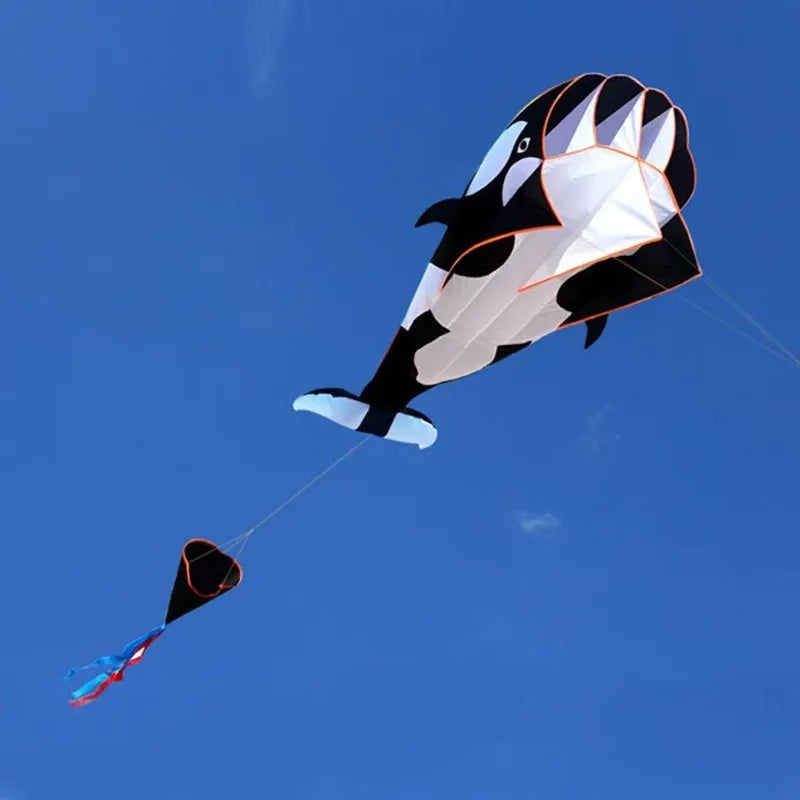
A properly sized kite tail helps improve stability and maintain smoother flight.
For families looking for a beginner-friendly option, the Whale Dolphin Kite is designed for stable recreational flying and pairs well with the tail-length recommendations discussed above.
Many parents compare the experience of choosing reliable outdoor equipment with selecting trusted resources from Baby Growth & Learning —both focus on creating enjoyable, confidence-building experiences with less trial and error.
Choose the right tail setup for your conditions and explore the Whale Dolphin Kite for a balanced recreational flying experience.

Comparing long and heavy tails highlights how different tail designs influence kite stability.
Quick Answers for First-Time Flyers
Why does a kite need a tail?
A kite tail improves stability by creating drag behind the sail. This extra drag helps keep the kite pointed into the wind, reducing spinning, wobbling, and sudden dives. For many traditional recreational kites, a properly sized tail makes launching and controlling the kite much easier.
Do all kites need tails?
No. While many diamond kites perform best with a tail, some modern designs such as delta, parafoil, and box kites are engineered to fly without one. Always follow the manufacturer's recommendations, and add a lightweight tail only if extra stability is needed in changing wind conditions.
How does a kite tail improve stability?
A tail increases aerodynamic drag behind the kite, helping the center of drag remain behind the center of pressure. This naturally aligns the kite with the wind and reduces unwanted oscillation, making flight smoother and easier to control.
How long should a kite tail be?
There is no single ideal length for every kite. The correct tail depends on the kite's size, design, and the wind conditions. Begin with the recommended tail length, then make gradual adjustments until the kite climbs steadily without excessive spinning or sluggish performance.
Can a tail make a kite fly worse?
Yes. A tail that is excessively long or too heavy can create unnecessary drag, reducing climbing performance and making the kite less efficient in light winds. Proper sizing is more important than simply using the longest tail available.
Why does my kite spin without a tail?
Spinning usually indicates that the kite lacks enough stabilizing drag or has a balance issue. Adding an appropriately sized tail often reduces rotation, but you should also check the bridle, frame alignment, and wind conditions to ensure the kite is properly set up.
Is a longer tail always better?
No. Longer tails generally provide greater stability, especially for beginners and gusty conditions, but they also increase drag. In steady winds or for more responsive flying, a shorter tail may deliver better overall performance.
Related Guide: Glass Coated Kite String: Why It Boosts Control and Durability





