

Montessori Walker vs Traditional Walker: Wooden Walker?
Does a Montessori style wooden walker really help babies walk better?
A montessori style wooden walker supports natural movement by encouraging balance, coordination, and independent exploration. Unlike wheeled plastic models, it lets babies control speed, build muscle strength, and gain confidence through purposeful pushing and play, helping many children transition to steadier, more confident first steps.
Montessori Style Wooden Walker vs Traditional Walkers
⏱ 7 min read
Choosing your baby’s first walker can feel overwhelming. Some promise faster walking, others focus on play, and many look similar at first glance. Understanding how a montessori style wooden walker compares to traditional walkers can help you feel confident you’re supporting your child’s balance, safety, and long-term development from the very first push.
montessori style wooden walker choices often surprise parents who assume all walkers teach the same skills. In reality, a walker montessori design encourages balance, independence, and problem-solving through movement, while a wooden activity center adds purposeful play. Unlike plastic options, a wooden push walker grows with your child and supports natural development without overstimulation. Curious which style truly supports confident first steps and long-term learning?
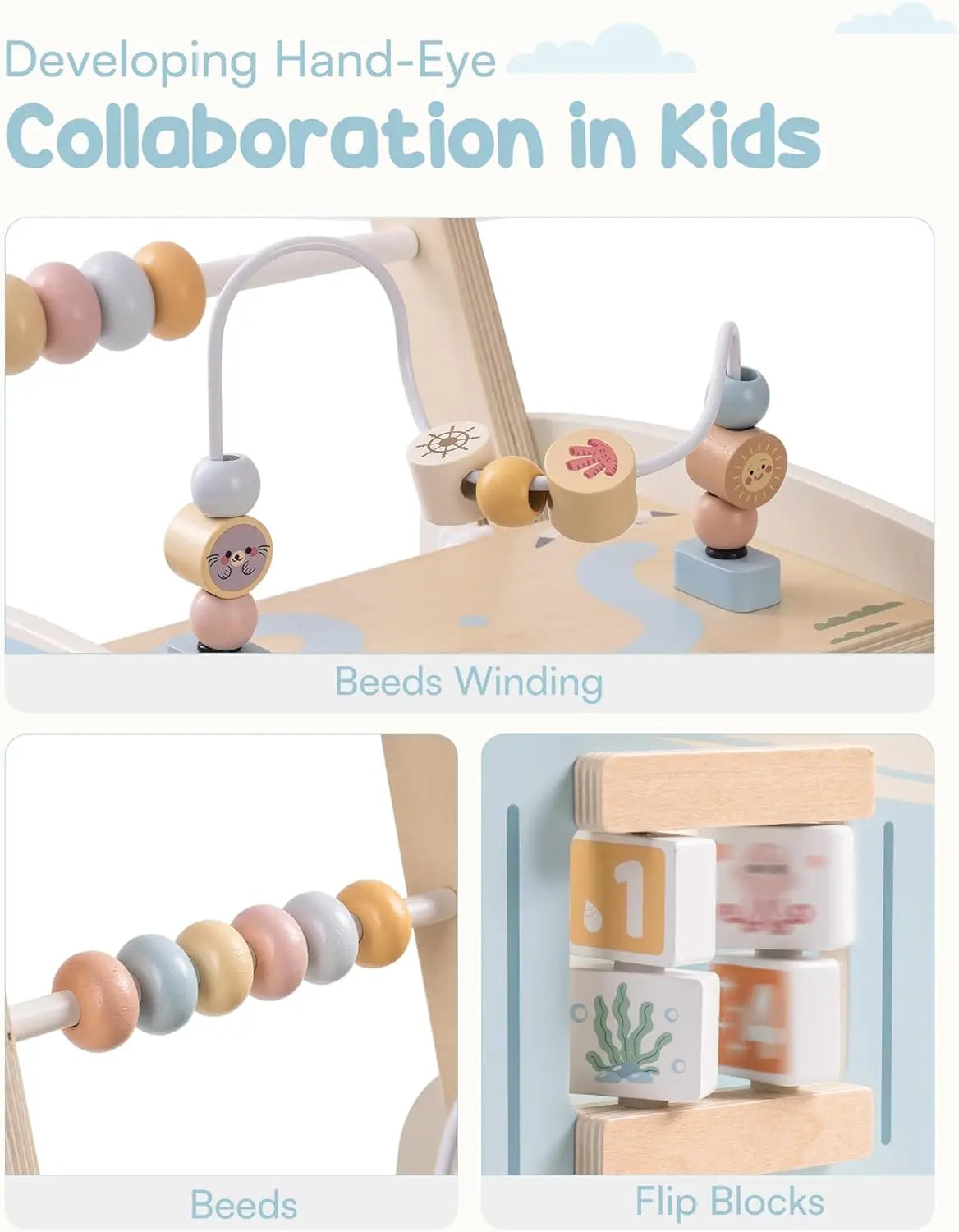
A montessori style wooden walker that combines balance practice with wooden activity center play 💡 See it in action
What is a Montessori style wooden walker?
A montessori style wooden walker is designed to support upright movement without forcing a child into an unnatural position. It focuses on pushing rather than sitting, allowing babies to feel their weight shift, adjust posture, and build strength at their own pace.
How this design supports balance and confidence
The solid wood frame provides gentle resistance, helping babies slow down and stabilize themselves. This makes it easier to correct small wobbles and learn how balance really feels.
- Encourages upright posture and core strength
- Helps babies control speed naturally
- Reduces reliance on external support
- Builds confidence through self-directed movement
The role of a wooden activity center
Many walker montessori models include a wooden activity center with gears, shapes, or sliders. These elements support fine motor skills and problem-solving while keeping play purposeful rather than overwhelming.
Parents often pair walkers like these with toys from Baby Growth & Learning to create a consistent environment focused on exploration and skill-building.
How traditional walkers work
Traditional walkers usually feature plastic frames, wheels, and a seat that allows babies to move by pushing with their feet. While they can keep babies entertained, they often change how a child learns to balance.
Why some parents still choose them
- Babies can move quickly with less effort
- Bright colors and sounds offer stimulation
- Hands-free movement can feel convenient
Common concerns raised by caregivers
Because babies are supported by a seat, they don’t fully practice balance or posture. Some parents also worry about safety near stairs or uneven surfaces.
Montessori style wooden walker vs traditional walkers
| Feature | Montessori Style Wooden Walker | Traditional Walker |
|---|---|---|
| Movement style | Push-based, upright walking | Seated, foot-propelled |
| Balance development | Actively encouraged | Limited by seat support |
| Play elements | Wooden activity center, focused tasks | Lights, sounds, high stimulation |
| Longevity | Grows with toddler stages | Often outgrown quickly |
Which walking style feels more aligned with how you want your child to learn—guided independence or quick mobility?
Why many parents prefer a wooden push walker
A montessori style wooden walker offers long-term value by supporting multiple stages of development. It’s not just about first steps, but about how children learn to move confidently.
Key benefits families notice
- More controlled, confident walking attempts
- Improved coordination over time
- Calmer, more focused play
- Durable design that lasts through toddler years
Many families combine walkers with items from Mobility & Training to support active play safely indoors.
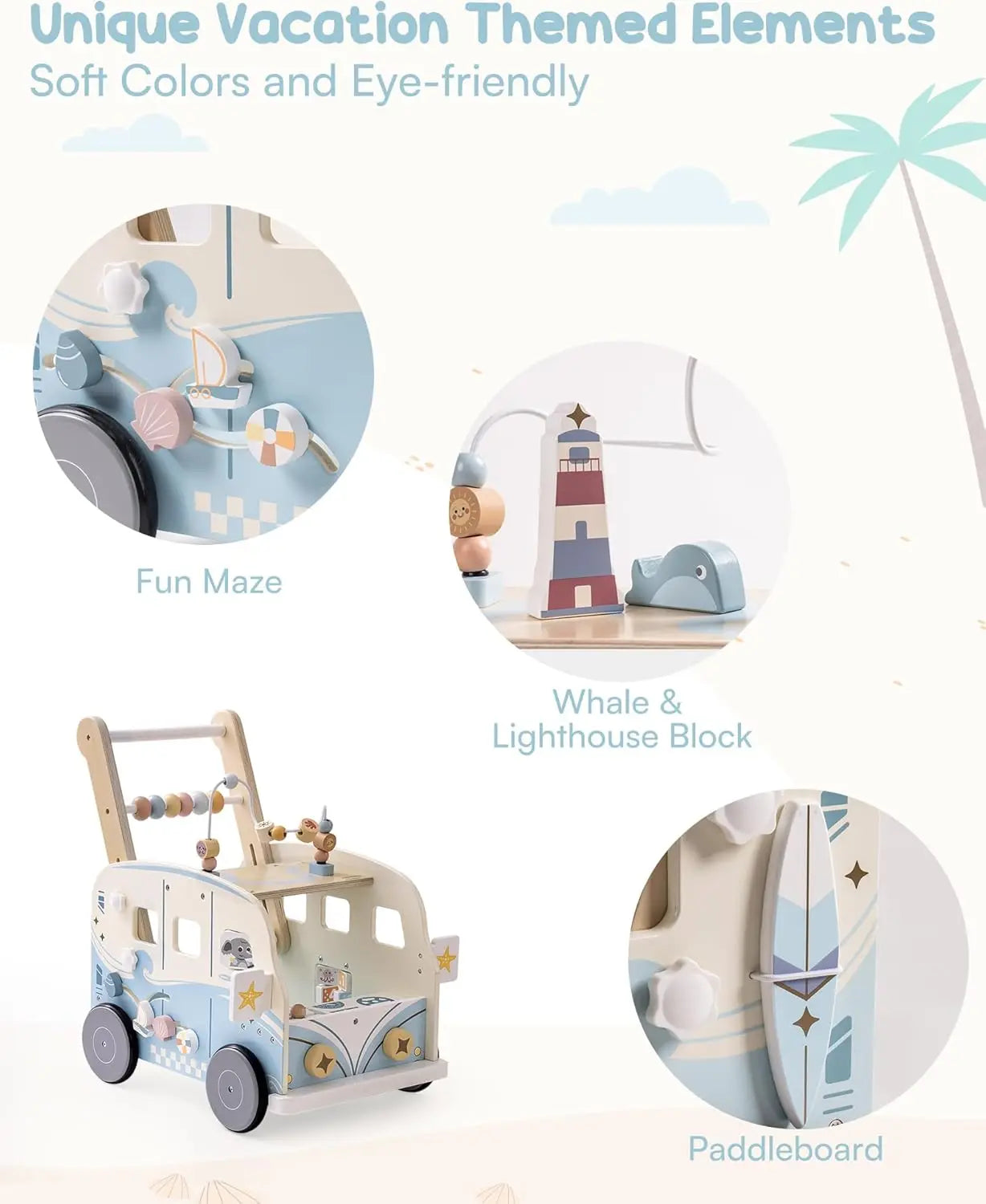
Comparing a wooden push walker and walker montessori features 💡 See it in action
Safety considerations parents care about most
Safety is often the deciding factor. A wooden push walker typically moves at a slower pace, reducing sudden falls. The sturdy frame also helps prevent tipping.
What to look for in a safe walker
- Wide base for stability
- Non-toxic, smooth wood finishes
- Adjustable resistance or weight
- Clear, open walking posture
For added peace of mind, many parents explore complementary safety tools from Health & Safety collections around the home.
Which walker fits your family best?
The right choice depends on your priorities. If you value independence, balance, and calm play, a montessori style wooden walker often feels like a natural fit. If quick mobility and entertainment matter more, traditional walkers may seem appealing.
Quick decision guide
- Choose wooden if you want skill-focused development
- Choose traditional if short-term entertainment is the goal
- Consider space, flooring, and daily routines
Some parents start with a wooden push walker and later add sensory toys from Sensory Toys to keep play engaging without overstimulation.
What parents notice after daily use
Many parents report that within weeks, their child shows better posture and more intentional steps. One mom shared that her toddler stopped rushing and started “thinking before moving,” which boosted confidence.
Another parent noted that the wooden activity center replaced multiple plastic toys, simplifying playtime and reducing clutter.
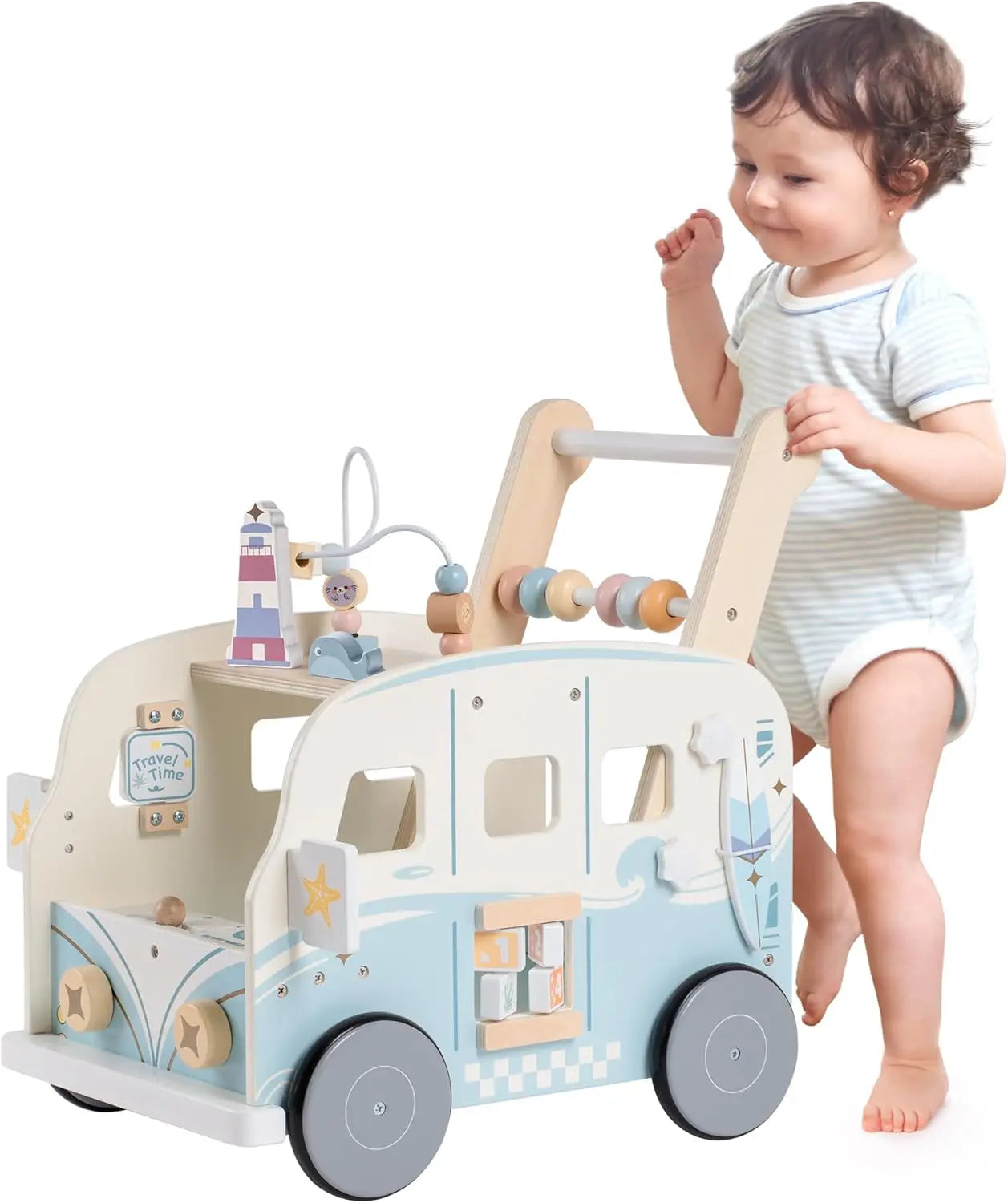
A wooden activity center and montessori style wooden walker in everyday use 💡 See it in action
Frequently asked questions
At what age can babies use a montessori style wooden walker?
Most babies start using a wooden push walker between 9 and 12 months, once they can pull to stand and show interest in cruising.
Is a wooden push walker safer than a traditional walker?
Many parents find wooden push walkers safer because babies control speed and posture, reducing the risk of tipping or rolling too fast.
Can a walker montessori design replace other toys?
Yes, the built-in wooden activity center often replaces multiple toys by supporting both movement and fine motor play in one space.
Related Guide: Choosing Safe Baby Walker: Best Options Compared





