

Organizing Kids Play Spaces for Stress-Free Pretend Cooking
Does a premium wooden play kitchen really justify the higher price?
A premium wooden play kitchen stands out through durable solid-wood construction, safer finishes, and richer pretend play features that grow with your child. Designed for daily use, a premium wooden play kitchen reduces breakage, supports learning, and delivers longer-lasting value than cheaper plastic or particleboard alternatives.
Premium Wooden Play Kitchen Features That Justify the Price
A premium wooden play kitchen isn’t just another toy—it’s a long-term investment in safer play, deeper imagination, and everyday learning moments. Parents comparing options often wonder if the higher price truly delivers better results. Let’s break down the features that make the difference and why so many families choose quality over quick fixes.
⏱ 7 min read
Have you ever watched a toy kitchen wobble, peel, or break after just a few weeks? Or felt frustrated replacing accessories that never seem to last? These small disappointments add up. A well-built wooden playset kitchen offers a different experience—one built for real play, not just display.

Premium wooden play kitchen with realistic details — explore how it supports lasting pretend play 💡 See it in action
What Makes a Premium Wooden Play Kitchen Different?
A premium wooden play kitchen is built with solid materials, reinforced joints, and thoughtful details that mirror real kitchens. Instead of flimsy panels or printed stickers, you get tactile knobs, opening doors, and sturdy countertops that support daily, energetic play without constant repairs.
Stronger Materials That Withstand Daily Play
Direct answer: A premium wooden play kitchen uses solid wood or high-grade plywood, thicker panels, and reinforced fasteners to prevent wobbling, cracking, or peeling. This construction ensures stability, longer lifespan, and safer play compared to thin plastic or compressed boards.
Children don’t play gently—and they shouldn’t have to. Dropped pots, climbing toddlers, and imaginative “restaurant rushes” all put toys to the test. Solid wood frames absorb impact better and maintain shape even after years of use.
- Thicker wood panels resist warping
- Secure screws instead of glue-only joints
- Scratch-resistant finishes that stay smooth
- Weight-balanced design to prevent tipping
These qualities align naturally with learning-focused collections like Baby Growth & Learning, where durability supports repeated skill-building activities.
Safety-Focused Design Parents Can Trust
Safety worries often surface when paint chips or loose parts appear. A premium wooden play kitchen typically uses non-toxic, water-based finishes and rounded edges to reduce risk during active play.
- Smooth, splinter-free surfaces
- Secure hinges and slow-close doors
- Non-toxic finishes tested for child safety
- Stable base to prevent tipping
Parents focused on safer home environments often explore solutions within Health & Safety, and the same mindset applies to choosing a play kitchen that stays safe as kids grow.
Realistic Features That Keep Kids Engaged Longer
Direct answer: The best wooden kitchen playset includes realistic elements like turning knobs, removable sinks, and opening ovens. These details encourage longer play sessions by helping children imitate real-life routines and feel more involved in their imaginative scenarios.
Realism matters. When a child can “wash” dishes, “bake” pretend cookies, or organize shelves, play feels purposeful. This leads to longer engagement and fewer abandoned toys.
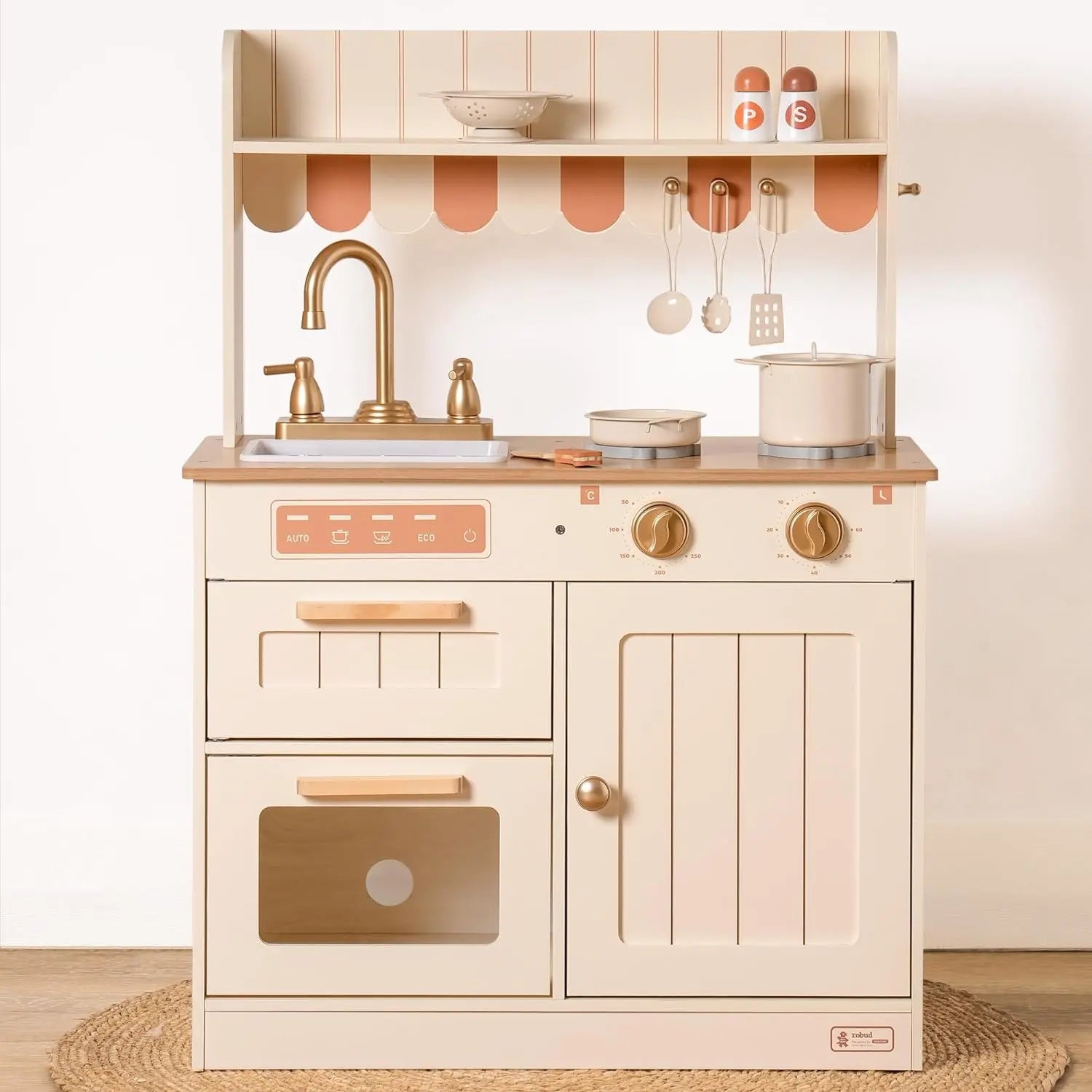
Wooden playset kitchen with interactive features and accessories — see why kids return to it daily 💡 See it in action
Wooden Toy Kitchen and Accessories That Actually Last
Accessories often reveal the true quality gap. Thin plastic food pieces crack or disappear quickly. Wooden toy kitchen and accessories are heavier, easier to grip, and less likely to snap.
- Wooden pots and pans with smooth edges
- Durable food pieces that don’t bend
- Storage hooks and shelves that stay attached
- Neutral colors that don’t fade fast
Pairing a kitchen with complementary items from Sensory Toys can further enhance imaginative and tactile play.
How Pretend Play Builds Real-Life Skills
Pretend kitchens aren’t just for fun. They support language development, problem-solving, and social skills. Children practice sequencing tasks, sharing roles, and expressing creativity.
- Improves communication through role-play
- Builds fine motor skills using knobs and doors
- Encourages responsibility through clean-up routines
- Supports confidence by mastering everyday tasks
These benefits align with early development goals found across Baby Growth & Learning collections.
Premium vs Budget Play Kitchens Compared
| Feature | Premium Wooden Play Kitchen | Budget Alternatives |
|---|---|---|
| Material | Solid wood / reinforced plywood | Thin plastic or particleboard |
| Durability | Built for years of daily play | Often breaks within months |
| Safety | Non-toxic finishes, rounded edges | Paint chipping, loose parts |
| Play Value | Realistic, engaging features | Limited interaction |
Why the Best Wooden Kitchen Playset Costs Less Over Time
Direct answer: The best wooden kitchen playset reduces replacement costs by lasting through multiple growth stages and even siblings. Its durable build and timeless design often make it more economical than repeatedly buying cheaper, short-lived alternatives.
Many parents share that their wooden playset kitchen remains a favorite for years. Some even pass it down. Fewer replacements mean less waste and less frustration.
You can explore a well-crafted option here: wooden kids kitchen playset.
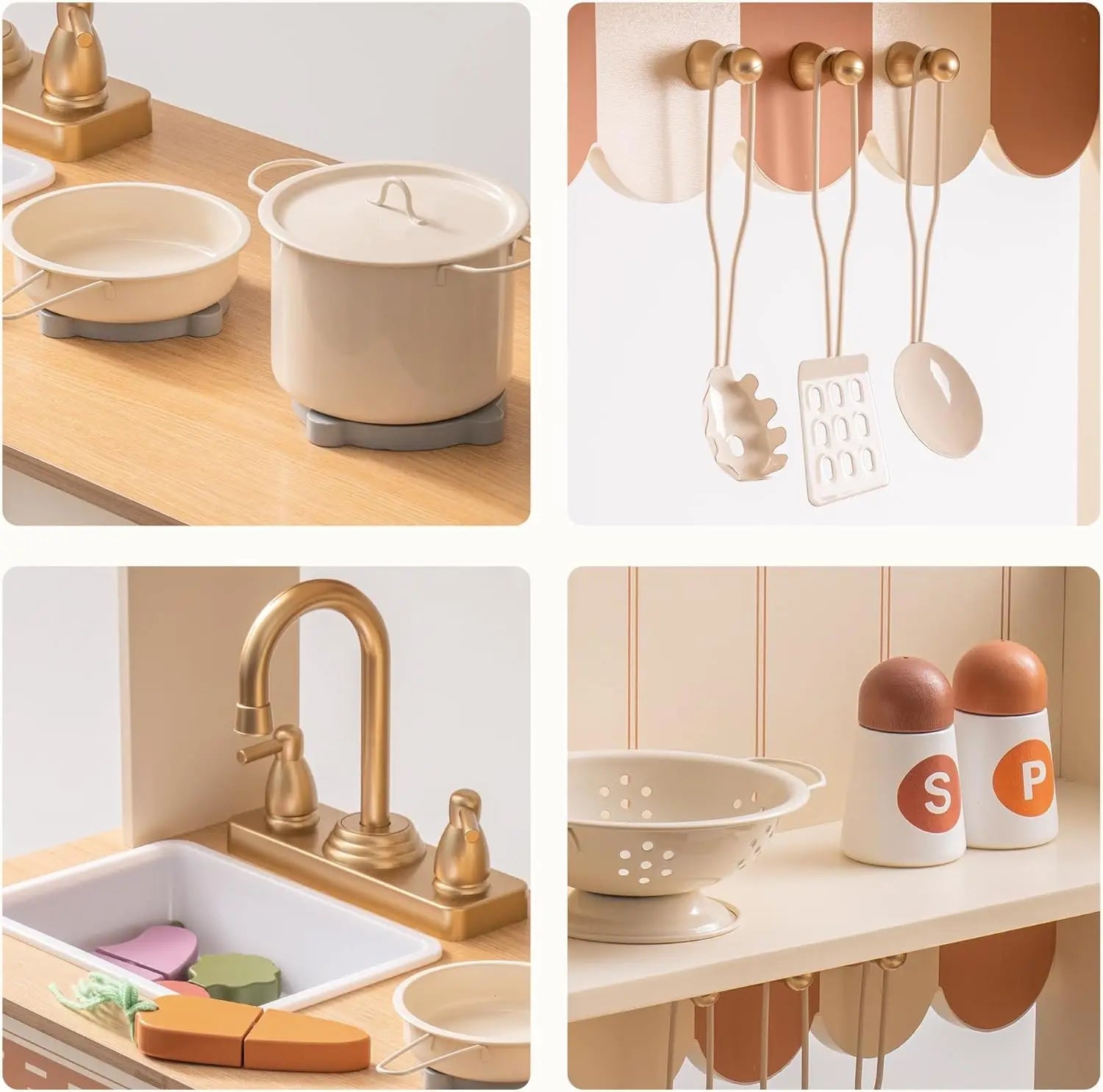
Best wooden kitchen playset designed for lasting family use — a smarter long-term choice 💡 See it in action
How to Choose the Right Wooden Playset Kitchen
- Check material thickness and weight
- Look for non-toxic, child-safe finishes
- Prioritize realistic, interactive features
- Consider accessory compatibility
Think about where it fits in your home and how your child will grow with it. A timeless design blends easily into shared spaces.
Frequently Asked Questions
At what age is a premium wooden play kitchen suitable?
Most are suitable from ages 3 and up, with features designed to grow with your child’s skills and imagination.
Are wooden play kitchens hard to maintain?
No. A simple wipe with a damp cloth keeps surfaces clean, and solid finishes resist staining better than plastic.
Do wooden kitchens support multiple children playing together?
Yes. Their sturdy build and wider layouts often make them ideal for shared play and cooperative learning.
Related Guide: How Pretend Kitchens Help Kids Learn Through Play





