

Orthopedic Insoles for Kids: How to Choose the Right Fit
Do orthopedic insoles for kids shoes really work?
Orthopedic insoles for kids shoes are designed to reduce impact, guide natural foot alignment, and support developing arches during daily activity. For many children, they improve comfort, absorb shock, and provide better pressure distribution than flat inserts. They are especially helpful for active children, flexible flat feet, overpronation, and those who experience foot fatigue during growth.
Orthopedic Insoles for Kids Shoes: Are They Better Than Regular?
Orthopedic insoles for kids shoes can quietly improve how growing feet move, feel, and recover after busy days. Many parents ask whether they truly offer advantages over the thin inserts that come with most children's shoes. Quality kids arch support insoles help cushion repeated impact, improve stability, and encourage healthier foot alignment without making shoes bulky. Choosing the right insole can make everyday walking, running, and playing noticeably more comfortable.
⏱ 7 min read
Growing feet experience thousands of impacts every day. While most children develop healthy feet naturally, active lifestyles, flexible flat feet, or poor shoe support can sometimes lead to discomfort. Orthopedic insoles are designed to provide additional cushioning and structured support when needed.
Wondering whether orthopedic insoles are worth buying or if regular inserts are enough? Here's what parents should know before choosing.
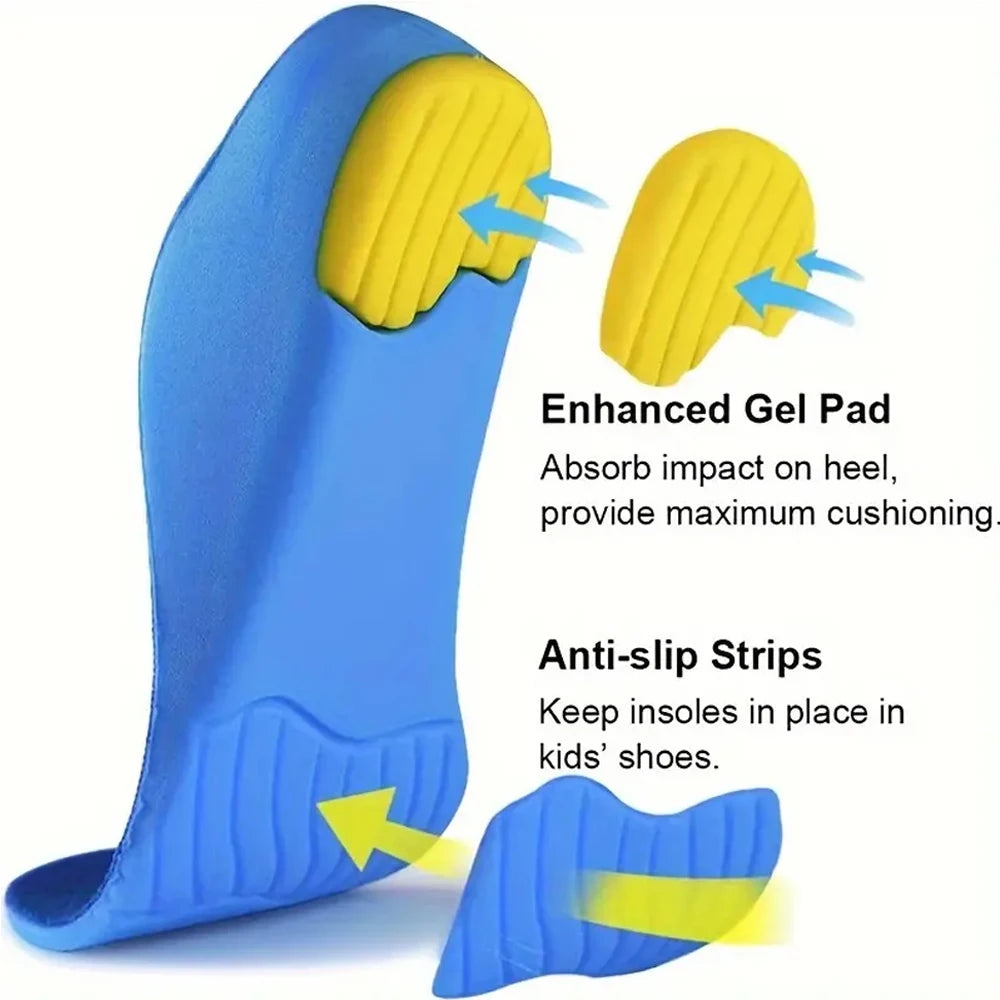
Orthopedic insoles for kids shoes designed for daily comfort and balance. See them in action.
Health & Safety essentials often focus on protection, but proper foot support also plays an important role in helping children stay comfortable during everyday activities.
Best Orthopedic Insoles for Kids: Top Picks by Age and Foot Condition
The best orthopedic insoles for kids depend on your child's activity level, foot shape, and daily footwear. Instead of choosing the firmest option available, look for balanced support that matches your child's needs.
Best for flexible flat feet
Children with flexible flat feet often benefit from moderate arch support combined with soft heel cushioning. Insoles should support the arch without forcing it into an unnatural position.
Best for overpronation
Kids who roll their feet inward while walking may benefit from deeper heel cups and structured arch support that improve stability and encourage more balanced foot movement.
Best for sports and active kids
Young athletes usually benefit most from multi-layer cushioning that reduces repeated impact during running, jumping, and court sports while maintaining flexibility.
Best budget option
Well-designed trim-to-fit orthopedic insoles provide excellent value because they fit multiple shoe styles while offering considerably more support than standard foam liners.
How children's feet develop
Children's feet continue developing throughout childhood. Bones remain flexible, muscles strengthen gradually, and the arch develops at different rates for every child. Because of this ongoing growth, comfort and proper support become increasingly important during active years.
What orthopedic insoles do
Unlike basic shoe liners, orthopedic insoles help distribute pressure across the foot, cushion repetitive impact, stabilize the heel, and support natural walking mechanics. They are designed to improve comfort rather than permanently change foot structure.
When they help most
Orthopedic insoles are often most beneficial for children who participate in sports, experience foot fatigue after school, have flexible flat feet, mild overpronation, or frequently complain of sore heels or arches.
When Should Kids Use Orthopedic Insoles?
Signs of overpronation
- Shoes wear down more quickly on one side.
- Ankles appear to roll inward while walking.
- Children tire quickly during long walks.
- Frequent complaints of ankle or arch discomfort.
Flexible flat feet
Flexible flat feet are common in younger children and often improve naturally. However, if flat feet are accompanied by pain, fatigue, or difficulty participating in activities, supportive insoles may improve daily comfort.
Heel pain and Sever's disease
Active children between approximately 8 and 14 years old may develop heel pain related to growth, commonly known as Sever's disease. Shock-absorbing insoles can help reduce impact on the heel during sports while following guidance from a healthcare professional.
When to see a pediatric podiatrist
If your child has persistent pain, limps, experiences swelling, has rigid flat feet, or symptoms continue despite supportive footwear, seek evaluation from a pediatric podiatrist before relying solely on insoles.
How Orthopedic Insoles Support Growing Feet
Direct answer: Orthopedic insoles for kids shoes provide targeted arch support, shock absorption, heel stability, and improved pressure distribution that standard flat inserts cannot deliver. They help reduce strain during daily activities while keeping growing feet comfortable.
Arch support
Gentle contouring supports developing arches without restricting natural movement.
Shock absorption
Layered cushioning helps reduce repetitive impact from running, playground activities, and sports.
Heel stability
Deep heel cups help stabilize the foot, encouraging more controlled movement with every step.
Pressure distribution
By spreading pressure more evenly across the foot, orthopedic insoles may reduce localized discomfort after long school days or active weekends.
Many parents pair them with active footwear from the Mobility & Training collection to support confident movement.
Do Shock Absorbing Insoles Help Active Children?
Direct answer: Yes. Shock absorbing insoles designed specifically for children's weight and activity levels help reduce repeated impact during running, jumping, and sports, making long periods of activity more comfortable.
Running and sports
Sports create repeated impact on growing feet. Cushioned insoles help reduce stress on the heels, arches, knees, and hips while maintaining flexibility.
School shoes
Children who spend long hours standing or walking at school may notice less foot fatigue when supportive insoles replace thin factory liners.
High-impact activities
Basketball, soccer, playground climbing, and running place additional stress on young feet. Supportive cushioning helps improve comfort throughout these activities.
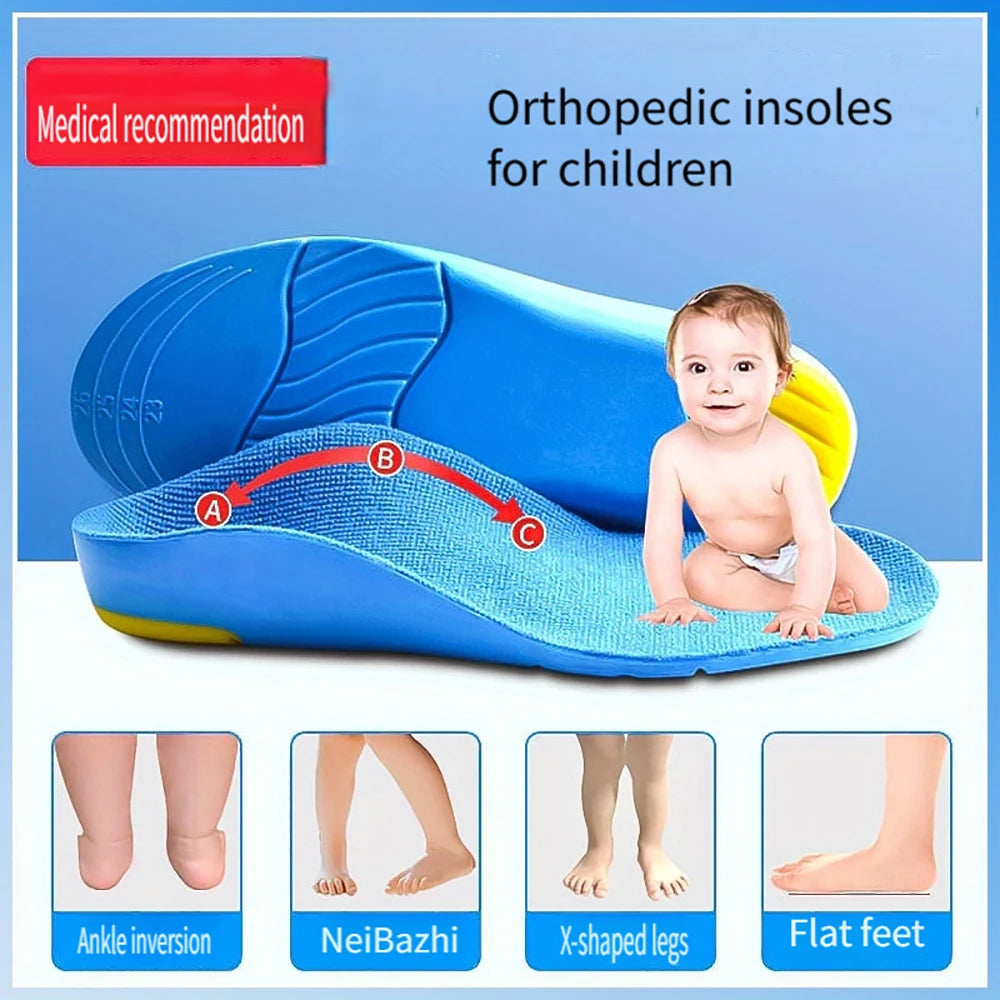
Shock-absorbing orthopedic insoles can help reduce fatigue after active school days. See them in action.
Curious how everyday comfort products support growing families? Explore Baby Care Essentials and additional wellness products in Body Care & Health Devices .
Orthopedic Insoles vs Regular Shoe Inserts
| Feature | Orthopedic Insoles | Regular Inserts |
|---|---|---|
| Arch Support | Structured and contoured | Minimal or flat |
| Shock Absorption | Multi-layer cushioning | Basic foam |
| Heel Stability | Supportive heel cup | Little or none |
| Pressure Distribution | Evenly distributes weight | Limited support |
| Best For | Active kids, flexible flat feet, overpronation | General shoe comfort |
| Typical Value | Higher initial cost but longer-term comfort | Lower cost with limited support |
Children who spend long hours on their feet usually notice the biggest difference between orthopedic insoles and standard shoe liners.
How to Choose the Right Orthopedic Insoles for Kids
Correct sizing
Choose the recommended size range and trim only along the manufacturer's guide if necessary.
Shoe compatibility
Most orthopedic insoles fit sneakers, school shoes, and casual footwear after removing the factory liner.
Material and firmness
Look for breathable materials with moderate firmness that provide support without feeling overly rigid.
Replacement schedule
Growing children often outgrow insoles before they wear out. Inspect them every 6 to 12 months and replace them when they become compressed or no longer fit properly.
Ready to support healthier steps? View the recommended option here: Kids Orthotic Insoles
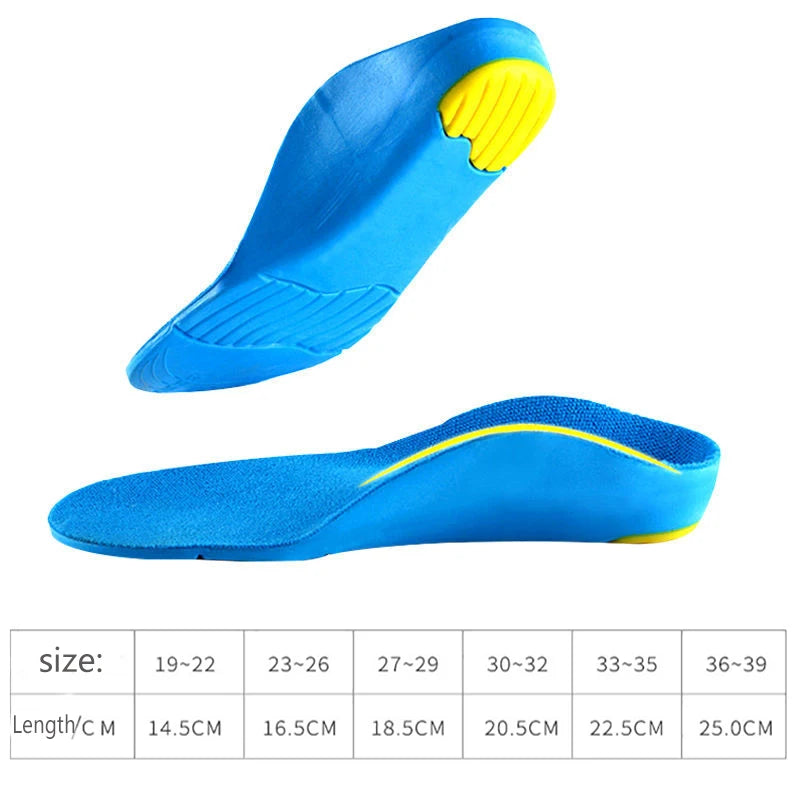
Youth arch support insoles designed to fit everyday shoes. See them in action.
Families also explore everyday wellness products from the Lifestyle collection to improve comfort during daily routines.
Frequently Asked Questions
Are orthopedic insoles good for kids with flat feet?
Yes. Children with flexible flat feet who experience discomfort, fatigue, or reduced activity tolerance often benefit from supportive orthopedic insoles that improve cushioning and stability.
Do kids need arch support insoles if they have no pain?
Not always. Many children with normally developing feet do well without extra support. Insoles are generally most useful when discomfort, high activity levels, or specific foot mechanics create additional demands.
How long do children's orthopedic insoles last?
Most quality insoles last between 6 and 12 months depending on growth, activity level, and wear. Replace them sooner if they become compressed or no longer fit.
Can orthopedic insoles fit school shoes and sneakers?
Yes. Most trim-to-fit orthopedic insoles are compatible with school shoes, sneakers, and casual footwear after removing the original shoe liner.
Can kids wear orthopedic insoles every day?
Yes. Daily use provides consistent support during school, sports, and everyday activities as long as the insoles fit correctly and remain in good condition.
Give your child more comfortable steps today. Get yours now while supplies last
Related Guide: Children Orthopedic Shoe Insoles: Honest Review After Real Use





