

Best Play Mat for Hardwood Floors That Protect Every Fall
How can you protect babies on hardwood floors?
Protect babies on hardwood floors by combining cushioned play mats, non-slip rugs, and soft knee protection as your child becomes more mobile. Layering these safety solutions reduces slips, cushions falls, keeps floors warmer, and creates a more comfortable space for tummy time, crawling, cruising, and early walking.
Protect Babies on Hardwood: What to Use at Every Age and Stage
Hardwood floors are durable, attractive, and easy to clean, but they can also be cold, slippery, and unforgiving for babies learning new movement skills. The right combination of cushioned play mats, non-slip surfaces, and age-appropriate protection helps create a safer play environment from the first tummy time sessions through confident crawling and early walking. This guide explains how to match floor protection to each developmental stage while keeping your play space practical and easy to maintain.
⏱ 6 min read
Protect babies on hardwood with cushioned mats and grip layers for safer infant mobility. See it in action.
Why Hardwood Floors Need Extra Baby Proofing
Hardwood flooring provides a clean and durable surface, but it offers very little impact absorption for babies who are learning to roll, crawl, stand, and walk. Even minor slips can feel more intimidating than they would on carpet, making some babies less willing to explore and practice new skills.
As mobility develops, common challenges include:
- Reduced traction on smooth flooring.
- Greater impact from small falls.
- Cold surfaces that make tummy time less comfortable.
- Increased confidence loss after repeated slips.
Creating a layered play area with cushioning, traction, and protective accessories helps support healthy movement while reducing everyday bumps and slips.
How to Protect Babies on Hardwood by Age Stage
Every developmental milestone places different demands on your baby's play space. Newborns benefit from warmth and soft support, while crawlers and early walkers need reliable grip and fall protection. Choosing the right combination of play mats, rugs, and mobility accessories for each stage creates a safer environment that grows with your child.
Although every child develops at their own pace, the following recommendations work well for most babies during each major mobility milestone.
Newborn Stage (0–3 Months): Soft, Warm, Supportive Surfaces
During the newborn months, movement is limited, but tummy time quickly becomes part of the daily routine. A supportive surface encourages longer sessions while helping babies develop neck, shoulder, and core strength.
Common hardwood floor concerns include:
- Cold surfaces that reduce comfort.
- Firm pressure on the chest, elbows, and arms.
- Shorter tummy time sessions because of discomfort.
Recommended setup:
- Thick foam play mats.
- Quilted tummy time mats.
- Soft rugs with non-slip backing.
These layers add insulation, improve comfort, and create a dedicated space for safe daily play and early development.
Browse cozy floor solutions inside Baby Care Essentials for soft play surfaces designed for early development.
Rolling Stage (3–6 Months): Grip and Cushion
Once babies begin rolling independently, they often cover more ground than parents expect. Smooth hardwood flooring can allow rolling babies to slide farther than intended, increasing the chance of bumping nearby furniture.
Primary risks include:
- Unexpected head bumps.
- Sliding toward furniture.
- Reduced traction during movement.
Recommended setup:
- Interlocking foam tiles.
- Non-slip play rugs.
- Furniture corner guards around the play zone.
A defined, cushioned play area helps babies explore movement while minimizing everyday hazards.
Find rolling-friendly play gear in Baby Growth & Learning.
Crawling Stage (6–9 Months): Mobility Meets Safety
Crawling is often the stage when hardwood floors become most challenging. Babies move faster, change direction quickly, and spend extended periods supporting their weight with their knees and hands.
During infant development around 7 months and beyond, many babies:
- Move rapidly across open spaces.
- Frequently tip forward while exploring.
- Place repeated pressure on knees and palms.
Common crawling challenges on hardwood include:
- Slippery knees.
- Sore or red kneecaps.
- Forward slips that interrupt crawling.
Recommended setup:
- Cushioned play mats.
- Non-slip area rugs.
- Protective crawling accessories.
Extra knee protection can improve comfort while giving babies more traction as they practice crawling.
Recommended crawling support:
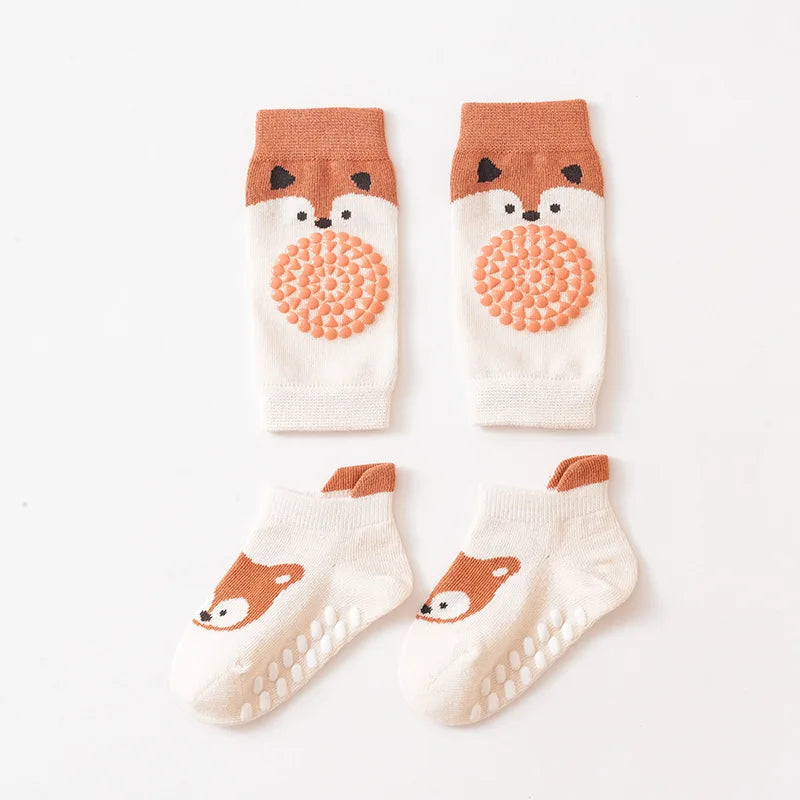
Baby Knee Pads & Non-Slip Socks help improve grip, cushion sensitive knees, and support more confident movement across hardwood floors.
Many parents find that once slipping is reduced, babies stay engaged in crawling practice for longer periods.
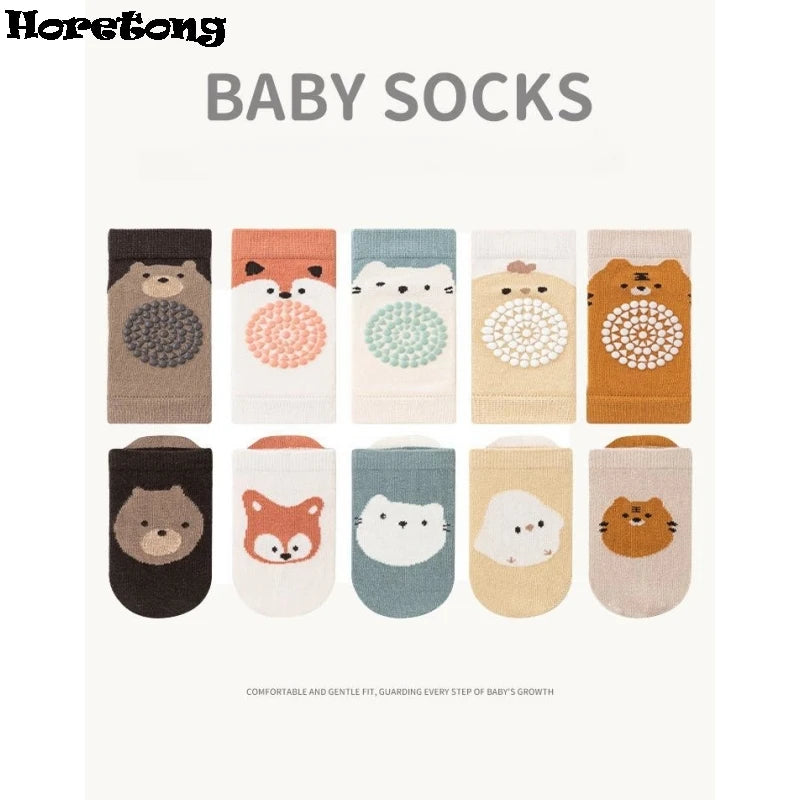
Protect babies on hardwood with knee grip and cushioned mats for crawling safety. See it in action.
Standing & Cruising (9–12+ Months): Anti-Slip Zones
As babies begin pulling up, cruising along furniture, and taking first steps, reliable traction becomes increasingly important. Hardwood floors can feel slick beneath new walkers, especially while they are learning balance.
Common concerns include:
- Feet sliding unexpectedly.
- Backward falls during standing practice.
- Reduced confidence after repeated slips.
Recommended setup:
- Non-slip area rugs.
- Foam mat pathways between activity areas.
- Grip socks designed for early walkers.
Creating dedicated walking lanes with stable, non-slip surfaces gives babies a safer environment to practice standing, cruising, and taking those first independent steps.
Explore mobility-friendly accessories in Mobility & Training.
Here is the rewritten HTML fragment for Part 2.The Essential Hardwood Safety Setup
A well-designed play space uses multiple layers of protection instead of relying on a single product. Combining cushioning, traction, mobility support, and furniture safety creates a comfortable environment that helps babies explore with greater confidence while reducing everyday slips and bumps.
- Base Layer: Place thick foam play mats or generously padded rugs in your baby's primary play area to provide cushioning and insulation from cold hardwood floors.
- Grip Layer: Secure rugs with non-slip pads or choose rubber-backed rugs to minimize movement during crawling and cruising.
- Mobility Layer: Add knee pads for crawlers and non-slip socks for babies beginning to stand and walk.
- Furniture Safety: Install corner guards and edge protectors on nearby furniture to reduce injury risks during unexpected falls.
Using these layers together helps absorb impact, improve traction, and support safer movement through every stage of development.
Quick Comparison: Hardwood Floor Protection Options
| Solution | Best For | Main Benefit |
|---|---|---|
| Foam Play Mats | Tummy time & crawling | Excellent cushioning and impact absorption |
| Non-Slip Rugs | Standing & cruising | Improved traction and warmer play surfaces |
| Knee Pads | Crawling stage | Added grip with protection for sensitive knees |
| Grip Socks | Early walking | Better stability on smooth hardwood floors |
Frequently Asked Questions
Are foam play mats safe on hardwood floors?
Yes. Quality foam play mats are designed to provide cushioning, reduce impact from minor falls, and add insulation against cold hardwood surfaces. Choose mats made from non-toxic materials with a textured or non-slip surface for improved stability during tummy time and crawling.
What is the best play mat for hardwood floors?
The best play mat for hardwood floors offers a balance of cushioning, grip, durability, and easy cleaning. Look for a mat that is thick enough to absorb everyday bumps, stays securely in place, and is made from baby-safe materials suitable for daily use.
How thick should a baby play mat be on hardwood floors?
For most families, a play mat between 0.4 and 0.8 inches (10–20 mm) thick provides a comfortable combination of cushioning and stability. Extra-thick mats can offer additional comfort in dedicated play areas while still allowing babies to practice balance and movement.
Can foam play mats scratch hardwood floors?
Properly manufactured foam mats generally do not scratch sealed hardwood flooring. Before installation, make sure both the floor and the underside of the mat are clean to prevent trapped dirt or debris from causing surface marks.
Are XPE mats safer than EVA foam mats?
Both XPE and high-quality EVA mats can be suitable for babies when they meet applicable safety standards. XPE mats are often lighter and easier to fold, while EVA mats typically provide greater durability and cushioning. Always choose products made from certified, non-toxic materials.
How do I stop a baby play mat from slipping on hardwood?
Use a non-slip rug pad beneath the mat, position it on a clean, dry floor, and avoid placing it over loose rugs. Regularly checking that the mat stays flat also helps maintain a stable play surface.
When should I start using knee pads for my baby?
Most babies benefit from knee pads once they begin crawling, typically between 6 and 9 months of age. Added cushioning and grip can improve comfort on hardwood floors while encouraging longer crawling sessions.
Do non-slip rugs really help early walkers?
Yes. Non-slip rugs provide additional traction, helping babies practice standing, cruising, and taking their first independent steps with greater confidence on smooth hardwood flooring.
What size play mat is best for crawling babies?
A larger play mat gives babies more uninterrupted space to practice rolling, crawling, and early movement. Select a size that comfortably fits your available floor space while leaving a safe clearance from furniture and other household hazards.
Baby Knee Pads & Non-Slip Socks
Related Guide: Hardwood Floor Baby Safety Solutions That Fit Real Homes





