

Push Walker vs Stationary Walker: Which Fits Your Baby Best?
What makes a push walker safe for babies?
A safe push walker for babies combines a wide, stable base, controlled wheel resistance, ergonomic handles, and a sturdy frame that helps prevent tipping or uncontrolled rolling. Compared with seated walkers, well-designed push walkers encourage natural posture, balance, and weight shifting while allowing babies to control their own pace during early walking practice.
Safe Push Walker for Babies: What Makes One Safer?
⏱ 7 min read
A safe push walker for babies does much more than support first steps. The right design helps babies develop balance, coordination, confidence, and muscle strength while reducing common safety risks such as tipping or rolling too quickly. Whether you're comparing a classic wooden push walker, a walker push toy, or an activity center walker, understanding the features that matter most can help you choose equipment that supports healthy walking development and everyday confidence.
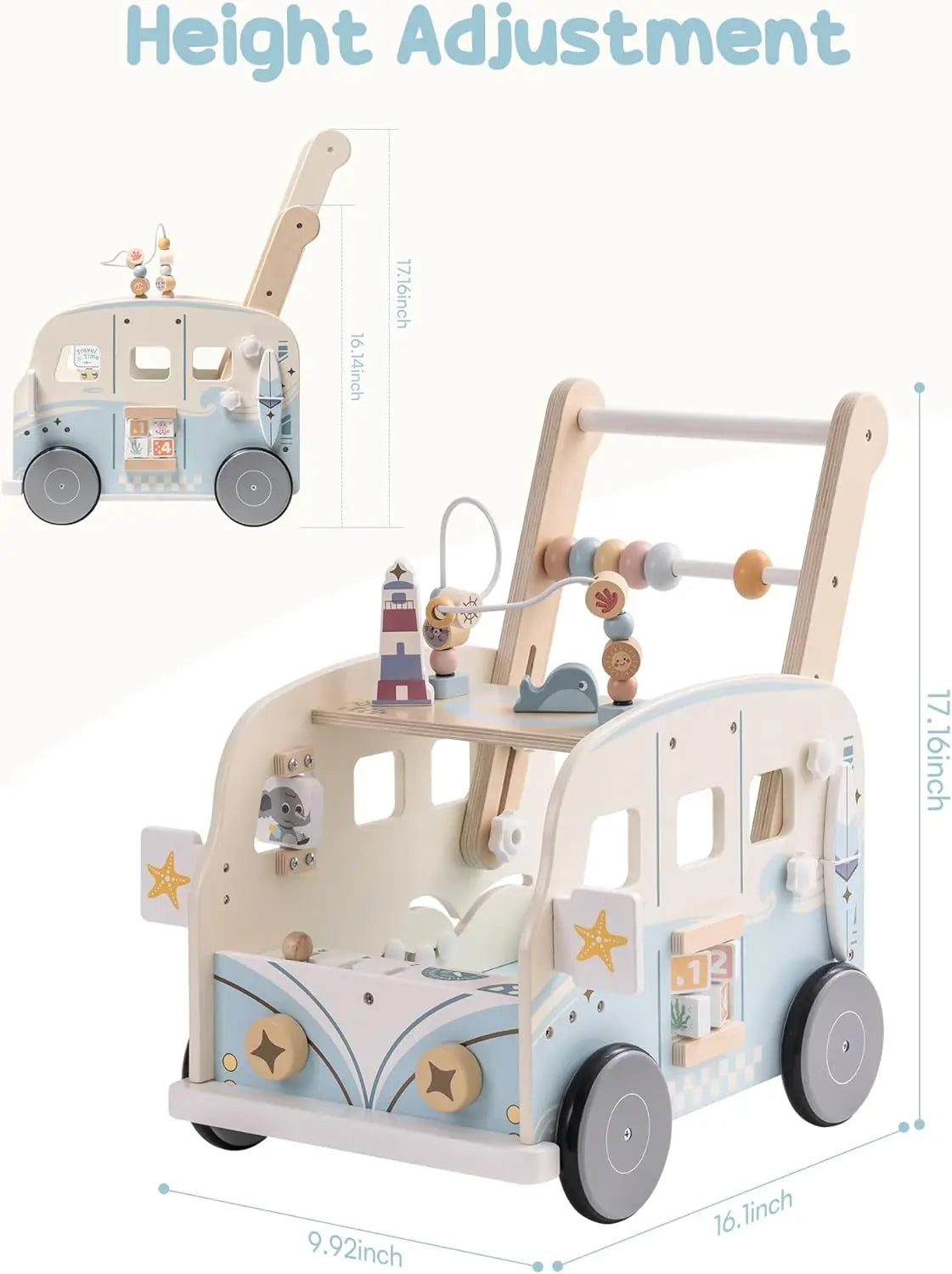
Safe push walker for babies with balanced design — See it in action
Why Safety Matters in a Baby Push Walker
During the first stages of walking, babies are learning to coordinate balance, posture, muscle strength, and weight shifting all at once. Because these skills develop gradually, the design of a push walker can influence how comfortably and confidently a child practices standing and walking. A safe push walker for babies supports natural movement instead of forcing unnatural positions or encouraging excessive speed.
Parents commonly worry about walkers sliding across hardwood floors, tipping when a child leans forward, or rolling away before little legs are ready to keep up. These concerns are understandable, especially during the months when babies transition from cruising along furniture to taking independent steps.
A thoughtfully designed push walker helps reduce these risks by combining several important features, including a wide wheelbase for stability, controlled wheel resistance, comfortable handles, and materials sturdy enough to remain balanced as babies shift their weight. While no walker replaces close adult supervision, choosing a stable model creates a safer environment for practicing early mobility.
Equally important, developmental specialists generally recommend products that allow babies to move at their own pace. Push walkers encourage children to initiate each step themselves, helping build coordination, confidence, and lower-body strength without restricting natural movement patterns. These qualities make them a preferred option for many families looking to support healthy walking milestones.
Key Safety Features That Protect Early Walkers
A safe push walker for babies combines stability, controlled movement, and ergonomic support to encourage healthy walking mechanics. Features such as a wide base, adjustable wheel resistance, easy-to-grip handles, and rounded construction help babies practice balance while reducing the risk of tipping or runaway movement.
- Wide, weighted base: Provides a stable foundation that helps prevent forward tipping when babies lean or shift their weight.
- Speed-controlled wheels: Add gentle resistance so the walker moves at a pace that matches your baby's developing coordination.
- Ergonomic, non-slip handles: Give little hands a secure grip while encouraging a more upright posture during practice.
- Rounded edges and smooth finishes: Help reduce bumps and minor injuries during everyday indoor exploration.
- Durable construction: A sturdy frame minimizes wobbling and provides consistent support as confidence grows.
Beyond the walker itself, maintaining clutter-free play areas and using appropriate safety accessories can further reduce hazards. Many parents also explore resources from Health & Safety to create a safer environment throughout the home.
Comparing Walker Types: Which Is Safest?
No single walker is ideal for every family. The safest choice depends on your baby's developmental stage, home flooring, and how the product manages stability and movement. Understanding the strengths and limitations of each design makes it easier to choose one that supports both safety and healthy motor development.
Wooden Push Walker: Stability First
A wooden push walker is often considered one of the most stable options because its heavier construction naturally slows movement. This controlled pace allows babies to focus on balance, posture, and coordinated stepping instead of trying to keep up with a fast-moving toy.
- Pros: Excellent stability, durable construction, controlled movement, long service life.
- Cons: Usually offers fewer interactive play features than electronic or activity-based models.
Walker Push Toy: Engagement with Caution
Walker push toys often include bright colors, sounds, lights, and interactive activities that motivate babies to stay engaged. However, lighter plastic frames may roll more easily, making wheel resistance and a wide base especially important for safe use.
- Pros: Encourages exploration, sensory engagement, and longer play sessions.
- Cons: Lightweight models without speed control may move faster than some early walkers can safely manage.
Activity Center Walker: Play Meets Mobility
An activity center walker combines standing play with push support, allowing babies to interact with toys while practicing balance. High-quality designs provide enough stability for stationary play and gradual movement, making them a versatile option for developing multiple motor skills.
- Pros: Combines mobility with interactive learning, encourages standing endurance, supports fine and gross motor development.
- Cons: Larger footprint requires additional floor space, and overall stability varies between models.
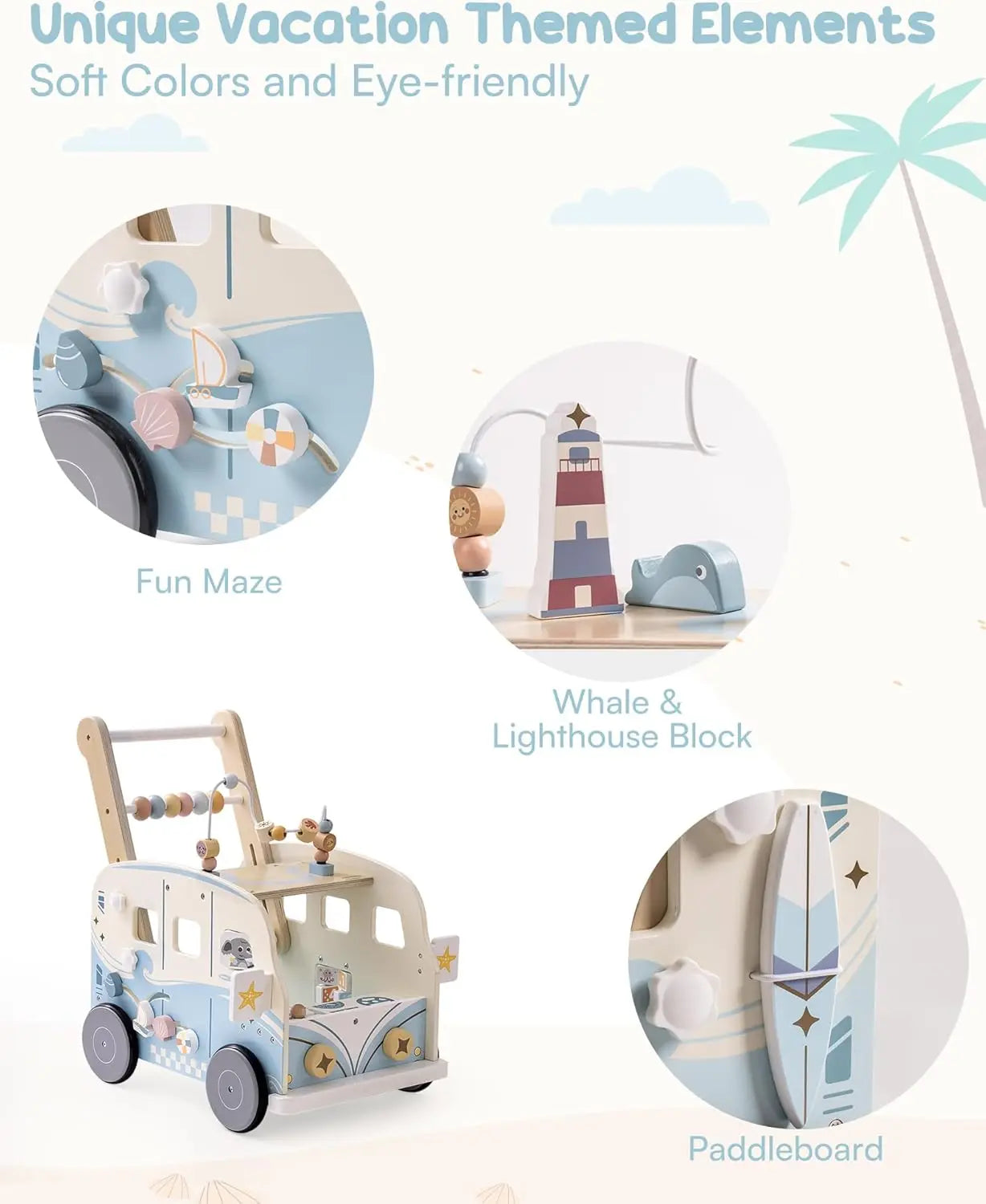
Comparing walker push toy and activity center walker designs — See it in action
Side-by-Side Safety Comparison
| Feature | Wooden Push Walker | Walker Push Toy | Activity Center Walker |
|---|---|---|---|
| Base Stability | High | Medium | Medium–High |
| Speed Control | Excellent with naturally slower movement | Varies by model and wheel design | Good on well-designed models |
| Support for Natural Walking | Excellent | Good | Good |
| Interactive Play | Low–Medium | High | Very High |
| Best For | Early walkers building balance | Confident cruisers who enjoy active play | Babies alternating between play and walking practice |
| Ideal Home Use | Hardwood, tile, or carpet with supervision | Larger open spaces with speed-controlled wheels | Playrooms and supervised indoor areas |
While each design has advantages, a stable push walker that allows babies to control their own movement generally offers the best combination of safety and developmental support. Families interested in encouraging balance, coordination, and confident movement often complement walking practice with products from the Mobility & Training collection.
What Parents Notice After Daily Use
Many parents observe that babies become more comfortable practicing independent steps when using a walker with a stable frame and controlled wheel resistance. Instead of rushing after a lightweight toy, children often take shorter, more deliberate steps as they learn to balance and shift their weight naturally.
Families also report that well-designed push walkers encourage longer periods of confident exploration without making babies feel unstable. Children frequently pause, regain their balance, and continue walking at their own pace rather than relying on momentum.
Although every child develops differently, consistent supervised practice with an appropriately designed push walker can help build confidence while reducing the likelihood of sudden rolling, collisions with furniture, or unnecessary frustration during the early walking stage. These practical observations reinforce why thoughtful safety features matter just as much as engaging toys or decorative design.
How to Choose the Right Walker for Your Baby
The best type of baby walker for development depends on your child's readiness, your home's layout, and the safety features built into the product. If you're deciding between a push walker or stationary walker, consider your baby's current motor skills rather than age alone. Babies who can pull to stand and cruise along furniture often benefit most from a stable push walker that lets them control movement naturally.
- Match the walker to your baby's developmental stage. Choose a push walker only after your baby can stand with support and shows interest in taking assisted steps.
- Test wheel resistance on your flooring. Hardwood, tile, and laminate floors may require slower, resistance-controlled wheels, while carpet generally provides additional traction.
- Check for key safety features. Look for a wide base, sturdy construction, ergonomic handles, rounded edges, and non-toxic materials with smooth finishes.
- Consider your home's layout. Open areas with minimal obstacles provide the safest environment for early walking practice. Ensure there are no stairs, loose rugs, or sharp furniture edges nearby.
- Choose the right level of interaction. Babies who enjoy sensory play may benefit from activity features, while children who are focused on walking often respond well to simpler, stability-focused designs.
Parents comparing a push walker or stationary walker which is safer should remember that no product replaces supervision. A well-designed push walker paired with a safe play environment generally provides excellent support for developing balance and coordination while encouraging independent movement.
For additional developmental ideas, many families also explore Baby Growth & Learning resources to encourage age-appropriate motor skills and confidence.
When and How to Use a Push Walker Safely
Introduce a push walker when your baby can pull up to stand, cruise along furniture, and bear weight comfortably through both legs. These developmental milestones are usually more important than reaching a particular age.
- Always supervise every walking session.
- Use the walker only on flat indoor surfaces away from stairs.
- Keep pathways clear of toys, cords, and furniture that could create tripping hazards.
- Allow frequent breaks if your baby becomes tired or frustrated.
- Inspect wheels and moving parts regularly to ensure they continue operating safely.
Adding soft play mats or rugs in appropriate areas and using safety products from Baby Care Essentials can further improve the play environment while your child practices new walking skills.
A Closer Look at a Safer Wooden Option
A quality wooden push walker combines durability, stability, and controlled movement to support babies as they progress from cruising to independent walking. Its naturally heavier frame helps reduce sudden acceleration, allowing little ones to focus on balance, coordination, and confident steps instead of chasing a fast-moving toy.
Many parents appreciate that wooden designs are built for everyday use, often lasting through multiple stages of development or even younger siblings. If you're looking for a balance-focused option with long-term value, many families consider this wooden push walker because of its sturdy construction and child-friendly design.
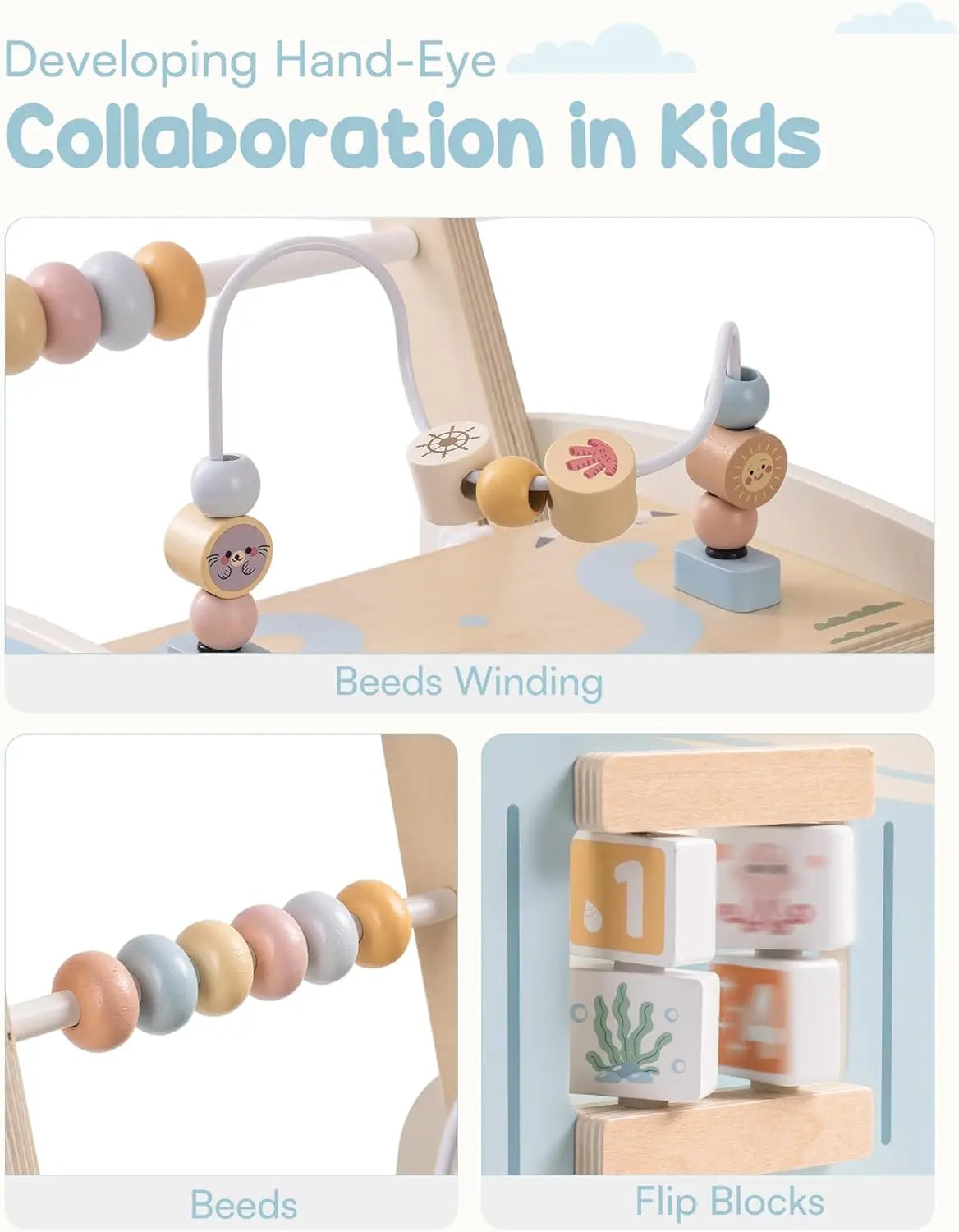
Wooden push walker designed for stability — See it in action
Frequently Asked Questions
Which is safer: a push walker or a stationary walker?
For babies who are ready to practice walking, a well-designed push walker generally supports more natural movement because children control their own pace. Stationary activity centers can provide engaging standing play but are not intended to teach walking.
Are push walkers recommended by pediatricians?
Many pediatric professionals favor push walkers over traditional seated walkers because they encourage natural posture, weight shifting, and balance. Regardless of the walker type, adult supervision and an appropriate developmental stage remain essential.
Can a stationary activity center help babies learn to walk?
A stationary activity center helps strengthen standing endurance and encourages play while upright, but it does not replace opportunities for cruising, floor play, and independent walking practice.
What age is best for a push walker?
Most babies are ready between 9 and 12 months, although readiness depends more on developmental milestones such as pulling to stand, cruising along furniture, and supporting their own weight than on age alone.
Do push walkers improve balance better than seated walkers?
Push walkers encourage babies to shift their own weight, coordinate each step, and maintain upright posture, making them a better choice for practicing balance and developing gross motor skills.
What are the safest alternatives to baby walkers?
Floor play, cruising along stable furniture, activity tables, and supervised push toys all encourage natural movement while helping babies build strength, coordination, and confidence.
Can using the wrong walker delay development?
A poorly designed or inappropriate walker may encourage movement patterns that do not match a baby's developmental stage. Choosing a stable, age-appropriate product and allowing plenty of supervised floor time supports healthy motor development.
How do I know my baby is ready for a push walker?
Your baby is usually ready once they can pull to stand independently, cruise along furniture, maintain good head and trunk control, and show interest in taking supported steps.
Related Guide: Choosing Safe Baby Walker: Best Options Compared





