

Baby Walking Aids That Support Safer First Steps
Do baby walking aids help babies walk sooner?
Baby walking aids can support balance, confidence, and early mobility skills, but they do not make babies walk before they are developmentally ready. A safe walking aid for a baby, such as a walker push toy or wooden push walker, can provide practice with standing, stepping, steering, and coordination when used under supervision. The biggest benefits come from helping babies explore movement naturally rather than rushing milestones.
Safe Walking Aids for Babies: Best Options, Safety Tips & Parent Guide (2026)
⏱ 7 min read
Choosing safe walking aids for babies can feel confusing because every child develops differently. A walker push toy, wooden push walker, or indoor baby walking toy may help babies practice balance and movement, but the safest choice depends on their age, strength, confidence, and walking stage. This guide explains which baby walking aids are worth considering, how they support development, and what safety features parents should look for before buying.
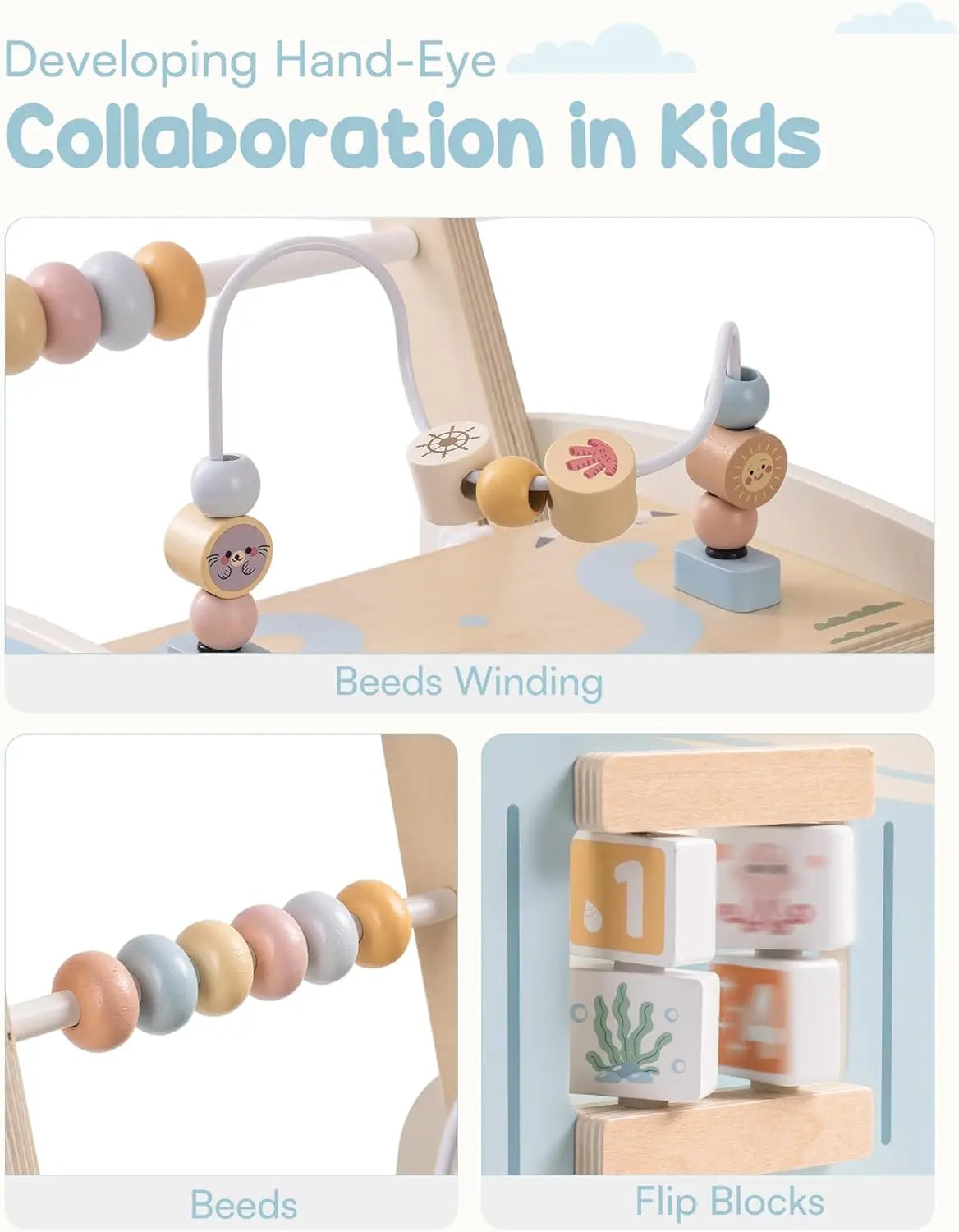
A closer look at how a walker push toy supports balance — See it in action
Best Baby Walking Aids (2026): Top Picks by Developmental Stage
The best baby walking aids should match your baby’s current abilities instead of pushing them toward a milestone too quickly. Parents usually choose based on stability, safety features, indoor space, and how much support their baby needs.
Quick Comparison Table
| Type | Best For | Ideal Stage | Main Benefits | Potential Drawback |
|---|---|---|---|---|
| Walker Push Toy | Babies practicing first steps | Standing and cruising stage | Encourages balance and independent movement | Requires proper wheel resistance |
| Sit-to-Stand Walker | Babies transitioning from sitting to standing | Around 9–12+ months depending on readiness | Supports pulling up and early walking practice | Can be unstable if too lightweight |
| Activity Walker | Babies who enjoy interactive play | Before and during early walking | Combines learning activities with movement | May distract from movement practice |
| Walking Harness | Parents wanting hand support outdoors | Confident standing stage | Helps parents guide movement | Should not replace natural practice |
| Ride-On Walker | Toddlers developing confidence | Walking and sitting balance stage | Adds play value and coordination | Needs more floor space |
Best Push Walker
A push walker is often the most practical walking aid for a baby because it lets children control their own movement. Look for wide bases, adjustable wheel resistance, and handles positioned for comfortable posture.
Best Sit-to-Stand Walker
Sit-to-stand walkers are useful for babies who are learning to pull themselves upright. They provide a stable activity surface before becoming a walker push toy.
Best Activity Walker
An activity walker combines sensory play with movement practice. It can encourage standing, reaching, and coordination while keeping babies engaged.
Best Walking Harness
Walking harnesses may help parents support balance during outdoor practice, but babies still need opportunities to develop independent control.
Best Ride-On Walker
Ride-on walkers are better suited for babies who already have stronger balance and enjoy combining play with movement.
Do Baby Walking Aids Help Babies Walk Sooner?
Baby walking aids can encourage practice, but they do not guarantee earlier walking. Most babies naturally begin walking when they develop enough strength, coordination, balance, and confidence.
Experts including pediatric organizations emphasize that supervised floor play, tummy time, standing practice, and free movement are essential for healthy motor development. A walking aid should support these experiences rather than replace them.
Parents searching for whether are push walkers good for babies should focus on realistic benefits:
- Improved balance practice
- More opportunities for supported stepping
- Greater confidence during movement
- Practice with steering and coordination
For more guidance on milestones, parents can explore Baby Growth & Learning .
Different Types of Baby Walking Aids Explained
Push Walkers
A push walker allows babies to stand behind the toy and move forward at their own pace. A well-designed walker push toy encourages natural stepping while providing support.
Advantages:
- Supports independent movement
- Encourages balance development
- Works well indoors
Limitations:
- Needs controlled wheels
- Requires adult supervision
Sit-to-Stand Walkers
Sit-to-stand models are designed for babies who are learning to move from sitting or crawling into standing positions.
Activity Walkers
These combine educational features with mobility. They can support fine motor skills while babies explore standing and movement.
Walking Harnesses
Harnesses provide guidance but should not be used to pull babies into walking before they are ready.
Ride-On Walkers
Ride-on designs combine sitting, pushing, and play. They are generally better for older babies and toddlers with stronger balance.
Push Walker vs Stationary Walker: Which Is Safer?
The difference between a push walker and stationary walker is how they encourage movement. A push walker moves with the baby, while a stationary walker keeps activities in one place.
| Feature | Push Walker | Stationary Walker |
|---|---|---|
| Movement | Encourages walking practice | Provides stationary play |
| Development | Supports balance and coordination | Supports reaching and interaction |
| Safety Needs | Requires wheel control and supervision | Requires stable design |
For many families, a properly designed push walker offers more natural movement practice because babies control the pace themselves.
When Is a Baby Ready for a Walking Aid?
The right time to introduce a walking aid depends more on developmental readiness than age. Many babies show interest between 9–12 months, but some are ready earlier or later.
Signs your baby may be ready include:
- Pulling up independently
- Standing while holding furniture
- Strong head and body control
- Showing interest in moving forward
Parents should wait if a baby cannot sit steadily, struggles with balance, or shows discomfort during standing practice.
How to Choose the Right Baby Walking Aid
Wheel Resistance
Adjustable wheel resistance helps prevent sudden movement. This is one of the most important features when selecting safe infant walkers.
Stability and Base Width
A wide base lowers the chance of tipping. Wooden push walkers often provide extra stability because of their heavier construction.
Braking Systems
Some models include wheel locks or resistance controls that help babies learn at a safer pace.
Materials and Foldability
Choose non-toxic finishes, smooth surfaces, rounded edges, and designs that are easy to store. Parents interested in natural options often compare choices through Wooden Toys Guide .
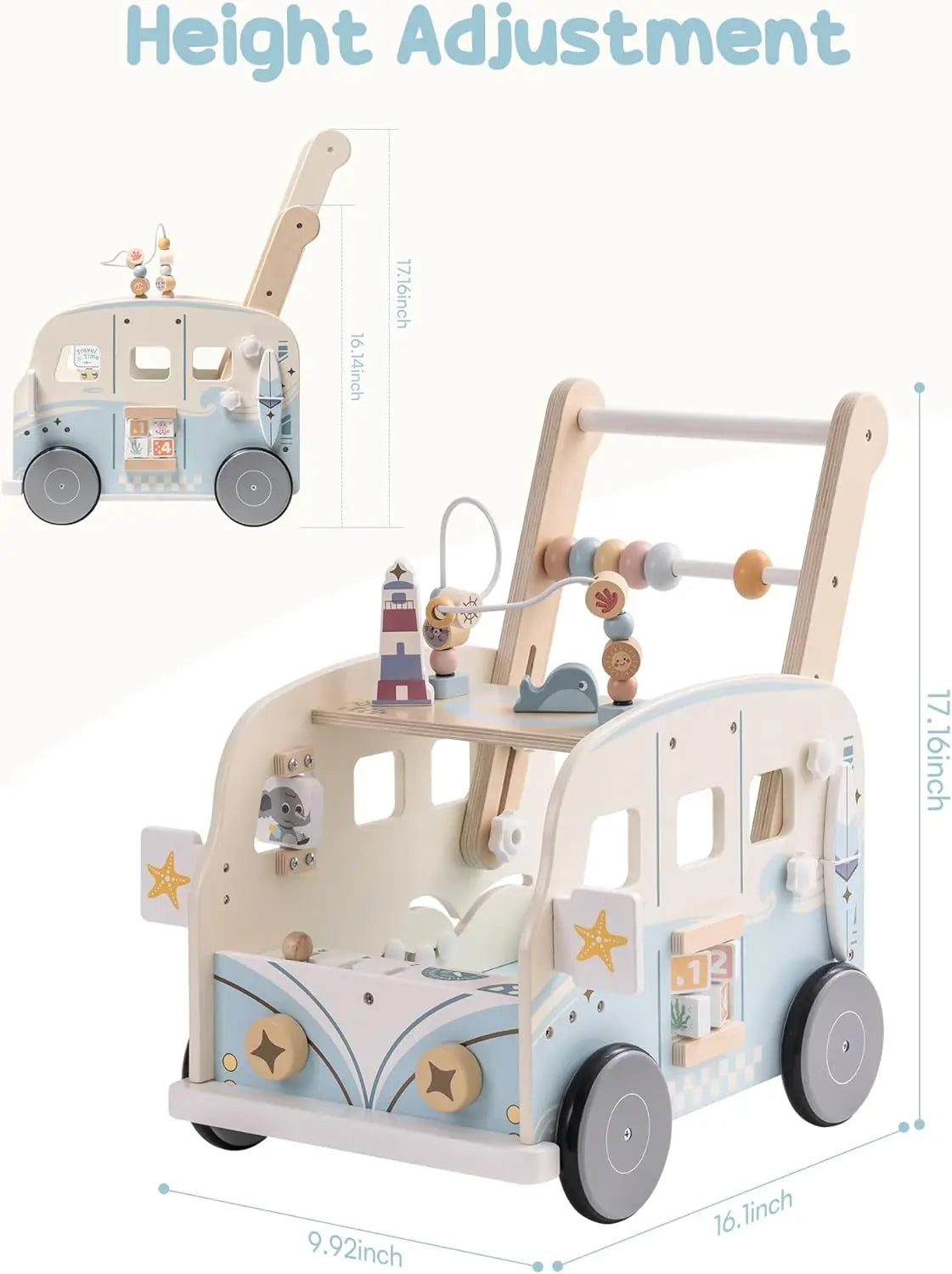
Mid-play with an indoor baby walking toy — See it in action
Are Push Walkers Safe? Benefits and Potential Drawbacks
Parents often ask, “are push walkers safe?” The answer depends on product quality and how they are used. A safe push walker can support movement practice, but poor designs or unsupervised use may increase risks.
Benefits:
- Encourages confidence
- Supports coordination
- Creates opportunities for independent exploration
Potential concerns:
- Using one before a baby is ready
- Allowing access near stairs or unsafe areas
- Choosing lightweight designs that roll too quickly
Parents asking “are push walkers bad for babies” should know that the product design and usage habits matter more than the category itself.
Comparison Table: Recommended Baby Walking Aids
| Product Type | Age Range | Materials | Indoor/Outdoor | Price Range |
|---|---|---|---|---|
| Wooden Push Walker | 9–18+ months depending on ability | Wood, non-toxic finishes | Best indoors | Mid-range |
| Plastic Activity Walker | 6–18 months depending on design | BPA-free plastic | Indoor | Budget to mid-range |
| Walking Harness | Standing stage and beyond | Fabric materials | Indoor/outdoor | Budget |
In-Depth Review: Best Wooden Push Walker
A wooden push walker remains one of the most popular choices for parents who want stability, durability, and a classic design. The Wooden Baby Walker is designed to support early movement practice with a sturdy frame, comfortable handle, and indoor-friendly wheels.
Who it is best for:
- Babies practicing standing and first steps
- Families wanting a durable indoor walking aid
- Parents who prefer natural materials
Pros:
- Wide base for improved stability
- Durable wooden construction
- Supports natural walking practice
Cons:
- Heavier than lightweight plastic models
- Not designed for rough outdoor surfaces
See full details here: Wooden Baby Walker
Common Mistakes Parents Make When Using Walking Aids
- Using too early: Wait until your baby shows standing and balance readiness.
- Poor supervision: Always monitor movement, especially around furniture and stairs.
- Incorrect setup: Adjust handles and wheels before use.
- Ignoring safety guidelines: Check the product regularly for loose parts or damage.
Cleaning and Maintaining Baby Walking Aids
Regular maintenance keeps baby walking aids safer and longer lasting.
- Wipe wooden surfaces with a damp cloth and dry completely.
- Remove dust from wheels regularly.
- Check screws, handles, and moving parts before use.
- Store in a dry area away from moisture.
Frequently Asked Questions
Are baby push walkers safe?
Yes, baby push walkers can be safe when they have stable designs, controlled wheels, and are used with adult supervision.
Are push walkers good for babies?
Push walkers can be helpful for babies who are already showing readiness for standing and stepping practice.
Are push walkers bad for babies?
Push walkers are not automatically harmful, but using them too early or without supervision can create safety concerns.
What is the difference between a push walker and a stationary walker?
A push walker moves with the baby and supports walking practice, while a stationary walker focuses on seated activities and play.
What is the safest walking aid for a baby?
The safest option is one with a wide base, controlled wheels, non-toxic materials, and a design appropriate for your baby’s developmental stage.
When should babies start using walking aids?
Many babies begin showing interest around 9–12 months, but readiness signs are more important than age alone.
Can baby walking aids be used outdoors?
Most indoor baby walking toys work best on flat indoor surfaces. Always check manufacturer recommendations before outdoor use.
How do I clean a wooden push walker?
Clean a wooden push walker with a soft damp cloth, avoid soaking the wood, and inspect wheels and joints regularly.
Related Guide: Push Along Toddler Walker Review Parents Trust Most





