

Safe Wooden Toys for Children: What to Check Before You Buy
Are safe wooden toys for children really safe?
Safe wooden toys for children are designed to reduce common risks like toxic paint, sharp edges, and choking hazards. When properly checked for smooth finishes, non-toxic coatings, and sturdy construction, wooden toys—especially items like a wooden toy kitchen and accessories—can offer durable, child-safe play that supports healthy development and long-lasting use.
Safe Wooden Toys for Children: How to Check Before Play
Safe wooden toys for children are often trusted for their natural feel and timeless design, but not every wooden toy is automatically safe. From hidden splinters to unsafe paints, small details matter. This guide walks you through simple, parent-friendly checks so you can confidently choose items like a wooden toy kitchen and accessories that support joyful, worry-free play.
⏱ 7 min read
Have you ever handed your child a wooden toy and wondered, “Is this really safe?” Many parents assume wood equals harmless, yet safety depends on how that toy is made, finished, and maintained. Let’s break down exactly what to look for—step by step—before play begins.
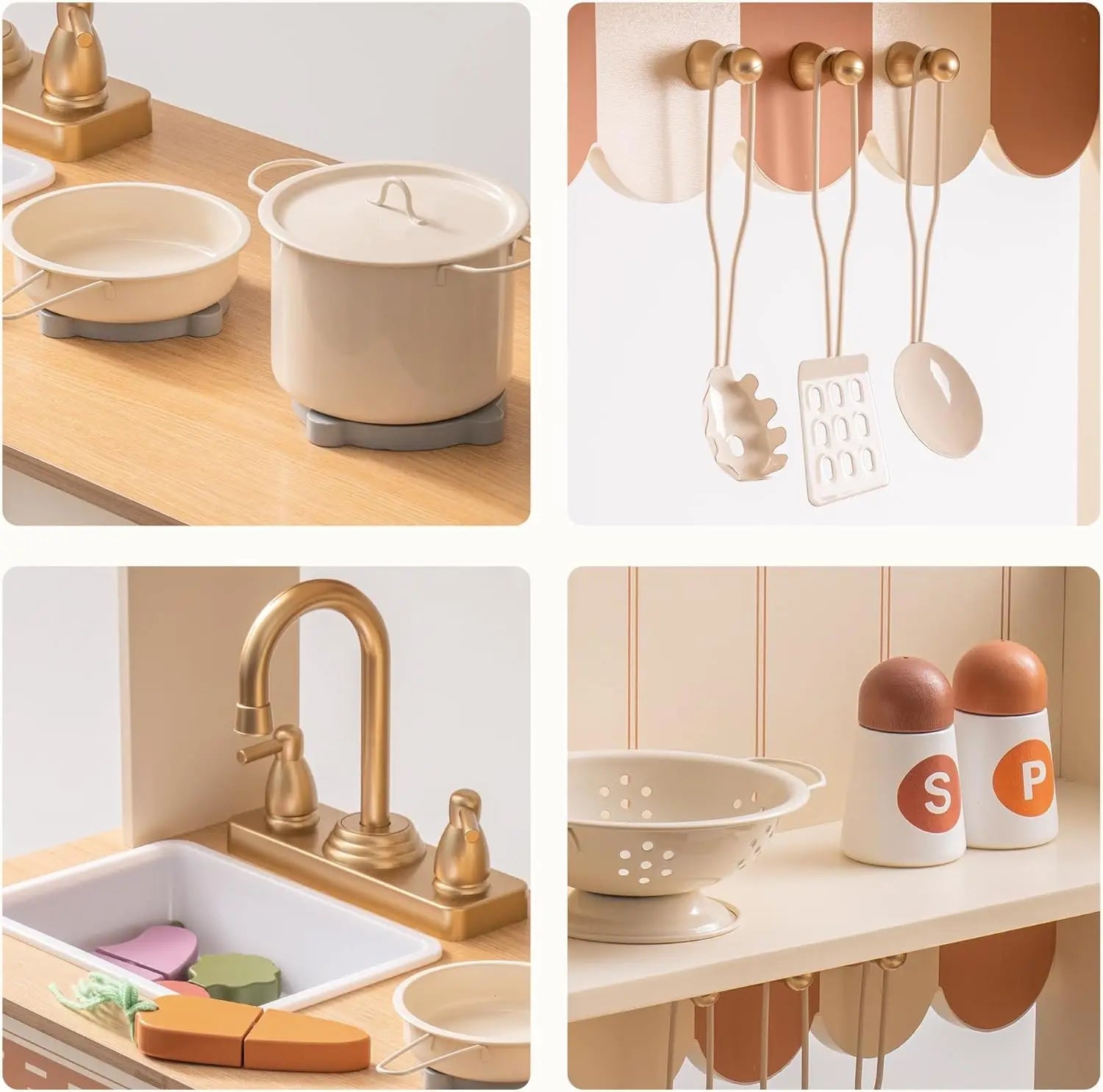
Safe wooden toys for children like a wooden toy kitchen and accessories support calm, imaginative play See it in action
Why parents choose wooden toys for everyday play
Wooden toys have a calming, sturdy feel that many families love. They’re often chosen to reduce screen time, encourage imagination, and support hands-on learning. Parents browsing Baby Growth & Learning collections frequently gravitate toward wooden toys because they blend play with developmental benefits.
- Encourage open-ended, creative play
- Feel solid and long-lasting compared to plastic
- Fit naturally into home environments
- Support fine motor skills and role-play
However, these benefits only hold true when the toy is genuinely safe for children.
How to check materials and paint safety before play
Safe wooden toys for children should always start with the right materials. Not all wood finishes are created equal, and paint safety is one of the biggest concerns for parents.
Direct answer: Safe wooden toys for children use solid wood or high-quality plywood combined with non-toxic, water-based paints. These finishes reduce exposure to harmful chemicals while keeping colors vibrant and resistant to chipping during daily play.
- Look for smooth, sealed surfaces without strong odors
- Check that paint does not flake when lightly rubbed
- Avoid toys with glossy, sticky finishes
- Choose toys designed specifically for children’s use
Parents focused on home safety often explore Health & Safety solutions alongside toy purchases to create a safer overall play environment.
Why smooth edges matter for little hands
Run your fingers slowly along every edge of the toy. This simple habit can prevent countless small injuries.
- No rough corners or visible splinters
- Even sanding across all surfaces
- No cracks forming at joints
For larger items like a wooden toy kitchen and accessories, smooth edges are especially important because children lean, climb, and explore with their whole bodies.
How to assess size and choking risks at home
Even wooden toys can pose risks if accessories are too small. Pretend food, knobs, or removable parts should be sized appropriately for young children.
Direct answer: Safe wooden toys for children avoid small detachable parts that fit entirely into a child’s mouth. Accessories should be large enough to grasp easily, reducing choking risks during imaginative play.
- Test small pieces against your child’s palm
- Avoid loose components for toddlers
- Store accessories together to prevent loss
Families often pair toy safety with tools from Monitoring Devices to keep an extra eye on active playtimes.
What makes a wooden toy kitchen stable and durable
A wobbly toy kitchen can quickly turn playtime into frustration—or worse, a safety hazard.
Direct answer: A stable wooden toy kitchen features a wide base, reinforced joints, and balanced weight distribution. These elements keep the playset upright during active use and help it withstand daily play without tipping or loosening.
| Feature | Why It Matters |
|---|---|
| Wide base | Prevents tipping during pretend cooking |
| Thick panels | Adds strength and long-term durability |
| Secure fittings | Keeps accessories firmly attached |

Choosing a stable wooden toy kitchen and accessories helps ensure safe wooden toys for children See it in action
How to choose the best wooden kitchen playset for your child
The best wooden kitchen playset balances safety, durability, and engagement. Parents often feel overwhelmed by choices, but focusing on a few core factors makes decisions easier.
- Simple, realistic design that encourages role-play
- Accessories sized for small hands
- Sturdy construction for multi-year use
- Easy-to-clean surfaces
Many families find that investing once in a well-built option—such as this wooden kids kitchen playset—reduces the need for frequent replacements and keeps play consistent.
Parents browsing Sensory Toys often pair kitchen playsets with tactile items to expand imaginative play safely.
Care tips to keep wooden toys safe over time
Even safe wooden toys for children need regular care to stay that way.
- Wipe surfaces weekly with a damp cloth
- Check for loose screws or fittings monthly
- Store toys away from moisture
- Remove damaged accessories immediately
Routine checks take just minutes and help maintain both safety and appearance.
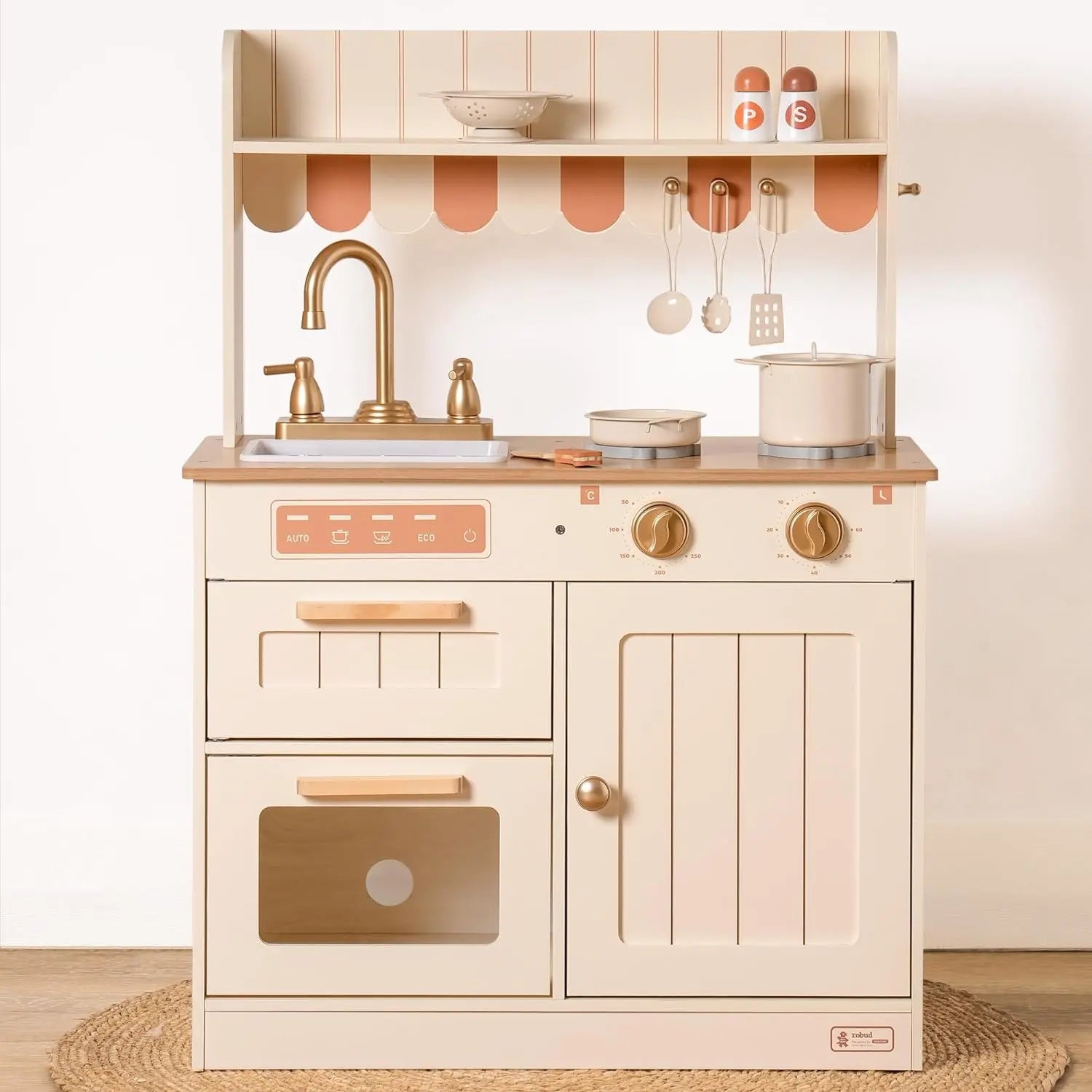
Well-maintained wooden toy kitchen and accessories remain safe wooden toys for children See it in action
Quick answers parents ask most
How often should I inspect wooden toys?
Check wooden toys every few weeks for cracks, loose parts, or rough edges, especially if they’re used daily.
Are wooden toy kitchens suitable for toddlers?
Yes, when designed with large accessories, smooth edges, and stable bases, wooden toy kitchens can be safe for supervised toddler play.
Do wooden toys last longer than plastic ones?
High-quality wooden toys often last years, making them a durable option for growing families.
Related Guide: How Pretend Kitchens Help Kids Learn Through Play
UPGRADE PLAN { "outline": [ { "action": "MODIFY", "h2": "Safe wooden toys for children: Are they really safe?", "h3": [], "focus": [ "Explain why safety depends on design and manufacturing", "Address common misconceptions about wooden toys", "Introduce key safety standards and evaluation criteria", "Set expectations for parents before buying" ], "keywords": [ "safe wooden toys for children", "safe wooden toys", "wooden toy safety" ] }, { "action": "MODIFY", "h2": "Wooden toy safety checklist: What to inspect before buying", "h3": [ "Check materials and wood type", "Choose non-toxic paints and finishes", "Inspect construction quality and smooth edges", "Verify age recommendations and certifications" ], "focus": [ "Hardwood vs softwood", "Non-toxic finishes and adhesives", "Safety certifications and labels", "Overall build quality" ], "keywords": [ "wooden toy safety checklist", "wooden toy safety features", "non-toxic wooden toys", "wooden toy safety" ] }, { "action": "ADD", "h2": "Hazardous materials and warning signs to avoid", "h3": [], "focus": [ "Lead and toxic paints", "BPA, phthalates and formaldehyde-based adhesives", "Splinters, cracks and loose parts", "Strong chemical odors and poor finishing" ], "keywords": [ "wooden toy safety", "non-toxic wooden toys" ] }, { "action": "MODIFY", "h2": "Why smooth edges, size and construction matter", "h3": [ "Prevent splinters and pinch points", "Avoid choking hazards with age-appropriate sizing" ], "focus": [ "Rounded edges", "Secure joints", "Small parts risks", "Durability under normal play" ], "keywords": [ "wooden toy safety features", "safe wooden toys" ] }, { "action": "ADD", "h2": "Age-specific wooden toy safety recommendations", "h3": [ "Infants and babies", "Toddlers", "Preschoolers and older children" ], "focus": [ "Developmentally appropriate toys", "Supervision needs", "Common hazards by age", "Matching toy complexity to skill level" ], "keywords": [ "safe wooden toys for children", "wooden toy safety" ] }, { "action": "REMOVE", "h2": "What makes a wooden toy kitchen stable and durable", "h3": [], "focus": [], "keywords": [] }, { "action": "REMOVE", "h2": "How to choose the best wooden kitchen playset for your child", "h3": [], "focus": [], "keywords": [] }, { "action": "ADD", "h2": "Toy box safety features parents should not overlook", "h3": [], "focus": [ "Lid support mechanisms", "Ventilation gaps", "Finger-pinch protection", "Stable construction" ], "keywords": [ "toy box safety features", "are there safety features to look for in a wooden toy box" ] }, { "action": "MODIFY", "h2": "How to clean, inspect and maintain wooden toys safely", "h3": [ "Routine inspection checklist", "When to repair or discard a toy" ], "focus": [ "Safe cleaning methods", "Signs of wear", "Storage practices", "Regular maintenance" ], "keywords": [ "wooden toy safety checklist", "wooden toy safety" ] }, { "action": "MODIFY", "h2": "Frequently asked questions", "h3": [ "How often should I inspect wooden toys?", "Are non-toxic wooden toys completely chemical-free?", "What certifications should safe wooden toys have?", "Are there safety features to look for in a wooden toy box?", "When should a damaged wooden toy be discarded?" ], "focus": [ "Certifications", "Maintenance", "Toy box safety", "Replacement guidance" ], "keywords": [ "safe wooden toys", "wooden toy safety", "toy box safety features" ] } ], "internal_links": [ "How to choose age-appropriate toys", "Toy storage and organization safety", "Pretend play safety tips", "Non-toxic materials for children's products", "Cleaning and maintaining children's toys", "Childproofing your playroom" ], "faq": [ "What certifications indicate a wooden toy is safe?", "How can I tell if paint on a wooden toy is non-toxic?", "Are handmade wooden toys as safe as factory-made ones?", "What type of wood is best for children's toys?", "How often should wooden toys be inspected?", "Are there safety features to look for in a wooden toy box?", "When should I replace a damaged wooden toy?" ], "trim": [ "Generic benefits of wooden toys without safety guidance", "Product-specific discussion centered on wooden toy kitchens", "Broad eco-friendly claims unrelated to child safety", "Repetitive durability comparisons with plastic toys" ] } Approved linked products: - wooden kids kitchen playset (/products/wooden-kids-kitchen-playset) Product Rules - Keep all approved products. - Only approved products may contain affiliate links. - You may add real competitor products when useful. - Competitor products must not contain links unless already present. - Only create comparison tables when they genuinely improve the article. RULES - Apply every instruction in the Upgrade Plan. - Keep all existing affiliate links unchanged. - Keep all existing internal links unchanged. - Keep all existing image URLs unchanged. - Preserve sections such as Related Articles, Related Posts and Recommended Reading. - Avoid duplicate headings. - Insert new sections only where specified. - Improve clarity, topical coverage, EEAT and readability. - Expand weak sections only when required. - Use natural keyword placement. - Keep semantic HTML clean. YEAR UPDATE If visible article text contains "2005", replace it with "2026". Do not modify years inside: - URLs - href attributes - image filenames OUTPUT REQUIREMENTS Return ONLY the final upgraded HTML article. The output must be valid HTML and ready to publish. Do NOT return: - Markdown - Explanations - Notes - Code fences - JSON - XML Return the HTML beginning with the first HTML element and ending with the last HTML element.





