

Science Experiments Electricity: 18 Fun & Safe Projects for Kids
Science Experiments Electricity: 18 Fun & Safe Projects for School and Home
Electricity powers lights, toys, computers, and countless everyday devices, yet children cannot see it in action. One of the most effective ways to understand how electricity works is through hands-on science experiments electricity activities that transform abstract ideas into memorable learning experiences at home or in the classroom.
By exploring balloons, batteries, wires, LEDs, magnets, and simple circuits, kids discover how static electricity, electric current, conductors, insulators, voltage, and electromagnetism work together. Instead of simply reading scientific definitions, they observe real results, ask questions, test predictions, and develop practical STEM skills.
This guide features 18 fun and safe electricity science experiments for kids, arranged from beginner-friendly static electricity demonstrations to introductory circuit-building and electromagnet projects. Each activity is designed to reinforce key scientific concepts while encouraging curiosity, creativity, and problem-solving.
What Kids Learn from Electricity Science Experiments
Science experiments on electricity give children opportunities to investigate, observe, and explain how electrical energy behaves. Rather than memorizing facts, learners build confidence by testing ideas and seeing immediate results from their own experiments.
Key Electricity Concepts Kids Will Discover
- Static electricity – electric charges created through friction that can attract or repel objects.
- Electric circuits – complete pathways that allow electrical current to travel.
- Conductors and insulators – materials that either allow electricity to pass through easily or resist its flow.
- Voltage – the electrical force that pushes electrons through a circuit.
- Electric current – the movement of electrical charge from one point to another.
- Energy transfer – changing electrical energy into light, heat, sound, or motion.
- Electromagnetism – the connection between electricity and magnetic fields that powers many everyday technologies.
These foundational concepts introduce children to the principles behind electronics, engineering, robotics, and physics while strengthening observation, logical reasoning, and problem-solving skills.
Basic Materials for Electricity Science Projects
Most electricity experiments require only inexpensive household supplies and low-voltage components, making them ideal for classrooms, homeschool lessons, science clubs, and family STEM activities.
Common Classroom Electricity Experiment Supplies
- Balloons
- Plastic combs
- Copper wire
- AA batteries or coin batteries
- LED lights
- Paper clips
- Magnets
- Aluminum foil
- Lemons or potatoes
- Small electric motors
- Electrical tape
- Alligator clip wires
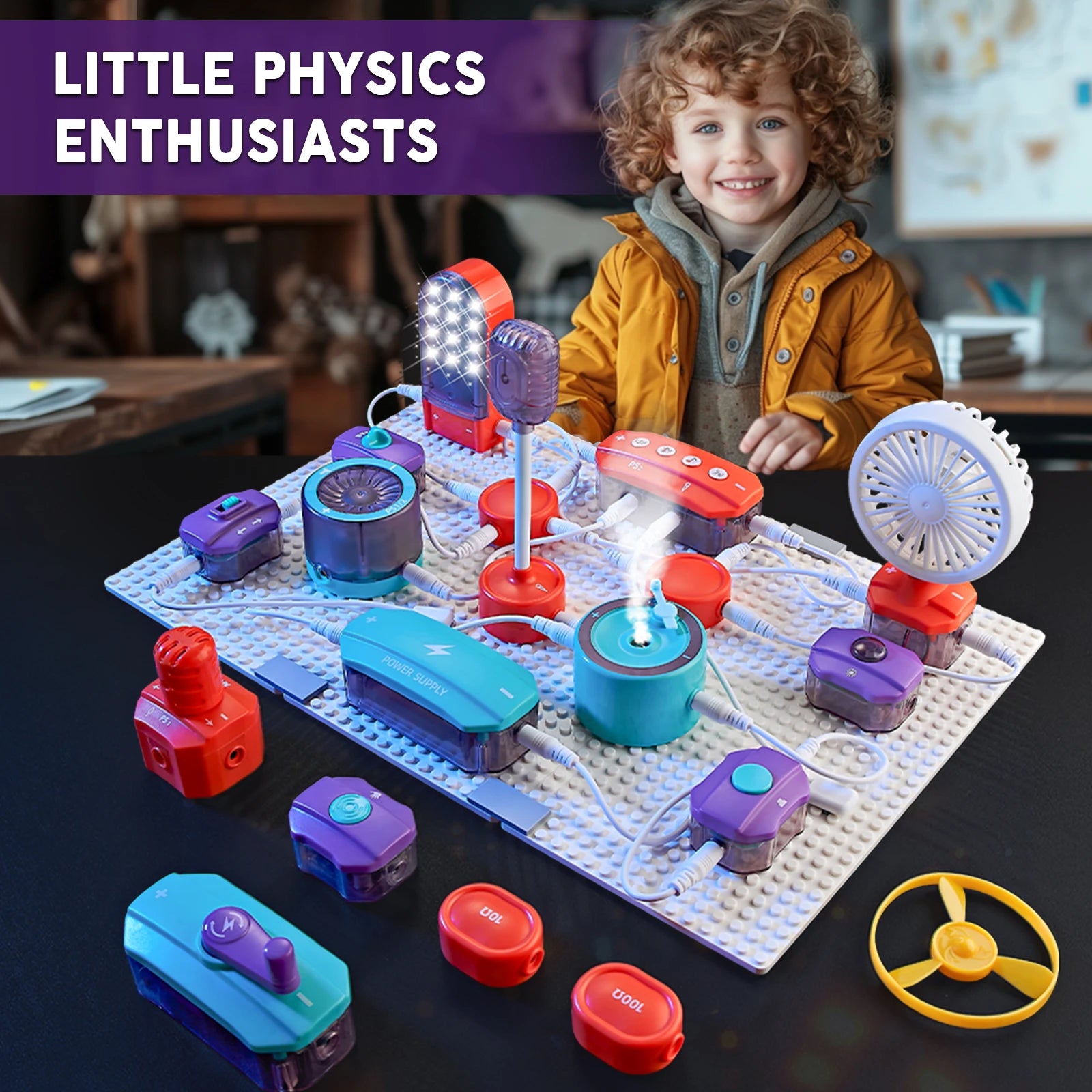
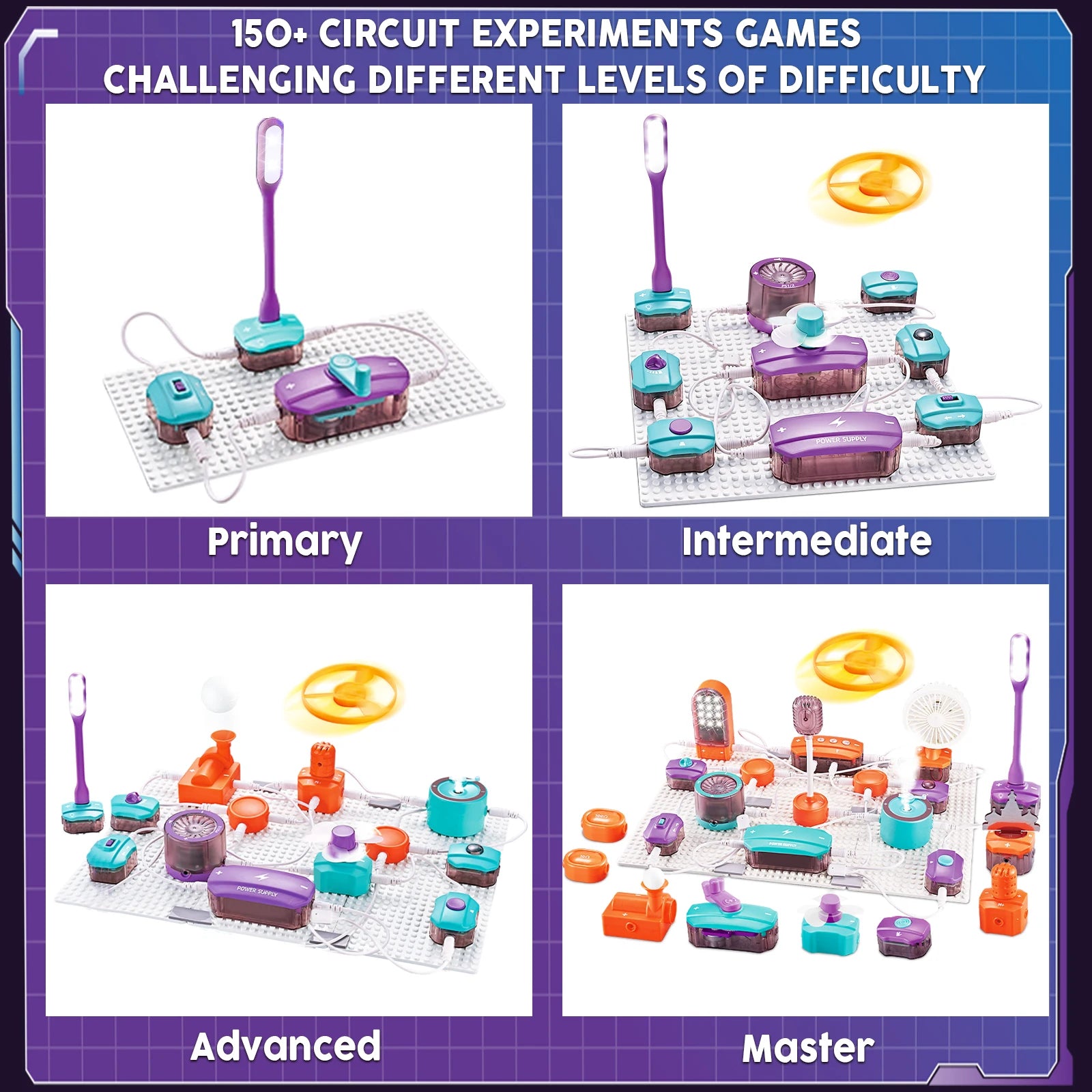
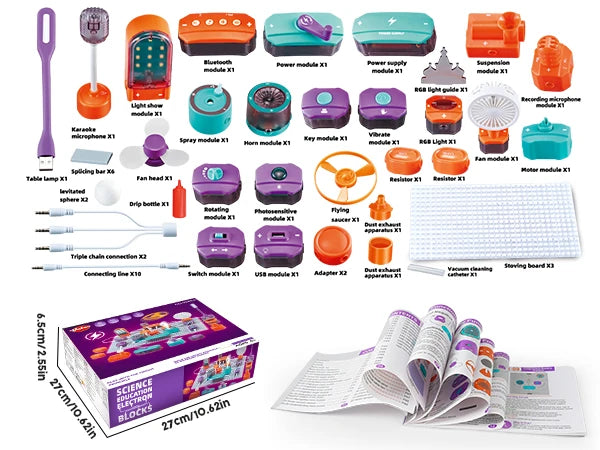
Keeping these reusable supplies organized allows students to complete multiple electricity experiments with minimal setup. For classrooms and homeschool programs looking for ready-to-use components, the STEM Circuit Kit for Kids – 150+ DIY Electronics Projects includes switches, motors, LEDs, wires, battery holders, and other low-voltage parts designed to support safe, hands-on STEM learning.
Teachers and parents can also explore additional educational resources in the Baby Growth & Learning collection for STEM activities that encourage creativity, critical thinking, and scientific exploration.

18 Fun Electricity Science Experiments for Kids
1. Bending Water with Static Electricity
Difficulty: Easy | Time: 5 minutes
Materials
- Balloon
- Thin stream of running water
Steps
- Inflate a balloon and tie it securely.
- Rub it against dry hair or a wool sweater for about 20 seconds.
- Turn on the faucet so only a narrow stream of water flows.
- Slowly move the balloon close to the water without touching it.
Why It Works
Rubbing the balloon creates a static electric charge. Polar water molecules are attracted to that charge, causing the water stream to bend toward the balloon.
2. Make a Balloon Stick to the Wall
Difficulty: Easy | Time: 2 minutes
Materials
- Balloon
- Smooth wall
How to Do It
Rub the balloon on dry hair for several seconds, then gently press it against a clean wall. The balloon remains attached because opposite electrical charges attract each other.
3. Pepper and Salt Static Electricity Trick
Difficulty: Easy | Time: 5 minutes
Mix salt and pepper on a plate. Charge a balloon or plastic spoon by rubbing it on your hair, then hold it just above the mixture. The lighter pepper flakes usually jump toward the charged object first, demonstrating static electricity in action.
4. Homemade Electroscope
Difficulty: Easy | Time: 15 minutes
Materials
- Glass jar
- Aluminum foil
- Paper clip
Why It Works
Two thin foil strips suspended inside the jar separate when a charged object comes close. Both strips receive the same electrical charge and repel one another, making electric charge visible.
5. Simple Lemon Battery
Difficulty: Intermediate | Time: 10 minutes
Insert a copper coin and a galvanized zinc nail into a lemon without letting them touch. Connect wires from each metal to a small LED or voltmeter. The acidic juice acts as an electrolyte, allowing a chemical reaction that generates a small electrical current.
6. Potato Battery Experiment
Difficulty: Intermediate | Time: 10 minutes
Replace the lemon with a potato and repeat the same setup. Although the voltage is modest, the potato also serves as an electrolyte, showing that different fruits and vegetables can help produce electricity through chemical reactions.
7. Light an LED with a Coin Battery
Difficulty: Easy | Time: 5 minutes
Touch the longer LED leg to the positive side of a coin battery and the shorter leg to the negative side. When both connections are made correctly, the closed circuit allows current to flow and the LED lights immediately.
8. Build a Simple Electric Circuit
Difficulty: Easy | Time: 10 minutes
Materials
- Battery
- Copper wire
- LED
Connect one wire from the battery's positive terminal to the LED. Use another wire to connect the LED back to the negative terminal. This complete loop allows electric current to flow continuously through the circuit.
9. Make a Paper Clip Switch
Difficulty: Easy | Time: 10 minutes
Fasten a paper clip with a brass fastener so it can pivot between two metal contacts. Rotating the paper clip closes or opens the circuit, demonstrating how switches control electrical flow.
10. Conductors vs Insulators Test
Difficulty: Easy | Time: 15 minutes
Place different materials such as a coin, aluminum foil, plastic spoon, rubber eraser, or pencil into a simple circuit. If the LED lights, the material conducts electricity; if it stays off, the material acts as an insulator.
11. Build a Battery-Powered Fan
Difficulty: Intermediate | Time: 20 minutes
Connect a small DC motor to a battery and attach lightweight paper blades to the motor shaft. As electricity powers the motor, electrical energy is converted into mechanical motion.
12. Simple Electric Motor
Difficulty: Intermediate | Time: 30 minutes
Create a copper wire coil, position it between magnets, and connect it to a battery. The interaction between magnetic fields and electric current produces rotational movement, illustrating the basic principle used in electric motors.
13. Make an Electromagnet
Difficulty: Intermediate | Time: 15 minutes
Wrap insulated copper wire around an iron nail and connect the wire to a battery. Current flowing through the coil creates a temporary magnetic field that magnetizes the nail.
14. Magnetic Paper Clip Pickup Challenge
Difficulty: Intermediate | Time: 15 minutes
Use the homemade electromagnet to lift paper clips. Experiment by increasing the number of wire turns or changing the battery to discover which setup creates a stronger magnetic field.
15. Build a Buzzing Buzzer
Difficulty: Advanced Beginner | Time: 20 minutes
Create a simple electromagnet circuit with a flexible metal strip. As the strip repeatedly makes and breaks contact, it vibrates rapidly to produce a buzzing sound.
16. Human Circuit Experiment
Difficulty: Easy | Time: 10 minutes
Students hold hands while the first and last person touch the terminals of a low-voltage battery-powered circuit designed for classroom demonstrations. When everyone forms a complete loop, the circuit closes and the LED lights.
17. Foil Boat Motor Challenge
Difficulty: Advanced Beginner | Time: 30 minutes
Build a lightweight aluminum foil boat and power it with a small battery-operated motor. Test different boat shapes and weight distributions to learn how propulsion, balance, and design affect performance.
18. Build a Simple Flashlight
Difficulty: Intermediate | Time: 20 minutes
Assemble a battery, LED, wires, and a simple switch inside a cardboard tube. Completing the circuit turns the LED into a working flashlight while demonstrating a practical application of electric circuits.
Electricity Experiment Progression Guide
| Level | Experiment Type | Key Concept | Recommended Activities |
| Beginner | Static Electricity | Electric charge and attraction | Bending water, balloon on wall, pepper and salt |
| Intermediate | Simple Circuits | Current flow and closed circuits | Coin battery LED, paper clip switch, conductors test |
| Advanced | Energy Conversion & Electromagnetism | Motors, magnetic fields, electrical engineering basics | Battery-powered fan, electric motor, electromagnet, buzzer |
This progression helps teachers and parents introduce science projects related to electricity in a logical sequence, allowing children to master one concept before moving to more advanced electric science projects. For guided learning with reusable components, the STEM Circuit Kit for Kids provides structured activities that support every stage of this learning pathway.
How to Explain Electricity to Kids Using Experiments
Simple Ways to Explain Electric Current and Voltage
One of the easiest ways to explain electricity science experiments to children is by comparing electricity to water moving through pipes. This familiar example helps young learners visualize how electrical energy travels even though it cannot be seen.
- Voltage = the water pressure that pushes water through a pipe.
- Current = the amount of water flowing through the pipe.
- Circuit = a complete loop of piping that allows continuous flow.
- Switch = a valve that starts or stops the flow.
- Battery = the pump that provides the pressure needed to move electricity.
After children build a simple circuit or light an LED, they can easily connect this analogy to what they observed. When the circuit is complete, electricity flows just as water flows through an unbroken pipe. If there is a gap, the flow stops and the light turns off.
Static Electricity vs Current Electricity
Many science experiments electricity activities introduce two different forms of electricity. Understanding the difference helps children connect simple demonstrations with everyday technology.
| Static Electricity | Current Electricity |
|---|---|
| Builds up on the surface of an object. | Flows continuously through a complete circuit. |
| Usually created by rubbing two materials together. | Powered by batteries or other electrical sources. |
| Produces quick attractions, repulsions, or tiny sparks. | Powers lights, motors, buzzers, and electronic devices. |
| Examples: balloon sticking to a wall, bending water. | Examples: LED circuits, motors, flashlights, electromagnets. |
Encourage children to identify which type of electricity each experiment demonstrates. This simple comparison reinforces the scientific concepts introduced throughout the activities.
Conductors and Insulators Made Simple
Another important lesson from electricity science experiments is learning why some materials allow electricity to pass while others do not.
- Conductors allow electric current to flow easily. Examples include copper, aluminum, steel, and many other metals.
- Insulators resist electrical flow and help keep people safe. Common examples include plastic, rubber, glass, dry wood, and ceramic.
A conductors-versus-insulators experiment lets children test different household materials and predict whether an LED will light. Making observations, recording results, and discussing why each material behaves differently strengthens scientific thinking while reinforcing the concept through hands-on learning.
Safety Tips for Electricity Experiments with Kids
Safe Voltage Levels for School Science Projects
Most classroom electricity activities are designed to use low-voltage power sources, making them appropriate for supervised learning. Following a few simple safety rules helps ensure every experiment remains both educational and safe.
- Use only low-voltage batteries between 1.5V and 9V.
- Never connect classroom experiments to household wall outlets.
- Always supervise younger children during electrical activities.
- Inspect wires and battery holders for damage before use.
- Keep liquids away from powered circuits unless the experiment specifically studies electrochemical batteries.
- Disconnect batteries when an experiment is finished to prevent overheating.
- Work on a clean, dry, non-metallic surface with adequate lighting.
Educational STEM kits designed for children typically use low-voltage components and are manufactured with age-appropriate safety considerations. Adult guidance remains essential, especially when introducing new tools, batteries, or electronic components.
Printable Classroom Materials List
Reusable Supply Checklist
Preparing materials in advance makes classroom demonstrations, homeschool lessons, and group STEM activities more efficient. Many of these supplies can be reused across multiple simple electricity projects throughout the school year.
- Balloons
- LED lights
- AA batteries
- Coin batteries
- Alligator clip wires
- Copper wire
- Electrical tape
- Magnets
- Paper clips
- Aluminum foil
- Small DC motors
- Plastic combs
- Lemons or potatoes for battery experiments
- Safety scissors
- Storage containers for reusable components
Storage Tip: Keep batteries, LEDs, wires, switches, and magnets sorted in labeled containers so students can quickly set up and clean up after each activity. Reusing components helps reduce classroom costs while keeping supplies organized.
Additional STEM learning resources are available in the Baby Growth & Learning Tips blog and the Sensory Toys collection, both of which encourage hands-on exploration and creative problem-solving.
Frequently Asked Questions
What is the easiest electricity experiment for beginners?
The balloon static electricity activity is one of the simplest experiments for young learners. It requires only a balloon and demonstrates how electric charges can attract lightweight objects or even bend a thin stream of water.
Are electricity experiments safe for kids at home?
Yes, provided they use low-voltage batteries, follow adult supervision, and never involve household electrical outlets. Simple battery-powered circuits are appropriate for most beginner STEM activities.
What materials are needed for simple electricity projects?
Most projects require inexpensive supplies such as batteries, LEDs, copper wire, balloons, magnets, paper clips, aluminum foil, and alligator clip leads. These materials can be reused for many different experiments.
How do you explain electric circuits to children?
A helpful comparison is to imagine electricity flowing like water through a closed loop of pipes. The battery provides the push, the wires form the path, and the switch controls whether electricity can flow.
What is the difference between static electricity and current electricity?
Static electricity is a buildup of electric charge on an object's surface, while current electricity flows continuously through a complete circuit powered by a source such as a battery.
Which electricity science experiments are best for classrooms?
Static electricity demonstrations, LED circuit building, conductor testing, paper clip switches, electromagnets, and simple motor projects all work well because they are inexpensive, repeatable, and clearly demonstrate core scientific concepts.
Conclusion
Science experiments electricity activities give children the opportunity to explore invisible scientific principles through observation, prediction, and hands-on discovery. Beginning with simple static electricity demonstrations and progressing to circuits, motors, and electromagnets helps build confidence while reinforcing essential STEM concepts.
Whether used in classrooms, homeschool lessons, science clubs, or family learning sessions, these experiments encourage curiosity, critical thinking, and practical problem-solving skills that extend far beyond a single activity.
For educators and families looking for reusable components and guided projects, the STEM Circuit Kit for Kids provides an easy way to continue exploring electricity, engineering, and beginner electronics through engaging hands-on experiments.
Pillar Article: Best Educational Electronics Kit Guide (2026): Compare STEM Kits by Age & Skill





