

Best Electronics Kits for Kids to Learn Faster
Best Educational Electronics Kit: Compare STEM Kits by Age & Skill
An educational electronics kit gives children a practical introduction to STEM by letting them build real working circuits instead of simply reading about electricity. From lighting an LED to creating sensor-based projects, these hands-on kits help kids understand how electronic components interact while developing confidence through experimentation.
Today's electronics learning kits range from simple snap-together circuit sets for young beginners to breadboard-based systems and programmable platforms for older students. Choosing the right option depends on your child's age, experience, and long-term learning goals.
This guide compares the best educational electronics kits by age, skill level, learning style, and project complexity. Whether you're shopping for a first STEM toy or an advanced engineering kit, you'll discover which type offers the best educational value.

What Is an Educational Electronics Kit?
An educational electronics kit is a hands-on STEM resource that teaches children how electricity, circuits, and electronic components work by allowing them to build functioning projects. Instead of relying on theory alone, kids learn by assembling circuits, testing ideas, identifying mistakes, and improving each design.
Depending on the difficulty level, an educational electronics kit may include snap connectors, breadboards, or modular electronic parts that can be reused across dozens or even hundreds of experiments. Many kits also function as an electric circuit construction kit, introducing engineering concepts without requiring soldering or advanced technical knowledge.
As children gain experience, they naturally progress from simple light circuits to projects involving motors, sensors, alarms, and eventually programmable electronics.
Common Components Included
Although every kit is different, most quality STEM electronics sets include reusable components that help children understand how complete electrical systems operate.
- LEDs for learning about current flow and polarity
- Resistors that safely control electrical current
- Push buttons and switches to operate circuits
- Connecting wires or snap connectors for easy assembly
- DC motors, buzzers, or fans to demonstrate output devices
- Breadboards for building reusable circuits without soldering
- Battery holders or low-voltage power modules
Together, these parts allow children to experiment safely while discovering how each component contributes to a working circuit.
How Electronics Kits Build STEM Skills
A quality educational electronics kit teaches far more than how to connect wires. Each project introduces scientific reasoning and engineering habits that transfer to robotics, coding, and future STEM coursework.
As children complete progressively challenging experiments, they learn to:
- Recognize how electricity flows through complete circuits.
- Understand the purpose of common electronic components.
- Test hypotheses and troubleshoot circuit problems.
- Interpret diagrams and follow engineering instructions.
- Build confidence by improving projects through experimentation.
This gradual progression keeps beginners engaged while preparing older learners for more advanced electronics and programming platforms.
Why Educational Electronics Kits Are Great for STEM Learning

Hands-on learning consistently helps children retain STEM concepts more effectively than passive instruction alone. Instead of memorizing definitions, kids immediately observe how switches, batteries, LEDs, and motors interact inside working circuits.
Hands-On STEM Learning vs Traditional Classroom Learning
Traditional science lessons often begin with diagrams and theory before students ever touch electronic components. While this builds foundational knowledge, many children understand concepts much faster when they can physically assemble a circuit and instantly observe the results.
Building projects encourages active learning. Every successful circuit reinforces scientific concepts, while mistakes become opportunities to develop troubleshooting and analytical thinking.
Skills Kids Develop With DIY Electronics Projects
The best educational electronics kits help children develop practical STEM abilities that extend well beyond electronics.
- Logical and computational thinking
- Engineering design and iterative problem solving
- Creativity through open-ended experimentation
- Patience, persistence, and debugging skills
- Confidence following technical instructions independently
Because many projects have multiple possible solutions, children also learn to experiment, evaluate outcomes, and improve their designs—an essential engineering mindset.
Best Electronics Kits for Kids to Learn: Quick Comparison
Different electronics kits are designed for different stages of STEM learning. Some emphasize safe, visual experimentation for younger children, while others introduce authentic electronic components or computer programming for advanced learners.
Comparison Matrix: Age, Skill Level, STEM Focus, Price
| Kit Type | Recommended Age | Skill Level | Primary STEM Focus | Typical Price |
|---|---|---|---|---|
| Snap Circuit Kits | 5–8 | Beginner | Basic circuit logic | $$ |
| Breadboard Electronics Kits | 8–12 | Intermediate | Electronic components & troubleshooting | $$–$$$ |
| Arduino Starter Kits | 12+ | Advanced | Coding, sensors & automation | $$$ |
Editor's Top Picks by Learning Goal
- Best overall educational electronics kit: Kits offering a large library of guided experiments provide the greatest long-term educational value.
- Best for complete beginners: Snap-style or modular circuit kits with illustrated instructions.
- Best for future engineers: Breadboard-based kits that introduce real electronic components.
- Best for coding enthusiasts: Arduino-compatible starter kits that combine programming with hardware projects.
Families looking for a versatile beginner-friendly option that continues to challenge children as their skills improve should explore the STEM Circuit Kit for Kids – 150+ DIY Electronics Projects. With more than 150 guided builds and over 50 reusable components, it introduces core electronics concepts while encouraging independent experimentation and creative problem-solving.
Best Electronics Kits by Age Group
Best Electronics Kits for Ages 6–8 (Beginner Level)
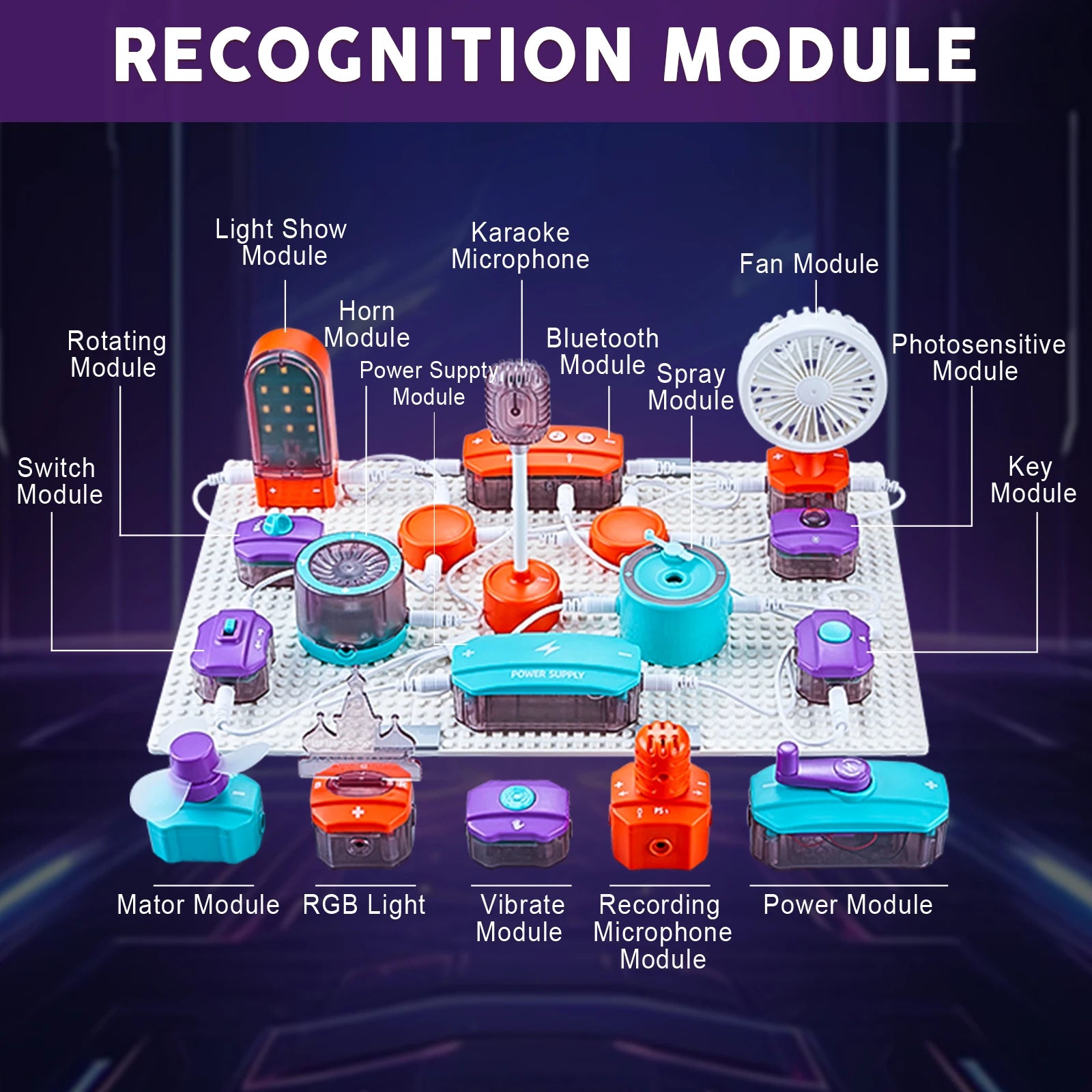
Children between ages 6 and 8 learn best through visual, hands-on activities that provide immediate feedback. Beginner electronics kits with color-coded parts, snap connectors, or clearly labeled components reduce frustration while helping young learners understand how electricity flows through a complete circuit.
At this stage, children typically learn to:
- Complete simple electrical circuits.
- Operate switches and push buttons.
- Identify batteries, LEDs, and motors.
- Recognize cause-and-effect relationships.
- Follow illustrated instructions independently.
The STEM Circuit Kit for Kids – 150+ DIY Electronics Projects is an excellent beginner option because it includes more than 50 reusable components and enough guided experiments to keep children engaged as their skills improve.
Pros
- Over 150 guided STEM projects.
- Supports creativity beyond step-by-step instructions.
- Low-voltage components designed for safe learning.
- Excellent long-term educational value.
Cons
- Adult guidance is recommended for younger beginners.
- Children interested in coding will eventually outgrow non-programmable projects.
Parents can also explore other learning toys in the Baby Growth & Learning collection to encourage curiosity across multiple STEM subjects.
Best Electronics Kits for Ages 9–12 (Intermediate Level)
Children in this age range are usually ready to move beyond simple circuit assembly and begin working with individual electronic components. Breadboard-based kits introduce authentic engineering concepts while remaining approachable for beginners.
Intermediate learners often explore:
- Resistors and current control.
- LED polarity and circuit troubleshooting.
- Motors, buzzers, and electronic sensors.
- Series and parallel circuit design.
- Reading simple circuit diagrams.
These projects encourage systematic thinking by requiring students to identify wiring mistakes, test different configurations, and improve their designs through experimentation.
Many families complement electronics projects with additional STEM resources available in the Baby Growth & Learning Tips library.
Best Electronics Kits for Teens (Advanced Level)
Teenagers with a growing interest in engineering or computer science benefit from programmable electronics platforms such as Arduino-compatible starter kits. These combine software and hardware, allowing students to write code that controls sensors, motors, displays, and other electronic components.
Typical advanced projects include:
- Smart lighting systems.
- Temperature and humidity monitors.
- Motion-activated devices.
- Small robotic vehicles.
- Home automation prototypes.
Because programmable electronics combine coding with circuit design, they provide an excellent foundation for robotics competitions, engineering courses, and future STEM careers.
How to Choose the Right Educational Electronics Kit
Selecting the right electronics kit depends on more than age alone. The best choice balances current ability with enough room to grow so children remain challenged as their confidence increases.
Choose Based on Age and Skill Level
Start with projects your child can complete successfully without becoming overwhelmed. Younger beginners generally benefit from guided circuit kits, while experienced learners can move into breadboards, sensors, and programmable microcontrollers.
The STEM Circuit Kit for Kids offers an accessible starting point thanks to its large collection of guided experiments and reusable components that support gradual skill progression.
Look for Project Variety and Expandability
A kit that includes dozens or hundreds of experiments typically provides better long-term value than one with only a handful of projects. Expandable systems also allow children to combine existing components with future accessories as their interests evolve.
Features worth prioritizing include:
- Reusable electronic components.
- Clearly illustrated instruction manuals.
- Projects ranging from beginner to intermediate difficulty.
- Compatibility with future upgrades or expansion packs.
Consider Safety and Learning Support
High-quality educational electronics kits are designed for safe experimentation using low-voltage circuits and durable components. Parents and educators should also consider how well each kit supports independent learning.
- Low-voltage battery-powered operation.
- Non-toxic, durable construction materials.
- Clearly labeled components.
- Step-by-step project guides.
- Age-appropriate instructions and supervision recommendations.
Families focused on creating a safe learning environment can also browse the Health & Safety collection for additional child-friendly products.
You are an expert SEO editor. Rewrite the article using the Upgrade Plan. MULTI-PART ARTICLE This article has been intentionally divided into 3 parts. You are rewriting ONLY PART 3 OF 3. Assume all previous parts already exist. Continue naturally from the supplied HTML. Do NOT restart the article. Do NOT repeat information already covered. Do NOT generate another H1. Do NOT generate another introduction. Do NOT summarize previous sections. Do NOT add transition paragraphs referring to omitted sections. Do NOT generate a conclusion unless it already exists in the supplied HTML. Rewrite ONLY the supplied HTML. GOAL Produce a stronger article capable of competing with Top 3 Google results while preserving the original page assets. INPUT ARTICLE HTML (THIS PART ONLY)Final Thoughts: Choosing the Best Educational Electronics Kit
Educational electronics kits are one of the most effective ways to introduce children to STEM learning. By building real circuits and experimenting with electronic components, kids develop problem-solving abilities, engineering thinking, and curiosity about how technology works.
The best kit ultimately depends on your child’s age and experience level. Younger learners benefit from simple circuit kits, while older students may prefer programmable systems and robotics.
If you're looking for a flexible starting point that offers both guided experiments and creative exploration, the STEM Circuit Kit for Kids – 150+ DIY Electronics Projects is designed to help children learn electronics through fun, hands-on experimentation.
Related Articles:
UPGRADE PLAN {'outline': [{'action': 'REMOVE', 'h2': 'Final Thoughts: Choosing the Best Educational Electronics Kit', 'h3': [], 'focus': [], 'keywords': []}], 'internal_links': ['STEM toys buying guide', 'Arduino beginner guide', 'micro:bit projects for kids', 'Snap Circuits review', 'Best coding toys for kids', 'How breadboards work', 'Robotics kits for beginners', 'Science gifts for kids'], 'faq': ['What is the best electronics kit for kids to learn?', 'Which electronics kit is best for a 12-year-old?', 'Are breadboard kits better than Snap Circuits for beginners?', 'What skills do kids learn from educational electronics kits?', 'Are electronics kits safe for young children?', 'How do I choose the right electronics kit by age and experience?'], 'trim': ['Generic project examples', 'Repetitive STEM learning benefits', 'Duplicate explanations of circuits', 'Standalone conclusion without buying guidance']} Approved linked products: - STEM Circuit Kit for Kids – 150+ DIY Electronics Projects (https://kentdomombaby.com/products/stem-circuit-kit-for-kids) Product Rules - Keep all approved products. - Only approved products may contain affiliate links. - You may add real competitor products when useful. - Competitor products must not contain links unless already present. - Only create comparison tables when they genuinely improve the article. RULES - Apply every instruction in the Upgrade Plan. - Keep all existing affiliate links unchanged. - Keep all existing internal links unchanged. - Keep all existing image URLs unchanged. - Preserve sections such as Related Articles, Related Posts and Recommended Reading. - Avoid duplicate headings. - Insert new sections only where specified. - Improve clarity, topical coverage, EEAT and readability. - Expand weak sections only when required. - Use natural keyword placement. - Keep semantic HTML clean. YEAR UPDATE If visible article text contains "2005", replace it with "2026". Do not modify years inside: - URLs - href attributes - image filenames PART OUTPUT Return ONLY the rewritten HTML for PART 3. Do NOT output any HTML belonging to previous parts. Do NOT output any HTML belonging to later parts. Do NOT add explanations. Do NOT add markdown. The returned HTML must concatenate directly with the remaining article without any edits. OUTPUT REQUIREMENTS Return ONLY the rewritten HTML for PART 3. The output must be valid HTML and ready to publish. Do NOT return: - Markdown - Explanations - Notes - Code fences - JSON - XML Return ONLY the rewritten HTML fragment. Do NOT add , or . Do NOT add code fences. Do NOT add explanations.





