

STEM Activities for Elementary Students: 25 Easy Projects
25 STEM Activities for Elementary Students That Teachers Can Set Up in Minutes
Adding meaningful STEM activities for elementary students to a busy school day doesn't have to involve expensive equipment or hours of preparation. With a few everyday classroom supplies and well-planned challenges, teachers and parents can create engaging lessons that encourage curiosity, critical thinking, and collaboration.
This collection features 25 ready-to-use elementary STEM activities that emphasize hands-on exploration across science, technology, engineering, and mathematics. Organized by grade level, activity type, and preparation time, these projects make it easy to select lessons that fit any classroom schedule—from five-minute warm-ups to longer engineering investigations.
Whether you're introducing basic scientific observation in the early grades or encouraging engineering design in upper elementary classrooms, these activities help students build confidence by asking questions, testing ideas, and learning through experimentation.
What Are STEM Activities for Elementary Students?
What STEM Means in Elementary Education
STEM stands for Science, Technology, Engineering, and Mathematics. Rather than teaching these subjects separately, STEM activities combine them through practical challenges that encourage students to investigate, design, build, test, and improve solutions.
You may also hear the term STEAM, which adds Arts to STEM. STEAM activities for elementary learners incorporate creativity, design, communication, and artistic expression alongside scientific thinking, making projects even more engaging for young students.
At the elementary level, the emphasis is on inquiry-based learning. Students learn by asking questions, making predictions, experimenting with materials, observing results, and reflecting on what they discover instead of simply memorizing facts.
Key Skills Students Build Through STEM Activities
- Critical thinking – Students evaluate ideas, recognize patterns, and draw evidence-based conclusions.
- Problem solving – Engineering challenges encourage planning, testing, redesigning, and continuous improvement.
- Creativity – Open-ended projects allow children to develop original solutions using everyday materials.
- Collaboration – Team activities strengthen communication, cooperation, and shared decision-making.
- Scientific reasoning – Students practice making predictions, collecting observations, identifying variables, and explaining outcomes.
Why Hands-On STEM Activities Improve Learning
Hands-on learning helps elementary students connect abstract concepts with real-world experiences. Building, experimenting, measuring, and observing make scientific ideas easier to understand while increasing classroom engagement.
Simple STEM activities also promote persistence. When students test a design, discover what doesn't work, and improve it, they experience the engineering design process in an age-appropriate way while developing resilience and confidence.
The activities throughout this guide are designed to be flexible, low-preparation, and easy to adapt for different grade levels, classroom sizes, and learning environments.
Materials You Need for Easy Classroom STEM Projects
Most STEM projects for elementary students rely on inexpensive materials already found in classrooms or homes. Keeping a reusable STEM supply bin allows teachers to set up activities quickly while minimizing preparation time and classroom costs.
Common Household and Classroom Supplies
- Popsicle sticks
- Rubber bands
- Paper cups
- Straws
- Cardboard
- String or yarn
- Masking or clear tape
- Magnets
- Marbles
- Balloons
These reusable materials support dozens of simple STEM activities, including bridge building, force and motion investigations, measurement challenges, and introductory engineering projects.
Optional STEM Tools and Kits
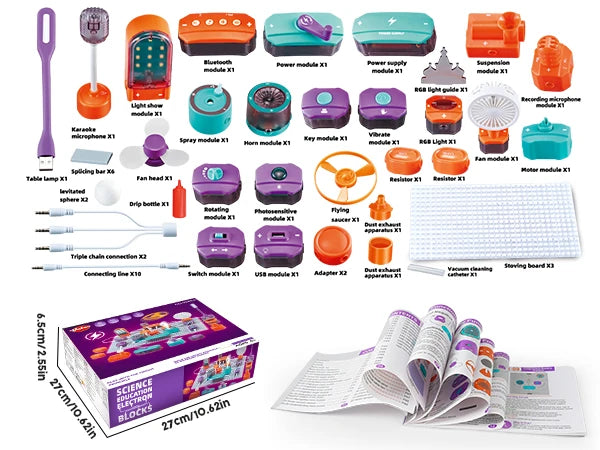
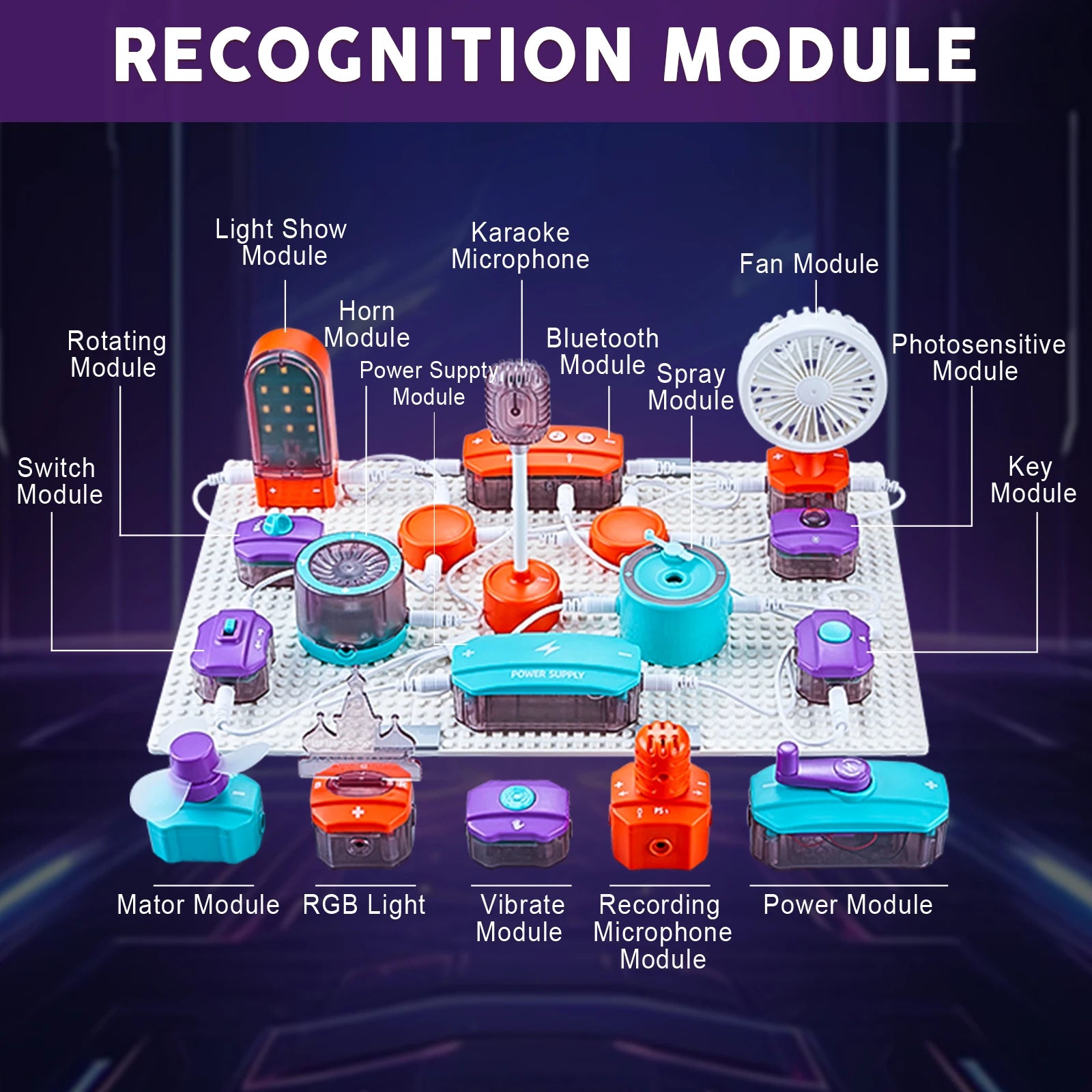
As students become more confident, classroom STEM experiences can expand to include introductory electronics and engineering. Beginner circuit kits help children explore electricity by building working switches, lights, motors, and other simple systems through guided experimentation.
Hands-on kits like a DIY electronics learning set allow students to extend classroom investigations while reinforcing problem-solving and engineering concepts with structured, age-appropriate activities.
Many educators incorporate these kits alongside classroom supplies through learning resources in the Baby Growth & Learning section or related STEM activities discussed in the Baby Growth & Learning Tips blog.
Low-Cost Alternatives
Schools working with limited budgets can substitute many commercial materials with recycled or donated items. Cardboard boxes, newspaper, paper towel tubes, bottle caps, plastic containers, aluminum foil, and scrap paper work well for many elementary STEM activities. Reusing materials not only reduces costs but also introduces students to sustainability and creative problem-solving.
STEM Activities for Grades K–2
These STEM activities for elementary students in kindergarten through second grade emphasize observation, exploration, and simple engineering. Most require minimal preparation, use everyday classroom materials, and can be completed in 10–20 minutes.
1–5: Discovery and Observation Activities
-
Color Mixing Science
Provide cups of colored water and droppers so students can combine primary colors to create secondary colors. Encourage them to predict each result before mixing and record their discoveries. -
Floating and Sinking Test
Gather common classroom objects and ask students to predict whether each item will float or sink. After testing, discuss how an object's material, size, and shape influence buoyancy. -
Magnet Treasure Hunt
Students use magnets to investigate which classroom objects are magnetic. They can sort findings into magnetic and non-magnetic groups while practicing observation and classification skills. -
Growing Crystal Shapes
Prepare a simple salt or sugar solution and allow crystals to develop over several days. Students observe changes, sketch growth patterns, and compare crystal sizes over time. -
Shadow Tracking
Trace the shadow of a fixed object at different times during the day. Students observe how sunlight changes shadow length and direction while learning about the Earth's movement relative to the Sun.
6–8: Simple Building Challenges
-
Paper Bridge Challenge
Using only paper, students design a bridge that supports as many coins as possible. They compare different folding techniques and redesign their bridges after testing. -
Straw Tower Engineering
Working individually or in teams, students build the tallest free-standing tower using straws and tape. This activity develops planning, teamwork, and basic structural engineering skills. -
Balloon Rocket
Thread a string through a straw, attach an inflated balloon, and release the air to propel the balloon across the room. Students explore force, motion, and action-reaction principles through hands-on experimentation.
STEM Activities for Grades 3–5
Upper elementary students are ready for STEM projects that involve planning investigations, collecting data, evaluating results, and improving designs. These activities encourage collaboration while strengthening scientific reasoning and engineering problem-solving.
9–15: Science Investigation Projects
-
Homemade Lava Lamp
Combine water, oil, food coloring, and an effervescent tablet to investigate density, liquid separation, and simple chemical reactions. -
Water Filtration Experiment
Students design and test water filters using materials such as sand, gravel, cotton, and coffee filters, comparing which combinations produce the clearest water. -
Plant Growth Investigation
Grow identical plants under different conditions, such as varying amounts of light or water, and record observations to identify factors that affect plant growth. -
DIY Weather Station
Build simple rain gauges, wind vanes, or thermometers and collect daily weather data to recognize patterns over time. -
Egg Drop Experiment
Design protective containers that reduce impact during a drop test. Students evaluate results and refine their designs using the engineering design process. -
Solar Oven Test
Construct a solar oven with a pizza box, aluminum foil, and plastic wrap to explore renewable energy and heat transfer. -
Static Electricity Exploration
Rub balloons against fabric to generate static electricity and investigate how electric charges attract or repel lightweight objects.
16–20: Engineering and Design Challenges
-
Marble Run Design
Design a marble track that controls speed, direction, and travel distance while experimenting with slopes and obstacles. -
Rubber Band Powered Car
Build a simple vehicle powered by a stretched rubber band and test how design changes affect speed and travel distance. -
Mini Catapult Engineering
Construct a small catapult using craft sticks and rubber bands, then investigate how launch angle and force influence projectile distance. -
Water Bottle Windmill
Create a windmill from recycled materials to demonstrate how moving air can be converted into mechanical energy. -
Simple Circuit Builder
Connect wires, switches, batteries, and LEDs to create working electrical circuits while learning about conductivity and energy flow.
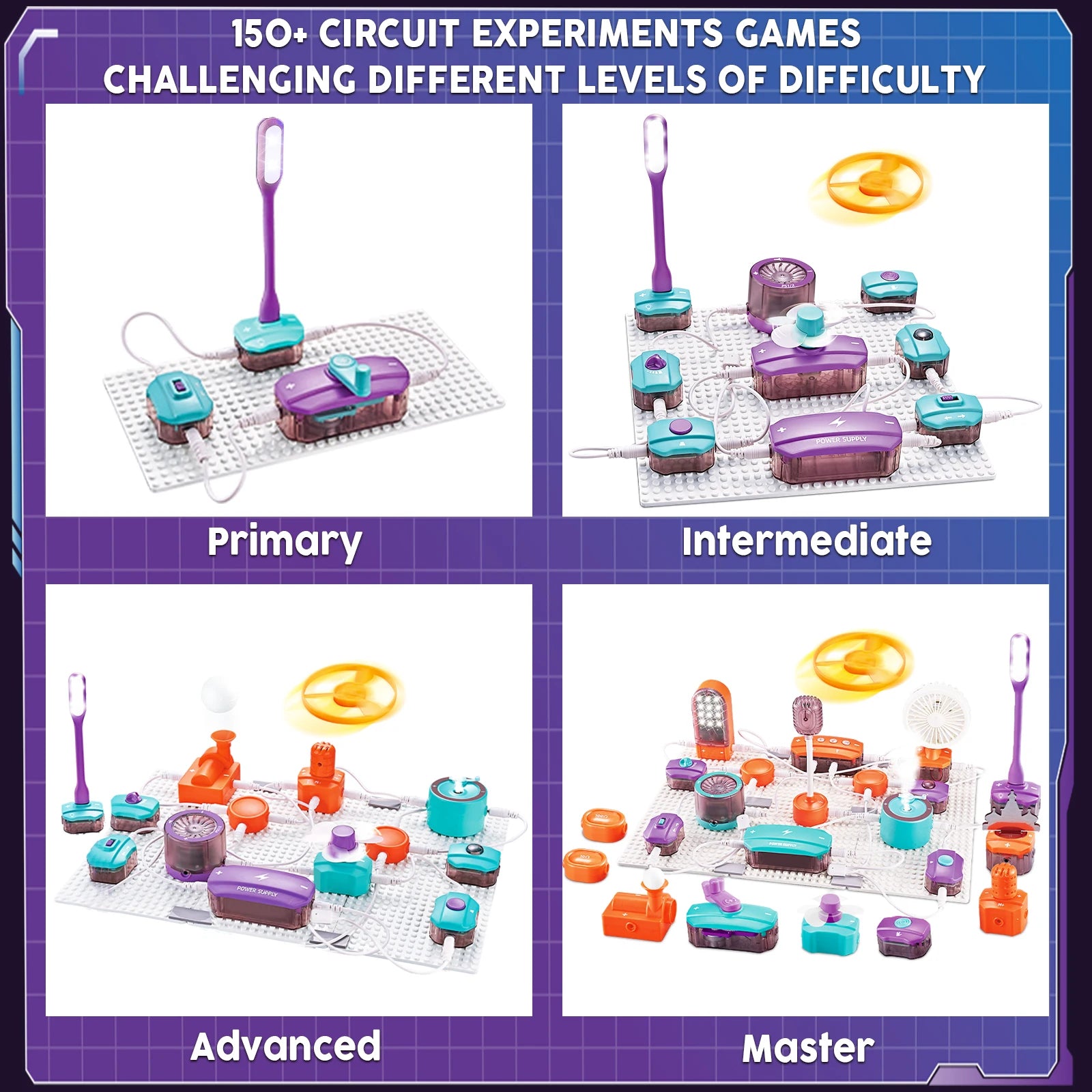
Electronics-based STEM engineering projects become increasingly engaging in grades 4 and 5 because students can immediately see how electrical components interact. A classroom electronics kit gives learners opportunities to experiment with circuits, motors, switches, and other engineering concepts through guided, hands-on exploration.
5-Minute STEM Activities for Busy Classrooms
Not every STEM lesson needs a full class period. These easy STEM activities work well as bell ringers, brain breaks, learning stations, or lesson starters. With little to no preparation, students practice observation, estimation, engineering, and scientific reasoning in just a few minutes.
21–23: Quick Thinking Challenges
-
Predict the Reaction
Before demonstrating a simple science experiment, ask students to predict what will happen and explain the reasoning behind their answers. Compare predictions with the actual results to reinforce scientific thinking. -
Observation Mystery
Display an unfamiliar object or everyday item from an unusual angle. Students record observations, infer its purpose, and support their ideas using evidence they notice. -
Quick Measurement Challenge
Have students estimate the length, height, weight, or circumference of classroom objects before measuring them with rulers or measuring tapes. Discuss which estimation strategies were most accurate.
24–25: Fast Build Activities
-
One-Minute Paper Tower
Challenge students to build the tallest free-standing tower possible using only one sheet of paper. Encourage redesigns after each attempt to improve stability. -
Index Card Bridge
Using a single index card, students experiment with folding techniques to build a bridge capable of supporting the greatest amount of weight.
These quick STEM games for elementary students can easily expand into longer engineering lessons by encouraging redesign, data collection, or additional testing. As students become more comfortable with engineering concepts, electronics activities provide another engaging way to apply what they've learned.
A beginner-friendly option is the STEM Circuit Kit for Kids – 150+ DIY Electronics Projects, which allows children to build simple circuits with lights, switches, and motors while learning through experimentation.
How to Run STEM Activities Successfully in the Classroom
Using the Engineering Design Process
Many successful STEM lessons for elementary classrooms follow a simple engineering design cycle that encourages students to think like engineers while solving real-world problems.
- Ask – Identify the problem or challenge.
- Imagine – Brainstorm multiple possible solutions.
- Plan – Select materials and sketch or describe the design.
- Create – Build and test the first prototype.
- Improve – Analyze results and refine the design based on what was learned.
Encouraging multiple rounds of testing helps students understand that revision and improvement are valuable parts of engineering rather than signs of failure.
Encouraging Scientific Thinking
Effective classroom facilitation focuses on guiding students with questions instead of immediately providing answers. Open-ended prompts encourage deeper reasoning and richer classroom discussions.
- What do you predict will happen, and why?
- What evidence supports your conclusion?
- What changed after your test?
- How could you improve your design?
- What would happen if you changed one variable?
Recording predictions, observations, measurements, and conclusions helps students organize their thinking while strengthening science and engineering practices.
Assessment and Reflection Ideas
Simple assessment strategies help teachers measure learning without interrupting hands-on exploration. Consider asking students to complete a brief reflection after each activity.
- Describe one thing you learned.
- Explain what worked well in your design.
- Identify one improvement you would make next time.
- Share how your group solved a problem together.
- Connect today's activity to a real-world application.
These reflection questions reinforce key STEM concepts while giving teachers valuable insight into student understanding, collaboration, and problem-solving skills.
Printable STEM Activity Planning Checklist for Teachers
A simple planning checklist helps teachers organize STEM activities for elementary school students while keeping lessons focused, efficient, and engaging. Use the following guide before and after each activity to streamline preparation and encourage meaningful learning.
Preparation Checklist
- Identify the science, technology, engineering, or math concept being explored.
- Gather and organize materials for each student or group.
- Review any safety expectations before the activity begins.
- Provide clear instructions, success criteria, and time limits.
- Prepare guiding questions that encourage predictions and discussion.
- Allow sufficient time for testing, redesigning, and sharing results.
Lesson Reflection Checklist
- Did students achieve the learning objective?
- Which designs or solutions worked best, and why?
- What misconceptions appeared during the activity?
- How effectively did students collaborate and communicate?
- What modifications would improve the lesson next time?
- What extension activity could deepen learning?
Teachers who regularly conduct STEM lessons often supplement classroom materials with organized learning resources that simplify preparation. These can complement other educational materials available through the Sensory Toys and Smart Baby Gadgets collections.
STEM Activity Types Comparison
| Activity Type | Recommended Grades | Typical Time | Learning Focus | Format | Best Setting |
|---|---|---|---|---|---|
| Observation experiments | K–2 | 10–15 minutes | Scientific curiosity and observation | Individual or pairs | Indoor or outdoor |
| Simple building challenges | K–3 | 15–20 minutes | Engineering basics and creativity | Small groups | Classroom |
| Science investigations | 3–5 | 20–30 minutes | Hypothesis testing and data collection | Individual or teams | Indoor or outdoor |
| Engineering design challenges | 3–5 | 30–45 minutes | Problem solving and iterative design | Collaborative groups | Classroom or makerspace |
| Electronics experiments | 4–5 | 30 minutes | Technology, circuits, and engineering | Pairs or small groups | Indoor classroom |
Frequently Asked Questions
What are the best STEM activities for elementary students?
The best STEM activities are hands-on, age-appropriate, and encourage students to ask questions, test ideas, and improve their designs. Popular choices include paper bridge challenges, balloon rockets, floating and sinking experiments, marble runs, weather stations, and simple circuit projects because they combine science, engineering, and problem-solving with everyday materials.
What are easy STEM activities that require little preparation?
Quick classroom favorites include color mixing, magnet investigations, estimation and measurement challenges, paper tower competitions, shadow tracking, and index card bridges. Most require only common classroom supplies and can be completed in 5–20 minutes.
How do I choose STEM activities for different elementary grade levels?
Kindergarten through second grade students benefit from short exploration activities that develop observation and fine motor skills. Students in grades 3–5 are ready for investigations involving data collection, hypothesis testing, engineering design, and collaborative problem-solving.
What materials are needed for simple STEM activities?
Many STEM lessons use inexpensive supplies such as paper, cardboard, craft sticks, tape, balloons, cups, straws, rubber bands, string, magnets, marbles, rulers, and recycled materials. These items can support dozens of engaging classroom projects.
How long should elementary STEM activities take?
Warm-up activities may take only five minutes, while most classroom STEM lessons fit comfortably within 15–30 minutes. Larger engineering challenges or investigations can extend across multiple class periods to allow time for testing and redesign.
How can STEM activities be adapted for small groups or individual students?
Most activities work well in either format. Individual projects encourage independent thinking, while small-group challenges strengthen communication, collaboration, and shared problem-solving. Teachers can also adjust materials and complexity to accommodate different learning needs.
What STEM skills do elementary students develop?
Students build scientific reasoning, critical thinking, creativity, engineering design skills, communication, collaboration, measurement, observation, data analysis, and perseverance. These transferable skills support success across many subject areas.
How can I assess learning after a STEM activity?
Assessment can include observation checklists, science journals, engineering design reflections, student presentations, exit tickets, group discussions, or simple questions that ask students to explain their reasoning, describe improvements, and connect their results to scientific concepts.
Conclusion
Effective STEM activities for elementary students do not require elaborate equipment or extensive preparation. Simple materials such as paper, balloons, cups, magnets, cardboard, and recycled items can become powerful learning tools when students are encouraged to explore, test ideas, and solve problems.
By incorporating a variety of science investigations, engineering design challenges, and quick classroom activities throughout the school year, teachers can foster curiosity, resilience, collaboration, and confidence. Regular hands-on experiences help students see that learning is an active process built on experimentation, observation, and continuous improvement.
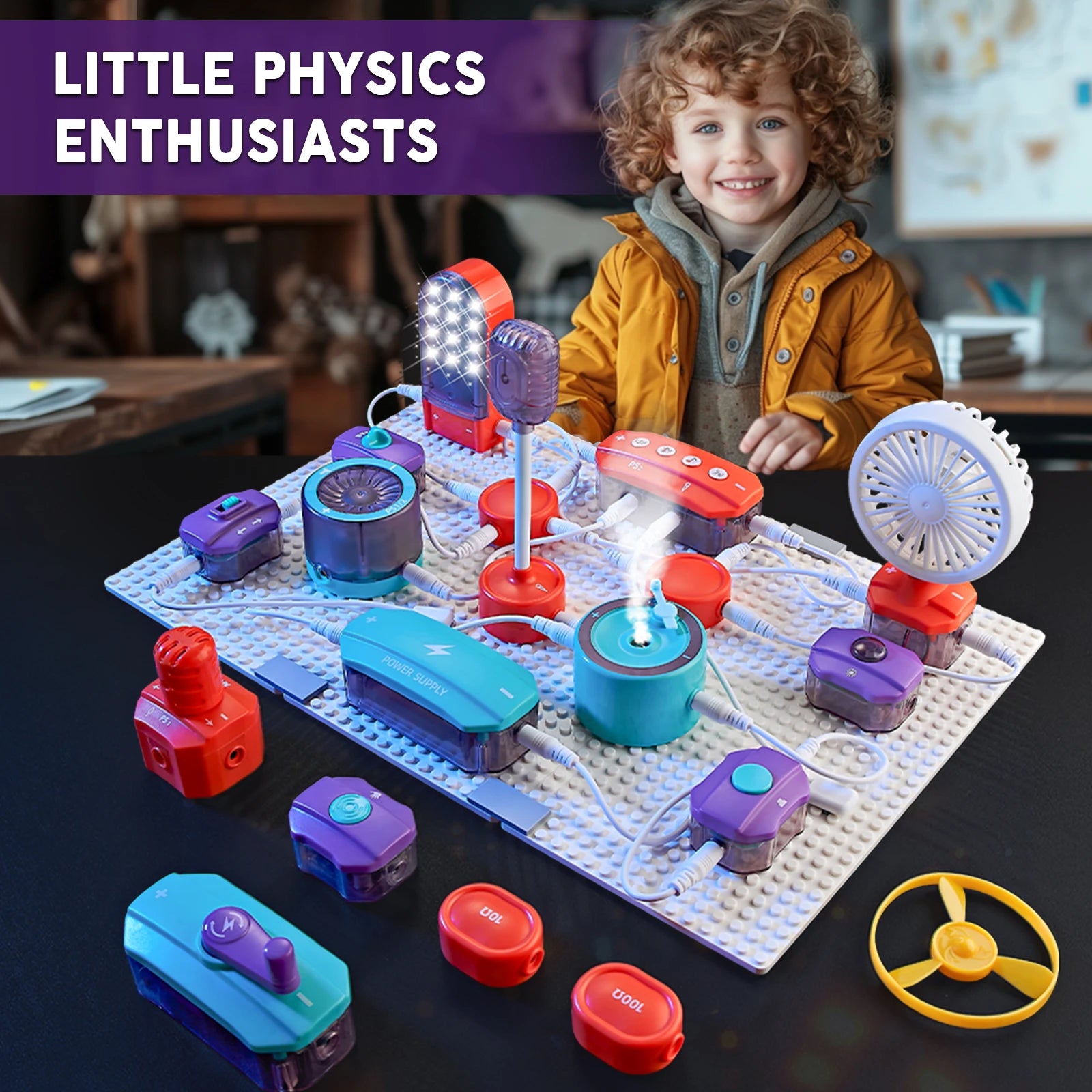
As learners become more comfortable with STEM concepts, introducing age-appropriate engineering and electronics projects can further strengthen their understanding of technology and real-world applications. Structured resources, including beginner circuit kits, provide engaging opportunities for students to build, experiment, and discover how everyday systems work.
Pillar Article: Best Educational Electronics Kit Guide (2026): Compare STEM Kits by Age & Skill





