

Toys for Developing Coordination Skills by Age and Ability
15 Best Toys That Develop Motor Skills for Babies and Toddlers
Play is one of the most important ways babies and toddlers build physical abilities during early childhood. The right toys that develop motor skills encourage children to practice essential movements such as reaching, grasping, crawling, stacking, balancing, and throwing. These repeated actions help strengthen muscle control, coordination, confidence, and independence during everyday activities.
Parents looking for a baby motor skills toy often find that simple, hands-on designs provide the greatest developmental value. Toys that involve building, sorting, pushing, pulling, or creating music encourage active participation while helping children improve both fine motor control and gross motor coordination.
This guide explores the best toys for developing coordination skills based on age, developmental stage, and the specific abilities children are building. From baby fine motor skills toys that improve grasping and finger strength to movement-based toys that support balance and body awareness, these play options help parents choose age-appropriate tools for healthy development.
How Toys Help Develop Coordination and Motor Skills
Motor skills describe a child's ability to control muscles and coordinate movements to interact with the world around them. During infancy and toddlerhood, children gradually develop the physical abilities needed for sitting, crawling, walking, picking up objects, and completing more complex tasks.
Motor skills development toys support this process by creating opportunities for repetition, exploration, and problem-solving. When children repeatedly grasp objects, fit pieces together, push toys, or balance their bodies, they practice the movement patterns needed for future skills such as writing, dressing, feeding, and participating in active play.
Understanding what are motor skill toys can help parents choose products that do more than entertain. The most beneficial toys encourage children to actively move, make decisions, and experiment with different actions rather than simply watch or listen.
Fine Motor Skills vs Gross Motor Skills
Fine motor skills involve the small muscles in the hands, fingers, and wrists. These abilities allow children to perform precise movements such as picking up small objects, stacking blocks, turning puzzle pieces, drawing, and using tools.
Gross motor skills involve larger muscle groups in the arms, legs, torso, and core. These movements support activities such as crawling, walking, climbing, jumping, throwing, and maintaining balance.
The best toys for motor skills often support multiple areas of development at the same time. For example, a stacking toy may improve finger control while also teaching visual planning, while a balance toy can strengthen core stability and body awareness.
Hand-Eye Coordination and Bilateral Coordination
Many developmental toys help children improve hand-eye coordination, which is the ability to use visual information to guide hand movements. This skill is essential for tasks such as catching a ball, placing puzzle pieces, feeding independently, and eventually writing.
Bilateral coordination involves using both hands together in a controlled way. Toys such as threading boards, building sets, and musical instruments encourage children to stabilize objects with one hand while manipulating them with the other.
Activities that combine vision, movement, and problem-solving provide valuable practice for children learning how their bodies interact with objects around them.
Why Pediatric Occupational Therapists Recommend Skill-Based Play
Pediatric occupational therapists often use play-based activities because children naturally repeat movements when they are engaged and interested. Skill-based toys encourage important developmental patterns through enjoyable hands-on experiences.
Quality motor development toys can help support:
- Grip strength and hand control
- Pincer grasp development
- Bilateral coordination using both hands together
- Visual tracking and hand-eye coordination
- Balance, posture, and body awareness
- Problem-solving through active exploration
Because young children learn through repetition, toys that encourage consistent practice can make skill development feel like natural play rather than structured training.
Best Toys for Developing Coordination Skills by Age and Development Stage
The best toys for developing coordination skills change as children grow. A toy that challenges a 6-month-old may be too simple for a toddler, while advanced building or balancing toys may frustrate younger children. Choosing toys that match developmental milestones helps children stay engaged while building confidence.
6–12 Months: Reaching, Grasping, and Sensory Play
During the first year, babies are developing early control over their hands and arms. They begin reaching intentionally, transferring objects between hands, and exploring different textures and sounds.
At this stage, choose baby fine motor skills toys that encourage holding, shaking, tapping, and squeezing. Good options include:
- Soft rattles that encourage grasping and wrist movement
- Textured sensory balls for reaching and exploration
- Large stacking rings that support hand control
- Simple musical instruments that encourage tapping and movement
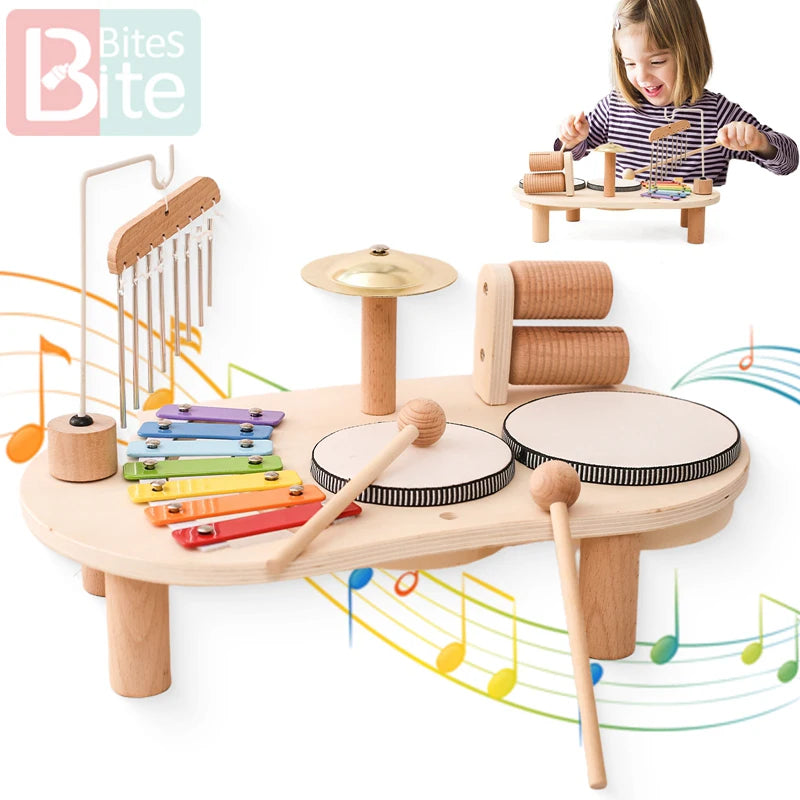
Musical toys are especially useful during this stage because babies practice controlled movements while responding to sounds and rhythm.
1–2 Years: Stacking, Pulling, and Early Hand-Eye Coordination
Toddlers between one and two years old begin experimenting with more purposeful movements. They learn to stack objects, push and pull toys, place shapes into openings, and coordinate their hands with their growing walking abilities.
Helpful toys for this stage include:
- Stacking towers for finger strength and spatial awareness
- Push walkers for balance and early mobility practice
- Shape sorters for problem-solving and hand control
- Pull toys that encourage movement and coordination
These toys help toddlers connect their actions with results while developing confidence in independent movement.
2–3 Years: Bilateral Coordination and Fine Motor Control
Between ages two and three, children become better at using both hands together. They begin completing tasks that require precision, planning, and controlled manipulation.
Toys that support this stage include:
- Threading toys that strengthen pincer grasp
- Simple puzzles that improve visual-motor skills
- Building blocks that encourage creativity and hand control
- Pound benches that develop timing and coordination
These toys to help with fine motor skills prepare children for everyday activities such as using utensils, opening containers, and drawing simple shapes.
3–5 Years: Balance, Throwing, Catching, and Complex Movement
Preschool children continue refining their coordination and begin mastering more advanced physical skills. Toys that involve whole-body movement help strengthen muscles while improving timing, balance, and confidence.
Recommended options include:
- Balance boards for stability and body awareness
- Stepping stones for coordination and spatial planning
- Ball games for throwing, catching, and tracking
- Ride-on toys for leg strength and movement control
Best Fine Motor Skill Toys for Hand Control and Dexterity
Fine motor skill toys help children strengthen the small muscles in their hands and fingers while improving precision, control, and independence. These activities support important developmental abilities such as holding utensils, dressing, drawing, turning pages, and completing everyday tasks.
The best toys that develop fine motor skills provide hands-on challenges that encourage children to grasp, manipulate, sort, and build. By repeating these movements during play, children gradually improve finger strength, coordination, and problem-solving skills.
Stacking Toys
Stacking toys are among the most effective toys to help with fine motor skills because they require children to control their hand movements while planning where each piece should go. Placing rings, blocks, or cups together helps develop grip strength, spatial awareness, and visual coordination.
Wooden stacking rings, nesting cups, and building sets are excellent choices for young children because they offer different levels of difficulty as skills improve. Babies may begin by holding and exploring pieces, while toddlers can practice arranging objects by size, color, or shape.
Threading and Lacing Toys
Threading and lacing toys challenge children to guide strings, cords, or beads through small openings. This activity strengthens the pincer grasp, which is the finger movement needed for picking up small objects and later tasks such as writing.
These toys also support bilateral coordination because children must use both hands together—one hand stabilizes the object while the other performs the detailed movement. Threading beads, lacing cards, and sewing-style activity boards can improve concentration, patience, and hand-eye coordination.
Shape Sorters and Puzzle Toys
Shape sorters and puzzles combine physical movement with early problem-solving. Children must rotate, adjust, and position pieces until they find the correct fit, helping strengthen visual-motor integration.
These motor skills development toys encourage children to understand size, shape, and position while practicing controlled movements. Simple puzzles with large pieces are ideal for younger toddlers, while more complex designs provide continued challenges as coordination improves.
Montessori Manipulative Toys
Montessori-inspired toys focus on independent exploration and purposeful movement. Wooden puzzles, sorting activities, stacking materials, and simple instruments allow children to practice precise actions at their own pace.
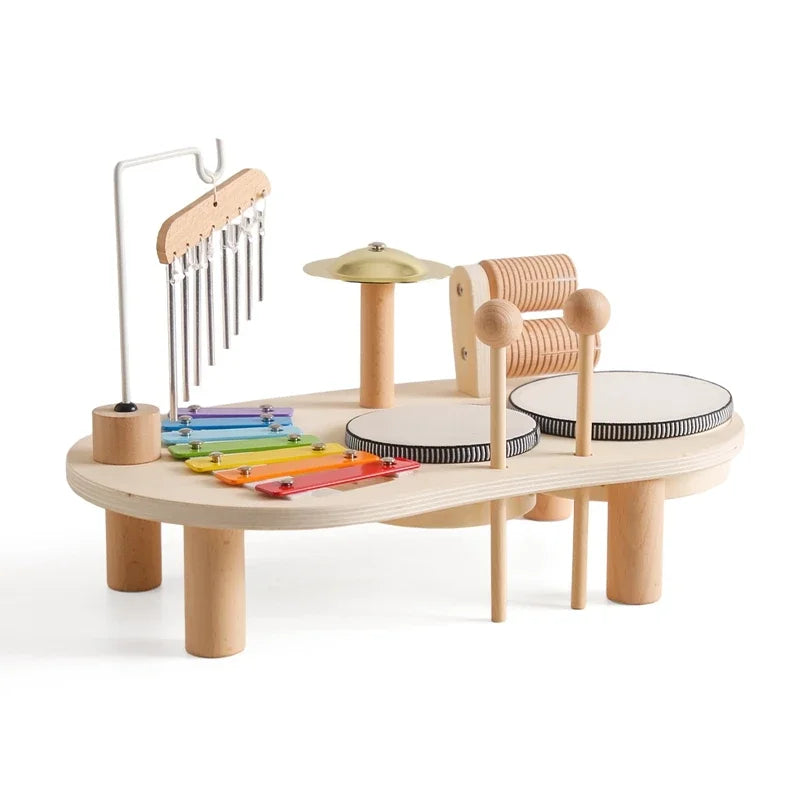
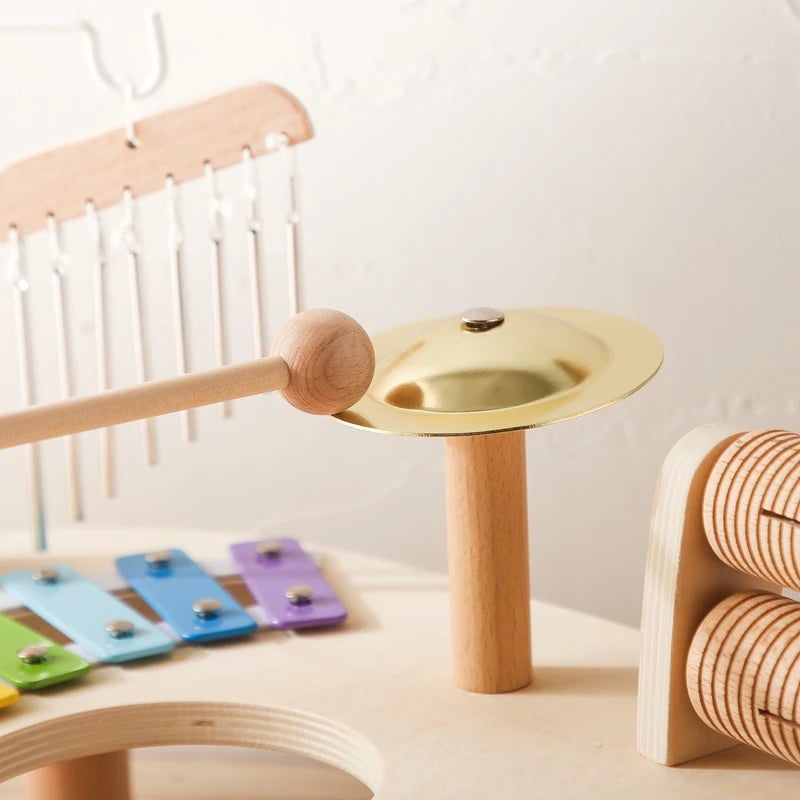
A good example is a wooden musical instrument like the Wooden Baby Xylophone Toy – Montessori Musical Learning . When children tap the bars with a mallet, they practice controlled hand movements, timing, and coordination while exploring sound and rhythm.
Parents exploring development-focused play options can also browse educational toys in the Baby Growth & Learning collection .
Building Blocks and Peg Boards
Building blocks and peg boards are valuable toys for developing fine motor skills because they require children to grasp, position, stack, and connect individual pieces. These actions strengthen finger muscles while encouraging creativity and planning.
Peg boards are especially useful for improving precision because children must align pieces carefully and apply controlled pressure. Building activities also support cognitive development by teaching balance, patterns, and cause-and-effect relationships.
Best Gross Motor Skill Toys for Balance and Whole-Body Coordination
Gross motor skill toys encourage children to use larger muscle groups while developing balance, strength, coordination, and body awareness. These activities are especially important during toddler and preschool years when children are learning to walk confidently, navigate spaces, and control larger movements.
Balance Bikes and Stepping Stones
Balance toys help children practice stability while learning how their bodies move through space. Activities involving stepping, balancing, and shifting weight strengthen core muscles and improve coordination.
Stepping stones, balance beams, wobble boards, and balance bikes are popular options for active play because they encourage children to adjust their posture and movements naturally.
Balance bikes are particularly useful for toddlers because they teach steering, body control, and balance before children transition to pedal bikes. Parents looking for age-based mobility guidance can also explore related resources such as a best balance bikes for toddlers guide.
Ride-On and Push Toys
Ride-on toys and push toys support early mobility by encouraging children to move independently. Pushing, pulling, and riding help strengthen leg muscles while improving coordination between the upper and lower body.
These toys that promote gross motor skills can also build confidence as toddlers practice starting, stopping, changing direction, and maintaining balance. Parents should choose stable designs with appropriate height and support for their child's developmental stage.
Many pediatric professionals value active play because repeated movement helps children develop natural movement patterns and body awareness.
Balls, Bean Bags, and Catching Games
Ball activities are simple but effective toys for gross motor development . Rolling, throwing, catching, and kicking games help children practice timing, balance, arm strength, and visual tracking.
Soft balls and bean bags are ideal for younger children because they are lightweight and easier to control. As children improve, parents can introduce target games that challenge accuracy and coordination.
For more active play products designed for early mobility development, parents can explore the Mobility & Training collection .
Best Toys That Improve Hand-Eye Coordination
Hand-eye coordination is the ability to use visual information to guide physical movements. This skill supports everyday activities such as feeding, dressing, writing, catching objects, and completing detailed tasks. The best eye hand coordination toys encourage children to watch, predict, and adjust their movements through active play.
Unlike passive toys, coordination-focused toys require children to interact, repeat actions, and learn from results. These toys that help with motor skills strengthen visual tracking, timing, accuracy, and problem-solving while keeping play engaging.
Ball Drop and Cause-and-Effect Toys
Ball drop toys are excellent motor skills toys for helping children understand cause and effect. Children place balls into openings, watch them roll through ramps or tunnels, and learn how their actions create predictable results.
This repeated activity improves visual tracking, hand control, and timing. Babies and toddlers practice aiming, releasing, and adjusting their movements while developing early coordination skills.
Cause-and-effect toys also encourage independent exploration because children can experiment with different actions and observe what happens next.
Hammering and Pound Toys
Pound benches and hammering toys require children to strike pegs or targets using controlled movements. This action strengthens arm muscles while improving precision, focus, and movement accuracy.
These toys also support bilateral coordination because children typically stabilize the toy with one hand while using the other hand to hammer. This two-hand cooperation is an important foundation for future activities such as cutting with scissors, writing, and manipulating tools.
Target Toss and Ring Toss Games
Target toss and ring toss games help children practice aiming, distance judgment, and controlled movement. By throwing objects toward a target, children learn to adjust their strength, direction, and timing.
These activities are effective toys for developing coordination skills because they combine large muscle movements with visual planning. Younger children can begin with short distances and larger targets, while older toddlers can progress to more challenging games that improve accuracy.
Construction and Magnetic Building Toys
Construction toys and magnetic building sets improve coordination by requiring children to connect, balance, and arrange pieces. These activities strengthen hand control while encouraging creativity and spatial reasoning.
Building structures requires children to look closely at pieces, plan their next movement, and adjust when pieces do not fit as expected. This combination of visual feedback and physical action makes building toys valuable tools for developing fine motor control and problem-solving abilities.
How to Choose the Right Coordination Toy
Choosing the right toy for motor development depends on your child's age, current abilities, interests, and the specific skills you want to support. The best toys for motor skills provide enough challenge to encourage growth while remaining enjoyable and achievable.
Match Your Child's Developmental Stage
Children develop coordination skills at different rates, so selecting age-appropriate toys is important. Babies often benefit from toys that encourage reaching, grasping, and sensory exploration, while toddlers may need more complex activities involving stacking, building, balancing, or problem-solving.
Parents looking for guidance on choosing activities can consider resources related to fine motor milestones by age, gross motor development, and learning toys by age to better match toys with their child's developmental progress.
Balance Fine and Gross Motor Activities
A balanced play environment includes both fine and gross motor activities. Fine motor toys strengthen finger control, precision, and hand coordination, while gross motor toys encourage movement, balance, strength, and body awareness.
Combining different types of play helps children develop complete coordination skills. For example, a child may build hand control with stacking blocks before practicing whole-body movement with balance toys or active games.
Select Safe Materials
Safety should always be a priority when choosing developmental toys. Look for products made with child-safe materials, smooth edges, secure parts, and designs appropriate for the child's age group.
Many parents choose wooden educational toys because they are durable, easy to handle, and designed for repeated hands-on play. Musical toys, puzzles, stacking sets, and Montessori-inspired activities can provide long-lasting developmental benefits when they are made with quality materials.
Parents exploring sensory-focused options can browse development-friendly choices like Sensory Toys to find toys that support exploration and coordination.
Rotate Toys to Maintain Interest
Children often learn more effectively when they have opportunities to explore different types of play. Rotating toys regularly can keep activities exciting while allowing children to revisit important skills in new ways.
For example, a child may practice fine motor control with puzzles one week, then improve balance and movement through active toys the next. This variety supports continuous learning without overwhelming children with too many choices.
Can Bilingual and Educational Toys Also Build Motor Skills?
Yes. Many bilingual and educational toys can support motor development while introducing language, sounds, and problem-solving skills. The most effective learning toys combine multiple senses by encouraging children to touch, move, listen, and respond.
Interactive Language Toys
Interactive language toys often require children to press buttons, move pieces, match objects, or point to different elements. These actions help strengthen hand control while supporting vocabulary development and early communication skills.
When children actively manipulate learning materials, they practice coordination while building cognitive connections between movement and language.
Music and Movement Toys
Music-based toys are excellent examples of multi-purpose developmental tools. Instruments such as drums, keyboards, and wooden xylophones encourage children to tap, strike, hold, and control movements while exploring rhythm.
A good example is the Wooden Baby Xylophone Toy , which allows children to practice hand control, timing, and coordination through musical play.
Learning Through Multi-Sensory Play
Multi-sensory toys combine movement with sounds, textures, colors, and problem-solving. These experiences help children understand how their actions create results while strengthening motor abilities.
Educational toys that encourage active participation can support several areas of development at once, making them valuable additions to early childhood play routines.
Conclusion
Choosing the best toys for motor skills means focusing on activities that encourage children to move, explore, and practice new abilities at their own pace. Toys for developing coordination skills can strengthen everything from early grasping and finger control to balance, throwing, and full-body movement.
The most effective approach is to provide a balanced mix of fine motor and gross motor activities that match your child's developmental stage. Stacking toys, puzzles, building sets, musical instruments, balance toys, and active play equipment all offer opportunities for children to develop confidence through hands-on exploration.
By selecting safe, engaging, and age-appropriate toys, parents can turn everyday play into meaningful learning experiences. Explore development-focused options in the Baby Growth & Learning collection or introduce musical coordination activities with the Wooden Baby Xylophone Toy to support your child's continued growth.
Pillar Article: 15 Best Musical Toys for Infants (0–12 Months) That Support Early Development





