

Choosing Baby Fork Spoon Set That Actually Helps Self Feeding
Does choosing the right baby fork spoon set really help self feeding?
Choosing baby fork spoon set can make self feeding easier by matching utensil shape, grip, and material to a baby’s developing motor skills. A well-designed infant spoon and fork set supports safer bites, reduces drops, and helps a newborn messy eater build confidence while learning independence at the table.
⏱ 7 min read
Choosing Baby Fork Spoon Set That Actually Helps Self Feeding
Messy meals are part of babyhood, but constant frustration doesn’t have to be. If your baby drops utensils, chews handles, or refuses to try feeding alone, the problem may not be their readiness—it may be the tools. Choosing baby fork spoon set designed for small hands can turn daily meals into calmer, more confident learning moments.
Explore supportive options in Feeding Tools.
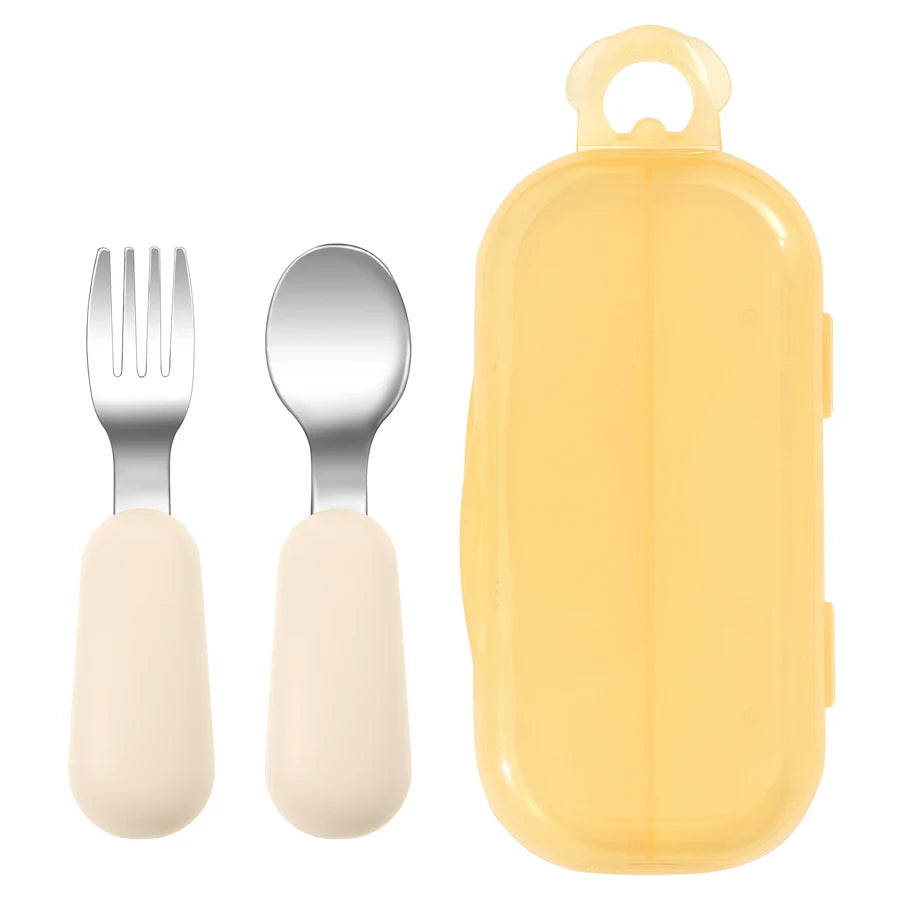
Choosing baby fork spoon set with bpa free utensils can simplify first meals. 💡 See it in action
Why the Right Utensils Matter for Self Feeding
Babies don’t fail at self feeding—tools fail babies. Oversized handles, slippery materials, or sharp edges make it harder for little hands to succeed. During baby-led weaning, utensils should support exploration, not perfection. The right infant spoon and fork set helps babies scoop, stab, and taste without constant help.
- Supports developing hand–mouth coordination
- Encourages longer independent eating time
- Reduces gagging caused by deep or rigid spoons
- Builds early confidence around food
How do you choose the best baby fork spoon set?
Choosing baby fork spoon set works best when you focus on safety, grip, and size rather than appearance. Look for bpa free utensils with short, thick handles and shallow spoon heads. A flexible yet sturdy infant spoon and fork set allows babies to practice self feeding without strain or risk.
Material Safety Comes First
Always choose bpa free utensils made from food-grade silicone or stainless steel tips with silicone handles. These materials are gentle on gums, resist splintering, and withstand chewing.
Parents often pair utensils with other safe mealtime essentials from Health & Safety collections to reduce everyday worries.
Grip and Shape That Fit Small Hands
Short, rounded handles prevent babies from pushing utensils too far into the mouth. Textured grips help prevent slipping, especially for a newborn messy eater still learning control.
Age-Appropriate Fork Design
Baby forks should have rounded, blunt tines. This allows food pickup without sharp points, supporting safer exploration during toddler mealtime.
See practical picks inside Feeding & Nursing.
Step-by-Step: Introducing Forks and Spoons
- Start with one utensil at a time during relaxed meals.
- Model use slowly while letting your baby explore freely.
- Expect drops—place extra utensils within reach.
- Celebrate attempts, not results, to build confidence.
Consistency matters more than cleanliness. Many families notice improvement within one to two weeks when using the same infant spoon and fork set daily.
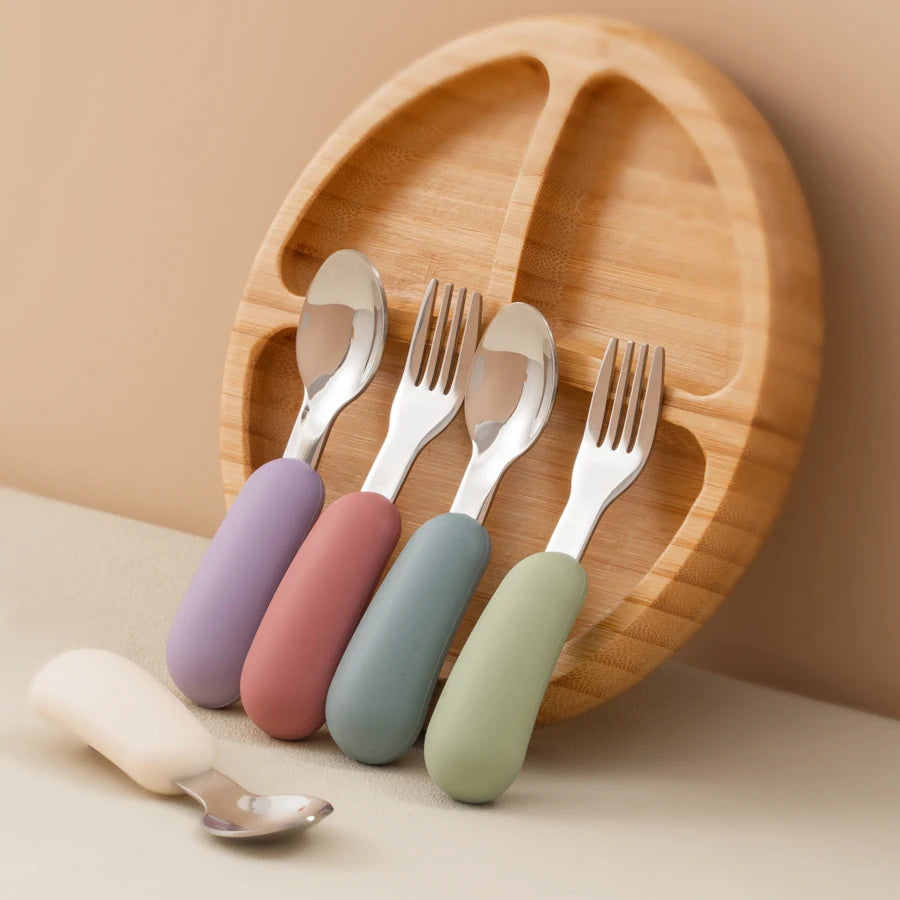
Infant spoon and fork set designed for self feeding skills. 💡 See it in action
Features That Reduce Mess and Frustration
Parents often underestimate how much utensil design affects cleanup and mood. These features make everyday feeding smoother:
- Shallow spoon bowls for easier scooping
- Non-slip silicone handles for wet or slippery foods
- Balanced weight to prevent wrist strain
- Dishwasher-safe materials for quick cleanup
Pairing utensils with suction plates or bowls from Feeding Tools can further reduce spills and plate tossing.
What to Avoid When Buying Baby Utensils
| ❌ Avoid | ✅ Choose Instead |
|---|---|
| Long adult-style handles | Short, chunky grips |
| Hard plastic | bpa free utensils |
| Sharp fork tines | Rounded baby-safe forks |
Real-Life Results From Parents
Parents report noticeable changes after switching utensils. One parent shared that their 9-month-old went from refusing spoons to finishing meals independently within days. Another noticed less food thrown and longer seated time during toddler mealtime.
Small changes in tools often create big shifts in confidence—for both baby and parent.
Why This Baby Fork Spoon Set Stands Out
Choosing baby fork spoon set from food-grade silicone helps babies grip, scoop, and explore safely. This infant spoon and fork set balances softness and structure, supporting self feeding skills while reducing mess and frustration during daily meals.
Many families pair this set with the baby silicone fork spoon for consistent results across meals.
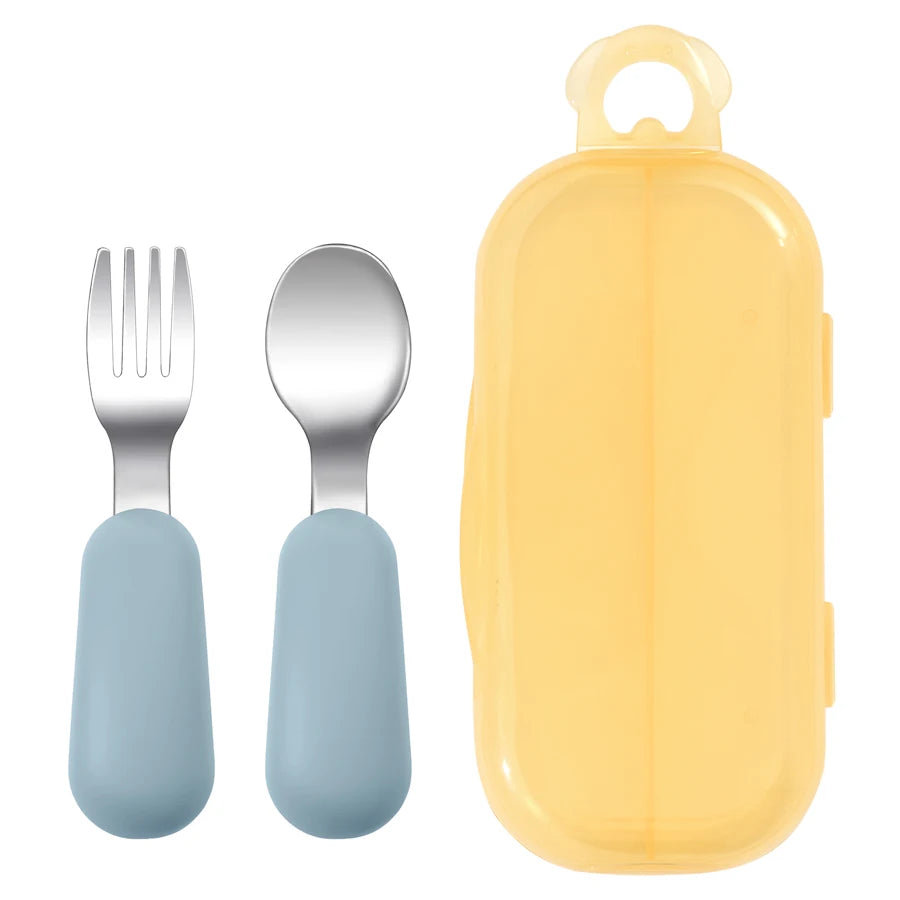
bpa free utensils that support self feeding skills. 💡 See it in action
Try the baby silicone fork spoon today.
Quick Questions Parents Ask
When should babies start using forks?
Most babies can begin practicing with a baby-safe fork around 9–12 months, once they can sit steadily and grasp objects.
Are silicone utensils safe for chewing?
Yes. Food-grade silicone is gentle on gums, durable, and commonly used for teething and feeding products.
How many utensils should I offer at once?
Offering two or three utensils reduces frustration when one drops and encourages continued self feeding without interruption.
Related Guide: How to Teach Toddler Self Feeding Step by Step at Home





