

Does a stainless steel baby feeding set really beat plastic?
A stainless steel baby feeding set offers excellent durability, easy cleaning, and long-term value while reducing reliance on disposable plastic tableware. Compared with many plastic options, it resists stains, odors, and everyday wear, making it a practical choice for babies learning to self-feed. The best option still depends on your child's age, feeding stage, and daily routine.
Stainless Steel Baby Feeding Set vs Plastic Options
Choosing the right feeding gear can feel overwhelming when safety, convenience, and independence all matter. This guide compares today's most popular feeding materials, explains the strengths and limitations of each, and helps you choose the best infant feeding set for your family's needs without unnecessary hype.
⏱ 9 min read
If you're wondering whether stainless steel is worth the investment—or whether silicone, bamboo, or even quality plastic may suit certain situations—this guide walks through the evidence, practical trade-offs, and buying tips.
Feeding Tools
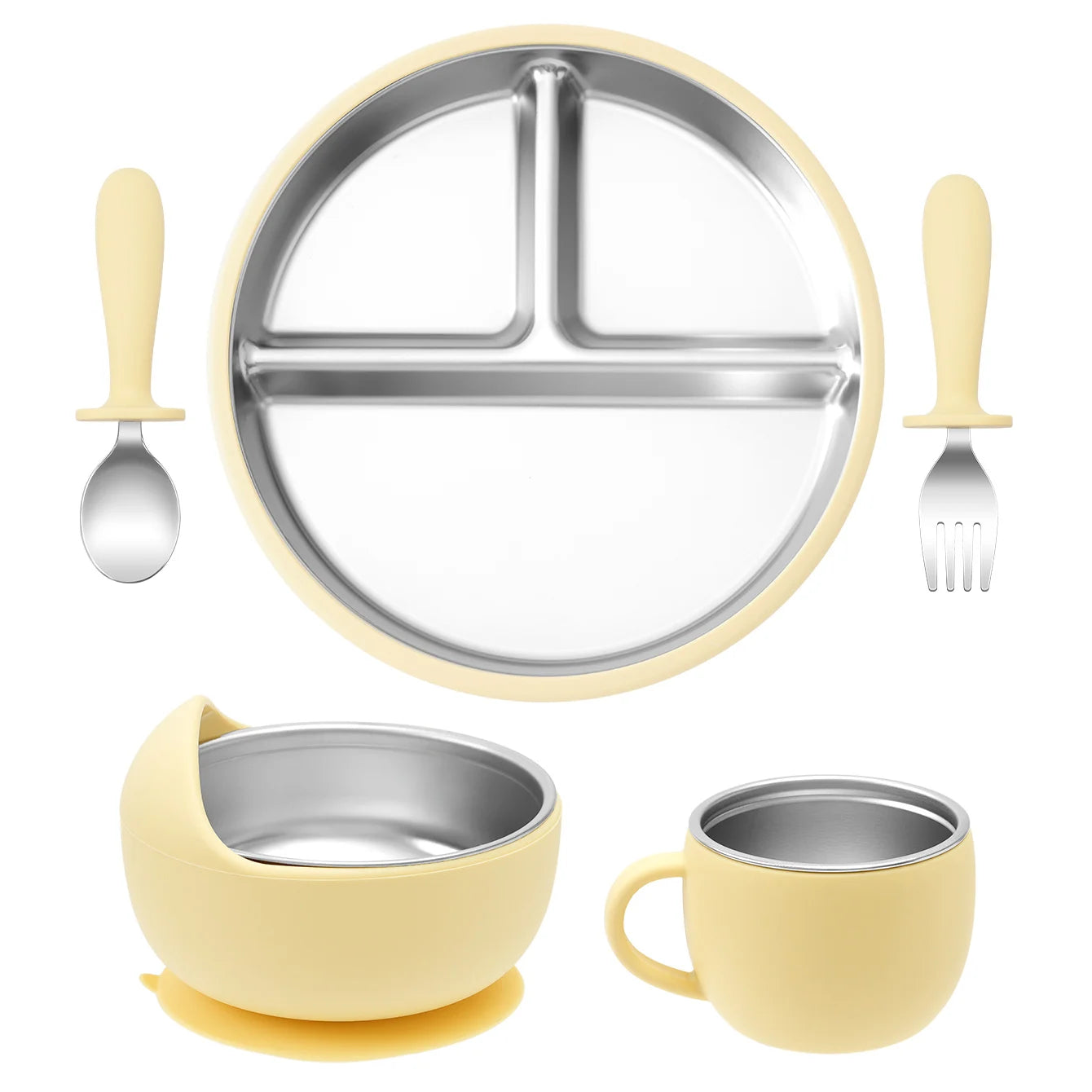
A stainless steel baby feeding set designed for safe everyday feeding — See it in action
Best Plastic Free Baby Feeding Products: Top Picks by Category
Best stainless steel baby feeding set
A quality stainless steel baby feeding set is ideal for families wanting exceptional durability, dishwasher compatibility, and a plate that stays put during self-feeding practice. It works well from baby-led weaning through the toddler years.
Best silicone baby feeding set
Food-grade silicone feeding sets provide soft edges, suction bases, and flexibility that work especially well for younger babies beginning solids.
Best stainless steel baby plate set
Parents looking for long-lasting dinnerware often prefer stainless steel divided plates that transition easily from purees to finger foods and family meals.
Best cups, utensils, and snack containers
Mixing materials often provides the most practical setup. Stainless steel cups, silicone spoons, leak-resistant snack containers, and training utensils can complement one another.
Best starter set by age
- 6–9 months: Silicone bowl and soft spoon.
- 9–18 months: Stainless steel plate with beginner utensils.
- 18 months+: Complete stainless steel baby feeding set with cup and divided plate.
Why Choose Plastic Free Baby Feeding Products?
Many families choose plastic free baby feeding products because they value durability, easy maintenance, and materials that hold up well through years of daily use. Rather than avoiding plastic entirely, many caregivers simply reduce unnecessary plastic exposure where practical.
Health considerations
High-quality stainless steel, tempered glass, and food-grade silicone are widely used food-contact materials. Their non-porous surfaces are generally easy to clean and less likely to retain food odors or stains.
Environmental benefits
Long-lasting feeding products are replaced less frequently, helping reduce household waste. Stainless steel products can often remain useful through multiple children.
When plastic may still be appropriate
Quality BPA-free plastic still has a place for travel, daycare, or situations where lightweight tableware is preferred. Replace plastic items once they become heavily scratched, warped, or difficult to clean.
Material Comparison: Stainless Steel vs Silicone vs Glass vs Bamboo
| Material | Advantages | Limitations | Best For |
|---|---|---|---|
| Stainless Steel | Extremely durable, stain resistant, dishwasher safe | Can become warm with hot foods | Daily meals and long-term use |
| Silicone | Soft, flexible, often includes suction bases | May retain odors over time | Early self-feeding |
| Glass | Non-porous and heat resistant | Heavier and breakable | Food preparation and supervised meals |
| Bamboo | Natural appearance and lightweight | Requires careful maintenance and may wear sooner | Occasional home use |
For most families seeking safe baby feeding materials, stainless steel and silicone offer the strongest balance between durability, ease of cleaning, and everyday practicality.
Silicone vs Stainless Steel Baby Feeding Set: Which Is Better?
Safety comparison
Both food-grade silicone and high-quality stainless steel are commonly used for infant feeding products. Choosing reputable manufacturers and following care instructions is more important than focusing on one material alone.
Durability
Stainless steel generally lasts much longer, resisting scratches, staining, and everyday wear better than silicone.
Ease of cleaning
Both materials clean easily in the dishwasher, although stainless steel is less likely to retain food odors after repeated use.
Best use cases by age
- Starting solids: Silicone bowls and spoons.
- Baby-led weaning: Stainless steel plates with rounded edges.
- Toddlers: Stainless steel complete feeding sets for everyday family meals.
Why Many Families Choose Stainless Steel
Long-term durability
A stainless steel baby feeding set withstands years of daily meals without cracking, fading, or absorbing food stains. Many families continue using the same set well into the toddler years.
Chemical-free confidence
Because stainless steel is non-porous and highly resistant to corrosion, it remains a trusted material for repeated food contact when properly cared for.
Travel and outdoor use
Unlike glass, stainless steel handles drops well, making it practical for picnics, family trips, and outdoor meals while remaining easy to clean afterward.
Families often pair steel plates with items from Health & Safety collections to build a worry-free feeding space.
Is Plastic Still Safe? Understanding Plastic Feeding Sets
Pros
- Affordable and widely available
- Lightweight for travel
- Often available in colorful child-friendly designs
Cons
- Scratches can make cleaning more difficult.
- Some foods leave lasting stains.
- May require replacement sooner than stainless steel.
When to replace plastic items
Replace feeding products that become cracked, heavily scratched, warped, or difficult to clean thoroughly. Regular inspection helps maintain safe mealtime habits.
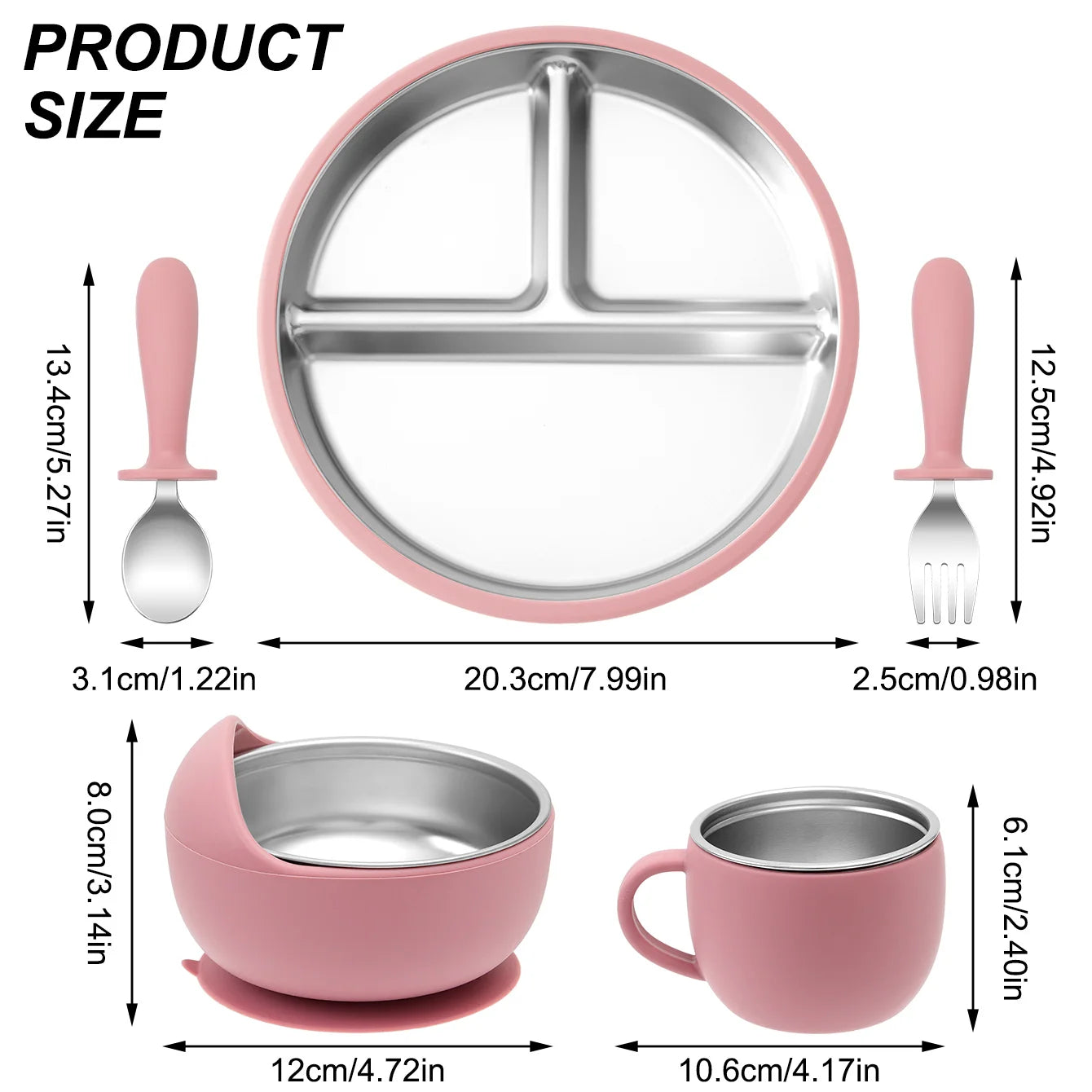
Choosing the right infant plate set for confident self-feeding — See it in action
How the Right Feeding Set Supports Baby-Led Weaning and Independent Eating
6–12 months
Soft spoons, small portions, and stable bowls help babies explore textures while developing hand-eye coordination.
12–24 months
Heavier stainless steel plates help reduce sliding, allowing toddlers to practice scooping and using utensils more successfully.
Toddlers
As meals become more varied, divided plates and child-sized utensils encourage independent eating while minimizing frustration.
Combining a sturdy plate with age-appropriate utensils from Baby Growth & Learning supports coordination and patience.
Feeding & Nursing
How to Choose the Best Non Toxic Baby Feeding Set
Safety certifications
Choose products made from recognized food-contact materials and purchase from reputable manufacturers.
Food-grade materials
Look for stainless steel, food-grade silicone, or other materials designed specifically for repeated food use.
Dishwasher compatibility
Easy cleaning encourages better hygiene and saves time during busy family routines.
Budget vs premium
Premium stainless steel feeding sets often cost more initially but may provide better long-term value by lasting through multiple developmental stages.
Many caregivers build a starter bundle by mixing plates with essentials from Baby Care Essentials to simplify daily routines.
Care, Cleaning, and Sterilization Guide
Stainless steel
Wash with warm soapy water or in the dishwasher. Dry thoroughly to maintain appearance.
Silicone
Dishwasher safe for most products. Periodically deep clean according to manufacturer instructions if odors develop.
Glass
Inspect regularly for chips or cracks before use.
Bamboo
Hand wash when recommended and avoid prolonged soaking to extend product life.
Product Spotlight: Plastic Free Stainless Steel Baby Feeding Set
A stainless steel baby feeding set combines durability, easy cleaning, and dependable stability for everyday family meals.
Who it's best for
Ideal for families seeking a long-lasting plastic free baby feeding set that supports baby-led weaning through the toddler years.
Key features
- Stain and odor resistant
- Stable design for self-feeding practice
- Easy dishwasher cleanup
- Suitable for everyday use
Pros and limitations
Pros: Excellent durability, long lifespan, simple maintenance, and dependable stability.
Considerations: Slightly heavier than plastic, though many parents appreciate the added stability during meals.
View the stainless steel baby feeding set
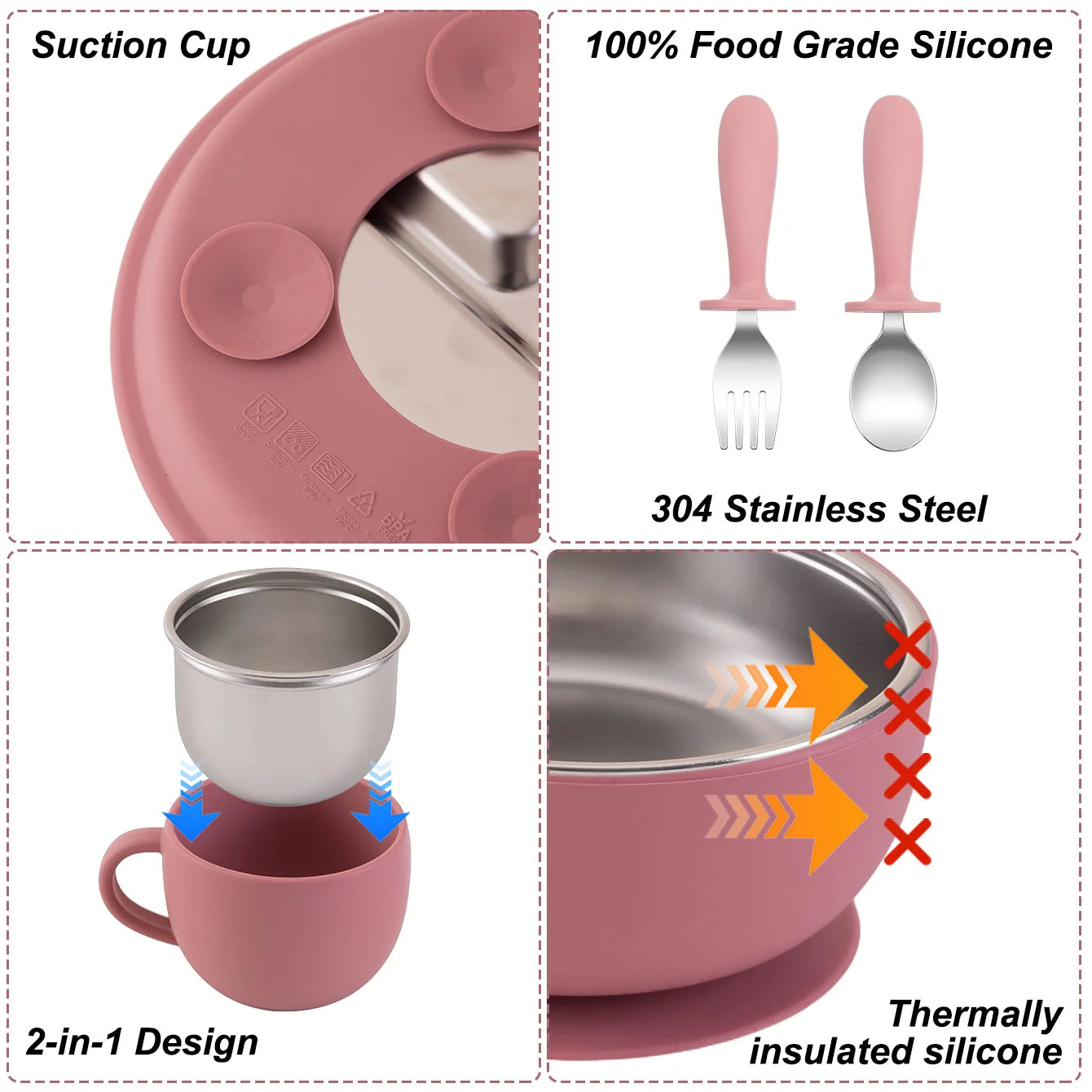
A durable stainless steel baby feeding set built for everyday family meals — See it in action
Get yours now
Frequently Asked Questions
Is stainless steel safe for babies?
Yes. High-quality stainless steel is widely used for food-contact products because it is durable, non-porous, and easy to clean.
Is silicone or stainless steel better for baby feeding?
Silicone works well for younger babies beginning solids, while stainless steel is often preferred for long-term durability and everyday meals.
What is the safest material for baby feeding products?
Food-grade stainless steel, food-grade silicone, tempered glass, and other materials intended for food contact can all be appropriate choices when used according to manufacturer guidance.
Can silicone and stainless steel be used together?
Yes. Many families combine stainless steel plates with silicone spoons, suction mats, or bibs to get the advantages of both materials.
How long do plastic free feeding sets last?
Well-made stainless steel feeding sets can last for many years with proper care, often outlasting several plastic alternatives.
Are bamboo baby feeding sets a good choice?
Bamboo can be suitable for light home use, but it generally requires more careful maintenance and may not last as long as stainless steel.
Related Guide: Best BPA-Free Feeding Set Toddler: Side-by-Side Picks





