

What is a toddler feeding starter kit and does it really help with first self-feeding?
A toddler feeding starter kit combines bowls, plates, cups, and infant feeding utensils designed for small hands and early coordination. The right toddler feeding starter kit supports self-feeding by reducing spills, improving grip control, and helping toddlers build confidence during meals, making first self-feeding less stressful for both parents and children.
Toddler Feeding Starter Kit Comparison for First Self-Feeding
⏱ 7 min read
Toddler feeding starter kit comparisons can save parents weeks of frustration when self-feeding begins. This guide focuses on what actually matters at the table: comfort, safety, mess control, and adaptability. If you’re wondering which feeding starter kit truly supports independence while keeping mealtime calmer, you’re in the right place.
When toddlers start insisting on feeding themselves, excitement often meets chaos. Food ends up everywhere, spoons get tossed, and parents question whether the “best infant feeding set” even exists. The good news? With the right setup, self-feeding can become a skill-building routine instead of a daily cleanup marathon.
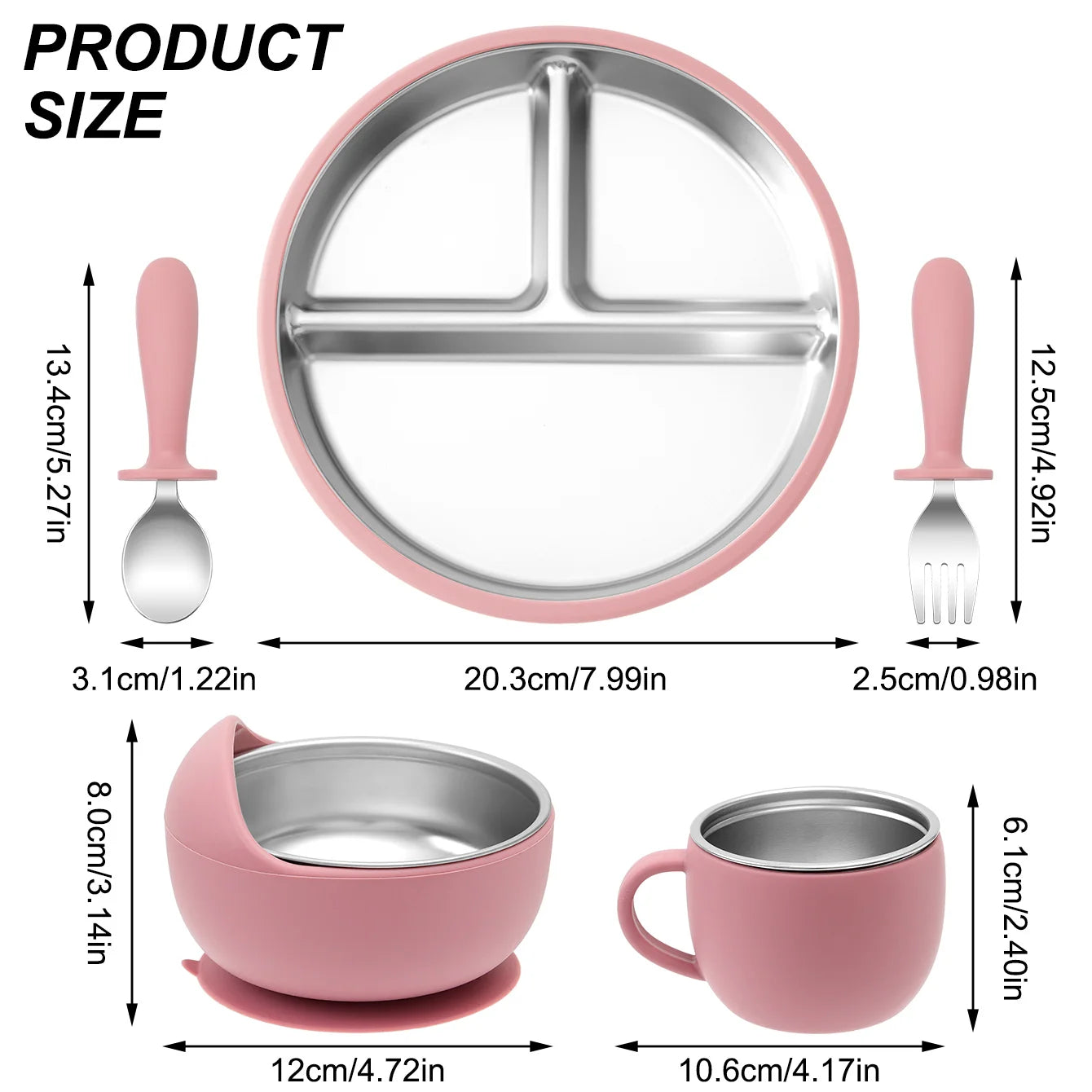
Toddler feeding starter kit essentials designed for early independence 💡 See it in action
Explore supportive mealtime essentials: Feeding & Nursing
Why a Feeding Starter Kit Matters for Self-Feeding
A toddler feeding starter kit is more than matching dishes. It’s a learning tool that supports motor skills, independence, and positive mealtime habits. When utensils are too large or bowls slide around, toddlers get frustrated quickly.
- Encourages hand-eye coordination
- Reduces spills and tipping
- Builds confidence with repeat success
- Supports smoother transitions from assisted feeding
Parents who choose a well-designed feeding starter kit often report calmer meals within weeks, especially during baby-led weaning stages.
What to Look for in the Best Infant Feeding Set
A high-quality toddler feeding starter kit should balance durability, safety, and usability. Here’s what experienced parents prioritize most.
Infant Feeding Utensils Sized for Small Hands
Short handles, lightweight materials, and rounded edges make it easier for toddlers to scoop and bring food to their mouths without strain.
Non-Slip or Weighted Bases
Bowls and plates that stay put reduce flipping and tossing. This single feature can dramatically cut down cleanup time.
Safe, Long-Lasting Materials
Many parents prefer stainless steel or food-grade silicone over plastic for durability and peace of mind.
Helpful related tools: Feeding Tools
Side-by-Side Toddler Feeding Starter Kit Comparison
| Feature | Basic Plastic Set | Silicone Set | Stainless Steel Set |
|---|---|---|---|
| Durability | Low–Medium | Medium | High |
| Spill Resistance | Low | Medium–High | High |
| Ease of Cleaning | Medium | High | High |
| Long-Term Use | Short-Term | Medium | Long-Term |
This comparison shows why many parents upgrading from basic sets look toward more durable options once toddlers eat independently every day.
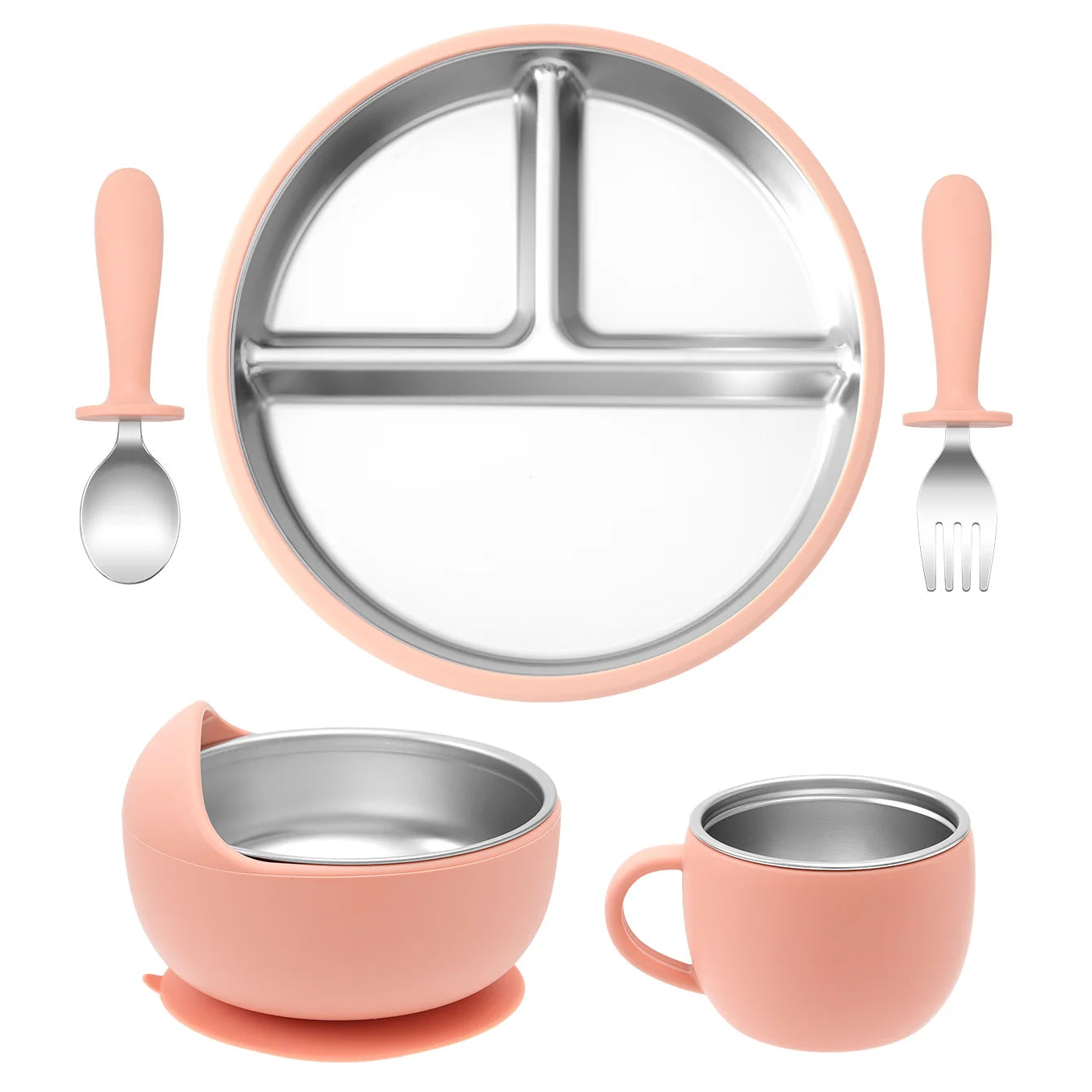
Comparing feeding starter kit materials for real toddler use 💡 See it in action
Why Stainless Steel Feeding Starter Kits Stand Out
A stainless steel toddler feeding starter kit offers durability, stability, and a clean eating surface that holds up to daily use. Parents often notice fewer dents, less tipping, and easier cleanup compared to lighter alternatives.
- Resists staining and odors
- Weighted feel helps prevent spills
- Suitable for long-term toddler use
- Pairs well with silicone sleeves or suction bases
One popular option is the stainless steel baby feeding set, often chosen by families who want a long-lasting first feeding set.
Support safer routines: Health & Safety
Real-Life Mealtime Scenarios Parents Recognize
Scenario 1: A 10-month-old practicing baby-led weaning keeps flipping lightweight bowls. Switching to a heavier feeding starter kit reduces spills within days.
Scenario 2: A toddler refuses help and wants “do it myself.” Properly sized infant feeding utensils allow successful scooping without frustration.
Scenario 3: Busy parents value sets that clean quickly. Dishwasher-safe materials simplify evenings.
These small wins build consistency and confidence for both child and caregiver.
How to Choose the Right Kit for Your Toddler
- Assess your child’s current motor skills
- Decide between lightweight or weighted dishes
- Check compatibility with your cleaning routine
- Choose materials that fit your household priorities
Many parents start with a simple feeding starter kit, then upgrade to more durable options as skills improve.
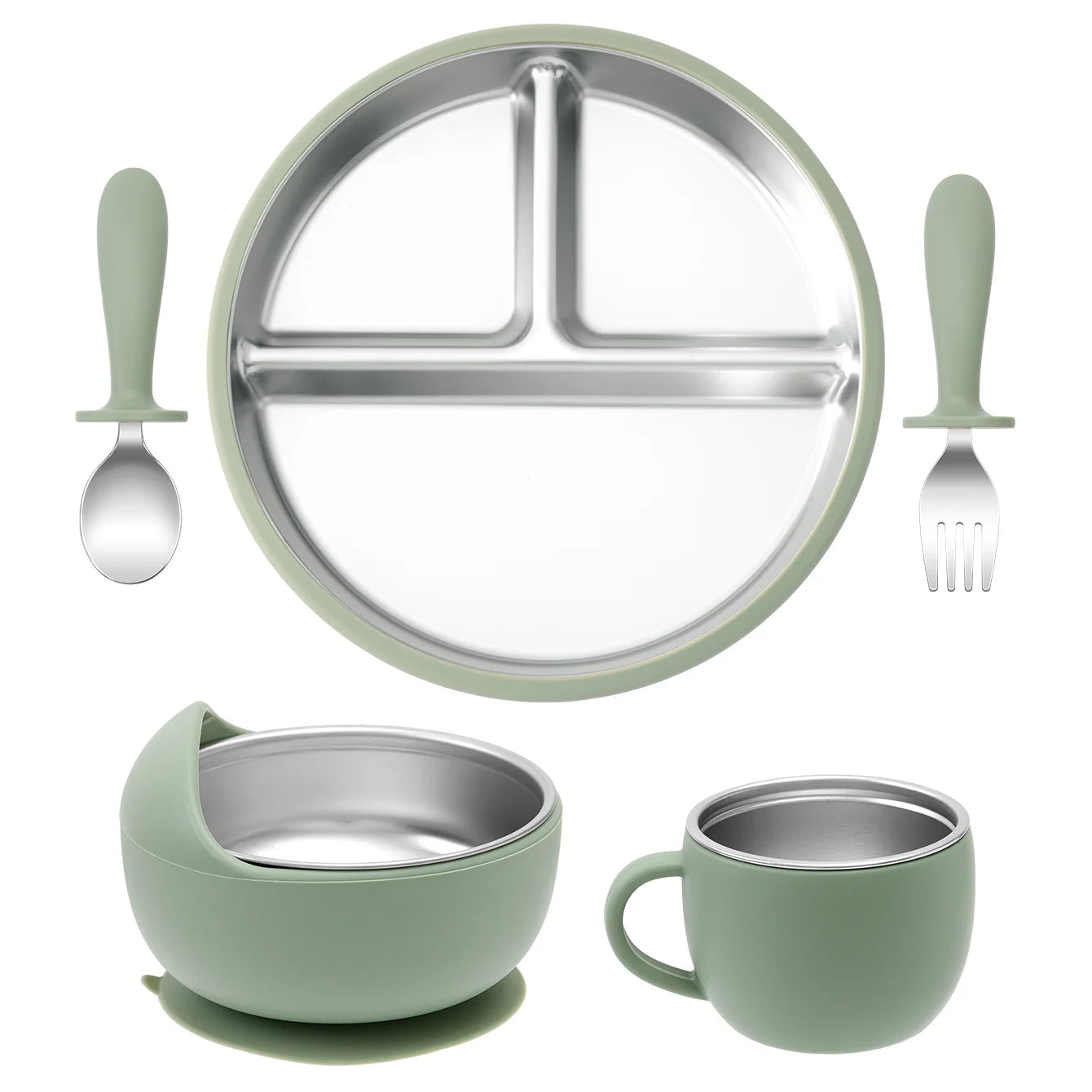
A best infant feeding set growing with self-feeding toddlers 💡 See it in action
Encourage independence beyond meals: Baby Growth & Learning
Quick Parent FAQs
When should I introduce a toddler feeding starter kit?
Most parents introduce a toddler feeding starter kit between 6–10 months, depending on readiness and interest in self-feeding.
Is stainless steel safe for toddlers?
Yes. High-quality stainless steel sets are widely used for infant feeding utensils due to durability and easy cleaning.
Do I need a full set or just utensils?
A full feeding starter kit provides consistency and stability, which often helps toddlers learn faster than mixing random pieces.
Related Guide: Best BPA-Free Feeding Set Toddler: Side-by-Side Picks





