

Toddler Fork and Spoon Set Comparison for First Independent Meals
What is the best toddler fork and spoon set for first independent meals?
The best toddler fork and spoon set supports safe grip, soft materials, and balanced weight so small hands can self-feed confidently. A well-designed infant spoon and fork set reduces mess, protects gums, and accelerates self feeding skills development by matching utensil shape to toddler motor control.
Toddler Fork and Spoon Set Comparison for First Independent Meals
Choosing a toddler fork and spoon set isn’t just about cute colors—it’s about safety, comfort, and helping your child feel proud of every bite. This comparison walks through real differences in design, materials, and ease of use so you can pick utensils that truly support confident, happy first meals.
⏱ 6 min read
Messy floors, tossed spoons, and frustrated faces—does this sound familiar at mealtime? Many parents don’t realize how much utensil design affects early independence. The right infant spoon and fork set can turn chaotic meals into small wins, helping toddlers feel capable while easing daily cleanup.
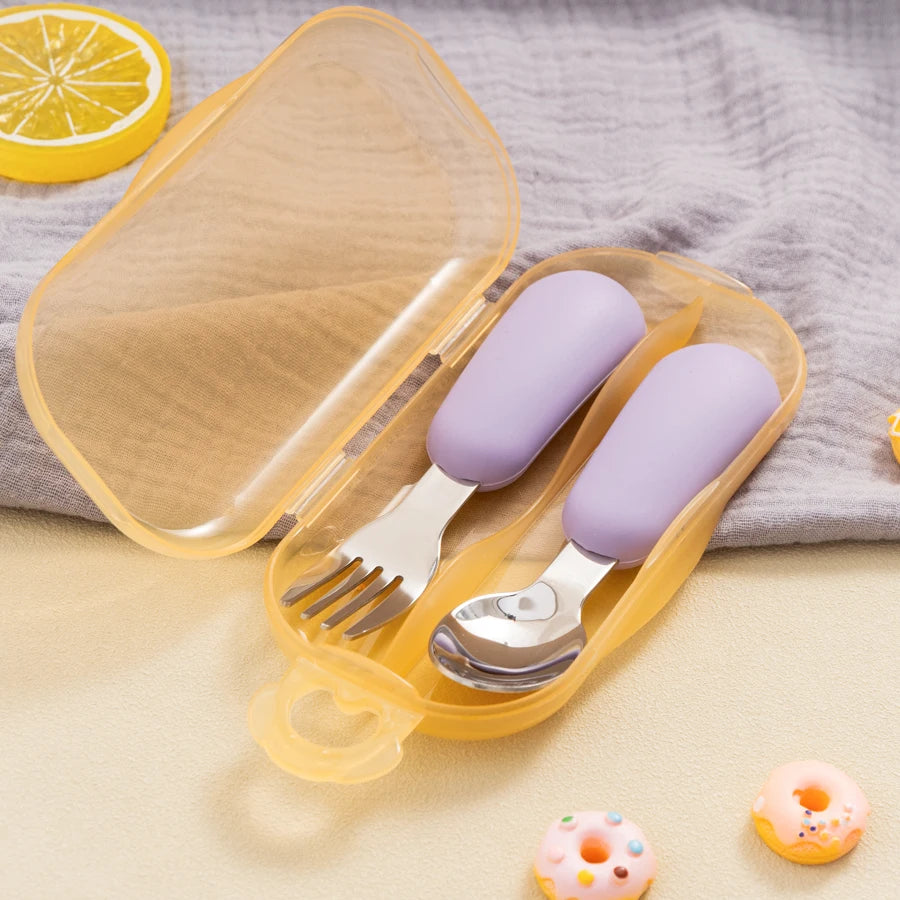
A toddler fork and spoon set built for comfort and self feeding skills development 💡 See it in action
Why Utensil Design Shapes Early Eating Success
The toddler fork and spoon set your child uses influences more than eating—it affects confidence, coordination, and patience. Poorly sized handles or hard edges can cause drops, gum discomfort, or refusal to try again.
- Soft tips protect sensitive gums
- Short handles improve control
- Balanced weight reduces wrist strain
- Textured grips prevent slipping
Feeding specialists often point out that utensils aligned with natural grasp patterns speed up self feeding skills development by weeks.
Side-by-Side Comparison of Popular Toddler Sets
| Feature | Silicone Set | Plastic Set | Metal Trainer Set |
|---|---|---|---|
| Gum Safety | Excellent | Moderate | Low |
| Grip Comfort | High | Medium | Medium |
| Mess Reduction | High | Low | Medium |
| Cleaning Ease | Dishwasher-safe | Dishwasher-safe | Hand wash preferred |
Silicone options consistently stand out for toddlers just starting independent meals, especially when paired with items from Feeding & Nursing collections for a cohesive setup.
Materials and Safety Parents Overlook
Not all materials are equal when it comes to early feeding. Silicone offers flexibility that protects gums, while rigid materials can discourage repeated attempts.
- Food-grade silicone resists cracking
- No sharp edges near lips
- Heat resistance for warm foods
- Free from common irritants
Parents focused on holistic safety often explore complementary items in Health & Safety to keep routines worry-free.
Grip and Ergonomics for Tiny Hands
Handles designed for adult hands don’t translate well to toddlers. Ergonomic toddler cutlery supports palmar grasp and early pincer development.
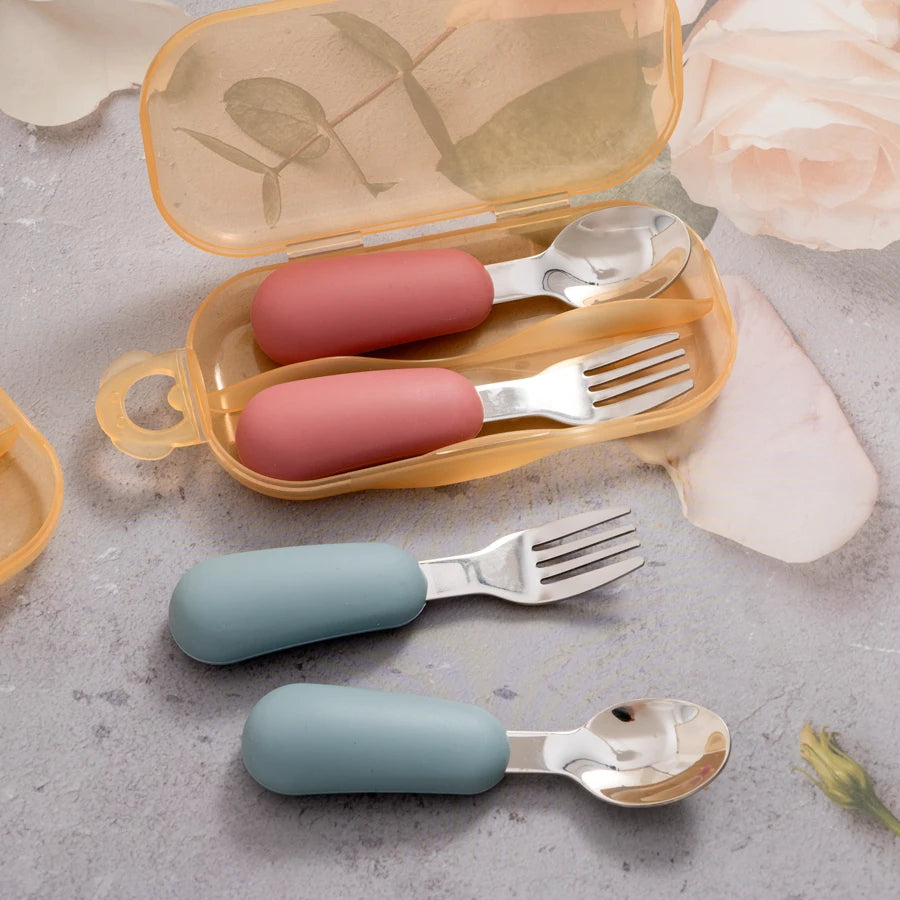
An infant spoon and fork set shaped to support self feeding skills development 💡 See it in action
Look for slightly curved handles and textured surfaces. These details help toddlers scoop successfully, reinforcing positive feedback loops during meals.
Which Set Fits Each Feeding Stage Best?
Different stages call for different tools. A toddler fork and spoon set that works at 10 months may frustrate a 2-year-old seeking independence.
- Early stage: soft silicone spoon only
- Transition stage: spoon + blunt fork
- Confidence stage: firmer tips with control
- Skill-building stage: varied textures
Combining utensils with supportive items from Baby Growth & Learning collections encourages steady progress.
Many parents favor the baby silicone fork spoon option because it adapts across multiple stages without constant replacements.
What Real Parents Notice After 30 Days
Across reviews, caregivers report fewer dropped utensils, shorter meal times, and more willingness to self-feed. One parent shared that switching sets reduced cleanup time by nearly half.
- Less frustration at the table
- Improved bite accuracy
- Greater toddler confidence
- More relaxed family meals
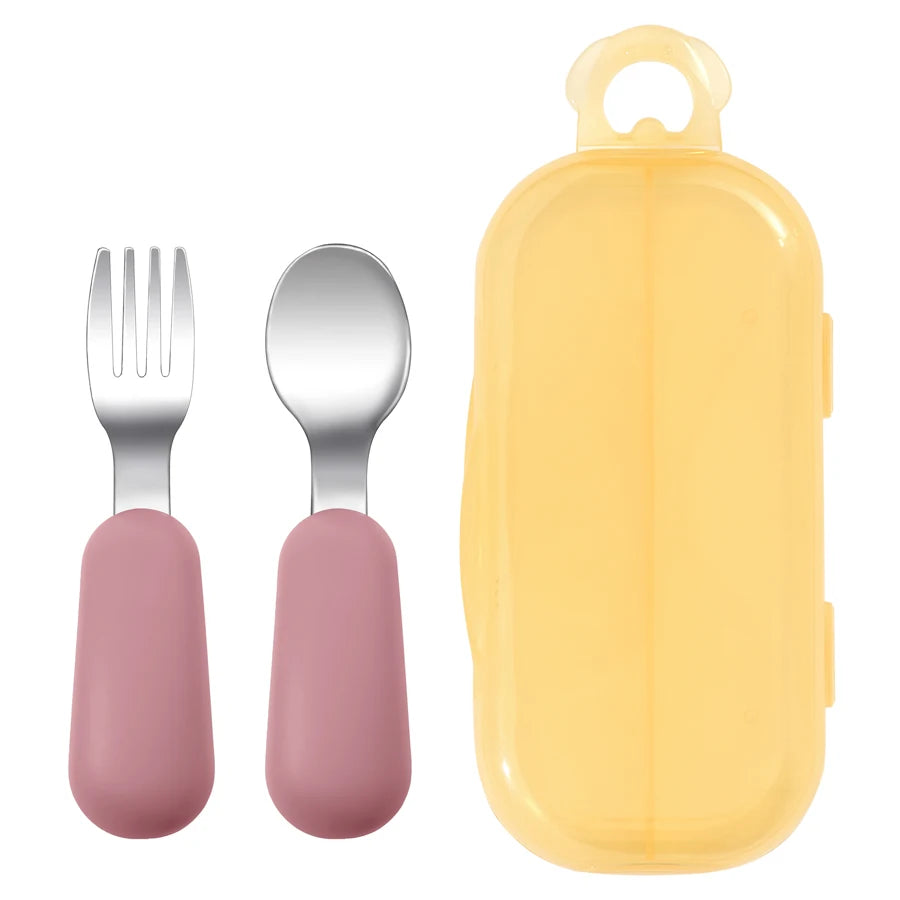
A toddler fork and spoon set that grows with your child 💡 See it in action
Parents often pair utensil upgrades with feeding accessories from Feeding Tools to create smoother routines.
Mini FAQ
When should toddlers start using a fork?
Most toddlers can begin experimenting with a blunt fork around 12–15 months, depending on coordination and interest.
Is silicone better than plastic for utensils?
Silicone is gentler on gums and offers better grip, making it a preferred choice for early self-feeding stages.
How many utensil sets does a toddler need?
Two to three sets allow for rotation during washing and help maintain consistent routines.
Related Guide: Best Utensils for Baby Self Feeding Compared for Easy Learning





