

Months Old Tummy Time: The Complete Month-by-Month Guide From Birth to Crawling
Tummy time is one of the most important activities for infant development during the first year of life. Many parents wonder how many minutes of tummy time their baby needs, when to start, how to do it safely, and whether their child is progressing normally. This comprehensive guide explains tummy time from birth through 12 months, including developmental milestones, safety recommendations, strategies for reluctant babies, and practical activities that support healthy motor skill development.
Parents looking for additional developmental resources can explore the Baby Growth & Learning collection and the Baby Growth & Learning Tips resource center for age-appropriate learning and movement ideas.
What Is Tummy Time and Why Is It Important?

Tummy time refers to supervised periods when an awake baby is placed on their stomach. This simple activity helps strengthen muscles that support head control, rolling, sitting, crawling, and eventually walking.
Definition of Tummy Time
Tummy time is structured floor play performed while a baby is awake and closely supervised. It can begin shortly after birth and gradually increase as babies develop strength and tolerance.
How Tummy Time Supports Early Infant Development
When babies spend time on their stomachs, they must work against gravity to lift and turn their heads. This movement strengthens neck, shoulder, back, and core muscles. These muscle groups form the foundation for future gross motor skills.
The Connection Between Tummy Time and Future Motor Skills
Tummy time contributes to developmental readiness for rolling, crawling, standing, and walking. Consistent floor play also supports visual tracking, sensory processing, balance, and body awareness.
Benefits of Tummy Time for Babies

Improves Head Control and Neck Muscle Strength
Newborns are born with limited head control. Regular tummy time encourages babies to lift, turn, and stabilize their heads, helping them gain strength more efficiently.
Supports Core Strength Development
Core muscles play a major role in posture, balance, sitting, crawling, and walking. Tummy time naturally activates these muscle groups during movement and exploration.
Encourages Rolling, Sitting, Crawling, and Walking
Babies develop movement skills sequentially. Strong foundations developed during tummy time often support smoother transitions into rolling, sitting independently, crawling, and cruising.
Reduces the Risk of Positional Plagiocephaly
Because babies spend significant time sleeping on their backs, supervised tummy time provides valuable pressure relief that may help reduce flat spots on the head.
Promotes Sensory and Visual Development
During tummy time, babies view their environment from a different angle. This promotes visual tracking, depth perception, and sensory exploration.
How Much Tummy Time Does a Baby Need by Age?
Quick-Reference Tummy Time Schedule Table: Birth to 12 Months
| Age | Recommended Daily Goal | Typical Focus |
| 0-1 Month | 3-5 minutes several times daily | Introduction |
| 1-2 Months | 15-20 minutes total | Head lifting |
| 2-3 Months | 20-30 minutes total | Neck strength |
| 3-4 Months | 30-45 minutes total | Upper body control |
| 4-6 Months | 45-60 minutes total | Rolling readiness |
| 6-9 Months | 60+ minutes through play | Crawling preparation |
| 9-12 Months | Integrated floor play | Mobility development |
Daily Tummy Time Goals by Developmental Stage
Short, frequent sessions are usually more effective than one long session. Parents should focus on consistency rather than perfection. Every supervised minute contributes to development.
Month-by-Month Tummy Time Development Guide
Newborn (0-1 Month): First Introduction to Tummy Time
Begin with brief tummy time sessions on a parent's chest or a firm play surface. Sessions may last only one or two minutes initially.
1 Month Old: Building Early Neck Strength
Babies begin lifting their heads briefly and turning from side to side. Multiple short sessions throughout the day are beneficial.
2 Months Old: Increasing Engagement and Head Lifting
Many babies start lifting their heads higher and showing more curiosity about their surroundings.
3 Months Old: Developing Better Head Control
Improved head control allows babies to stay engaged longer. Reaching for toys may begin during tummy time.
4 Months Old: Preparing for Rolling
Babies often push up through their arms and demonstrate improved shoulder stability.
5 Months Old: Strengthening Core and Shoulder Muscles
Core engagement becomes increasingly important as babies prepare for more advanced movement patterns.
6 Months Old: Transitioning Toward Sitting Skills
Many babies can roll independently and spend more time exploring different positions.
7-8 Months Old: Crawling Readiness Development
Weight shifting, rocking, and pivoting become common. These movements are important precursors to crawling.
9-10 Months Old: Advanced Mobility Practice
Babies often crawl, pull to stand, and move confidently between positions.
11-12 Months Old: Maintaining Strength for Walking Skills
Floor play remains valuable even as babies begin cruising and taking independent steps.
For families supporting movement milestones, resources within the Mobility & Training collection can provide additional developmental play ideas.
A developmental play gym can provide a stimulating environment for younger infants. One example is the Baby Activity Gym with Musical Play Mat for Early Learning.

Safe Tummy Time Setup: Step-by-Step Instructions

When to Start Tummy Time
Most healthy newborns can begin tummy time shortly after birth once parents receive guidance from healthcare providers.
Best Surfaces for Tummy Time
Choose a clean, firm, flat surface. Avoid soft mattresses, couches, or elevated surfaces.
Safe Positioning Techniques
- Place baby on a firm surface.
- Remain within arm's reach.
- Use toys or facial interaction for engagement.
- End the session if baby becomes overly distressed.
Common Safety Mistakes to Avoid
- Never leave a baby unattended.
- Do not perform tummy time during sleep.
- Avoid soft bedding and pillows.
- Do not force lengthy sessions.
Parents interested in creating a safe play environment may find helpful resources within the Health & Safety collection.
Signs Your Baby May Need More Tummy Time
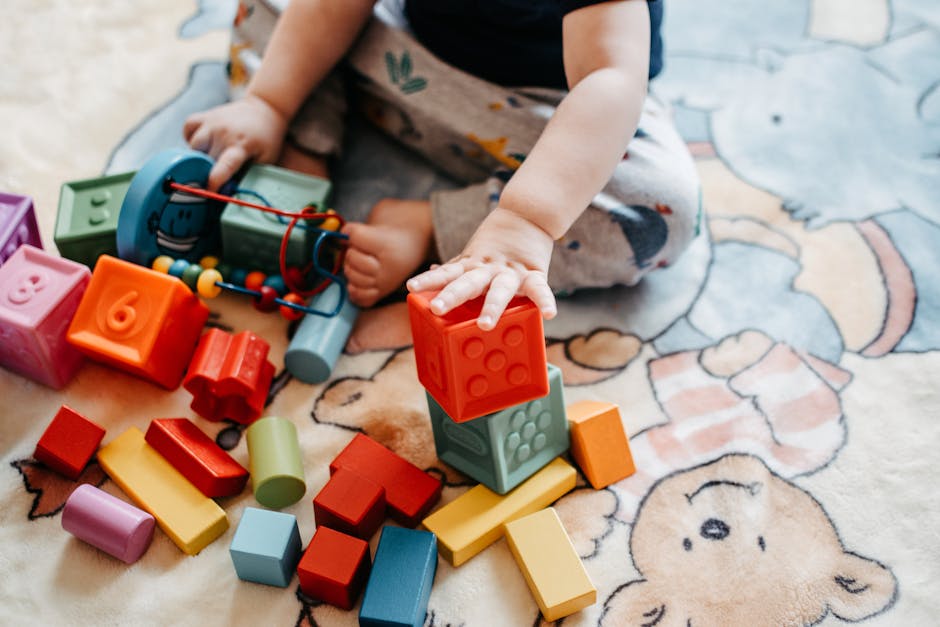
Physical Signs of Limited Tummy Time Practice
- Difficulty lifting the head
- Limited upper-body strength
- Poor tolerance for floor play
- Delayed rolling attempts
Movement Patterns That May Benefit from Additional Floor Time
Babies who spend most of their awake time in swings, carriers, or seats may benefit from more supervised floor exploration.
When Delays May Require Professional Evaluation
If parents have concerns about developmental progress, they should discuss milestones with their pediatrician. Early intervention can be beneficial when needed.
What to Do If Your Baby Hates Tummy Time
Why Some Babies Resist Tummy Time
Tummy time requires effort. Babies may become frustrated when they are still developing the strength necessary to lift their heads and bodies.
Short Session Strategies That Work
Try one- to three-minute sessions several times per day and gradually increase duration as tolerance improves.
Using Parent Interaction to Increase Tolerance
Face-to-face interaction often helps babies remain engaged and motivated.
Toy and Sensory-Based Engagement Techniques
High-contrast books, mirrors, textured toys, and sensory objects can make tummy time more enjoyable.
Alternative Positions for Reluctant Babies
Chest-to-chest tummy time and lap tummy time may serve as useful alternatives while babies build confidence.
A sensory exploration tool that can support engagement during floor play is the Baby Soft Cloth Book – Crinkle Marine Animal Sensory Fun.

Parents can also explore age-appropriate developmental resources in the Sensory Toys collection.
Best Tummy Time Activities by Age
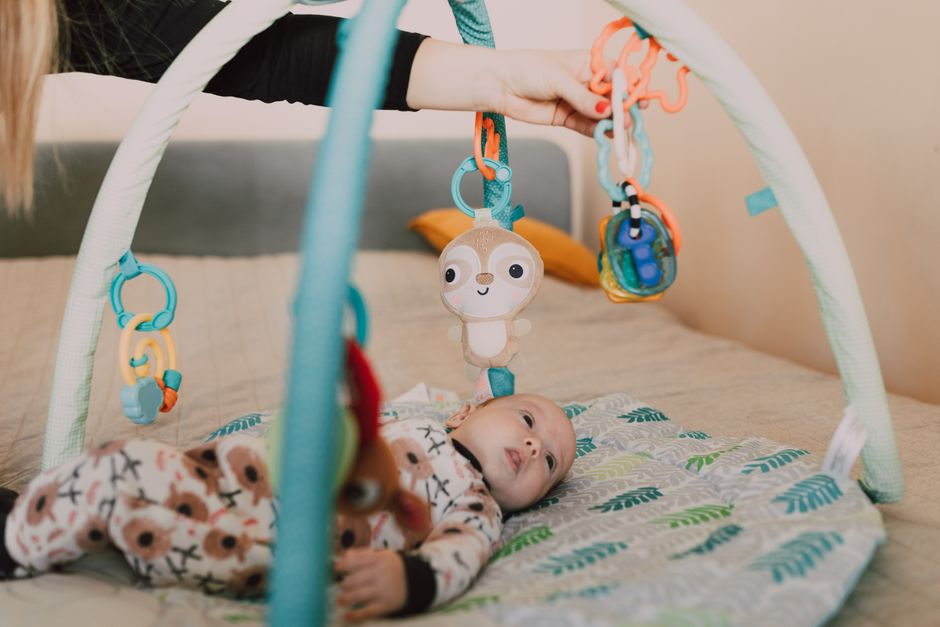
Activities for Newborns and Young Infants
- Chest-to-chest tummy time
- Black-and-white visual cards
- Gentle face tracking
- Mirror observation
Activities for 3-6 Month Old Babies
- Reaching for toys
- Rolling practice
- Supported pivoting
- Interactive songs
Activities for 6-12 Month Old Babies
- Crawling obstacle courses
- Target-reaching games
- Cruising encouragement
- Movement exploration
Recommended Tummy Time Products by Developmental Stage
Best Activity Gym Features for Newborns
Look for soft surfaces, detachable toys, sensory variety, and opportunities for reaching and kicking.
Sensory Cloth Books for Visual and Tactile Exploration
Interactive books can encourage visual attention, reaching, grasping, and sensory discovery.
Developmental Toys for Rolling and Crawling Preparation
Choose toys that encourage movement rather than passive observation. Motivation to move is often a powerful developmental driver.
How to Choose Age-Appropriate Tummy Time Products
- Match toys to developmental stage.
- Prioritize safety and durability.
- Look for sensory variety.
- Select products that encourage active participation.
Explore additional developmental resources through the Baby Care Essentials collection and the Baby Care Tips & Advice center.
Tummy Time, Crawling Development, and Future Mobility Skills
How Tummy Time Builds Crawling Foundations
Crawling requires coordinated use of the neck, shoulders, core, hips, and arms. Tummy time strengthens all of these areas.
The Relationship Between Core Strength and Walking Readiness
Strong trunk muscles help babies maintain balance and stability as they progress toward standing and walking.
What Research Suggests About Early Floor Play
Research consistently supports opportunities for supervised floor-based movement experiences during infancy. These experiences contribute to healthy physical development and exploration.
Developmental Red Flags: When to Talk to Your Pediatrician
Age-Specific Developmental Concerns
- Limited head control beyond expected age ranges
- Persistent asymmetrical movement
- Difficulty tolerating any tummy time
- Noticeable motor delays
When Pediatric Physical Therapy May Be Recommended
Some children benefit from evaluation by pediatric physical therapists who specialize in infant motor development.
Questions to Ask During Well-Baby Visits
- Is my baby's motor development on track?
- How much tummy time is appropriate now?
- Are there exercises we should practice at home?
- Should any concerns be monitored further?
Frequently Asked Questions
How much tummy time should a newborn have each day?
Newborns can begin with a few minutes at a time several times daily and gradually increase as tolerated.
What are the benefits of tummy time for newborns?
Tummy time supports head control, neck strength, core development, sensory exploration, and future mobility skills.
How do I do tummy time safely with a newborn baby?
Always supervise, use a firm surface, and ensure the baby is awake and alert.
What should I do if my baby hates tummy time?
Use shorter sessions, parent interaction, sensory toys, and alternative tummy time positions.
Can a baby get too little tummy time and delay motor development?
Limited opportunities for movement may contribute to slower development of strength and certain motor skills.
When should I start tummy time after birth?
Most healthy babies can begin shortly after birth with guidance from healthcare professionals.
How long should a 2-month-old do tummy time?
Many experts recommend gradually building toward approximately 20 to 30 minutes spread throughout the day.
Does tummy time help babies crawl sooner?
Tummy time helps develop the muscles required for crawling, although every baby reaches milestones at their own pace.
Can tummy time prevent flat head syndrome?
Regular tummy time may help reduce prolonged pressure on the back of the head.
What toys are best for tummy time?
Mirrors, sensory books, activity gyms, textured toys, and high-contrast visual objects are common choices.
Expert Insight: Consistent daily floor play is often more important than achieving a specific number of minutes. Small, enjoyable sessions repeated throughout the day can provide significant developmental benefits.
Tummy time is not a race or a test. It is a gradual developmental journey that helps babies build the strength, coordination, and confidence needed for future milestones. By following age-appropriate recommendations, creating safe opportunities for exploration, and staying consistent with daily practice, parents can support healthy development from the newborn stage through crawling readiness and beyond. For continued guidance, visit the Baby Growth & Learning Tips resource center and explore supportive tools within the Baby Growth & Learning collection.
Pillar Article: Beginner Guide to Gross Motor Development: Milestones, Activities & Red Flags





