

Outdoor Educational Games That Turn Camping Into a Learning Adventure
Modern parents face a growing challenge: finding meaningful ways to reduce screen time while still keeping children engaged, active, and learning. Outdoor educational games solve that problem by transforming camping trips, backyard adventures, and park outings into immersive learning environments. Whether children are exploring textures during a nature scavenger hunt, building shelters from sticks, or practicing map-reading around a campsite, outdoor play naturally develops creativity, STEM thinking, teamwork, and confidence.
Unlike structured classroom activities, outdoor learning encourages curiosity through movement and exploration. Children learn by touching, observing, experimenting, and collaborating. This type of hands-on discovery aligns closely with Montessori-inspired learning methods and supports healthy cognitive development across every age group.
Families looking for more ideas for developmental activities often explore the Baby Growth & Learning collection alongside practical guides from Baby Growth & Learning Tips for age-appropriate educational play inspiration.
Why Outdoor Educational Games Create Better Learning Experiences Than Indoor Play
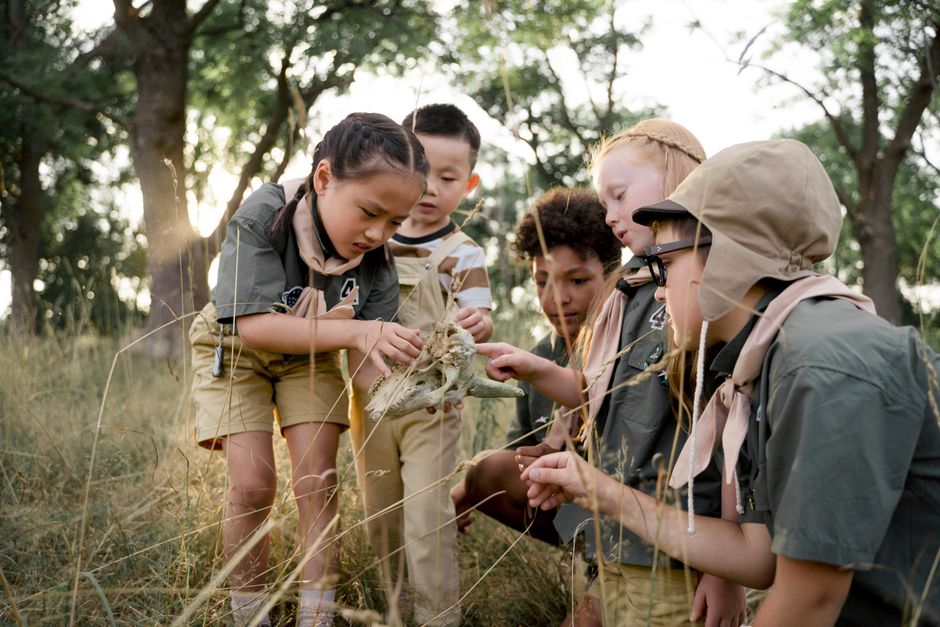
Outdoor environments stimulate multiple senses at once. Children encounter changing sounds, textures, temperatures, and visual patterns that naturally activate problem-solving and observational skills. Educational camping games also promote independence because children learn to make decisions in dynamic environments instead of relying on rigid instructions.
How Outdoor Environments Improve Cognitive Development
Research in early childhood education consistently shows that outdoor activity improves attention span, memory retention, emotional regulation, and creative thinking. Uneven terrain strengthens coordination and balance, while sensory-rich experiences activate multiple areas of the brain simultaneously.
For example, a simple scavenger hunt can combine:
- Color recognition
- Pattern matching
- Observation skills
- Language development
- Problem-solving
- Memory recall
Outdoor learning also encourages “open-ended play,” where children invent solutions instead of following fixed outcomes. This style of exploration builds confidence and resilience over time.
The Connection Between Montessori Learning and Outdoor Play
Montessori learning focuses on hands-on discovery, independence, movement, and real-world interaction. Outdoor educational games naturally support these principles because children manipulate objects directly rather than passively consuming information.
Nature sorting games, measuring sticks, balancing rocks, or building obstacle courses all support self-directed experimentation. Instead of memorizing facts, children discover patterns and relationships through experience.
Parents who enjoy sensory-based educational activities often combine outdoor exploration with tools from the Sensory Toys collection to extend tactile and visual learning opportunities at home and during travel.
Why Camping Is an Ideal STEM Learning Environment
Camping introduces countless real-world STEM applications. Children estimate distances, test gravity on hiking trails, observe weather changes, build structures, and practice directional awareness.
Outdoor STEM learning naturally includes:
| Camping Activity | Educational Skill |
| Building shelters | Engineering and structural design |
| Reading maps | Spatial reasoning and navigation |
| Identifying plants | Scientific observation |
| Measuring campsite distances | Math and estimation |
| Tracking wildlife | Pattern recognition |
| Campfire storytelling | Language development |
The Outdoor Learning System: How To Structure Educational Camping Games

Successful outdoor learning does not require complicated lesson plans. The best systems rotate between movement, creativity, observation, and reflection while adapting to the child’s age and energy level.
Many families organize activity supplies using lightweight items from the Mobility & Training collection to make campsite transitions easier and more organized.
Step 1: Match Activities to Developmental Goals
Before planning games, identify the primary learning outcome you want to encourage.
| Goal | Recommended Activities |
| Creativity | Nature art and storytelling |
| STEM skills | Measurement games and engineering challenges |
| Motor skills | Obstacle courses and climbing activities |
| Social development | Team scavenger hunts |
| Sensory learning | Texture and sound exploration |
Step 2: Choose the Right Outdoor Environment
Different locations support different educational outcomes.
- Backyards work well for structured learning games
- Campgrounds encourage exploration and independence
- Hiking trails support navigation and observation
- Beaches allow physics and water experiments
- Parks are ideal for cooperative games
Rainy weather backups can also be planned in advance with resources from Sleep & Comfort that help create calm indoor activity spaces.
Step 3: Rotate Between Active, Quiet, and Cooperative Games
Long outdoor days work best when activities alternate between physical movement and calm reflection. High-energy games help release excitement, while quieter observation periods support focus and emotional regulation.
A balanced camping learning schedule might include:
- Morning scavenger hunt
- Midday STEM challenge
- Afternoon free exploration
- Evening journaling or storytelling
Step 4: Build Reflection and Observation Into Play
Learning becomes stronger when children discuss or document their experiences. Encourage kids to sketch plants, describe wildlife sounds, or explain how they solved a challenge.
Reflection questions may include:
- What surprised you today?
- What was hardest to build?
- Which animal tracks did you find?
- How would you improve your design?
Parents who enjoy structured developmental activities often continue learning routines using resources from Baby Care Tips & Advice for everyday enrichment ideas.
Best Outdoor Educational Games for Toddlers and Preschoolers

Toddlers and preschoolers learn best through movement, repetition, and sensory exploration. Outdoor educational games at this age should focus on curiosity, texture discovery, language development, and simple problem solving.
Sensory Nature Hunts for Early Observation Skills
Create a simple scavenger hunt using colors, sounds, textures, or shapes. Ask children to find:
- Something rough
- Something smooth
- A yellow flower
- A leaf larger than their hand
- A sound from a bird or insect
This style of activity develops vocabulary, attention span, and sensory awareness without overwhelming younger children.
Outdoor Shape and Geometry Games
Children naturally recognize patterns outdoors. Arrange rocks into triangles, build squares from sticks, or sort leaves by size and symmetry.
A Montessori-inspired visual example parents sometimes use during travel learning sessions is the Little Bear Geometry Puzzle – Montessori Learning & Fun.

Parents can use similar shape-matching concepts outdoors with pinecones, sticks, stones, and leaves to encourage early STEM thinking.
Camping Pretend Play Stations Using Play Tents
Pretend play helps preschoolers develop language, emotional awareness, and creativity. Outdoor play tents become reading corners, ranger stations, mini markets, or nature labs.
Themed roleplay scenarios encourage children to:
- Practice storytelling
- Improve social communication
- Develop sequencing skills
- Build confidence during independent play
Many parents combine roleplay activities with items from the Baby Growth & Learning collection to create portable learning stations for camping weekends.
Safe Water and Mud Exploration Activities
Water and mud play encourage sensory integration and scientific experimentation. Children can compare wet and dry textures, build mud structures, observe floating objects, or create miniature rivers.
Safety guidelines include:
- Use shallow water only
- Supervise constantly
- Wash hands afterward
- Avoid unknown plants or stagnant water
- Use non-slip footwear
STEM-Based Outdoor Educational Games for Elementary-Age Kids
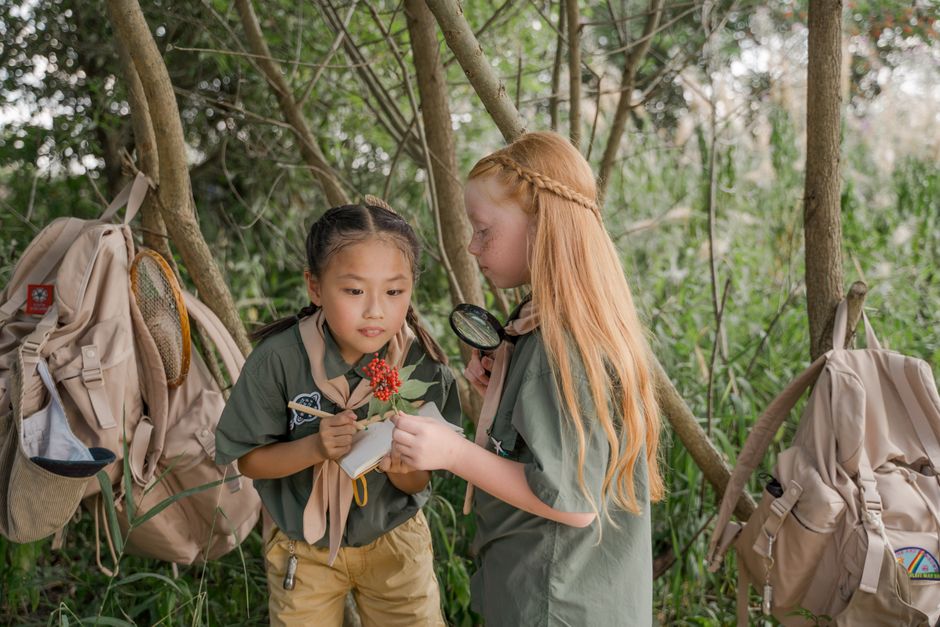
Elementary-age children thrive when outdoor activities include goals, challenges, and opportunities for experimentation. This stage is ideal for introducing engineering, navigation, measurement, and teamwork.
Navigation and Map Reading Challenges
Map-reading activities develop spatial awareness and logical thinking. Start with simple treasure hunts using landmarks, then gradually introduce compasses and directional clues.
Children learn concepts like:
- Distance estimation
- Cardinal directions
- Symbol interpretation
- Sequential reasoning
Outdoor Engineering Challenges With Natural Materials
Challenge children to build bridges, towers, or miniature shelters using sticks, leaves, stones, and rope. These activities teach structural balance and creative problem solving.
Encourage experimentation by asking:
- Which design holds the most weight?
- What makes the structure stronger?
- How can wind resistance be reduced?
Camping Science Experiments Kids Can Do Outside
Simple outdoor science activities turn campsites into living classrooms.
| Experiment | Learning Outcome |
| Shadow tracking | Earth rotation and sunlight |
| Leaf classification | Biology and observation |
| Water filtration challenge | Engineering and environmental science |
| Weather journals | Pattern recognition |
| Floating tests | Density and physics |
Families interested in travel-friendly science setups often explore the Smart Baby Gadgets collection for portable educational tools and organization accessories.
Math and Measurement Games Around the Campsite
Camping naturally creates opportunities for real-world math practice. Children can estimate tree height, measure walking distances, count trail markers, or compare object sizes.
Examples include:
- Measuring tent spacing
- Calculating hiking time
- Estimating campfire wood quantities
- Comparing weights of rocks
These hands-on tasks make abstract math concepts easier to understand because children experience them physically.
Outdoor Problem-Solving Games That Build Real-Life Skills

Problem-solving games teach children how to adapt, communicate, and think critically under changing conditions. Outdoor environments are especially effective because they introduce natural unpredictability.
Team-Based Camping Challenges for Communication Skills
Group games encourage leadership and cooperation. Activities like relay races, shelter building, and scavenger hunts require planning and teamwork.
Assigning rotating roles helps children practice:
- Leadership
- Listening
- Conflict resolution
- Decision making
Nature Survival Simulations for Critical Thinking
Age-appropriate survival games help children think strategically without creating fear or stress.
Examples include:
- Finding the safest campsite location
- Identifying weather changes
- Packing essential gear
- Building emergency shelters
These activities strengthen planning skills while teaching environmental awareness.
Creative Storytelling and Outdoor Roleplay Games
Storytelling games improve sequencing, imagination, and verbal communication. Children can invent forest adventures, create explorer missions, or roleplay wildlife researchers.
Props like maps, flashlights, and pretend camp journals make the experience more immersive while maintaining educational value.
How To Adapt Outdoor Educational Games by Age Group

Children learn differently at each developmental stage. Successful outdoor learning systems adjust challenge levels, activity duration, and supervision needs according to age.
Ages 2-4: Sensory Exploration and Simple Discovery
Young children benefit from:
- Texture hunts
- Water play
- Color matching
- Nature sorting
- Simple obstacle courses
Sessions should remain short, active, and highly supervised.
Ages 5-7: Early STEM and Cooperative Play
This age group enjoys structured games with clear objectives. Introduce:
- Map-reading basics
- Counting games
- Building challenges
- Cooperative scavenger hunts
- Simple science experiments
Children at this stage begin understanding rules, teamwork, and strategic thinking.
Ages 8-12: Strategy, Navigation, and Leadership Challenges
Older children can handle more independence and complex problem solving.
Ideal activities include:
- Advanced navigation games
- Outdoor engineering projects
- Leadership-based team challenges
- Survival simulations
- Nature documentation projects
Encourage kids to plan parts of the activity themselves to build responsibility and confidence.
Camping Learning Kits and Educational Gear That Support Outdoor Play
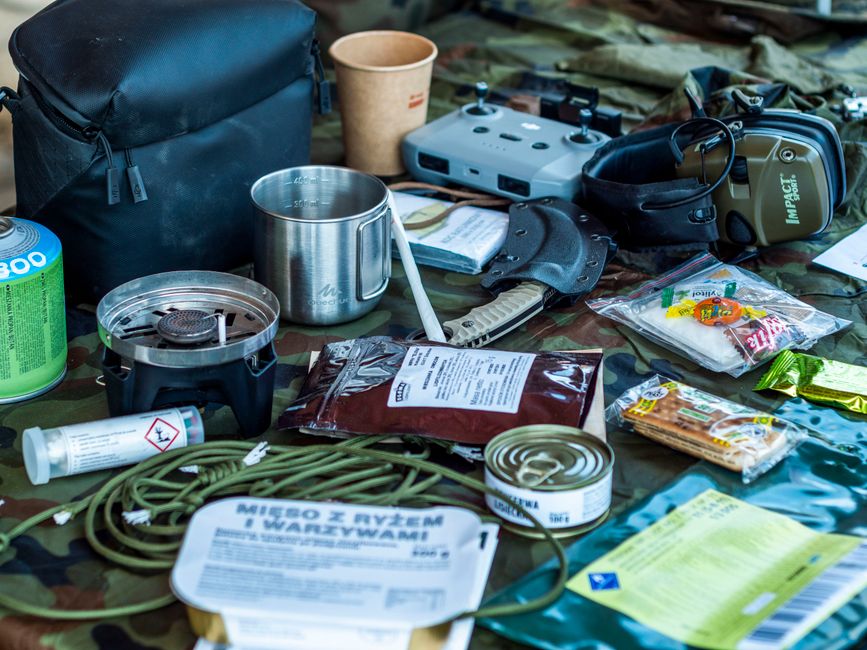
Educational gear should support curiosity and exploration rather than replace hands-on experiences. Portable learning kits make it easier to maintain educational routines during travel and camping weekends.
Portable STEM Kits for Campsites and Parks
Travel-friendly STEM kits often include magnifiers, measuring tools, building components, and observation cards. Compact educational gear works best when it encourages open-ended experimentation instead of scripted outcomes.
Parents preparing outdoor learning systems frequently browse the Health & Safety collection to support safe exploration during extended outdoor activities.
Best Outdoor Learning Tools for Nature Observation
Useful outdoor learning tools include:
- Binoculars
- Magnifying glasses
- Nature journals
- Clipboards
- Field guides
- Measuring tape
These tools encourage children to slow down, observe carefully, and ask deeper questions about their environment.
How To Build a Travel-Friendly Outdoor Learning Bag
A portable learning bag helps families stay organized during camping trips.
Recommended supplies include:
- Notebook and pencils
- Flashlight
- Reusable containers
- Measuring tools
- Nature guide cards
- Lightweight sensory materials
Parents looking for compact organization solutions often pair educational supplies with accessories from the Mom Essentials collection for easier travel planning.
Safe and Responsible Outdoor Learning Practices for Kids

Safety is essential for successful outdoor learning. Clear boundaries and preparation allow children to explore confidently while reducing unnecessary risks.
Outdoor Safety Rules for Educational Play
Important safety guidelines include:
- Establish visible play boundaries
- Keep hydration available
- Monitor weather conditions
- Use sun protection
- Teach emergency contact procedures
- Supervise water activities closely
Children should also learn to respect wildlife and avoid unknown plants.
Teaching Leave No Trace Principles Through Games
Outdoor educational games can teach environmental responsibility through simple challenges.
Ideas include:
- Trash collection races
- Nature preservation scavenger hunts
- Minimal-impact campsite setup competitions
- Wildlife observation without disturbance
These activities help children understand stewardship while building lifelong outdoor habits.
How National Parks and Nature Organizations Support Outdoor Education
Organizations such as the National Park Service, Leave No Trace, and National Wildlife Federation provide educational programs, ranger activities, and printable outdoor learning resources for families.
Parents can also expand safety awareness with practical routines from Health & Safety Tips before longer camping trips.
Rainy-Day and Indoor Backup Educational Camping Activities

Bad weather does not have to interrupt educational momentum. Indoor backup activities can continue creativity, teamwork, and STEM exploration inside cabins, RVs, or tents.
Indoor Tent Learning Stations
Indoor play tents create quiet spaces for reading, storytelling, roleplay, and sensory exploration during rainy days.
A flexible option families sometimes use for indoor and outdoor roleplay is the 3-in-1 Kids Play Tent – Tunnel, Playhouse & Ball Pit Fun.

Parents often transform tent spaces into mini science labs, reading corners, or pretend ranger stations to maintain imaginative learning during poor weather conditions.
Portable Puzzle and Logic Games for Campsites
Compact educational games are useful when outdoor movement becomes limited.
Strong rainy-day options include:
- Logic puzzles
- Story cubes
- Geometry challenges
- Memory games
- Travel chess or strategy games
These activities help preserve cognitive engagement without relying on screens.
Storytelling and Nature Journaling Activities
Journaling helps children process experiences and strengthen communication skills. Encourage kids to:
- Draw wildlife they observed
- Write fictional camping stories
- Create weather logs
- Record discoveries from hikes
- Sketch campsite layouts
This reflective style of learning reinforces memory and deepens emotional connection to outdoor experiences.
Frequently Asked Questions
What are the best outdoor educational games for camping trips with kids?
Some of the best outdoor educational games include scavenger hunts, map-reading challenges, shelter-building activities, nature journaling, STEM experiments, and cooperative obstacle courses. The ideal game depends on the child’s age and developmental stage.
How do you plan camping learning activities for different age groups?
Match activities to developmental goals. Younger children benefit from sensory exploration and simple discovery games, while older kids enjoy navigation, engineering challenges, and leadership-based activities.
What skills do outdoor educational games help children develop?
Outdoor learning supports problem solving, communication, creativity, coordination, STEM thinking, leadership, emotional regulation, and social collaboration.
How can I turn a simple camping trip into a structured learning experience?
Create a flexible schedule that rotates between active play, quiet observation, STEM challenges, and reflection activities like journaling or storytelling.
What are safe outdoor learning activities for preschoolers and toddlers?
Safe activities include sensory nature hunts, shallow water play, color-matching games, texture exploration, and supervised obstacle courses.
What should I pack for educational outdoor play during camping trips?
Useful supplies include notebooks, measuring tools, flashlights, magnifiers, binoculars, field guides, and portable sensory materials.
How do Montessori outdoor activities support child development?
Montessori-inspired outdoor play encourages independence, hands-on learning, self-direction, and exploration through real-world interaction and sensory experiences.
What are the best STEM outdoor games for elementary-age children?
Excellent STEM activities include engineering challenges, compass navigation games, water filtration experiments, shadow tracking, and campsite measurement projects.
Conclusion
Outdoor educational games transform camping trips into meaningful developmental experiences that strengthen creativity, independence, STEM thinking, and confidence. Instead of separating learning from play, outdoor environments naturally combine movement, exploration, and problem solving in ways children genuinely enjoy.
Whether families are organizing scavenger hunts in the backyard, building engineering challenges at a campsite, or creating indoor tent learning stations during rainy weather, the key is consistency and curiosity. Small, repeatable activities often create the strongest long-term learning habits.
For more ideas that support educational exploration, sensory development, and travel-friendly family activities, many parents continue exploring the Baby Growth & Learning collection alongside practical resources from Baby Growth & Learning Tips.
Pillar Article: Play Based Learning for Early Childhood: Activities, Games & Development Guide





