

Resistance Band Exercises vs Hip Thrusts: Bigger Glutes?
Do glute bridge bands or hip thrust bands build more strength?
For most home exercisers, a glute bridge band is one of the most effective tools for building glute strength because it provides continuous resistance, improves hip stability, and reinforces proper movement patterns throughout every repetition. Hip thrust bands can produce greater loading potential when combined with benches or external weights, making them better suited to experienced lifters pursuing maximum strength. For beginners and anyone training at home, a glute bridge band offers an excellent balance of muscle activation, safety, and long-term progression.
Glute Bridge Band vs Hip Thrust Bands: Which Builds More Strength
⏱ 7 min read
Choosing between a glute bridge band and hip thrust bands isn't simply about which exercise feels harder. The better option depends on your training experience, available equipment, recovery needs, and strength goals. While both movements target the glute muscles, they load the hips differently and excel in different situations. This guide compares their biomechanics, benefits, and practical use so you can decide which exercise deserves a place in your lower-body routine.
Glute bridge band setup for a resistance band glute bridge workout. See it in action.
Why Resistance Bands Matter for Glute Strength
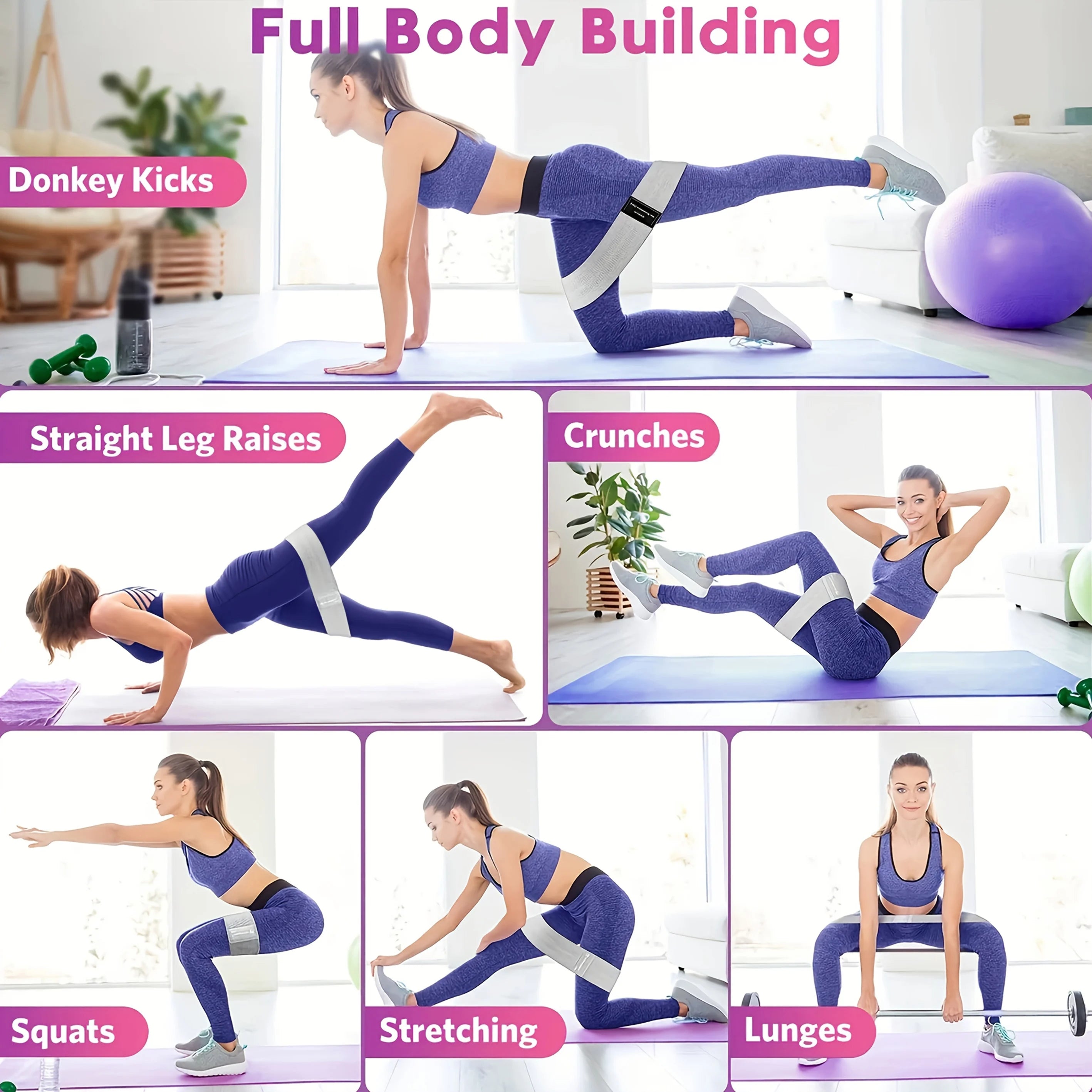
Resistance bands challenge the glutes by creating variable tension that increases as the band stretches. Unlike many machine-based exercises that provide fixed resistance, bands encourage the hips, core, and stabilizing muscles to work together throughout the movement. This makes them especially valuable for home workouts, travel training, warm-ups, and accessory strength sessions.
Whether you're performing a glute bridge or a band hip thrust, resistance bands help improve movement quality while placing relatively little stress on the knees and lower back when proper technique is used.
- Create continuous muscular tension during each repetition.
- Improve mind-muscle connection with the glute muscles.
- Support hip stability and pelvic control.
- Require minimal space and portable equipment.
- Allow gradual progression by increasing band resistance.
What Is a Glute Bridge Band?
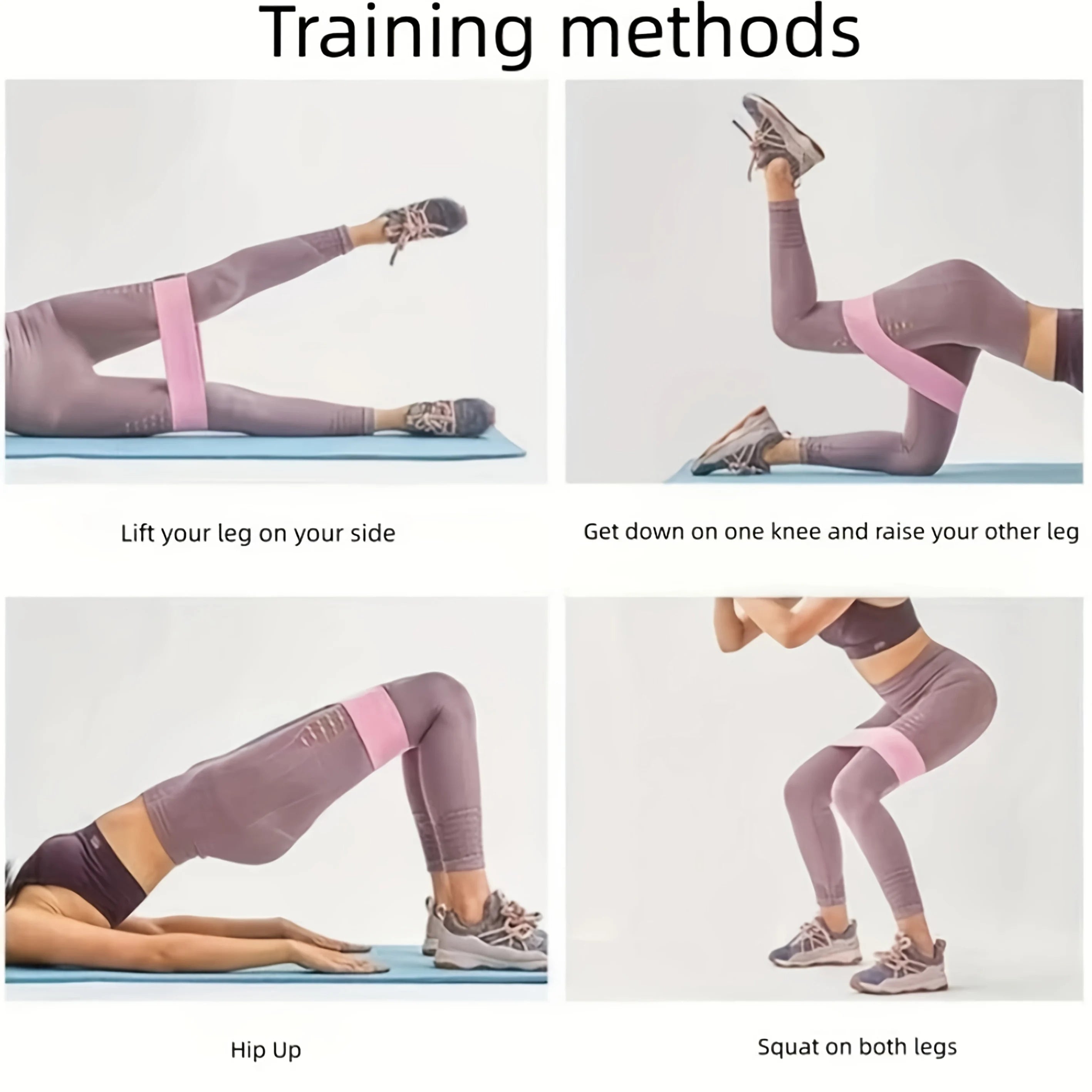
A glute bridge band is a fabric or elastic resistance band positioned just above the knees while performing a glute bridge. As you press your knees outward and extend your hips, the band adds lateral resistance that increases glute activation while helping maintain proper knee alignment.
The movement primarily trains the gluteus maximus while also engaging the gluteus medius, hamstrings, core, and deep hip stabilizers. Because your upper back remains on the floor, the exercise is easy to learn and places less demand on balance than a traditional hip thrust.
A resistance band for glute bridge exercises is particularly effective for beginners, rehabilitation programs, and home fitness because it encourages consistent technique while making progressive overload simple through stronger bands, additional repetitions, or slower tempo.
Benefits of Glute Bridge With Band Exercise
- Improves glute activation without heavy equipment.
- Strengthens hip abductors and stabilizing muscles.
- Promotes better knee tracking and pelvic alignment.
- Supports recovery-friendly lower-body training.
- Works well with a portable fabric resistance band set for home or travel workouts.
What Are Hip Thrust Bands?
Hip thrust bands are resistance bands used during hip thrusts to increase tension as the hips approach full extension. They may be used alone for bodyweight training or combined with barbells, dumbbells, or weight plates to create greater overall loading.
Unlike a glute bridge, the upper back is supported on a bench, allowing a larger range of hip motion and making the exercise popular among strength athletes seeking greater force production and glute development.
A banded hip thrust emphasizes peak contraction near the top of each repetition, where the glutes are strongest. This makes it an effective progression for intermediate and advanced lifters, although it typically requires more equipment, careful setup, and greater attention to technique than a floor-based glute bridge.
Glute Bridge Band vs Hip Thrust Bands: Side-by-Side
Both exercises strengthen the glutes effectively, but they differ in setup, loading mechanics, and who benefits most from each. The comparison below highlights the practical differences for home exercisers and gym users.
| Feature | Glute Bridge Band | Hip Thrust Bands |
|---|---|---|
| Setup | Floor-based with minimal equipment | Typically requires a bench or elevated surface |
| Range of Motion | Moderate hip extension | Greater hip extension and longer movement path |
| Resistance Profile | Continuous lateral band tension | Higher peak resistance near lockout |
| Portability | Excellent for travel and home workouts | Moderate due to additional equipment |
| Joint Stress | Low when performed correctly | Moderate depending on loading |
| Progression | Increase band resistance, tempo, or repetitions | Add heavier resistance or combine with external weights |
| Best For | Beginners, home fitness, activation, rehabilitation | Intermediate to advanced strength training |
Which Is Better for Glute Activation Exercises?
For improving glute activation, a glute bridge band is often the better starting point. The outward pressure created by the band encourages the gluteus medius and gluteus maximus to stay engaged throughout the repetition while helping maintain proper knee alignment.
Because the movement is performed on the floor, many people also find it easier to maintain a neutral spine and avoid excessive lower-back extension. This makes the exercise particularly valuable during warm-ups, rehabilitation, mobility sessions, and home strength workouts.
Banded hip thrusts also produce excellent glute activation, especially near the top of the movement where hip extension reaches its peak. However, achieving consistent activation depends more heavily on stable bench positioning, controlled tempo, and proper pelvic alignment.
Glute bridge with band exercise improving glute activation. See it in action.
Which Builds More Strength Long Term?
Long-term strength gains depend on progressive overload, quality technique, and training consistency rather than selecting a single exercise. A glute bridge band makes it easier to train regularly because the movement creates relatively low joint stress while still challenging the glutes through continuous resistance.
- Supports frequent weekly training with manageable recovery.
- Allows gradual progression by moving to stronger resistance bands.
- Improves movement quality before advancing to heavier exercises.
- Fits easily into portable home workout equipment routines.
Hip thrust bands generally provide greater strength potential once heavier loading becomes necessary. Lifters pursuing maximal glute strength often progress toward banded hip thrusts with additional resistance, while continuing to use banded glute bridges as activation work or accessory training.
Which One Fits Your Routine Best?
A glute bridge band is an excellent choice if your priorities include convenience, low-impact training, and workouts that fit into a busy schedule. It requires very little space, travels easily, and complements mobility-focused exercise programs. It also pairs well with wellness routines available in Beauty & Wellness and functional fitness equipment found in Mobility & Training.
Hip thrust bands are often a better fit for experienced lifters with access to a dedicated workout area who want to progressively increase loading while refining lower-body strength. They demand more setup time but can become an effective progression after mastering the fundamentals of the glute bridge.
How to Use a Glute Bridge Band Safely
- Position the resistance band just above your knees.
- Lie on your back with your knees bent and feet flat on the floor, about hip-width apart.
- Brace your core and gently press your knees outward to create constant band tension.
- Drive through your heels while lifting your hips until your shoulders, hips, and knees form a straight line.
- Pause for one to two seconds at the top while squeezing your glutes.
- Lower your hips slowly under control before beginning the next repetition.
For most strength-focused workouts, perform 2 to 4 sets of 10 to 20 controlled repetitions. As the exercise becomes easier, increase band resistance, add a pause at the top, or slow the lowering phase to continue progressing without sacrificing technique.
This resistance band glute bridge workout requires very little space, making it easy to perform in a living room, hotel room, garage gym, or commercial fitness facility.
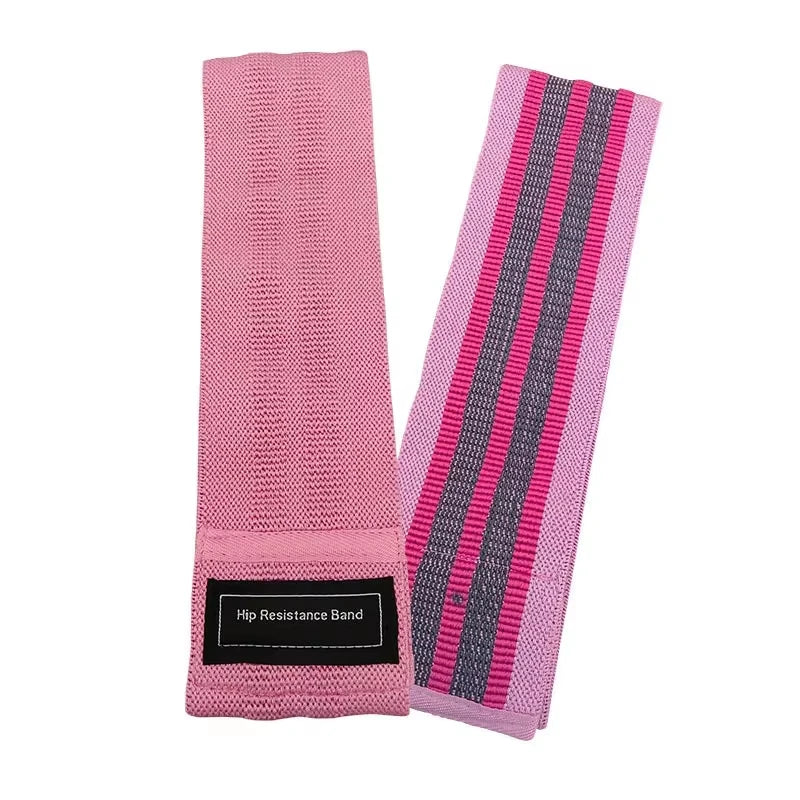
Portable fabric resistance bands set for glute bridge band training. See it in action.
Explore the glute band set
Frequently Asked Questions
Are resistance band exercises as effective as hip thrusts for glute growth?
Yes, especially for beginners and intermediate exercisers. Resistance band exercises provide continuous tension that supports muscle activation and hypertrophy when combined with progressive overload. Hip thrusts generally allow heavier loading, making them advantageous for advanced strength development.
Can you replace hip thrusts with banded glute bridges?
For many home workouts, yes. Banded glute bridges effectively strengthen the glutes while requiring less equipment. As your strength improves, adding hip thrusts can provide additional loading options.
Should beginners start with a banded glute bridge or a hip thrust?
Most beginners benefit from starting with a banded glute bridge because it is easier to learn, places less stress on the lower back, and helps establish proper hip extension mechanics before progressing to hip thrusts.
What resistance band is best for hip thrusts?
Wide fabric loop bands are a popular choice because they resist rolling, stay comfortably in place, and provide consistent resistance throughout the movement. Select a band that allows good technique while still making the final repetitions challenging.
How many sets and reps should you do for glute growth?
A practical starting point is 2 to 4 sets of 8 to 20 repetitions, performed two to four times per week. Progress by increasing resistance, repetitions, or training volume over time while maintaining proper form.
Can you combine banded glute bridges and hip thrusts in the same workout?
Absolutely. Many training programs use banded glute bridges first to activate the glutes, followed by heavier hip thrusts for strength and muscle growth, then finish with accessory exercises.
Do resistance bands increase glute activation during hip thrusts?
Adding a loop band above the knees encourages active hip abduction, which can increase engagement of the gluteus medius while reinforcing proper knee alignment during hip thrusts.
Is a banded hip thrust better than a bodyweight hip thrust?
In most cases, yes. A resistance band adds extra tension, particularly near the top of the movement where the glutes produce the greatest force, making the exercise more challenging than the bodyweight version alone.
Related Guide: Fabric Resistance Band Comparison: Which One Fits Your Glute Goals





