

How to Use Contoured Pillow With Neck Indent for Better Sleep
How do you use a memory foam contoured pillow for proper support?
A memory foam contoured pillow provides the best support when it follows the natural curve of your neck instead of lifting your head unnaturally. Correct positioning helps maintain proper spinal alignment while sleeping, reduces pressure on the neck and upper back, and allows the pillow to function effectively as both a sleep back support pillow and a side sleeping pillow for back pain.
How to Use a Memory Foam Contoured Pillow for Proper Support
Learning how to use a memory foam contoured pillow correctly is just as important as choosing the right one. The unique cervical shape is designed to support the neck while keeping the head and spine aligned throughout the night. Whether you sleep on your back or side, proper positioning can reduce unnecessary strain, improve comfort, and help your muscles relax instead of compensating for poor posture. A few simple adjustments in pillow placement can make a noticeable difference in how you feel when you wake up.
⏱ 7 min read
Explore Sleep & Comfort essentials
Memory foam contoured pillow supporting the neck and shoulders for proper spinal alignment while sleeping — See it in action
Why Proper Pillow Support Matters for Everyday Sleep
Quality sleep depends on more than the number of hours you spend in bed. The position of your head, neck, and shoulders throughout the night has a direct impact on muscle tension, joint comfort, and spinal alignment. When the neck bends too far forward, backward, or to one side for several hours, surrounding muscles remain under constant strain instead of fully relaxing.
Using a memory foam contoured pillow helps maintain a more neutral cervical position by supporting the natural curve of the neck. This balanced alignment distributes pressure more evenly across the head, neck, and shoulders, allowing muscles to recover overnight rather than working continuously to stabilize your posture.
Proper cervical support may be especially beneficial for people who spend long hours at a desk, frequently lift children or heavy items, or wake with recurring morning stiffness. By improving sleep posture, the body can recover more efficiently and reduce the buildup of everyday muscular tension.
What Makes a Memory Foam Contoured Pillow Different?
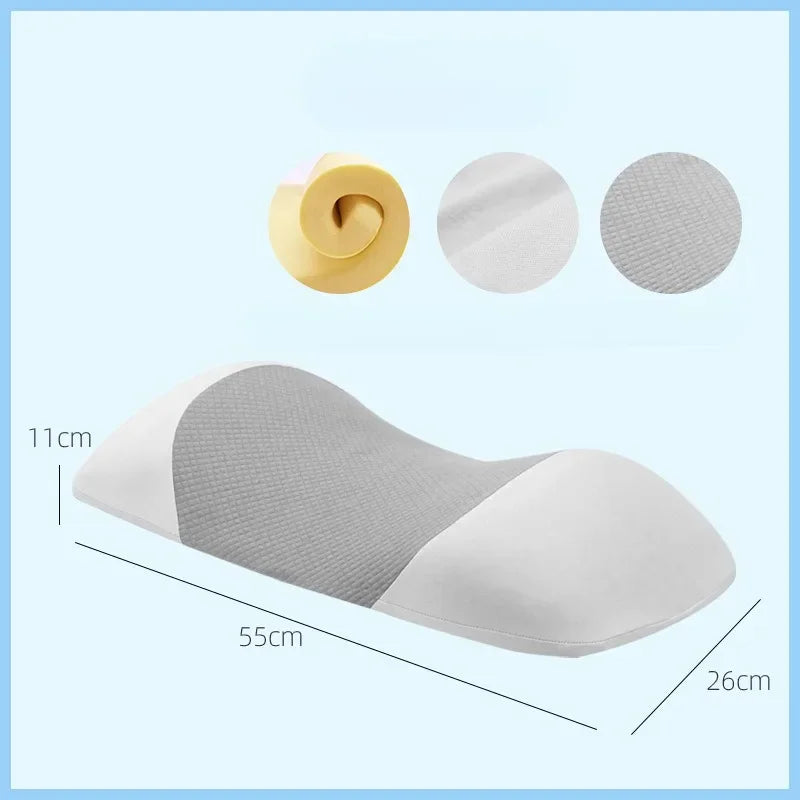
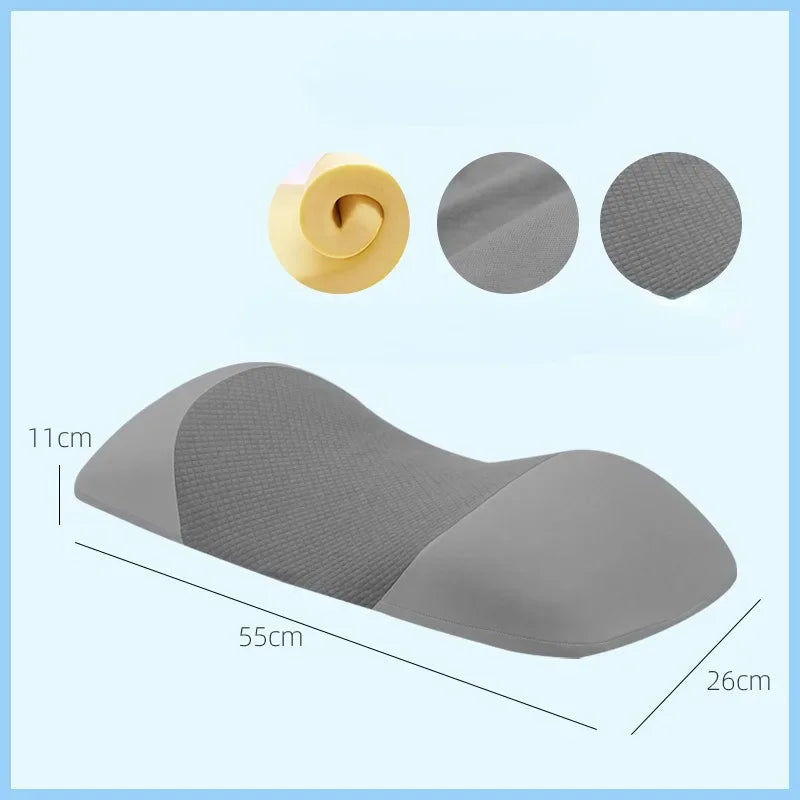
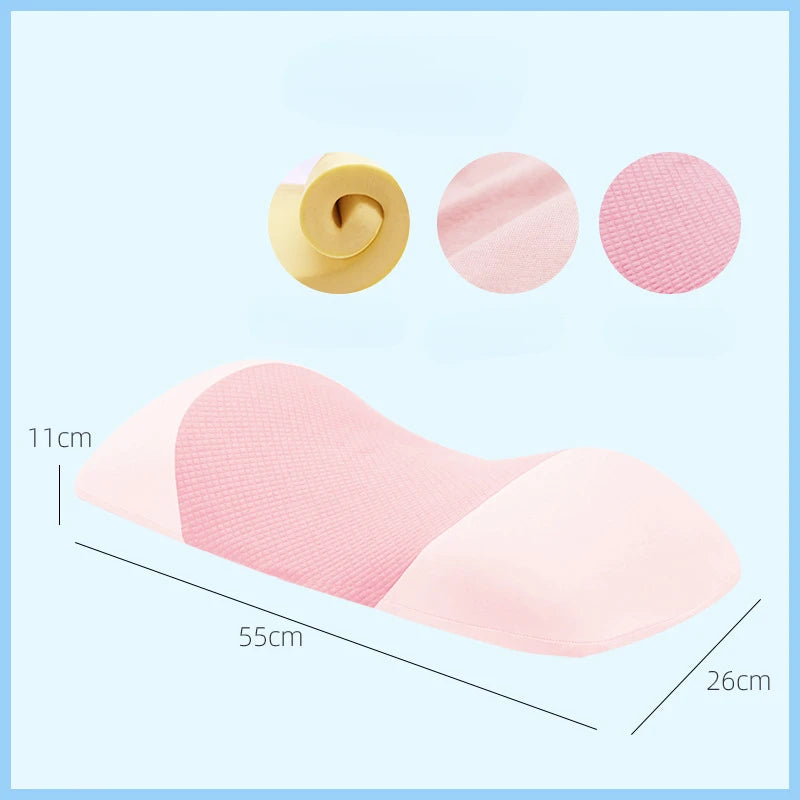
A memory foam contoured pillow is designed with two raised edges and a central cervical indent that supports the natural shape of your neck. Unlike traditional flat pillows that compress evenly, the contoured design keeps the neck supported while allowing the head to rest comfortably in a slightly lower position.
The higher and lower contours allow the pillow to accommodate different sleeping positions and body types. Memory foam responds to your body weight and temperature, creating stable support without excessive sinking, which helps maintain proper spinal alignment while sleeping throughout the night.
- Contoured edges help support the natural cervical curve.
- The neck indent cradles the neck while keeping the head comfortably centered.
- Memory foam distributes pressure across the head, neck, and shoulders.
- Suitable as both a sleep back support pillow and a side sleeping pillow for back pain when positioned correctly.
Many people pair their pillow upgrade with other relaxation tools from the Massage & Relaxation collection to create a more restorative bedtime routine.
How to Position a Memory Foam Contoured Pillow Correctly
Correct positioning is what allows a memory foam contoured pillow to support the cervical spine as intended. The raised contours are designed to cradle the neck, while the center indentation supports the head without forcing it forward. Whether you sleep on your back or side, your shoulders should remain on the mattress so the pillow supports only your head and neck.
Choose the Correct Contour Height
Most contoured pillows feature one higher edge and one lower edge. The higher contour generally suits side sleepers or people with broader shoulders, while the lower contour is often more comfortable for back sleepers or those with a smaller frame. If your chin tilts toward your chest or your head leans backward, try switching to the opposite contour.
Align Your Shoulders Below the Pillow
Position the pillow so its edge meets the top of your shoulders rather than sitting underneath them. This allows the cervical contour to fill the natural space beneath your neck while keeping the shoulders relaxed against the mattress.
Keep Your Neck Supported Without Lifting Your Head
Your neck should rest comfortably within the cervical groove, allowing your head to settle naturally in the center of the pillow. The goal is to maintain a neutral spine instead of forcing the neck into excessive flexion or extension.
Bedtime Positioning Checklist
- Place the higher contour toward your shoulders if additional neck height is needed.
- Rest your neck inside the cervical indent instead of directly on the raised ridge.
- Allow your head to remain level without tilting forward or backward.
- Keep both shoulders on the mattress rather than on the pillow.
Following these simple steps helps the pillow function as an effective sleep back support pillow by maintaining proper spinal alignment throughout the night.
Learn how this pillow supports your back naturally
Best Setup for Back Sleepers
Back sleepers typically achieve the best results when the cervical contour supports the natural inward curve of the neck while allowing the head to remain centered. The pillow should fill the space beneath the neck without pushing the chin toward the chest or causing the head to tip backward.
- Place the neck comfortably within the cervical indent.
- Keep the head centered and level with the rest of the spine.
- Use the lower or higher contour depending on which maintains a neutral neck position.
- If needed, add a small lumbar cushion beneath the knees or lower back for additional comfort.
A quick way to check alignment is to imagine a straight line running from your ears through your shoulders and hips. If your head feels balanced and your neck muscles remain relaxed, the pillow height is likely appropriate.
Many back sleepers combine their pillow with items from the Health & Safety collection to create a safer, more supportive sleep environment.
Best Setup for Side Sleepers With Back Pain
For side sleepers, the pillow should completely fill the gap between the mattress and the neck. This prevents the head from dropping toward the bed or tilting upward, both of which can place unnecessary stress on the cervical spine. A properly positioned memory foam contoured pillow serves as an effective side sleeping pillow for back pain by helping keep the spine in a straight, neutral line.
- Select the higher contour if you have broader shoulders or a firmer mattress.
- Keep your ears aligned vertically with your shoulders.
- Avoid bending your chin toward your chest.
- Keep your shoulders below the pillow so only your neck and head are supported.
- Placing a pillow between your knees may help maintain better hip and lower back alignment.
If you change positions during the night, make sure your neck settles back into the cervical contour after rolling onto your side or back. This helps maintain consistent support regardless of your preferred sleeping position.
Using a memory foam contoured pillow as a side sleeping pillow for back pain relief — See it in action
Common Pillow Mistakes That Cause Pain
Even a high-quality memory foam contoured pillow may not deliver proper support if it is positioned incorrectly. Small setup mistakes can place unnecessary stress on the neck and shoulders, reducing the benefits of proper spinal alignment while sleeping.
| ❌ Mistake | ✅ Better Choice |
|---|---|
| Sleeping on the wrong side of the pillow | Place your neck in the cervical groove and choose the contour that best matches your body. |
| Using multiple stacked pillows | Use a single properly fitted contoured pillow to maintain neutral alignment. |
| Allowing shoulders to rest on the pillow | Keep shoulders on the mattress so only the head and neck are supported. |
| Using a contour that is too high or too low | Select the contour that keeps your head level without tilting forward or backward. |
| Sleeping with the chin tucked toward the chest | Maintain a neutral head position with the ears aligned over the shoulders. |
Who Benefits Most From a Contoured Pillow?
A memory foam contoured pillow is designed for anyone who wants more consistent neck support during sleep. It is particularly useful for people whose sleeping position places extra demands on the cervical spine.
- Back sleepers seeking better cervical support and spinal alignment.
- Side sleepers who need the space between the neck and mattress properly filled.
- Combination sleepers who alternate between back and side sleeping.
- People who wake with morning neck stiffness or upper back tension.
- Individuals who spend long hours working at a desk, driving, lifting, or caring for children.
While many people benefit from a contoured design, those who primarily sleep on their stomach may find a lower-profile pillow or a different sleep position more comfortable, as stomach sleeping often places the neck in a rotated position for prolonged periods.
Parents often find improved sleep posture helps them manage daily routines with more comfort and energy. Pairing healthy sleep habits with calming bedtime routines from the Beauty & Wellness collection can further support overall recovery.
Get your memory foam contoured pillow today — limited stock available
Memory foam contoured pillow used as a sleep back support pillow for proper spinal alignment while sleeping — See it in action
Frequently Asked Questions
How long does it take to adjust to a memory foam contoured pillow?
Most people adapt within three to seven nights, although it can take up to two weeks if you've used a traditional flat pillow for many years. A short adjustment period is normal as your neck muscles become accustomed to improved alignment.
Can a memory foam contoured pillow help with back pain?
Yes. Proper cervical support helps maintain spinal alignment, which may reduce strain on the neck, shoulders, and upper back. For side sleepers, keeping the head and neck aligned can also contribute to improved overall posture during sleep.
Is a contoured pillow safe for everyday use?
A quality memory foam contoured pillow is designed for nightly use. When it maintains its shape and provides consistent support, it can be used every night as part of a healthy sleep routine.
Which side of a contoured pillow faces up?
The side with the cervical groove should face upward so your neck rests comfortably in the indent. The higher and lower contours are both intended for use, allowing you to choose the height that best matches your sleeping position and body size.
How do I know if my contour pillow is too high or too low?
If your chin tilts toward your chest, the pillow is likely too high. If your head falls backward or the neck feels unsupported, it may be too low. The correct height keeps your head level with your spine while allowing your neck to rest naturally.
Can combination sleepers use a contoured pillow?
Yes. Many combination sleepers use one contour while sleeping on their back and the opposite contour when turning onto their side. The key is ensuring the neck remains supported and the shoulders stay on the mattress regardless of position.
Related Guide: How to Achieve Correct Spinal Alignment While Sleeping





