

Pressure Between Knees Sleeping Fixes That Work
Does pressure between knees sleeping cause pain, and how can you fix it?
Pressure between knees sleeping often leads to hip, knee, and lower back pain because the legs collapse inward and twist the spine. Using a properly designed support like an orthopedic leg pillow keeps knees separated, improves sleep spine alignment, and reduces joint stress through the night.
Pressure Between Knees Sleeping Fixes That Work
If you wake up with sore hips, aching knees, or a stiff lower back, your sleep position may be the real culprit. Pressure between knees sleeping is a common issue for side sleepers, especially parents and caregivers whose bodies are already under daily strain. The good news? Small adjustments and the right support can dramatically improve comfort, alignment, and rest quality.
⏱ 6 min read
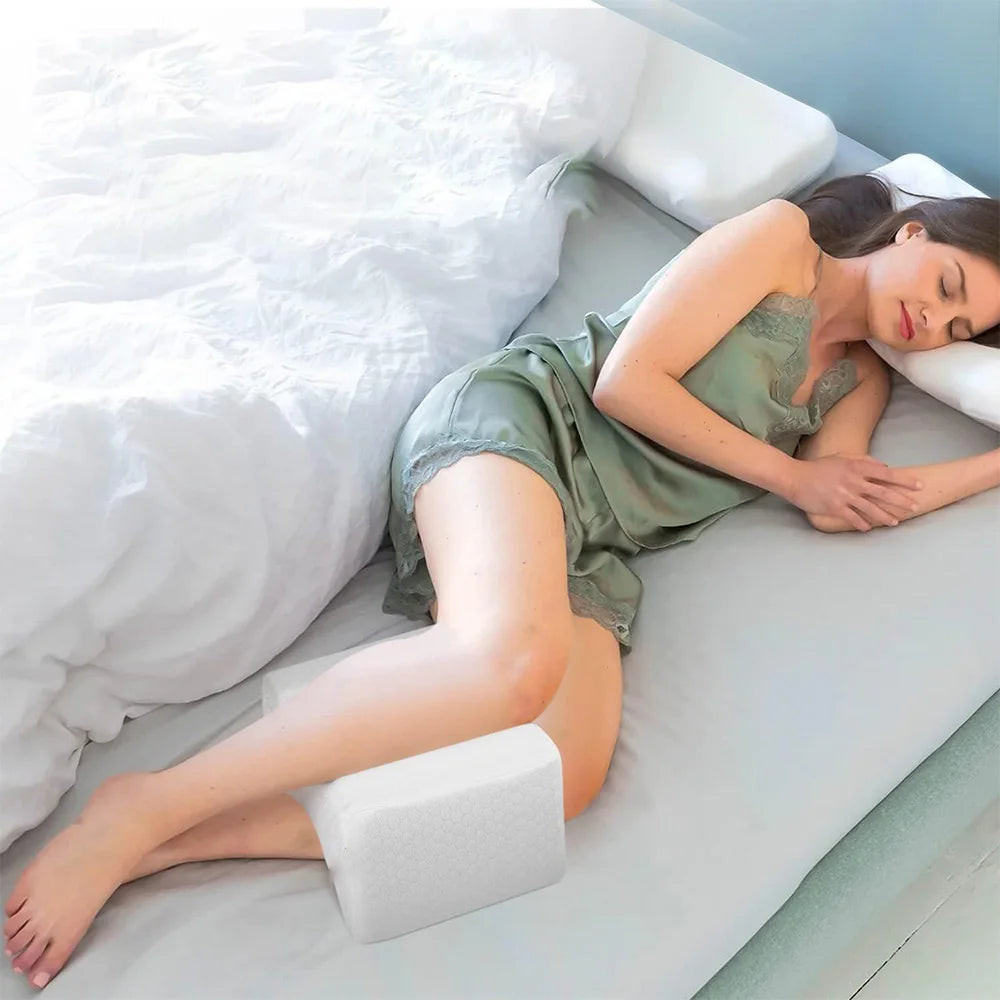
pressure between knees sleeping relief with proper leg support 💡 See it in action
Why Pressure Builds Between Knees at Night
When lying on your side, gravity pulls the top leg forward and downward. Without support, the knees press together, twisting the hips and pulling the spine out of neutral alignment. Over hours, this creates tension that radiates into the lower back and hips.
For many adults—especially moms juggling long days—this nightly strain compounds existing fatigue. It’s not about sleeping “wrong,” but sleeping unsupported.
What Is the Fastest Fix for Pressure Between Knees Sleeping?
Pressure between knees sleeping improves quickly when the legs are kept parallel and supported. A knee pillow for sleeping on back or side fills the gap between the thighs, prevents inward collapse, and supports sleep spine alignment. Consistent positioning reduces joint compression and helps muscles relax naturally.
- Keeps hips stacked instead of rotated
- Reduces knee-on-knee contact
- Supports neutral spine posture
- Minimizes tossing and readjusting
Many sleepers notice relief within just a few nights because the body finally rests in a balanced position.
Step-by-Step: How to Sleep Without Knee Pain
- Lie on your side with shoulders and hips aligned.
- Place an orthopedic leg pillow between your knees.
- Ensure the pillow reaches from thigh to calf for even spacing.
- If you move a lot, choose a design with a strap to keep it in place.
This simple setup is especially helpful for parents who need uninterrupted rest to keep up with busy days.
Pairing leg support with a calm bedtime routine—something often emphasized in Sleep & Comfort solutions—can further improve rest quality.
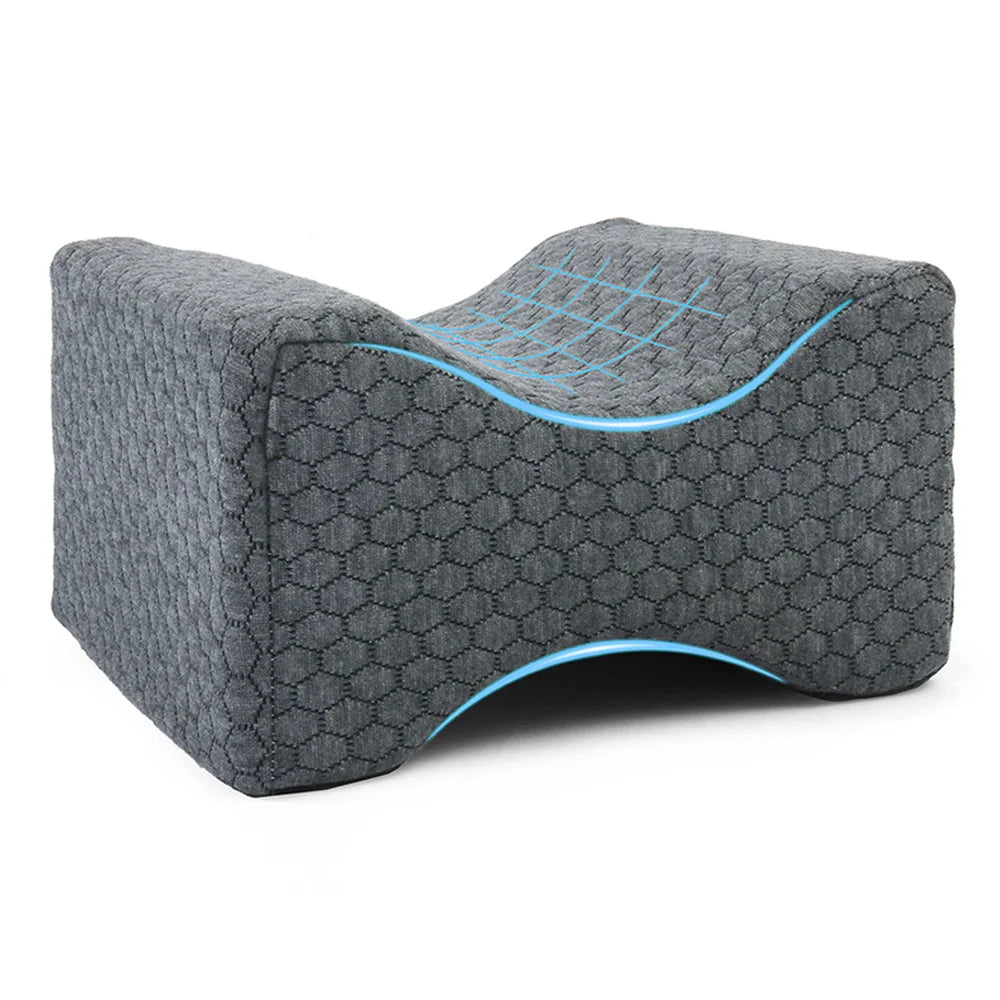
orthopedic leg pillow helping sleep spine alignment 💡 See it in action
Which Knee Pillow Works Best for Side Sleepers?
| Option | Stability | Alignment Support | Best For |
|---|---|---|---|
| Regular Pillow | Low | Inconsistent | Occasional use |
| Traditional Knee Pillow | Medium | Moderate | Light sleepers |
| Strapped Orthopedic Leg Pillow | High | Consistent | Active side sleepers |
A strapped orthopedic leg pillow stands out because it stays aligned all night, even when you shift positions. This is especially useful for those who roll frequently or share a bed.
Many wellness-focused parents already explore comfort tools through Beauty & Wellness collections, where sleep support plays a key role in recovery.
What Do Sleepers Notice After Switching?
Parents and caregivers often report:
- Less hip stiffness in the morning
- Reduced knee soreness after long days
- Improved side sleeping stability
- Fewer nighttime awakenings
One mom shared that after a week of proper leg support, she stopped waking up to reposition pillows and finally slept through the night.
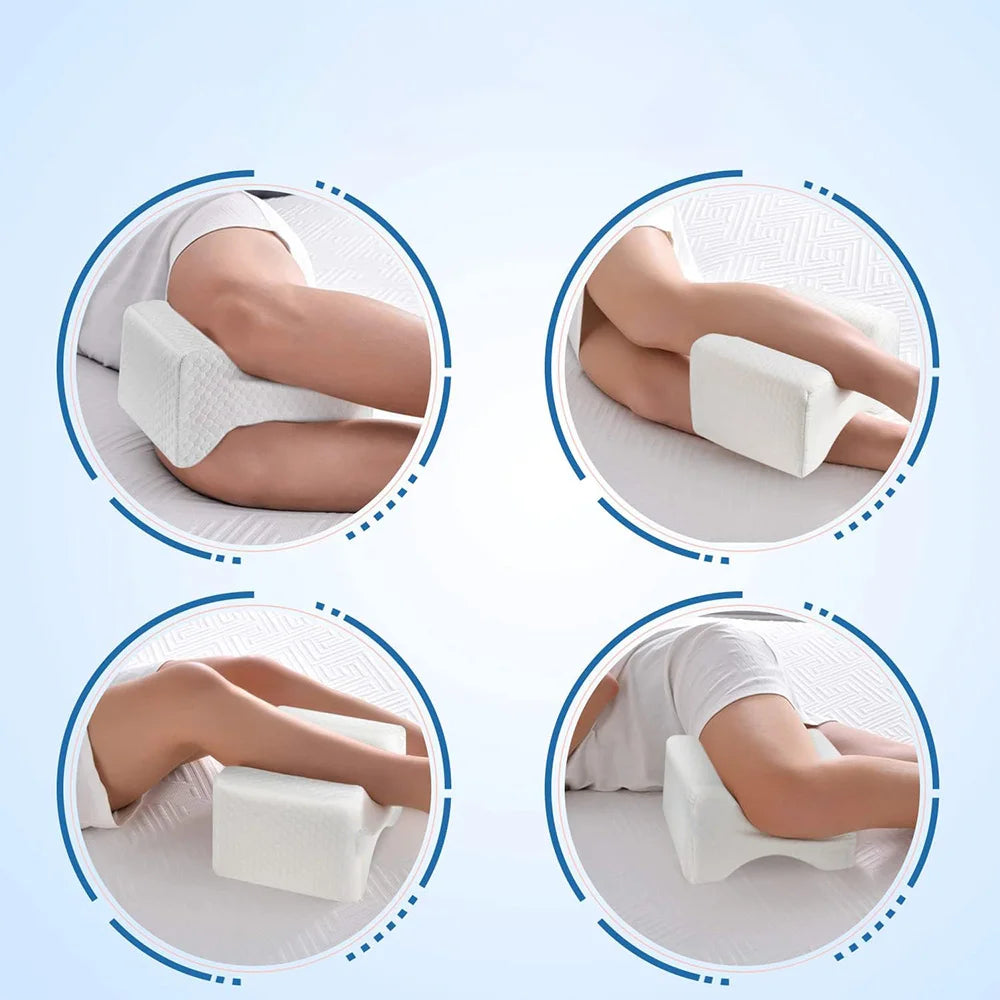
knee pillow for sleeping on back or side 💡 See it in action
Quick Questions Answered
Is pressure between knees sleeping harmful long term?
Yes, ongoing pressure can contribute to hip misalignment, knee strain, and lower back discomfort. Proper support helps prevent these issues.
Can back sleepers use leg pillows?
A knee pillow for sleeping on back can be placed under the knees to reduce lumbar strain and improve comfort.
How firm should an orthopedic leg pillow be?
It should be firm enough to hold shape but soft enough to avoid pressure points, maintaining sleep spine alignment without discomfort.
Related Guide: How to Align Your Hips for Pain Free Side Sleeping





