

Side Sleeper Knee Pillow Alignment: Why Placement Matters
How do you use a side sleeper knee pillow correctly?
Using a side sleeper knee pillow correctly means placing it snugly between your knees so your hips, spine, and legs stay aligned. The pillow helps keep your pelvis in a neutral position, reduces pressure on the lower back and hips, and promotes a more comfortable side sleeping posture. Some people notice less morning stiffness, although results vary depending on the underlying cause of discomfort.
Side Sleeper Knee Pillow How to Use It Correctly
A side sleeper knee pillow does more than add cushioning—it supports better body alignment while you sleep. When positioned correctly, it helps keep your hips, knees, and spine in a more neutral position, reducing unnecessary twisting through the lower body. Many people miss these benefits simply because the pillow is placed incorrectly or doesn't match their body size.
⏱ 6 min read
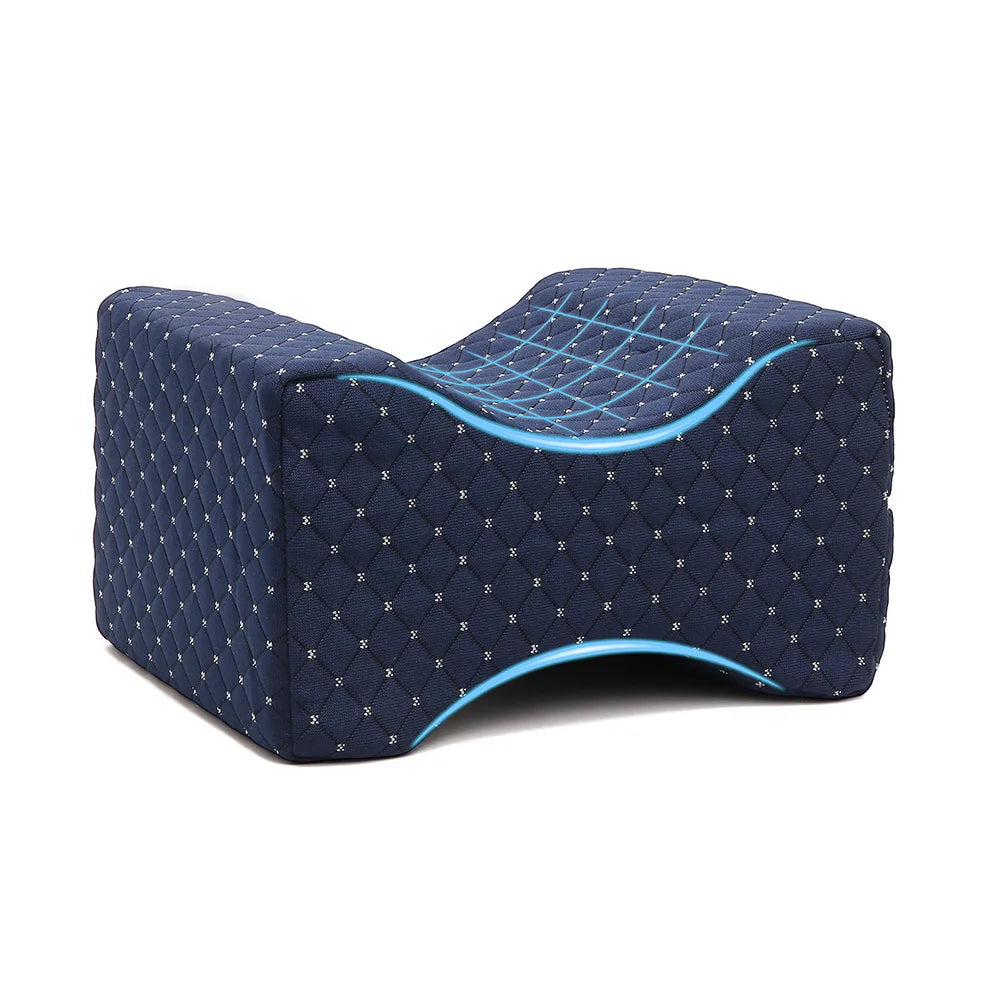
Side sleeper knee pillow placement for better alignment. See it in action.
Explore simple ways to improve side sleeping comfort and protect your body while you rest.
How Does a Knee Pillow Improve Side Sleeper Alignment?
How side sleeping changes spinal, pelvic, and hip alignment
When you sleep on your side, gravity naturally pulls your top leg downward. Without support, the upper knee often falls forward, causing the pelvis to rotate and the lower spine to twist slightly. For some people, this can increase pressure around the hips, knees, and lower back during the night.
How a pillow between the knees restores neutral alignment
A side sleeper knee pillow alignment strategy is simple: place a supportive cushion between the knees to keep both legs separated and the hips stacked. This helps reduce excessive rotation through the pelvis and encourages a more neutral sleeping posture from shoulders to ankles. While a knee pillow is not a treatment for back pain, maintaining better alignment may improve comfort for many side sleepers.
Side sleeping pillow between knees diagram
Think of your body as one straight line:
- Head supported by an appropriately sized pillow
- Shoulders stacked vertically
- Hips aligned one above the other
- Knees separated evenly by the pillow
- Ankles remaining comfortably aligned beneath the knees
This simple positioning reduces unnecessary strain without forcing the body into an unnatural posture.
Why a Knee Pillow Matters for Side Sleepers
Benefits for spinal alignment
One of the primary reasons people use a side sleeping pillow between knees is to reduce rotational stress through the lower body. By filling the natural gap between the legs, the pillow helps keep the spine in a more neutral position throughout the night.
Pressure reduction for hips and knees
Without support, the knees often press directly against each other while the upper hip bears additional rotational force. A properly sized pillow cushions the knees while helping distribute pressure more evenly across the hips and pelvis.
Comfort versus long-term posture
A knee pillow alignment for side sleepers primarily improves sleeping comfort and positioning. Although improved alignment may reduce strain for some individuals, it should not be viewed as a guaranteed solution for chronic pain or underlying medical conditions.
- Helps keep hips level
- Supports a more neutral spinal position
- Reduces direct knee-to-knee pressure
- May decrease overnight muscle tension for some sleepers
Many parents and caregivers already prioritize comfort and safety with essentials from Sleep & Comfort, and the same thoughtful approach applies to adult sleep support.
How to Use a Knee Pillow for Side Sleeping Correctly
Direct answer: Proper knee pillow placement for side sleepers means positioning the pillow fully between both knees so the hips remain stacked and the spine stays as neutral as possible. Depending on the pillow design, extending support toward the ankles can further improve comfort for taller sleepers.
Proper knee pillow placement for side sleepers
- Lie comfortably on your side.
- Keep your shoulders and hips vertically stacked.
- Place the pillow directly between both knees.
- Allow each knee to rest evenly against the cushion.
- Relax your legs instead of squeezing the pillow tightly.
Step-by-step positioning
After placing the pillow, check whether:
- Your lower back feels relaxed rather than twisted.
- Your top knee does not fall forward.
- Your hips remain comfortably stacked.
- Your ankles stay naturally aligned beneath the knees.
Knee pillow side sleeper alignment diagram
A simple alignment checklist is:
- Head → Neck → Spine in one gentle line
- Shoulders stacked
- Hips stacked
- Pillow between knees
- Legs relaxed without crossing
Adjusting pillow thickness and height
Body size influences pillow choice. A person with broader hips may benefit from a slightly thicker pillow, while someone with a narrower frame may feel more comfortable with a slimmer design. If your hips still rotate forward or your knees press together, the pillow may be too thin. If it pushes your upper leg noticeably upward, it may be too thick.
For added relaxation, pairing proper leg alignment with soothing routines inspired by Massage & Relaxation can help your body unwind faster at night.
Learning small positioning tweaks can make a noticeable difference by morning.
Common Mistakes That Reduce Comfort and Alignment
Pillow too thick or too thin
An oversized pillow can force the hips apart, while one that's too thin may not provide enough separation to maintain comfortable alignment.
Placing the pillow incorrectly
Positioning the pillow beneath the calves or only between the thighs often allows the knees to rotate forward, reducing support where it's needed most.
Poor upper-body support
Even perfect knee placement cannot fully compensate for a head pillow that's too high or too low, or a mattress that doesn't adequately support side sleeping. Your neck, shoulders, hips, and legs all work together.
Expecting immediate pain relief
Some people notice improved comfort after the first night, while others need several nights to adapt. Persistent pain, numbness, or worsening symptoms should be evaluated by a healthcare professional rather than relying solely on sleep accessories.
Who Benefits Most From a Knee Pillow and Who May Not
Direct answer: A side sleeper knee pillow may benefit people who experience mild discomfort related to sleeping posture, including lower back stiffness, hip pressure, pregnancy-related positioning needs, or knee contact during side sleeping. However, it is not a replacement for medical care when symptoms are persistent or severe.
Lower back pain
Reducing pelvic rotation may decrease mechanical stress on the lower back for some side sleepers.
Hip pain and sciatica
Some individuals with hip discomfort or sciatica report improved sleeping comfort when their legs remain aligned overnight. However, these conditions have many possible causes, so outcomes vary.
Pregnancy
Many pregnant side sleepers use knee pillows to reduce pressure on the hips while maintaining a more comfortable sleeping position.
Post-surgery recovery
Some healthcare providers recommend leg positioning aids after certain orthopedic procedures. Always follow your surgeon's specific recovery instructions.
When to seek medical evaluation
If pain regularly wakes you from sleep, radiates into the legs, causes numbness or weakness, or continues despite improving sleep posture, seek medical assessment to identify the underlying cause.
- Side sleepers with recurring stiffness
- People experiencing hip pressure overnight
- Pregnant sleepers seeking improved positioning
- Individuals wanting to reduce knee-on-knee pressure
Many moms already explore comfort-focused solutions through Mom Essentials to make daily routines easier, and sleep quality plays a big role in overall wellbeing.
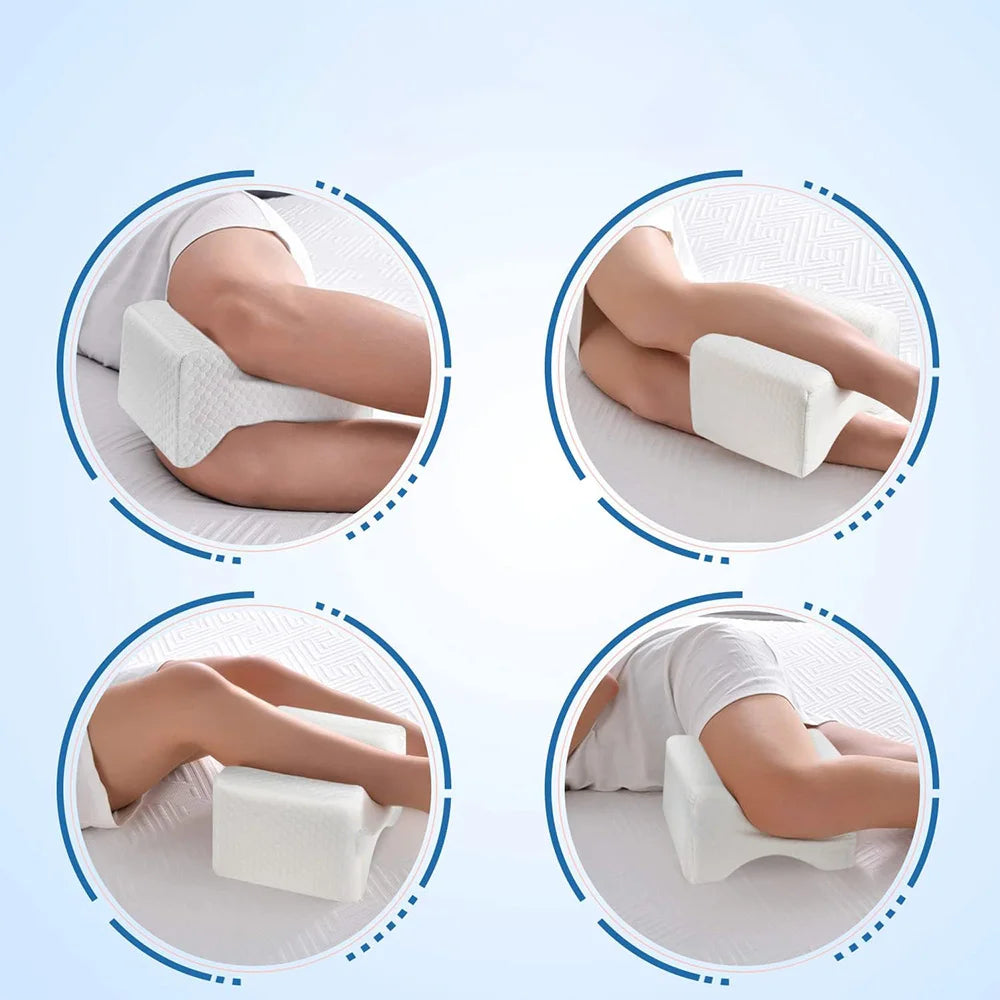
Side sleeper pillow between knees for ergonomic sleep position. See it in action.
How to Choose the Right Knee Pillow
Shape and design
Contoured knee pillows are designed to stay in place more easily than standard rectangular pillows. Some wrap around the legs, while others fit naturally between the knees.
Firmness and thickness
Choose a firmness that supports your legs without feeling rigid. The ideal thickness depends on your hip width and sleeping posture.
Foam and material options
- Memory foam for consistent support
- Contoured designs that reduce shifting
- Breathable covers for temperature regulation
- Removable washable covers for easier care
The memory foam leg pillow is designed to provide consistent overnight support while maintaining comfort.
Cleaning and replacement
Wash removable covers according to the manufacturer's instructions. Replace the pillow when it permanently loses its shape, develops visible damage, or no longer provides adequate support.
For a holistic wellness routine, some sleepers combine better posture with calming bedtime habits inspired by Beauty & Wellness.
Try the memory foam leg pillow and feel the difference proper alignment can make.
When a Knee Pillow Alone Is Not Enough
Mattress and head pillow considerations
A supportive mattress and an appropriately sized head pillow work together with a knee pillow to maintain better overall alignment. If either is unsuitable, your sleep posture may still feel uncomfortable.
Stretching and mobility
Gentle mobility exercises and stretching during the day may help reduce muscle tightness that contributes to nighttime discomfort. Follow advice appropriate for your individual health needs.
Sleep position adjustments
If your pillow frequently shifts or you continue waking with discomfort, making small adjustments to your sleeping position or consulting a healthcare professional may be more beneficial than changing pillows repeatedly.
Frequently Asked Questions
Can a knee pillow really help with back pain?
It may help some people by reducing pelvic rotation and encouraging better sleeping alignment. Results vary depending on the underlying cause of back pain.
How long does it take to notice results?
Some people notice improved comfort after the first night, while others need several nights to adjust to sleeping with a knee pillow.
Should I use a knee pillow every night?
Consistent use helps maintain consistent sleeping posture, especially if you naturally sleep on your side.
What thickness should a knee pillow be?
The pillow should comfortably separate your knees without pushing your upper leg excessively upward. Body size and hip width influence the ideal thickness.
Can I use a regular pillow between my knees?
Yes, although regular pillows often compress more quickly and may not maintain alignment as well as a purpose-designed knee pillow.
Should the pillow also support my ankles?
Some taller individuals or those with longer legs find additional ankle support more comfortable, but it is not necessary for everyone.
How often should I replace a knee pillow?
Replace it when it no longer springs back to its original shape, loses support, or shows signs of wear. Memory foam pillows typically last longer than standard fiber-filled pillows.
Related Guide: How to Align Your Hips for Pain Free Side Sleeping





