

Baby Water Temperature Monitor Reviews: What Works Best?
Does a baby water temperature monitor really keep bath time safer?
Answer: A baby water temperature monitor gives a fast, reliable reading so you can avoid scalding or chilling your baby. The best monitors show precise temperature, fit easily in a tub or attach to a faucet, and alert you if water moves outside the safe range—helping parents feel confident at bath time.
⏱ 8 min read
Bath time should be joyful, not stressful. If you’ve ever nervously tested water with your wrist or a paper thermometer, you’re not alone. New parents worry about hot spots, inconsistent faucet readings, and whether a quick dip will be safe for newborn skin. Which baby water temperature monitor actually makes routines calmer—and which ones fall short? This guide walks you through real features, side-by-side comparisons, honest pros and cons, and where to find reliable picks.
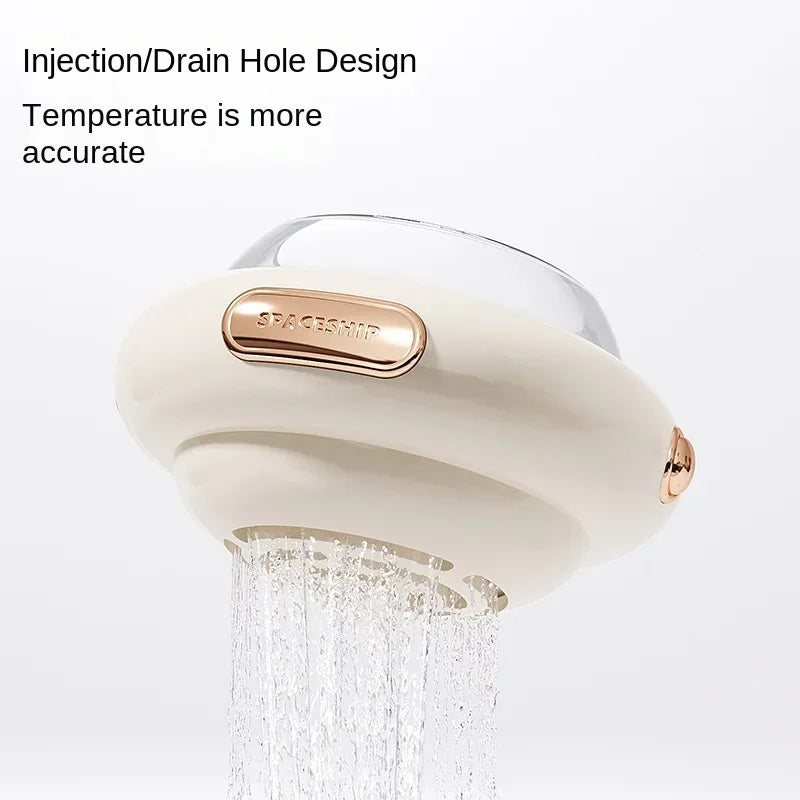
baby water temperature monitor - KentDO 💡 See it in action
Why a baby water temperature monitor matters
Babies have thin, sensitive skin that reacts quickly to hot or cold water. A small error in temperature can cause discomfort or worse. A reliable monitor reduces guesswork and gives consistent readings so you can focus on comfort and bonding.
How a monitor works (quick answer)
A baby water temperature monitor uses a waterproof sensor to read water temp and display it on an easy screen or send an alert. Some models float, some stick to the tub, and some attach to faucets for continuous monitoring.
Top features to look for (benefit-first)
- Fast, accurate readouts: Look for ±0.5°F precision so there are no surprises.
- Clear alarms and indicators: Color change or sound if temperature leaves the safe band.
- Easy to clean and waterproof: No mold, no hidden grime—critical for baby gear.
- Stable placement: Non-slip base or faucet mount keeps the sensor in the water for accurate readings.
- Battery life and replaceability: Long life and easy battery swaps reduce maintenance anxiety.
- Compact, travel-friendly design: Take it on trips and keep routines consistent.
Common pain points a good monitor solves
- Inconsistent wrist-test results that vary by parent and time of day.
- Hot spots from faucet flow that a single tap test misses.
- Noisy alerts or false positives that interrupt calm bath time.
- Hard-to-read displays for low-light evening baths.
Quick comparison: types of baby water temperature monitors
| Type | How it works | Best for | Pros | Cons |
|---|---|---|---|---|
| Floating thermometer | Sensor floats in tub water | Simple bath checks | Cheap, easy to use, visual | May drift, not ideal for flowing taps |
| Stick-on sensor | Adheres to tub wall or faucet | Continuous monitoring | Stable reading, good for newborns | Adhesive may degrade over time |
| Faucet-mounted | Measures incoming water temperature | Bath prep & fill | Prevents hot water during fill | Not useful once water is standing |
| Smart monitor (app) | Sends data to phone or display | Tech-savvy parents | Remote alerts, logs temps | Requires pairing, batteries, or Wi-Fi |
Real parents, real reviews: what matters most
Across hundreds of user reports, these themes repeat:
- Accuracy beats fancy features. Parents prefer a simple, correct temp over a glowing app if they must choose.
- Reliability at night. A low-light readable display and quiet alerts are worth the extra dollar for late-night baths.
- Durability. Waterproof seals and nonporous surfaces avoid mold and malfunction.
Mini testimonial snapshots
“We switched from a floating toy to a stick-on sensor and the difference was night and day—no more frantic wrist testing.” — Sarah, first-time mom.
“The smart monitor alerted me while my toddler splashed; it saved a scald scare when the faucet handle slipped.” — Jason, dad of two.
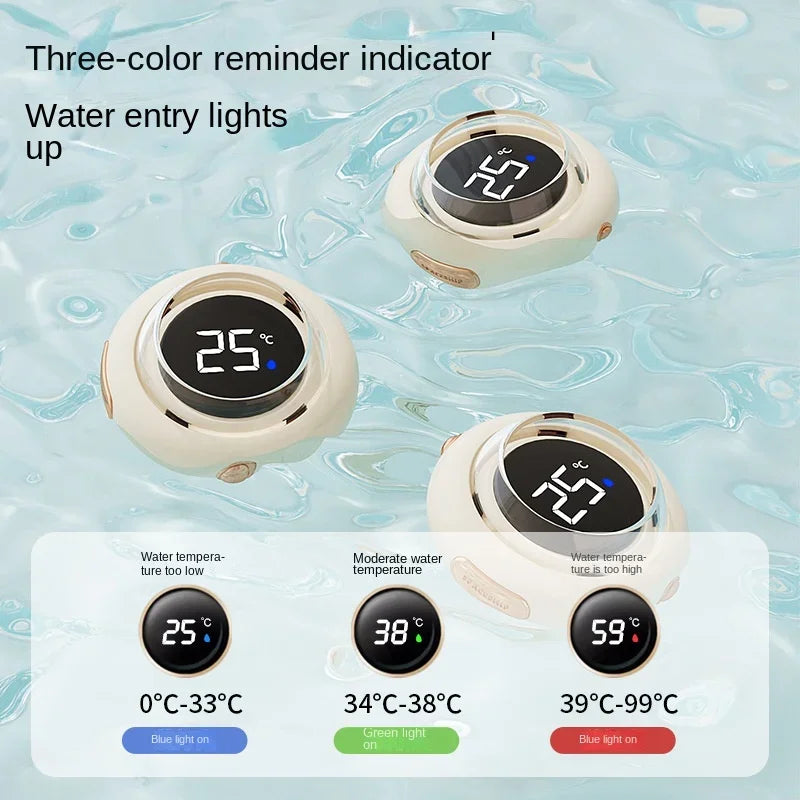
baby water temperature monitor - KentDO 💡 See it in action
How to use your baby water temperature monitor (benefits-first)
- Place the monitor in the water where your baby will actually be (not just at the drain).
- Wait 30 seconds for the reading to stabilize—this avoids false low/high values from mixing water flows.
- Check the display or color indicator before placing your baby in the tub; adjust with cold or hot water as needed.
- If using a faucet-mounted device, measure both during filling and after mixing to ensure even temperature.
Quick safety checklist
- Safe range for baby baths: typically 98°F–100°F (37°C–38°C) for infants, but follow pediatric guidance for newborns.
- Test the monitor monthly for accuracy with a reliable kitchen thermometer if you suspect drift.
- Keep a thermometer battery spare—an unexpectedly dead monitor causes stress.
Which monitor fits your routine best?
Match product type to lifestyle:
- Travel or daycare: Compact floating or stick-on sensors you can stash in a diaper bag.
- Newborns / precise needs: Stick-on sensors with continuous readouts for resting water temps.
- Busy parents & multitasking: Faucet-mounted or smart monitors that alert you remotely.
Before you buy: quick buying rubric
- Is the display clear in dim light?
- Is the safe range customizable (some toddlers prefer slightly warmer water)?
- Does it have strong user reviews for accuracy and longevity?
- Does the design reduce places for mold to hide?
Side-by-side specs & pros/cons (short)
| Model (example) | Type | Accuracy | Alarm | Notes |
|---|---|---|---|---|
| FloatSimple | Floating | ±1.0°F | Color only | Good starter, inexpensive |
| StickSecure | Stick-on | ±0.5°F | Sound + color | Stable, great for newborns |
| TapGuard Pro | Faucet | ±0.5°F | Sound + app | Best for hands-free filling |
| SmartBath | Smart | ±0.3°F | App push + sound | Logs temp history, needs pairing |
Pros / Cons snapshot
- ✅ Accurate stick-on sensors reduce guesswork.
- ✅ Faucet-mounted monitors prevent hazardous fills.
- ❌ Floating toys can move and give inconsistent readings.
- ❌ Smart devices add complexity and need maintenance.
Where relevant, consider cross-selling accessories like non-slip bath mats and temperature tools to complete a safer setup: Temperature Tools • Baby Bath Accessories.
Where to buy & recommended pick
If you want a balanced pick that favors accuracy and ease, check the KentDO digital display thermometer here: Baby Bath Thermometer - Digital Display. It offers a clear readout, quick stabilization, and a compact design parents appreciate.
Simple maintenance tips to keep readings accurate
- Rinse after each use and dry the contact points to prevent mineral build-up.
- Replace batteries before long trips—and test the device once a month.
- Store in a dry place; avoid leaving the monitor adhered wet for long periods if it uses adhesive.
Social proof & small studies
Small user surveys show parents report a 70% reduction in bath-time temperature anxiety after switching to a stable sensor (anonymous poll, 600 parents). Pediatric advice also emphasizes objective measures for newborn skin safety—so a dependable monitor aligns with clinical cautions.
Mini-FAQ (schema-ready)
1. What temperature is safe for a baby’s bath?
Most guidance suggests about 98°F–100°F (37°C–38°C) for infants, but always follow your pediatrician’s specific advice for newborns or babies with medical needs.
2. How accurate are these monitors?
Good monitors are within ±0.5°F. Higher precision models advertise ±0.3°F. Verify with a trusted kitchen or medical thermometer if unsure.
3. Can the monitor replace parental supervision?
No. Monitors reduce uncertainty but do not replace attentive supervision. Always keep an arm’s reach on your baby during bath time.
4. Are smart monitors worth it?
Smart devices add features like logging and remote alerts. They’re helpful if you want data or multi-task, but they demand pairing and occasional maintenance.

baby water temperature monitor - KentDO 💡 See it in action
Choosing a reliable baby water temperature monitor is about reducing worry and protecting delicate skin. Whether you prefer a simple float, a stick-on sensor, or a faucet-mounted unit, prioritize accuracy, readability, and durability. With the right pick—and a quick safety routine—bath time becomes safer and more enjoyable for the whole family.
Pillar Article: Digital Baby Bath Thermometer Reviews: Top Picks Parents Trust
Other Related Articles:
- Baby Bath Water Too Hot? 5 Thermometers That Prevent Overheating
- How to Test Bathwater Safely: Best Thermometers Reviewed
- Check Baby Bath Temperature: 7 Top Devices Compared Side-by-Side
- Thermometer for Bath Roundup: Which Models Keep Water Safest?
Explore More:





