

Does a crawling and motor skills mat really improve stability for babies?
Yes. A quality baby crawling mat provides a cushioned, non-slip surface that helps babies maintain better traction while rolling, sitting, crawling, and taking their first supported steps. The right mat reduces slipping on hard floors, encourages longer tummy time sessions, and creates a comfortable play area that supports developing balance, coordination, and confidence.
⏱ 7 min readCrawling and Motor Skills Mat Uses for Babies Who Need Extra Stability
If your baby slips during tummy time or struggles to gain confidence while crawling, the surface beneath them may be part of the challenge. A well-designed crawling and motor skills mat offers the grip, cushioning, and stability babies need to practice movement safely. In this guide, you'll learn how to compare important features such as non-slip construction, cushioning, waterproof materials, and sensory textures so you can choose a mat that matches your baby's developmental stage and your family's daily routine.
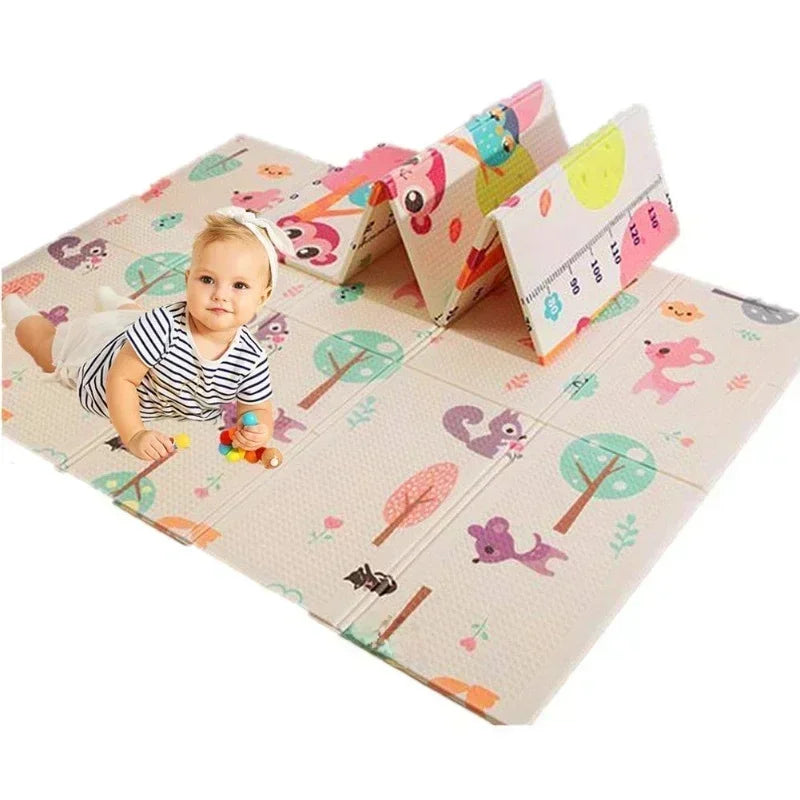
crawling and motor skills mat + non slip cushioned baby mat — See it in action
Why choose a stability-focused mat?
A baby's earliest movement milestones depend on a stable practice surface. Hardwood, tile, and laminate floors can become slippery, while thin rugs may bunch up and shift under movement. A dedicated baby crawling mat stays in place, cushions minor tumbles, and provides reliable traction that helps babies push through tummy time, crawling, and early standing practice with greater confidence.
Choosing a safe baby play mat also benefits caregivers by creating a defined, easy-to-clean play space that can be used every day. Features such as waterproof surfaces, non-slip backing, and moderate cushioning make daily practice more comfortable without sacrificing stability.
How a crawling and motor skills mat helps
A crawling and motor skills mat combines grip, cushioning, and tactile feedback to support natural movement patterns. Instead of focusing solely on comfort, a quality mat helps babies maintain hand and knee traction, shift weight more smoothly, and practice reaching, crawling, and cruising on a predictable surface.
- Reduces slipping during tummy time and crawling.
- Provides moderate impact protection on hard flooring.
- Encourages longer, more enjoyable floor play sessions.
- Supports sensory exploration through textured surfaces.
- Creates a dedicated space for everyday developmental activities.
Choose the right mat: features that matter
Comparing baby crawling mats becomes much easier when you focus on the features that directly affect safety, durability, and everyday usability.
- Grip pattern: Light surface texture improves traction for hands, knees, and bare feet without feeling abrasive.
- Cushion thickness: Around 8–12 mm typically provides a balance between comfort and stability. Extremely thick foam may compress too much during crawling practice.
- Non-slip backing: A high-friction base helps prevent movement on hardwood, tile, vinyl, and laminate floors.
- Waterproof finish: Closed-cell or coated surfaces simplify cleanup after spills, drool, snacks, and everyday messes.
- Sensory textures: Gentle raised patterns encourage tactile exploration while adding extra grip for active babies.
- Foldable design: Foldable mats are convenient for apartments, travel, and quick storage without requiring permanent floor space.
Key benefits at a glance
- Improves traction during tummy time, crawling, and early standing.
- Provides cushioning that helps reduce impact on hard indoor flooring.
- Supports sensory play through textured surfaces and interactive floor activities.
- Offers portable options suitable for both indoor rooms and outdoor play areas.
Practical use-cases & routines
Using a baby crawling mat consistently can help create enjoyable movement routines throughout the first year. These simple activities pair naturally with the mat's supportive surface while encouraging active exploration.
1. Tummy time progression (5–10 minute sessions)
- Begin with short supervised sessions and gradually increase duration as your baby becomes more comfortable.
- Position colorful toys slightly ahead to encourage reaching, lifting the head, and weight shifting.
- Allow frequent breaks to keep practice positive and engaging.
2. Supported cruising practice (8–12 months)
- Place the mat beside a sturdy sofa or low furniture to provide a softer landing area during standing practice.
- Encourage side-stepping by placing favorite toys just beyond easy reach.
- Maintain close supervision whenever your baby practices pulling to stand.
3. Sensory balance circuit (15 minutes)
- Create different activity zones using textured sections, soft toys, and open crawling space.
- Encourage barefoot exploration so babies can experience surface textures naturally.
- Alternate crawling, rolling, sitting, and reaching activities to keep sessions engaging.
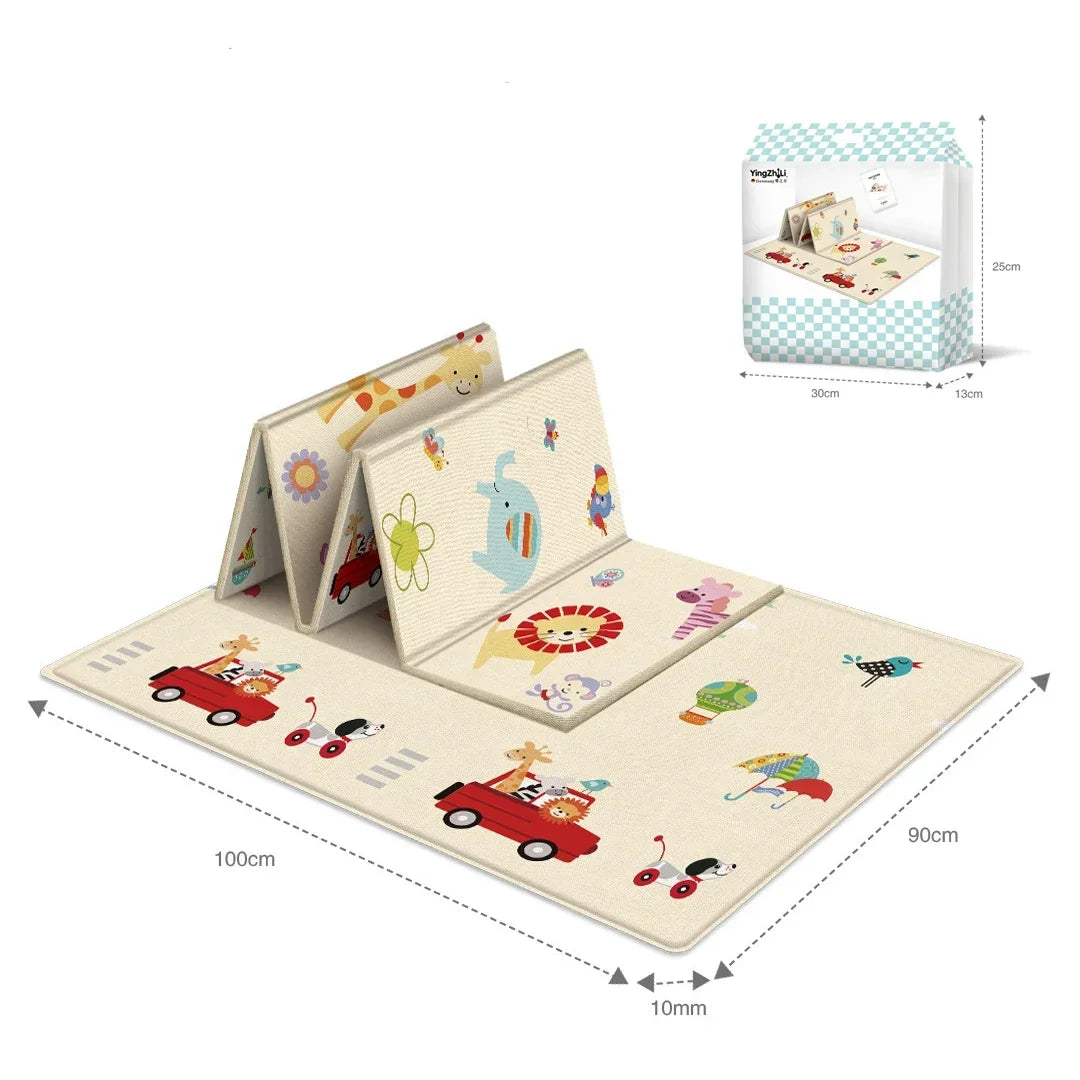
sensory surface + outdoor mat for play area — See it in action
Safety and cleaning checklist
Regular inspection and cleaning help extend the life of a baby crawling mat while keeping the play surface safe for everyday use. Before each play session, take a few moments to check both the mat and the surrounding area.
- Secure the edges: Make sure the mat lies completely flat and does not curl or slide, especially on hardwood or tile flooring.
- Inspect the non-slip backing: Replace the mat if the backing becomes damaged, peels away, or no longer grips the floor securely.
- Check for wear: Look for cracks, tears, compressed foam, or exposed filling that could affect cushioning or create hazards.
- Clean daily: Wipe waterproof surfaces with a soft cloth, warm water, and mild soap. Avoid harsh cleaners that may damage protective coatings.
- Allow complete drying: Let the mat air dry before folding or storing to help prevent moisture buildup and odors.
- Supervise at all times: Even the safest baby play mat should only be used on the floor under adult supervision.
Quick comparison: indoor vs outdoor mats
| Feature | Indoor non slip cushioned baby mat | Outdoor mat for play area |
|---|---|---|
| Primary material | Soft waterproof foam with cushioned finish | Durable weather-resistant material designed for repeated outdoor use |
| Traction | High-grip backing for hardwood, tile, and laminate floors | Textured surface for grass, patios, or concrete |
| Comfort level | Optimized for tummy time, crawling, and indoor play | Designed for durability while maintaining moderate cushioning |
| Cleaning | Quick wipe with mild soap and water | Easy to rinse after outdoor use |
| Portability | Lightweight and foldable for everyday storage | Usually rollable with slightly heavier construction |
| Best use | Daily nursery and living room play sessions | Backyard activities, picnics, parks, and family outings |
Buying guidance: choosing the right mat for your family
Selecting the best baby crawling mat depends on your flooring, available space, and how you plan to use it. Rather than focusing on a single feature, compare the overall balance of comfort, stability, portability, and ease of maintenance.
- For hardwood or tile floors: Choose a mat with a reliable non-slip backing and medium-density cushioning.
- For small homes or apartments: Foldable designs store easily when floor space is limited.
- For frequent travel: Lightweight waterproof mats simplify packing and cleaning.
- For mixed indoor and outdoor use: Look for durable, water-resistant materials that can be wiped clean after each outing.
- For sensory play: Textured surfaces can add tactile variety while maintaining stable traction.
If you're looking for a practical option that combines portability, waterproof construction, and everyday comfort, many parents prefer the foldable baby play mat for use at home, during travel, and for outdoor family activities.
- Need play-based balance tools? See Mobility & Training for gentle walkers and push toys.
- Want tactile toys that complement the mat? Check Sensory Toys .
- For peace-of-mind safety gear, browse Health & Safety items.
Pros & cons
-
✅ Pros
- Provides reliable traction for tummy time, crawling, and early standing practice.
- Helps cushion everyday bumps on hardwood, tile, and laminate floors.
- Waterproof surfaces simplify cleanup after spills, drool, and snacks.
- Foldable models are easy to store and transport for travel or outdoor use.
- Many designs include textured surfaces that encourage sensory exploration.
-
❌ Cons
- Very thick foam may feel less stable for babies learning to balance.
- Textured surfaces can require more detailed cleaning than smooth finishes.
- Larger mats need adequate floor space for safe use.
- Lower-quality foam products may lose cushioning after extended use.
What experts and studies say
Pediatric physical and occupational therapists generally recommend supervised floor time on stable, moderately cushioned surfaces that allow infants to move freely while developing strength and coordination. Rather than overly soft padding, a firm, supportive baby crawling mat provides consistent feedback for the hands, knees, and feet, helping babies practice rolling, crawling, and weight shifting with greater control.
Experts also encourage providing babies with ample opportunities for unrestricted floor play, since regular movement supports motor skill development, body awareness, and confidence. While no mat can accelerate developmental milestones on its own, choosing a safe, non-slip play surface can create an environment that encourages consistent daily practice.
Featured baby crawling mat
For families looking for a versatile solution, a foldable waterproof crawling mat combines everyday comfort with practical storage and portability. Its cushioned construction, easy-clean surface, and foldable design make it suitable for living rooms, nurseries, travel, and supervised outdoor play.

crawling and motor skills mat + sensory surface + outdoor mat for play area — See it in action
Mini-FAQ
-
Q: When can I start using a motor skills mat?
A: Most baby crawling mats can be used from supervised newborn tummy time through crawling, standing, and early walking. Choose a mat with appropriate cushioning and a stable, non-slip surface for each developmental stage.
-
Q: How often should I clean the mat?
A: Wipe the surface after everyday use and perform a more thorough cleaning weekly or whenever spills occur. Always allow the mat to dry completely before folding or storing it.
-
Q: Can a mat prevent all falls?
A: No. A baby crawling mat helps reduce slipping and cushions minor impacts, but active adult supervision and a safe play environment remain essential.
-
Q: What thickness is best for a baby crawling mat?
A: Around 8–12 mm offers a good balance of comfort and stability for most babies. Extremely thick mats may compress more during crawling and standing practice.
-
Q: Are foam baby crawling mats safe for newborns?
A: Quality mats made from non-toxic materials and used according to the manufacturer's instructions are commonly suitable for supervised newborn floor time. Always inspect the mat regularly for damage or excessive wear.
-
Q: Can a baby crawling mat be used outdoors?
A: Yes. Foldable waterproof mats are convenient for parks, patios, and backyards, provided they are placed on a clean, level surface and cleaned thoroughly after outdoor use.
Final Recommendation: Which Baby Crawling Mat Is Best?
The best baby crawling mat is one that matches both your baby's developmental stage and your family's lifestyle. Look for a model that combines reliable non-slip performance, moderate cushioning, durable non-toxic materials, and a waterproof surface that is easy to clean. These features create a comfortable space for tummy time, crawling, and early standing practice while simplifying everyday maintenance.
If your home has hardwood or tile floors, prioritize a mat with excellent grip and medium-density foam. Families who frequently travel or need flexible storage will benefit from a foldable design that can move easily between rooms, parks, and family visits without sacrificing stability.
A thoughtfully chosen baby crawling mat becomes a long-lasting play space that supports supervised floor activities throughout infancy and the toddler years. Pair it with age-appropriate sensory activities and movement-based play, and continue exploring resources in Baby Growth & Learning and Mobility & Training to encourage safe, active development.
Pillar Article: Indoor Outdoor Play Mat Guide for Active Babies and Busy Parents
Other Related Articles:
Explore More:





