

Secure Three Point Harness: Features That Keep Babies Safe
A secure three point harness helps keep babies properly positioned during everyday seated activities when it is designed for the specific product, correctly installed, and adjusted to fit the child. Unlike a vehicle's 3 point harness seat belt, a baby seating harness is part of a child seating system such as a high chair or compatible booster. Understanding how a 3 point harness works, its limitations, and the features that improve correct fit can help caregivers make informed safety decisions.
Does a secure three point harness really keep babies safer?
A secure three point harness can help reduce unwanted movement and improve seating stability when it is used with a compatible baby seat, adjusted correctly, and appropriate for the child's age, height, and weight. However, no 3 point harness is universally safer for every situation, and it should never be confused with a certified child car seat restraint or a vehicle 3-point seat belt.
⏱ 18 min read
What Is a 3-Point Harness and Is It Safe for Babies?
A 3 point harness is a restraint system that typically uses two shoulder straps connected to a lower buckle or crotch attachment point. Together, these three restraint points help keep a child centered in the seat and reduce excessive forward or side-to-side movement during normal use.
Whether a secure three point harness is appropriate depends on several factors, including the product it is designed for, the child's age, height, weight, correct installation, and proper adjustment. A baby seating harness should always be used according to the manufacturer's instructions and within its stated limits.
It is also important to distinguish between different restraint systems. A baby high-chair harness is intended for stationary seating, while a vehicle 3-point seat belt protects larger occupants in automobiles. Likewise, a certified child car seat typically uses a 5-point harness engineered and tested specifically for crash protection. These systems are not interchangeable.
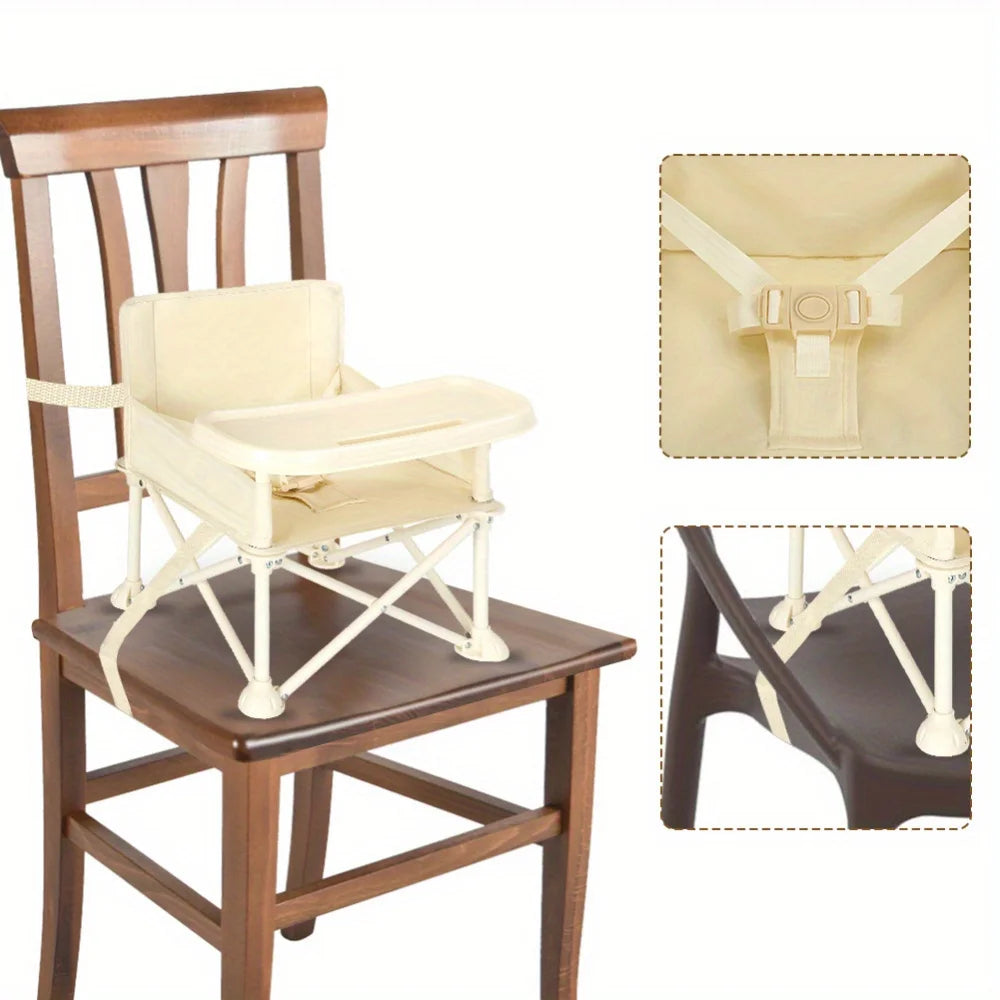
Secure three point harness used on a compatible baby seat.
How Does a 3-Point Harness Work?
A secure three point harness keeps a child positioned by routing restraint forces across stronger parts of the upper body and pelvis rather than concentrating pressure on a single area. During normal movement or a sudden stop, the harness helps limit excessive forward motion while encouraging the child to remain properly seated.
Shoulder straps and lower restraint point
The two shoulder straps help stabilize the upper body, while the lower buckle or crotch attachment helps prevent the child from sliding downward beneath the harness. Together they create a stable restraint path for everyday seated use.
Anchor points and force distribution
Each attachment point shares restraint forces across the harness webbing instead of placing all the load on one strap. Correct routing and proper adjustment allow the harness to lie flat against the child's body without unnecessary slack.
- Shoulder straps
- Central buckle
- Lower connection point
- Seat attachment anchors
This simplified layout illustrates the basic components of a baby seating harness. It should not be interpreted as a vehicle restraint system.
How the harness helps limit forward movement
When adjusted correctly, the harness keeps the child positioned against the seat back, reducing unnecessary leaning or sliding during feeding and other stationary activities. This differs from a vehicle 3 point harness seat belt, which is engineered and tested under entirely different safety standards for automotive use.
Key Components of a 3-Point Harness
Rather than focusing on marketing features, evaluate the core components that influence correct fit, durability, and ease of everyday use.
Webbing and shoulder straps
Quality webbing should remain flat without excessive twisting and provide an adjustment range appropriate for the manufacturer's recommended child size. Optional shoulder padding may improve comfort but does not replace proper harness adjustment.
Buckle and adjustment system
An adjustable 3 point harness should allow caregivers to tighten or loosen the straps smoothly while maintaining consistent positioning. The buckle should engage securely and be easy for adults to operate without encouraging accidental release by children.
Anchor points and attachment hardware
Attachment hardware should connect only to the locations specified by the seat manufacturer. Using unapproved attachment points or modifying the harness can reduce the effectiveness of the restraint and may compromise product safety.
3-Point Harness vs 2-Point, 4-Point, 5-Point, and 6-Point Harnesses
Does a secure three point harness outperform a lap-only or 5-point harness?
No single restraint system is best for every application. A 3 point harness generally provides better upper-body positioning than a lap-only restraint for compatible seating products, while a certified 5-point harness offers additional restraint points for child car seats designed for motor vehicle travel. The safest choice always depends on the intended use, product design, and applicable safety standards.
3-point vs 5-point harness
A 3-point harness uses two shoulder straps and one lower attachment point to help keep a child positioned in compatible seating. A 5-point harness adds two hip attachment points, providing additional restraint that is commonly required in child car seats engineered for crash protection. These systems are designed for different purposes and should not be considered interchangeable.
2-point vs 3-point restraint
A lap-only, or 2-point, restraint primarily secures the lower body and provides limited upper-body control. A properly adjusted 3-point harness adds shoulder restraint, helping reduce forward leaning and encouraging better seated positioning during normal use.
4-point and 6-point harness systems
Four-point and six-point harnesses are commonly found in specialized environments such as motorsports, aviation, industrial equipment, and certain rehabilitation or mobility products. Their design requirements, installation methods, and testing standards differ substantially from baby seating restraints.
| Harness Type | Typical Restraint Points | Common Applications | Typical Adjustment Complexity |
|---|---|---|---|
| 2-point | Lap restraint | Basic seating systems | Low |
| 3-point | Two shoulders + lower connection | Compatible baby seats, high chairs, selected boosters | Low to moderate |
| 4-point | Four attachment points | Specialized equipment and motorsports | Moderate |
| 5-point | Two shoulders, two hips, crotch strap | Certified child car seats | Moderate |
| 6-point | Six attachment points | Professional racing and specialty applications | High |
Where Are 3-Point Harnesses Used?
Passenger vehicles and child restraints
Vehicle 3-point seat belts are engineered for adult and older child occupants using automotive safety standards. Baby seating harnesses used in high chairs or compatible booster seats serve a different purpose and should only be used as directed by their manufacturers. A booster seat with a 3 point harness should be specifically designed and approved for that configuration.
Wheelchairs and mobility equipment
Some wheelchairs, adaptive seating systems, and rehabilitation products incorporate 3-point harnesses to help maintain posture and positioning. These systems are selected according to individual medical or mobility needs and should not be substituted across different equipment categories.
Racing, aviation, and industrial equipment
Professional racing vehicles, aircraft, and industrial machinery may use multi-point restraint systems designed to meet industry-specific performance requirements. Their construction, anchor locations, and certification standards differ significantly from consumer baby products.
How to Adjust and Use a 3-Point Harness Correctly
Correct adjustment is just as important as the harness itself. Follow the manufacturer's instructions for the specific seat or equipment and check the fit each time the child is seated.
Check the fit before every use
- Place the child fully back against the seat back.
- Fasten the buckle until it is completely engaged.
- Adjust the shoulder straps so they lie flat without excessive slack.
- Position the lower strap according to the product instructions so it is not twisted or displaced.
- Confirm the child remains securely positioned without unnecessary forward movement during normal use.
Prevent twisting and slack
- Straighten any twisted webbing before tightening.
- Keep the straps flat against clothing.
- Recheck the fit after the child changes position.
Use only approved attachment points
Never modify the harness, replace components with non-approved parts, or attach the restraint to locations not specified by the manufacturer. Compatibility between the harness and the seat is essential for proper performance.
Maintenance, Inspection, and Replacement
Routine maintenance helps keep a secure three point harness functioning as intended throughout its service life. Always follow the manufacturer's instructions for cleaning, inspection, storage, and replacement, since recommendations vary by product type.
Cleaning and care
- Clean the harness only with the methods approved by the manufacturer.
- Avoid bleach, harsh solvents, or abrasive cleaners that may damage webbing or stitching.
- Allow straps to air dry completely unless the product instructions specify another method.
- Keep food residue and debris out of buckles and adjustment hardware to maintain smooth operation.
Inspection for wear or damage
Inspect the harness regularly before use, paying close attention to areas that experience repeated movement or tension.
- Check webbing for cuts, fraying, excessive wear, or discoloration.
- Inspect stitching for loose threads or separation.
- Verify that buckles latch securely and release properly.
- Ensure adjusters move smoothly and hold their position once tightened.
- Confirm all attachment points remain firmly connected to the compatible seat.
When replacement is necessary
Replace the harness if it shows structural damage, has missing or broken components, has been recalled by the manufacturer, or no longer functions as intended. If the manufacturer specifies replacement after a significant impact or other event, follow that guidance even if damage is not immediately visible.
When selecting compatible seating equipment, choose products that clearly state their intended age, height, and weight ranges. For families looking for a compatible feeding solution, the portable baby high chair is designed for everyday mealtime use when assembled and used according to the manufacturer's instructions.
Installation, cleaning and long-term care
Cleaning & maintenance
- Follow the manufacturer's cleaning instructions for the specific harness and seat. If removable fabric components are machine washable, use the recommended cycle and allow straps or webbing to air dry unless otherwise instructed.
- Inspect the webbing, stitching, buckle, adjusters, and attachment points regularly for fraying, cuts, cracks, deformation, or other signs of damage.
- Avoid bleach, harsh solvents, excessive heat, or abrasive cleaning methods that could weaken materials or affect restraint performance.
Inspection for wear or damage
- Verify that the buckle latches securely and releases only when intentionally operated.
- Check that adjustment mechanisms lock properly and that straps remain flat without twisting.
- Stop using the harness if critical components are damaged or no longer function as intended.
When replacement is necessary
- Replace the harness if the manufacturer recommends replacement due to age, recall, contamination, or damaged components.
- If the restraint is part of a certified child seating product, follow the manufacturer's replacement guidance after any significant impact or structural damage.
- Keep the original instructions available so future inspections and adjustments follow the approved procedures.
See how the portable baby high chair integrates with its included restraint system and follow the manufacturer's installation instructions for proper use.
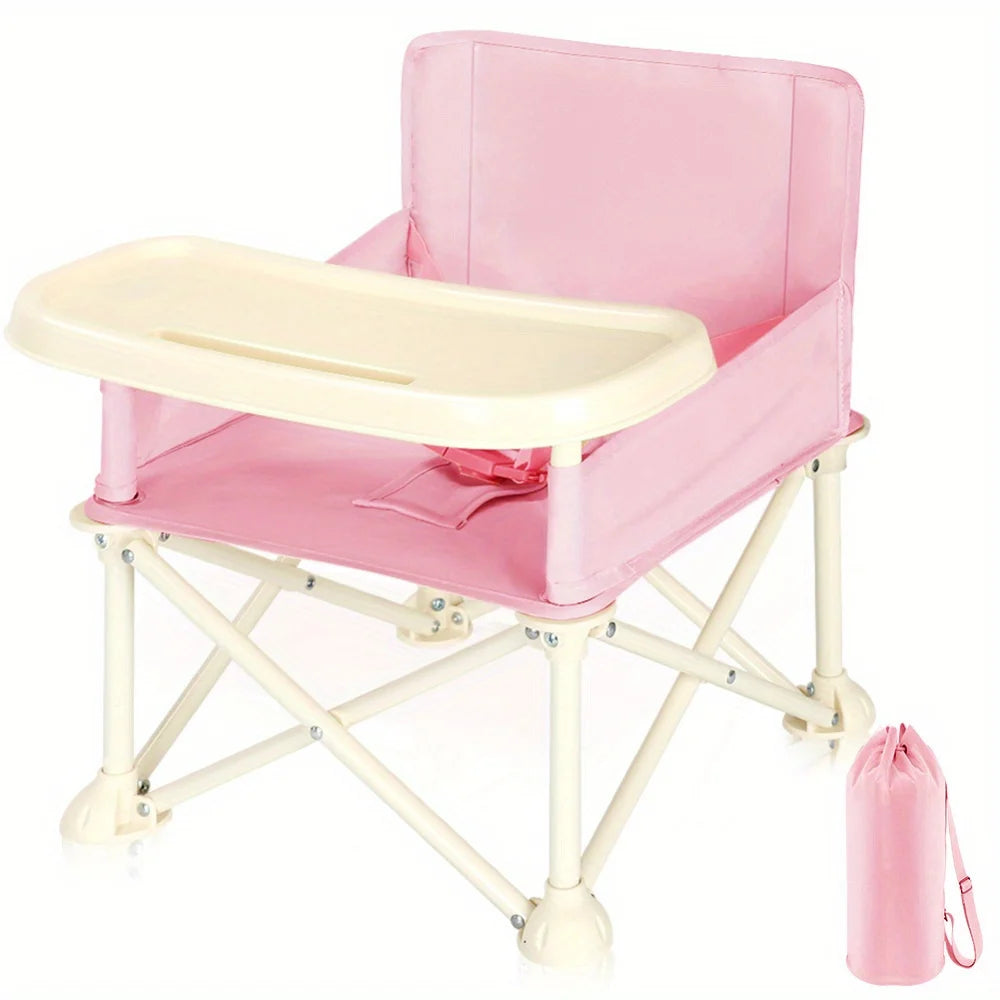
Secure three point harness integrated with a portable baby high chair.
3-Point Harness FAQ
Is a 3-point harness safe for babies?
A 3-point harness can be safe when it is designed for the specific baby seat or product, fits your child's age, height, and weight, and is used exactly as instructed by the manufacturer. Safety depends on proper fit, correct installation, and compliance with applicable safety standards rather than the number of restraint points alone.
How does a 3-point harness work?
A 3-point harness uses two shoulder straps that connect to a lower buckle or restraint point to help keep a child positioned in the seat. The system spreads restraint forces across stronger areas of the upper body and pelvis while helping limit excessive forward movement during normal use or sudden stops.
What is the difference between a 3-point and 5-point harness?
A 5-point harness adds two additional hip attachment points, providing more restraint and body positioning than a typical 3-point design. Child car seats commonly use 5-point harnesses because they are engineered and certified for vehicle crash protection. A 3-point harness used on a baby chair or feeding seat is not interchangeable with a certified car seat restraint.
Can a 3-point harness be used in a car?
Only if the entire child restraint has been designed, tested, and approved for vehicle use. A feeding chair or portable seating harness should never replace a certified child car seat, even if it also uses a 3-point restraint design.
What is an adjustable 3-point harness?
An adjustable 3-point harness allows caregivers to tighten or loosen the shoulder straps and lower restraint to achieve an appropriate fit as the child grows. Adjustments should always follow the manufacturer's instructions so the straps remain flat and properly routed.
How tight should a 3-point harness be?
The harness should be snug enough to hold the child securely without excessive slack. The straps should lie flat against the body, the buckle should be fully engaged, and the fit should match the guidance provided by the product manufacturer.
When should a 3-point harness be replaced?
Replace the harness if it becomes damaged, shows excessive wear, has missing or broken components, is affected by a safety recall, or if the manufacturer specifies replacement after a significant impact or other event. Always follow the product's service and replacement recommendations.
Related Articles:
- Hygienic Baby Dining Setup: Top Features for Stress-Free Meals
- Easy Clean Baby High Chair Tray: Why Parents Love It
Pillar Articles:





