

Best Microscope for Kids Science Exploration That Sparks STEM
Best Digital Microscope for Kids: 7 Parent-Tested Picks for Young Scientists (2026)
Whether your child loves collecting leaves, examining insects, or completing school STEM projects, the best digital microscope for kids can transform everyday curiosity into meaningful scientific discovery. Digital microscopes make magnified images easier to view by displaying them on a built-in screen, smartphone, or computer, helping young learners observe tiny details without the frustration often associated with traditional eyepiece microscopes.
Compared with conventional optical microscopes, digital models are typically more beginner-friendly. Features such as LED lighting, photo capture, adjustable magnification, and simple focus controls encourage children to investigate everything from plant cells and fabric fibers to coins, rocks, feathers, and insects. Many models also allow parents and siblings to view specimens together, creating a more collaborative learning experience.
This guide compares the best digital microscope for kids based on image quality, ease of use, durability, portability, educational value, and age suitability. Whether you're shopping for a curious 5-year-old or an older student preparing science fair projects, these recommendations will help you choose a microscope that keeps learning engaging for years.
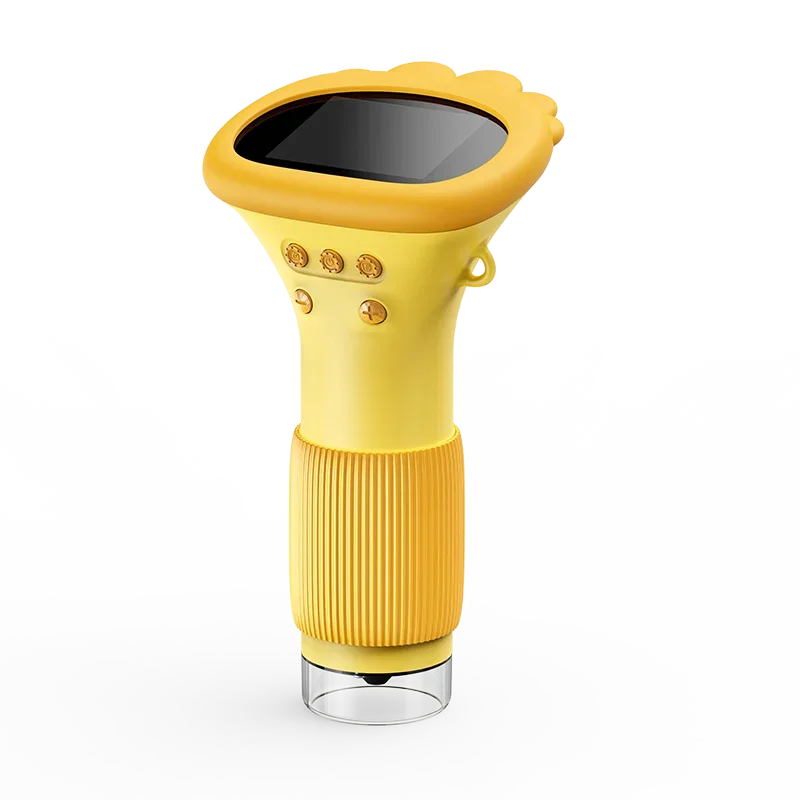
Quick Picks: Best Digital Microscopes for Kids in 2026
- Best Overall: Kids Digital Microscope 1000x with Camera
- Best for Ages 5–7: LCD Screen Beginner Microscope
- Best for Ages 8–10: Dual-Focus Digital STEM Microscope
- Best for Ages 11+: High-Resolution Science Project Microscope
- Best USB Microscope: Laptop-Compatible USB Digital Microscope
- Best Portable Option: Handheld Microscope Camera
- Best Budget Choice: Entry-Level LED Pocket Microscope
For families seeking an excellent balance of magnification, ease of operation, portability, and educational value, the Kids Digital Microscope 1000x with Camera & LED Learning Tool is an outstanding beginner-friendly choice. Its built-in camera and LED illumination encourage children to document discoveries while developing observation skills through hands-on science.
Parents looking to expand their child's STEM activities can also browse the Baby Growth & Learning collection for additional educational tools designed to inspire curiosity, creativity, and independent exploration.
Comparison Matrix: Top Digital Microscopes for Kids
| Microscope | Type | Screen Type | Magnification | Illumination | Recommended Age | Portability | Ease of Use |
|---|---|---|---|---|---|---|---|
| Kids Digital Microscope 1000x | Digital handheld | Built-in screen + camera | Up to 1000x | LED | 4+ | Portable handheld | Very easy |
| LCD Beginner Microscope | Digital desktop | 4.3" LCD screen | 500x | LED | 5–7 | Desktop | Easy |
| Dual-Focus STEM Microscope | Digital desktop | LCD screen | 800x | LED | 8–10 | Moderate | Easy |
| Advanced Student Microscope | Digital | LCD + PC | 1200x | LED | 11+ | Desktop | Moderate |
| USB Digital Microscope | USB digital | Laptop screen | 1000x | LED | 10+ | Moderate | Moderate |
| Handheld Microscope Camera | Portable digital | Smartphone connection | 600x | LED | 6+ | Very portable | Easy |
| Budget LED Pocket Microscope | Pocket digital | Small LCD | 400x | LED | 5+ | Very portable | Very easy |
Key Features Compared: Screen, Magnification, Portability, and Ease of Use
Before buying a microscope, compare the features that have the biggest impact on your child's learning experience rather than focusing only on maximum magnification.
- Screen Type: Built-in LCD displays allow multiple people to view specimens simultaneously, making family science activities and classroom demonstrations more enjoyable.
- Magnification: A practical range of 400x to 1000x is ideal for examining insects, leaves, feathers, fabrics, rocks, and many everyday materials without overwhelming beginners.
- LED Illumination: Bright, adjustable lighting improves image clarity and makes observing translucent or textured specimens much easier.
- Portability: Handheld microscopes are excellent companions for backyard adventures, park visits, nature walks, and field observations.
- Ease of Use: Large buttons, straightforward controls, and simple focusing mechanisms help younger children explore independently with minimal assistance.
The 7 Best Digital Microscopes for Kids (Parent-Tested Picks)
Best Overall Digital Microscope for Kids
Kids Digital Microscope 1000x with Camera
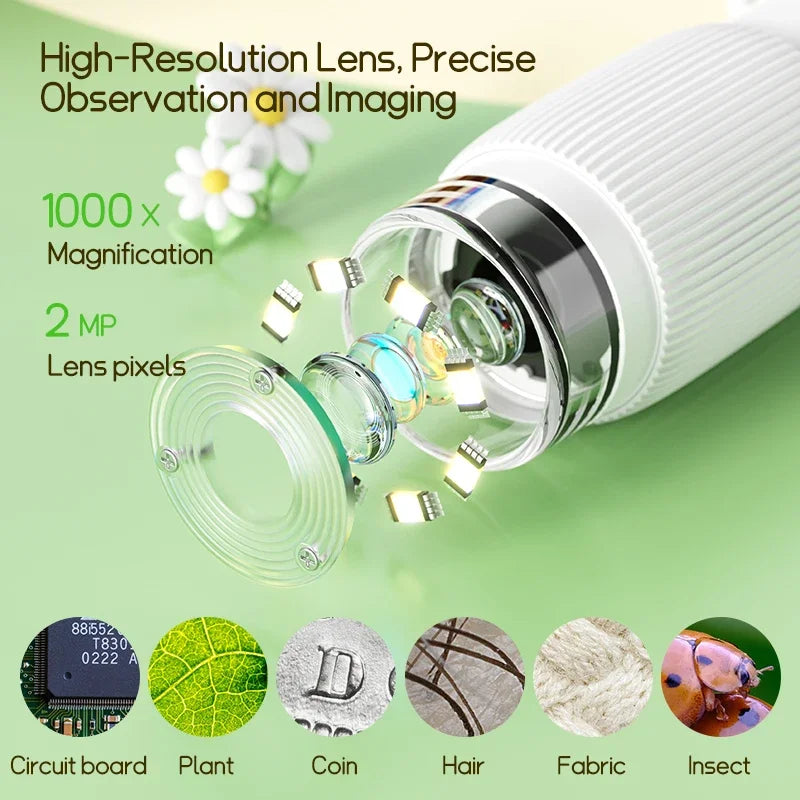
This all-around digital microscope combines high magnification, simple controls, and built-in imaging features that make science accessible for beginners. Children can quickly examine insects, leaves, fabrics, rocks, feathers, coins, and other everyday objects while capturing photos and videos of their discoveries.
- Magnification: Up to 1000x
- Camera: Built-in photo and video capture
- Lighting: Adjustable LED illumination
- Recommended Age: 4+
- Best For: Home STEM learning, nature exploration, and beginner science projects
Pros
- Excellent magnification for most children's science activities
- Digital camera encourages documentation and observation
- Bright LED lighting improves image clarity
- Easy controls suitable for independent learning
- Portable enough for both indoor and outdoor exploration
Cons
- Not intended for advanced laboratory biology work
- Battery runtime varies depending on recording and screen brightness
Parents looking for one microscope that can grow with a child's curiosity will appreciate its balance of educational value, portability, and ease of use. It performs especially well for insect observation, plant studies, household materials, and introductory STEM experiments.
View this digital microscope and start exploring microscopic science.
Best Digital Microscope for Ages 5–7
Children in this age range learn best with simple, frustration-free equipment. A beginner LCD microscope featuring large buttons, automatic lighting, and moderate magnification allows young scientists to focus on exploring rather than adjusting complicated settings.
Pros
- Easy-to-read LCD display
- Large controls designed for smaller hands
- Lightweight construction for supervised outdoor use
- Encourages independent observation skills
Cons
- Lower maximum magnification than advanced models
- Basic imaging features
Best Digital Microscope for Ages 8–10
Elementary students often begin completing structured STEM assignments and science fair projects. A dual-focus digital microscope offers greater precision while remaining easy enough for independent use, allowing children to compare specimens, adjust focus accurately, and record observations.
Pros
- Improved focus control for sharper images
- Higher magnification for detailed exploration
- Well suited for classroom assignments and homeschool activities
- Supports photo documentation of discoveries
Cons
- Takes a little practice to master manual focusing
Best Digital Microscope for Ages 11+
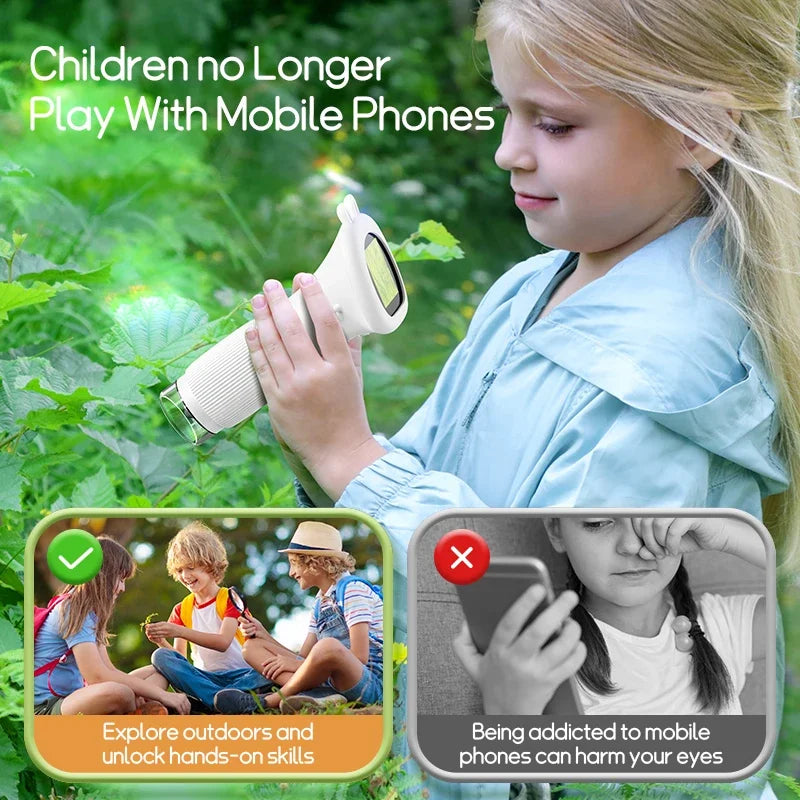
Older children and middle school students typically benefit from higher-resolution imaging, greater magnification, and the ability to save photos for reports. These models are suitable for biology investigations, engineering projects, and more advanced STEM learning.
Pros
- Higher image resolution for detailed observations
- Excellent for science fair and classroom projects
- Greater magnification range for challenging specimens
- Often includes image capture and recording features
Cons
- Larger desktop footprint
- More settings for beginners to learn
Best USB Digital Microscope for Laptop Learning
USB digital microscopes connect directly to a computer, allowing children to view specimens on a much larger display. This makes group learning, online classes, homeschool lessons, and digital science journals easier to manage.
Pros
- Large computer display improves visibility
- Ideal for documenting science projects
- Useful for virtual learning and presentations
- Easy to save images and videos
Cons
- Requires access to a compatible computer
- Less convenient for outdoor exploration
Best Portable Handheld Microscope Camera
For children who enjoy exploring parks, gardens, beaches, and backyards, handheld microscope cameras make it possible to examine natural specimens without bringing them indoors. Their lightweight design encourages spontaneous scientific discovery.
Pros
- Compact and easy to carry
- Excellent for outdoor STEM activities
- Quick setup with minimal adjustments
- Ideal for insects, bark, flowers, and rocks
Cons
- Lower maximum magnification than desktop models
Best Budget Digital Microscope for Kids
Affordable digital microscopes remain an excellent way to introduce young learners to microscopy. Entry-level models usually include LED lighting, basic digital viewing, and enough magnification for observing leaves, fabrics, insects, sand, and household objects.
Pros
- Budget-friendly entry into STEM learning
- Portable and lightweight
- Simple operation for beginners
- Suitable for casual home exploration
Cons
- Fewer advanced imaging and recording features
- Typically lower overall image quality
If you're searching for an affordable microscope that also offers room to grow, the Kids Digital Microscope 1000x provides stronger long-term value thanks to its higher magnification, integrated camera, and versatile learning features.
You are an expert SEO editor. Rewrite the article using the Upgrade Plan. MULTI-PART ARTICLE This article has been intentionally divided into 4 parts. You are rewriting ONLY PART 3 OF 4. Assume all previous parts already exist. Continue naturally from the supplied HTML. Do NOT restart the article. Do NOT repeat information already covered. Do NOT generate another H1. Do NOT generate another introduction. Do NOT summarize previous sections. Do NOT add transition paragraphs referring to omitted sections. Do NOT generate a conclusion unless it already exists in the supplied HTML. Rewrite ONLY the supplied HTML. GOAL Produce a stronger article capable of competing with Top 3 Google results while preserving the original page assets. INPUT ARTICLE HTML (THIS PART ONLY)How to Choose the Best Digital Microscope for Kids
Magnification Levels Explained for Beginners
Most children's microscopes offer magnification between 400x and 1000x. This range is perfect for:
- Plant structures
- Household fibers
- Insect features
- Everyday materials
Extremely high magnification (2000x+) is usually unnecessary for beginner learners.
Screen vs USB Microscopes: Which Is Better for Kids?
LCD Screen Microscopes
- Standalone device
- Easier for younger kids
- No computer required
USB Microscopes
- Connect to a computer
- Better for documentation
- Great for school projects
For most beginners, LCD or built-in screen models are easier to operate.
Durability and Kid-Friendly Design
Children’s microscopes should have:
- Shock-resistant casing
- Stable base or handheld grip
- Simple focus controls
- Non-toxic materials
LED Lighting and Image Quality
LED illumination is essential for clear observation. Adjustable lighting helps children see transparent materials like plant cells or insect wings more clearly.
Best Age to Introduce Kids to Digital Microscopes
Microscopes for Ages 5–7
At this stage, children enjoy simple discovery activities like looking at leaves, rocks, and bugs.
Microscopes for Ages 8–10
Kids begin exploring structured science experiments and STEM projects.
Microscopes for Ages 11 and Up
Older students can use microscopes for science fair projects and more detailed biological observation.
UPGRADE PLAN {'outline': [], 'trim': ['How Digital Microscopes Help Kids Learn Science', 'Best Age to Introduce Kids to Digital Microscopes']} RULES - Apply every instruction in the Upgrade Plan. - Keep all existing affiliate links unchanged. - Keep all existing internal links unchanged. - Keep all existing image URLs unchanged. - Preserve sections such as Related Articles, Related Posts and Recommended Reading. - Avoid duplicate headings. - Insert new sections only where specified. - Improve clarity, topical coverage, EEAT and readability. - Expand weak sections only when required. - Use natural keyword placement. - Keep semantic HTML clean. YEAR UPDATE If visible article text contains "2005", replace it with "2026". Do not modify years inside: - URLs - href attributes - image filenames PART OUTPUT Return ONLY the rewritten HTML for PART 3. Do NOT output any HTML belonging to previous parts. Do NOT output any HTML belonging to later parts. Do NOT add explanations. Do NOT add markdown. The returned HTML must concatenate directly with the remaining article without any edits. OUTPUT REQUIREMENTS Return ONLY the rewritten HTML for PART 3. The output must be valid HTML and ready to publish. Do NOT return: - Markdown - Explanations - Notes - Code fences - JSON - XML Return ONLY the rewritten HTML fragment. Do NOT add , or . Do NOT add code fences. Do NOT add explanations.Conclusion: Which Kids Microscope Offers the Best Value?
The best microscope for kids science exploration is the one that matches your child's age, interests, and confidence level. Younger children usually enjoy portable digital microscopes with built-in screens and straightforward controls, while older students often benefit from higher magnification and USB connectivity for documenting science projects and classroom assignments.
For most families, the Kids Digital Microscope 1000x with Camera delivers the strongest overall value. Its combination of up to 1000x magnification, integrated camera, LED illumination, and beginner-friendly operation makes it suitable for everything from backyard insect observation to school STEM activities. Instead of quickly outgrowing the device, many children can continue using it as their scientific interests become more advanced.
If your priority is choosing by age, an LCD microscope is an excellent starting point for children ages 5–7, a dual-focus digital microscope suits elementary students developing observation skills, and higher-resolution USB models are ideal for older learners creating science reports and presentations. Families shopping on a tighter budget can still find entry-level microscopes that provide an engaging introduction to microscopy, provided they include reliable LED lighting and clear digital imaging.
Whichever model you choose, encouraging children to investigate leaves, insects, rocks, fabrics, coins, and other everyday objects helps develop observation, critical thinking, and problem-solving skills that support long-term STEM learning. Pairing a quality microscope with additional educational resources from the Baby Growth & Learning collection can help create an engaging home science environment that keeps curiosity growing well beyond a single experiment.
Frequently Asked Questions
What is the best microscope for kids science exploration?
A digital microscope with an LCD display, adjustable LED lighting, and magnification between 400x and 1000x offers the best balance of usability, image quality, and educational value for most children.
Is a digital microscope better than an optical microscope for children?
For beginners, digital microscopes are often easier to use because images appear on a screen instead of through an eyepiece. This makes focusing simpler and allows multiple people to observe specimens together.
Does a child really need a 1000x microscope?
Not necessarily, but a microscope capable of up to 1000x provides flexibility as children become more interested in science. Lower magnification is sufficient for many everyday observations, while higher settings expand what they can explore.
What age is appropriate for a microscope?
Many children can begin using simple digital microscopes around age 5 with adult guidance. Older children generally benefit from additional features such as image capture, manual focus, and USB connectivity.
What can kids observe with a microscope?
Children can safely examine leaves, flowers, feathers, insects, fabric fibers, paper, coins, sand, rocks, hair, tree bark, and prepared slides to better understand the microscopic world around them.
Are USB digital microscopes good for school projects?
Yes. USB microscopes make it easy to capture high-resolution photos and videos that students can include in reports, presentations, and science fair displays.
What accessories should a beginner microscope kit include?
Useful accessories include prepared slides, blank slides, specimen containers, tweezers, collection tools, charging cables, a protective carrying case, and lens cleaning materials.
How do you clean and maintain a kids microscope?
Use a microfiber lens cloth or lens-cleaning paper to remove dust, avoid touching the optics with fingers, keep the microscope dry, recharge batteries as recommended, and store the device in a protective case when not in use.
Related Articles:





