Best Preschool Toy for Real Learning Through Play
Share
Best Preschool Toy: Top Picks for Learning, Math, Creativity & Skill Development
Looking for the best preschool toy that does more than keep your child occupied? The strongest best educational toys for preschoolers encourage active participation while building early math, fine motor, problem-solving, language, creativity, or independent-play skills. This guide compares practical options by developmental goal so you can choose a toy that fits your child, budget, and learning stage.
⏱ 8 min read
Discover engaging toys that turn everyday play into learning opportunities.
What is the best preschool toy for your child's learning goals?
The best preschool toy is one that matches your child's developmental stage and gives them an active way to practice a specific skill. For many preschoolers, a hands-on counting toy is an especially strong starting point because it combines number recognition, early counting, fine motor practice, and independent exploration.
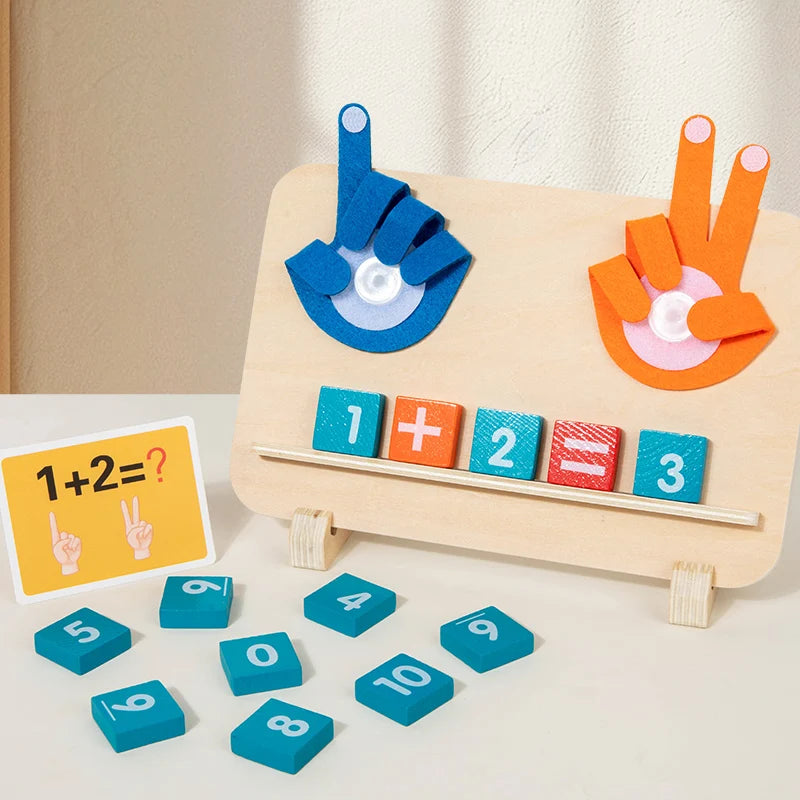
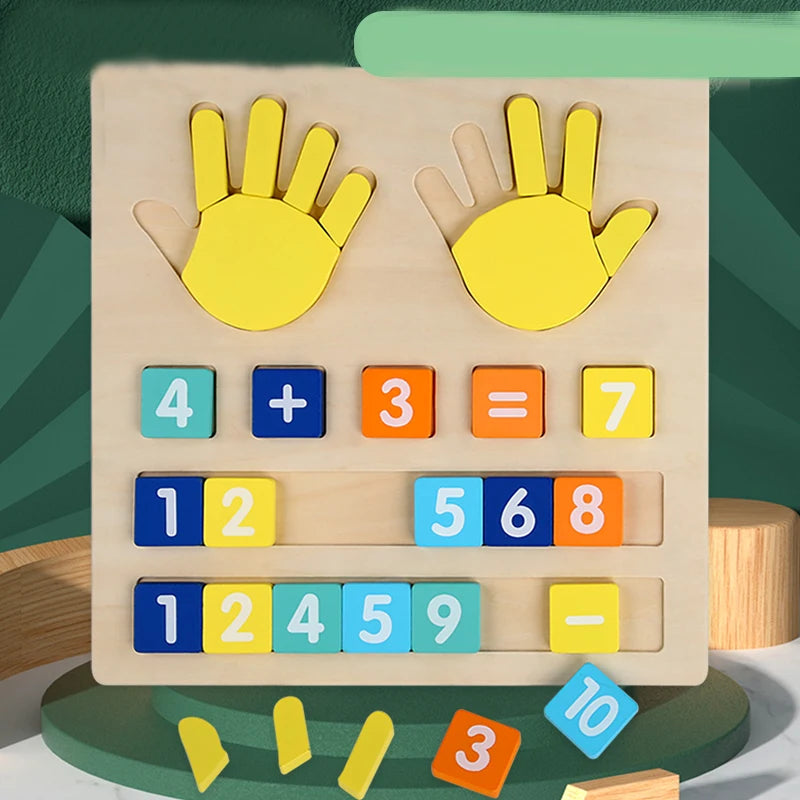
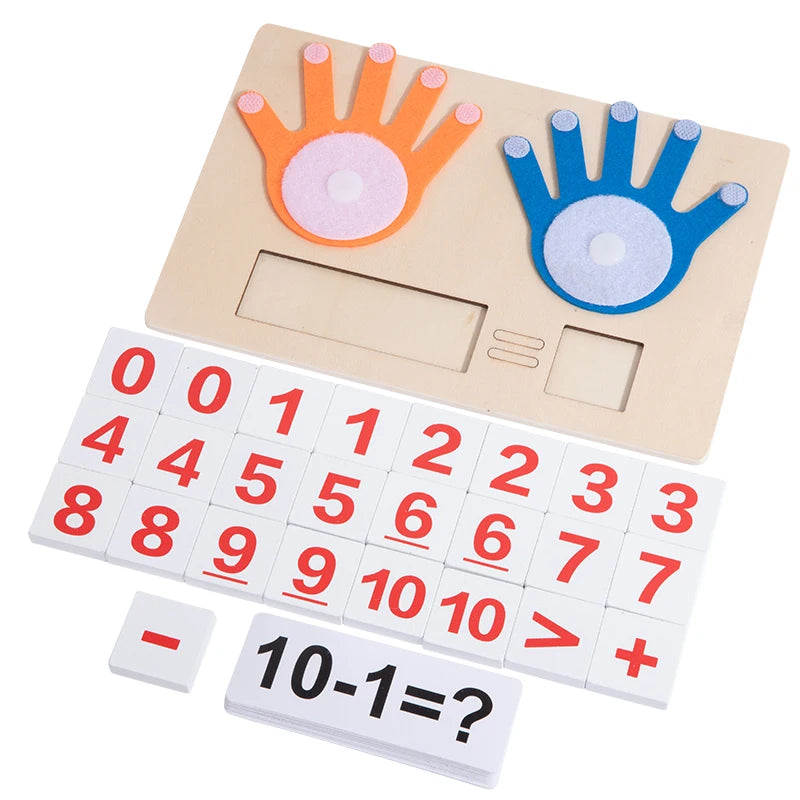
Best overall recommendation: the Wooden Finger Counting Toy is a strong choice for children who are beginning to connect numbers with quantities. It uses tactile interaction rather than passive watching, making it useful for short, repeatable learning sessions.
- Best for early math: Wooden Finger Counting Toy
- Best for hands-on Montessori-style learning: Wooden Finger Counting Toy
- Best for number recognition: Number puzzle boards
- Best for visual counting: Bead counting frames
- Best for fine motor development: Toys requiring grasping, sorting, matching, or manipulation
- Best for open-ended creativity: Building, drawing, pretend-play, and construction toys
The key is not buying the toy with the most features. A useful preschool toy should be simple enough for a child to understand, challenging enough to encourage progress, and engaging enough to invite repeated play.
See it in action - best preschool toy / best educational toys for early math, top rated counting toys for kids, number recognition toys comparison for toddlers, Montessori math learning toys for toddlers
Quick comparison: Best preschool toys at a glance
Different top preschool toys support different developmental goals. Use this quick guide to narrow down the right type before comparing individual options.
| Toy Type | Recommended Age | Primary Skills | Key Strength | Budget Level |
|---|---|---|---|---|
| Wooden Finger Counting Toy | 2–5 years | Counting, number recognition, fine motor skills | Hands-on early math practice | Budget-friendly |
| Bead Counting Frame | 3–5 years | Counting, sequencing, visual reasoning | Clear visual representation of quantities | Budget-friendly |
| Number Puzzle Board | 2–5 years | Number recognition, matching, coordination | Simple recognition practice | Budget-friendly |
| Building or Construction Toy | 3–5 years | Problem-solving, spatial reasoning, creativity | Open-ended play | Varies |
| Creative Art Toy | 3–5 years | Creativity, fine motor control, expression | Flexible, child-led activities | Budget to moderate |
For families looking for affordable preschool toys recs , simple tactile toys can offer excellent value because they can be reused in different games instead of being limited to one activity.
The best preschool toys by developmental goal
Best Overall Preschool Toy
Wooden Finger Counting Toy
The Wooden Finger Counting Toy is the strongest overall pick in this guide for children who are developing early number skills. Children physically interact with the counting elements while connecting quantities to numbers, giving them an opportunity to practice through repetition.
- Pros: hands-on, simple to use, supports counting and fine motor practice, encourages independent exploration
- Cons: primarily focused on early math rather than broad creative play
- Ideal age: approximately 2–5 years, depending on developmental readiness
- Learning outcomes: counting, quantity recognition, number familiarity, coordination
- Best for: parents looking for an affordable, focused early-math learning toy
Try it here: /products/wooden-finger-counting-toy
Best Montessori Math Toy
A good Montessori-inspired math toy emphasizes concrete, hands-on learning rather than passive instruction. Counting materials are particularly useful because children can physically manipulate objects while developing an understanding of quantity, sequence, and one-to-one correspondence.
- Pros: tactile, focused, supports independent discovery
- Cons: may need an adult to introduce new counting activities
- Ideal age: roughly 2–5 years
- Learning outcomes: early numeracy, concentration, coordination, independence
- Best for: families seeking best math toys for preschoolers with a hands-on learning approach
Best Counting Toy for Preschoolers
The Wooden Finger Counting Toy is also a practical choice for children who need repeated counting practice. Instead of asking children to memorize numbers alone, tactile counting activities can help connect spoken numbers, written symbols, and quantities.
- Pros: supports repetition and active participation
- Cons: focused primarily on counting-related skills
- Ideal age: approximately 2–5 years
- Learning outcomes: counting sequence, quantity awareness, number familiarity
- Best for: children beginning structured counting activities
Best Number Recognition Toy
Number puzzle boards are useful when the main goal is recognizing written numerals. Matching and fitting pieces can also add a fine motor component, although the activity generally provides less opportunity for extended counting practice than a dedicated counting toy.
- Pros: straightforward number matching, tactile, easy to introduce
- Cons: recognition does not always equal understanding of quantity
- Ideal age: approximately 2–5 years
- Learning outcomes: numeral recognition, visual matching, coordination
- Best for: children learning to identify written numbers
Best Fine Motor Learning Toy
Preschool toys that require children to grasp, place, sort, stack, match, or manipulate small components can provide valuable fine motor practice. These activities can complement math learning by requiring controlled hand movements and visual coordination.
- Pros: combines physical manipulation with cognitive tasks
- Cons: small components require appropriate supervision and age suitability
- Ideal age: varies by toy and component size
- Learning outcomes: hand-eye coordination, grasp control, sorting, concentration
- Best for: children who enjoy hands-on tasks and puzzles
Best Creative Play Toy
Creative toys such as art materials, construction sets, and pretend-play resources give preschoolers more freedom to decide what to make or how to play. They are especially useful when the goal extends beyond one academic skill.
- Pros: open-ended, encourages imagination and self-expression
- Cons: learning outcomes are less predictable than with skill-specific toys
- Ideal age: approximately 3–5 years, depending on the activity
- Learning outcomes: creativity, communication, planning, fine motor development
- Best for: children who prefer creating, building, or pretend play
Best STEM Preschool Toy
Simple construction and problem-solving toys can introduce preschoolers to early STEM concepts through experimentation. Building, sorting, balancing, and assembling encourage children to test ideas and adjust their approach when something does not work.
- Pros: promotes problem-solving, spatial thinking, and experimentation
- Cons: more complex sets can be frustrating for younger preschoolers
- Ideal age: generally 3–5 years, based on complexity
- Learning outcomes: reasoning, spatial awareness, planning, persistence
- Best for: curious children who enjoy figuring out how things work
Best Budget Preschool Toy
Parents do not need an expensive activity center to support meaningful learning. Simple counting toys, puzzles, sorting activities, and open-ended materials can provide repeated practice at a relatively low cost.
- Pros: affordable, reusable, easy to integrate into daily play
- Cons: fewer features than electronic or multi-function toys
- Ideal age: depends on the individual toy
- Learning outcomes: can include counting, matching, coordination, creativity, and problem-solving
- Best for: families prioritizing learning value over extra features
See it in action - best preschool toy / best educational toys for early math, top rated counting toys for kids, number recognition toys comparison for toddlers, Montessori math learning toys for toddlers
Comparison: The best preschool learning toys
The best choice depends on the skill you want to reinforce. A counting toy is not necessarily the best option for creativity, while a building set may not be the most direct way to practice numeral recognition.
| Toy Type | Age Range | Skills Developed | Materials | Value for Money |
|---|---|---|---|---|
| Wooden Finger Counting Toy | 2–5 years | Counting, number recognition, fine motor skills | Wood | High for early math practice |
| Bead Counting Frame | 3–5 years | Visual counting, sequencing, quantity | Wood or mixed materials | High |
| Number Puzzle Board | 2–5 years | Number recognition, matching, coordination | Wood or durable composite materials | High |
| Construction Toy | 3–5 years | Spatial reasoning, problem-solving, creativity | Plastic, wood, or mixed materials | Moderate to high |
| Creative Art Toy | 3–5 years | Creativity, fine motor control, self-expression | Paper, wood, washable art materials, or mixed materials | Moderate to high |
These top rated preschool learning toys differ in purpose, so the most useful comparison is not simply which toy has the most features. Consider whether your child will actually use the toy repeatedly and whether the activity matches the skill you want to develop.
How we selected and evaluated these preschool toys
We evaluated the toy categories using practical criteria designed around how preschool children learn through play. Rather than treating price or the number of features as a measure of quality, the focus is on usefulness, developmental fit, and repeat-play potential.
- Educational value: Does the toy provide a clear opportunity to practice a meaningful developmental skill?
- Hands-on interaction: Does the child actively manipulate, sort, match, build, count, or create?
- Age appropriateness: Is the complexity suitable for the intended developmental stage?
- Safety: Are materials, construction, edges, fasteners, and component sizes appropriate for the intended age? Always follow the manufacturer's age and safety guidance.
- Durability: Can the toy reasonably withstand repeated preschool play?
- Independent play: Can a child eventually use the toy with limited adult assistance after learning how it works?
- Repeat-play value: Can parents introduce new games or challenges as the child's skills improve?
This approach helps separate genuinely useful preschool toys recs from products that simply offer more lights, sounds, or features.
How to choose the right preschool toy
The right educational toy should match both the child's current ability and the next skill they are ready to practice. Use these factors before buying.
- Match the toy to age and ability. A toy that is too advanced may create frustration, while one that is too easy may quickly lose its appeal.
- Choose a clear learning objective. Decide whether you want to support counting, number recognition, fine motor control, creativity, language, spatial reasoning, or another skill.
- Prioritize active play. Look for toys that require children to make choices and manipulate objects instead of simply watching or pressing buttons.
- Check safety and materials. Review the manufacturer's recommended age, material information, warnings, and care instructions. Avoid toys with accessible parts that are inappropriate for the child's age.
- Consider open-ended play. Toys that can be used in several ways tend to provide more opportunities for children to repeat and extend activities.
- Think about long-term value. A simple toy that grows with the child can be more useful than a highly specialized product that is quickly outgrown.
Families looking for additional learning resources can also explore Baby Growth & Learning , Sensory Toys , and Feeding Tools for related products and activities.
Choose toys that support the skills your child is ready to practice.
Which preschool toy is right for your child?
There is no single toy that is best for every preschooler. Start with your child's interests and the developmental skill you want to reinforce.
- For a math-focused learner: choose counting materials that connect numbers with quantities through hands-on practice.
- For a child learning number symbols: a number puzzle or matching activity can provide repeated recognition practice.
- For a child who prefers independent play: choose a simple toy with a clear objective and room for self-correction.
- For a creative child: favor open-ended art, construction, or pretend-play materials.
- For home learning: choose compact toys that can be used for short, repeatable activities.
- For classroom or group use: prioritize durable materials and activities that can accommodate different skill levels.
The best preschool toy is ultimately the one your child understands, enjoys, and uses often enough to practice the target skill.
Real parent experiences and learning results
Parent feedback in the original article highlighted two recurring benefits of the Wooden Finger Counting Toy: children were more willing to repeat counting activities and parents found the simple format easier to use than some digital alternatives.
Example parent feedback:
“My toddler finally understands counting. We tried apps and puzzles—nothing worked like this.”
Another reported benefit:
“It’s simple but powerful. My son plays with it every day without getting bored.”
These comments should be viewed as individual experiences rather than proof that one toy will produce the same results for every child. Learning progress depends on age, prior experience, developmental readiness, adult interaction, and how consistently the activity is used.
For a more useful measure of progress, watch for observable changes such as:
- Recognizing familiar numbers more consistently
- Counting objects with fewer prompts
- Matching numbers with quantities
- Completing an activity with less adult assistance
- Staying engaged with a learning activity for longer
- Using counting or sorting skills during everyday play
See it in action - best preschool toy / best educational toys for early math, top rated counting toys for kids, number recognition toys comparison for toddlers, Montessori math learning toys for toddlers
Final recommendations
If you want one practical starting point, the Wooden Finger Counting Toy is the best preschool toy in this guide for early math learning. Its biggest advantage is its simplicity: children can physically interact with the counting elements while practicing number concepts repeatedly.
- Best overall: Wooden Finger Counting Toy
- Best value: Simple hands-on counting and matching toys
- Best Montessori-style option: Tactile math materials that encourage independent discovery
- Best for early math: Counting toys that connect numerals with quantities
- Best for broader development: Open-ended construction, creative, and fine motor toys
Instead of buying toys simply because they are marketed as educational, choose products that give your child a clear opportunity to practice, repeat, experiment, and eventually solve the activity with less help.
Try the Wooden Finger Counting Toy for hands-on early math practice.
FAQ
What is the best preschool toy for learning?
The best preschool toy depends on the skill your child is ready to develop. For early math, a hands-on counting toy is a strong option because it can support counting, number recognition, quantity awareness, and fine motor practice in one activity.
Which educational toys help preschoolers develop math skills?
Counting toys, bead frames, number puzzles, sorting activities, and other tactile math materials can help preschoolers practice early numeracy. The most useful options let children connect numbers with real quantities instead of relying only on memorization.
What are the best counting toys for preschoolers?
Good counting toys give children physical objects to count, move, match, or organize. A Wooden Finger Counting Toy is a practical choice for children who are beginning to develop counting and number recognition skills.
Are Montessori math toys worth buying?
Montessori-style math toys can be worthwhile when they provide hands-on activities, clear learning objectives, and opportunities for independent exploration. The Montessori label itself does not guarantee quality, so also evaluate safety, durability, developmental fit, and how the toy is actually used.
How do number recognition toys help preschool children?
Number recognition toys give children repeated opportunities to identify and match written numerals. For stronger early-math learning, combine recognition activities with counting physical objects so children begin connecting the numeral with its quantity.
How many educational toys should a preschooler have?
There is no required number. A smaller collection of well-chosen toys can provide plenty of learning opportunities when each toy supports a different type of play, such as counting, building, creativity, fine motor practice, or pretend play.
What materials are safest for preschool toys?
Look for toys made with durable, child-appropriate materials and follow the manufacturer's age recommendations, warnings, cleaning instructions, and material information. Avoid toys with damaged parts, sharp edges, or components that are inappropriate for the child's age.
How do I choose the right educational toy by age?
Start with the manufacturer's recommended age, then consider your child's individual abilities. Choose activities that are understandable but still provide a small challenge. As children gain confidence, introduce more complex counting, matching, building, or problem-solving tasks.
Pillar Article: Math educational toys: Best brands reviewed for real results
Other Related Articles:
Explore More: