
Does a baby balance training cushion really help babies sit?
Yes — a baby balance training cushion supports safe, earlier sitting by providing gentle instability that engages core muscles while protecting against tipping. Used correctly, it speeds confidence during infant development sitting and complements an infant support chair for safer infant sit and play practice.
⏱ 6 min read — Baby Balance Training Cushion: How to Boost Sitting Skills Safely
Worried your baby slides, tips, or seems unsure while sitting? A baby balance training cushion can turn shaky first sits into steady practice—supporting infant development sitting while encouraging tiny core muscles to learn balance. This guide explains how the cushion works, how to use it safely, and why parents choose it over bulky support devices.
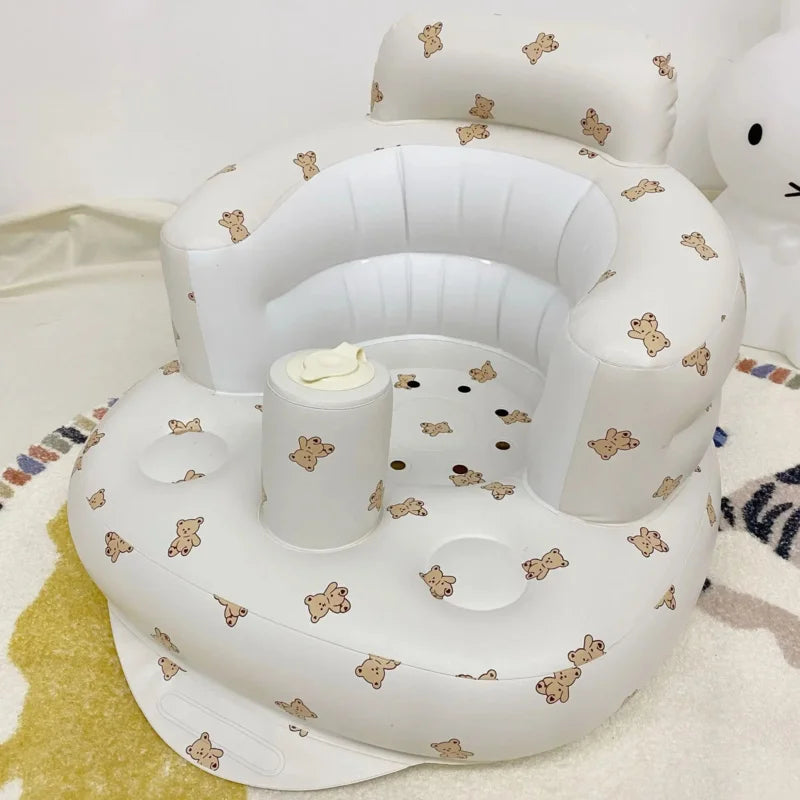
baby balance training cushion + infant development sitting — 💡 See it in action
How this cushion helps baby sit more steadily
The baby balance training cushion provides a slightly unstable platform that encourages small corrective movements — engaging core, back, and hip muscles. Instead of rigid padding that props a baby into position, the cushion rewards active stabilization, which trains the nervous system and motor patterns used for independent sitting.
Direct answer — why it works
A baby balance training cushion works by adding gentle instability that makes infants recruit stabilizing muscles. Short, consistent practice sessions (3–10 minutes) help babies improve balance, reduce slumping, and build confidence for longer sit-and-play periods.
Who benefits most from a balance cushion?
- Babies beginning to sit (typically 4–7 months) who can hold head steady.
- Infants who need more core-strengthening practice before independent sitting.
- Caregivers seeking a lightweight, portable practice tool versus a full infant support chair.
Step-by-step: start safe sitting practice
Follow these steps to introduce the cushion safely and effectively.
- Clear a soft, flat floor area (carpet or play mat). Keep the baby in view at all times.
- Place the cushion on the floor and sit behind or in front of the baby for supervision.
- Start with short sessions (2–3 minutes) and increase to 8–10 minutes as the baby tolerates.
- Use toys placed slightly forward to encourage upright posture and active reaching.
- Alternate with tummy time and supported upright holds to balance muscle development.
Quick checklist before every session
- Baby has good head control.
- Surface is non-slip and free of hazards.
- Session supervised — never leave baby unattended on the cushion.
- Monitor for signs of fatigue or fussiness and stop if present.
Real results: what to expect after safe, regular practice
Parents report measurable improvements in sitting time: babies progress from a few seconds of steady sit to several minutes of independent play across 2–6 weeks of gentle practice. Improvements include less slumping forward, faster recovery from loss of balance, and increased hand use for play while seated.
Comparison: balance cushion vs. common alternatives
| Option | What it trains | Pros | Cons |
|---|---|---|---|
| Baby balance training cushion | Active stabilization, core control | Portable, encourages muscle use, versatile | Needs supervision; not for newborns |
| Infant support chair | Passive support, posture | Stable, easier for feeding | May reduce active muscle use |
| Pillows/prop ring | Partial support | Cheap, familiar | Can slip, inconsistent support |
Top safety tips every caregiver should follow
- Only use the cushion when baby has reliable head control and can maintain midline orientation.
- Keep sessions short and varied — mix with tummy time and supported standing.
- Never place cushion on elevated surfaces (beds, sofas, chairs).
- Inspect the cushion for wear, punctures, or zipper issues before use.
- If your child has low muscle tone or medical conditions, consult a pediatrician or physical therapist before using.
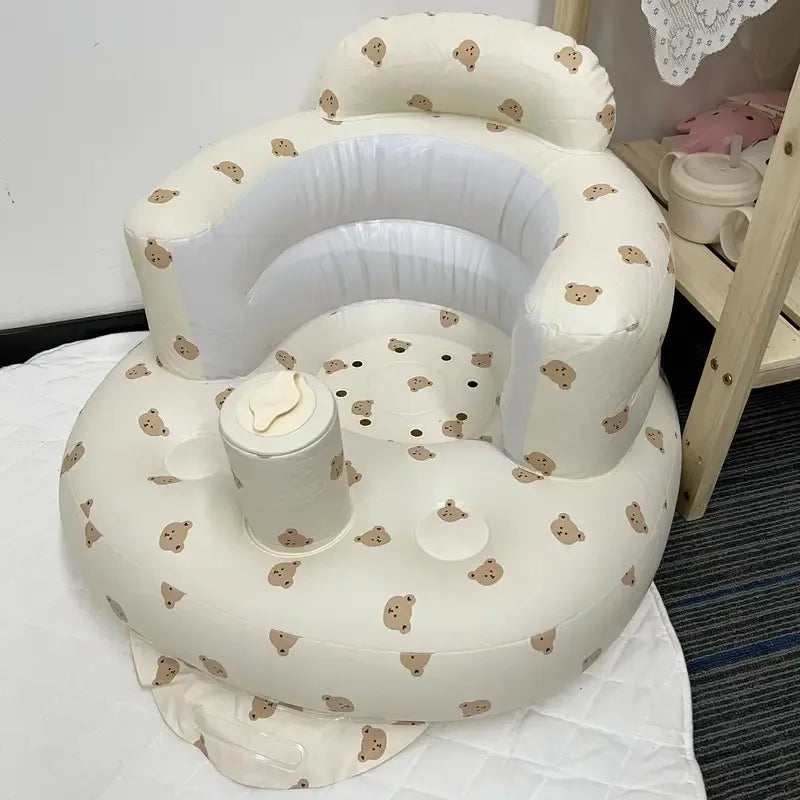
infant sit and play + infant support chair — 💡 See it in action
When to use a balance cushion during your day
- After morning wake-up for a short 3–5 minute practice before playtime.
- Post-nap when baby is alert and fed (not immediately after feeding).
- As part of supervised toy-play — place favorite toys slightly out of reach to encourage reaching and balance corrections.
- When practicing transitions toward crawling or pulling to stand — the cushion builds core strength useful across milestones.
Product features that make a cushion worth choosing
Look for these features when comparing options. They directly affect outcomes and ease of use.
- Firm-but-giving inflation: Enough give to stimulate balance without collapsing under weight.
- Non-slip base: Prevents sliding on hardwood or tile.
- Soft, washable cover: Easy to clean after snacks and finger paints.
- Compact, lightweight design: Allows use across rooms or travel.
- Rounded edges and safety certifications: No sharp seams, BPA-free materials.
Why this type of cushion often outperforms rigid supports
Rigid supports hold a baby upright but can reduce active muscle recruitment. A gently unstable cushion trains the same muscles babies need for independent sitting, producing stronger, more transferable balance control.
Pros & cons at a glance
- ✅ Encourages active muscle use and balance recovery.
- ✅ Lightweight and portable for everyday practice.
- ❌ Requires constant supervision and safe floor setup.
- ❌ Not suitable for babies without good head control or certain medical conditions.
Social proof: short parent reviews & usage notes
"After a few weeks of short sessions my little one could sit and play with both hands free — no more instant topples." — Jessica, mom of a 7-month-old
"We swap between the infant support chair for meals and the cushion for practice time. Best of both worlds." — Marco, caregiver
Where caregivers usually include this tool
Balance cushions are commonly used alongside feeding and learning gear. Explore gear categories such as Baby Growth & Learning and Mobility & Training for complementary items. Ready to compare? The product page for the inflatable seat provides specs and usage ideas: Baby Inflatable Sofa Seat.
Final setup checklist (quick reference)
- Flat, soft floor surface
- Short session length (3–10 minutes)
- Favorite toy within reach to encourage posture
- Visual supervision at all times
- Alternate with tummy time and supported standing
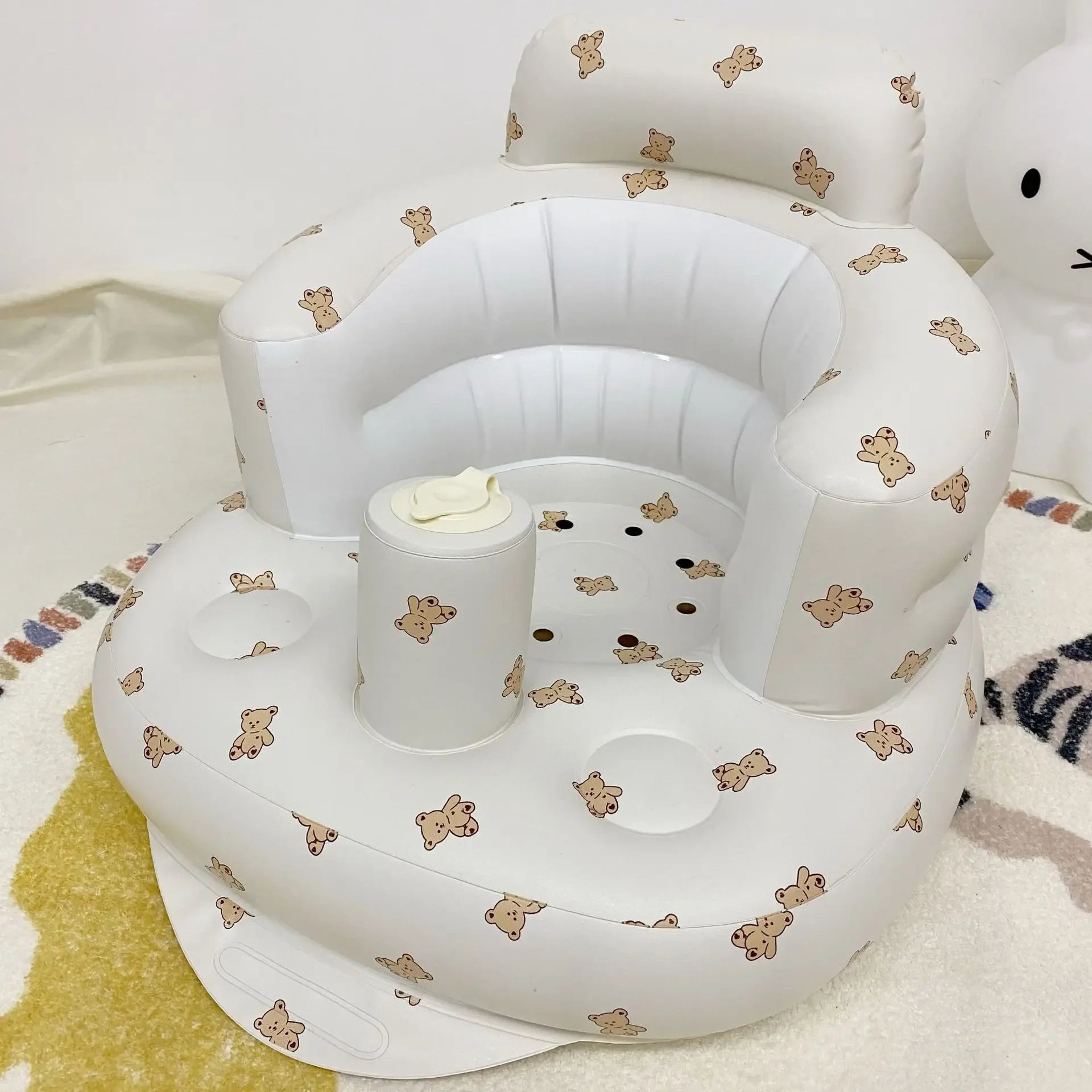
baby balance training cushion + infant sit and play — 💡 See it in action
Care & maintenance for long-lasting use
- Remove and wash cover per manufacturer instructions.
- Check inflation level — too soft reduces challenge, too firm increases tipping risk.
- Store away from sharp objects and intense heat to prevent damage.
Mini FAQ
-
When can I start using a balance cushion?
Answer: When your baby has stable head control and can sit unsupported briefly (typically around 4–7 months). Check with a pediatrician if unsure. -
How long should practice sessions be?
Answer: Start with 2–3 minutes and work up to 8–10 minutes per session, once or twice daily, watching for fatigue or fussiness. -
Can a cushion replace an infant support chair?
Answer: No — they serve different purposes. The cushion builds active balance; an infant support chair gives stable posture for feeding. Use both where appropriate.
Closing: making practice fit your family
Introducing a baby balance training cushion is a low-effort way to help babies develop the muscle control and confidence needed for independent sitting. When paired with short, enjoyable practice sessions and sensible safety rules, many families see steady progress within weeks. For related learning tools, check the Baby Growth & Learning collection and mobility accessories in Mobility & Training.
Product link: Baby Inflatable Sofa Seat
Pillar Article: Infant Unsupported During Playtime: Key Features for Safety and Comfort
Other Related Articles:
Explore More:





