
Does an infant support seat really help when baby can’t sit upright safely?
Yes. When baby can’t sit upright safely , an appropriately designed infant support seat can provide gentle lateral support while your baby develops the strength needed for independent sitting. Used during short, supervised sessions, it helps reduce tipping, encourages an upright posture, and supports practice without replacing tummy time or natural motor development.
Baby Can’t Sit Upright Safely? Expert Guide to Infant Support Seats and Healthy Sitting Development
If your baby can’t sit upright safely , it's natural to wonder whether an infant support seat is the right solution. Most babies develop sitting skills at their own pace, and supportive seating can be a helpful practice tool when used correctly. This guide explains normal sitting milestones, why some babies need extra support, and how to encourage safe, confident development.
⏱ 9 min read
Why babies struggle to sit upright (and what to do first)
Learning to sit is a major developmental milestone that depends on gradually building head control, trunk stability, balance, and core muscle strength. While many babies begin sitting with support around 4 to 6 months and independently between 6 and 9 months, every child develops at an individual pace.
If your baby can't sit upright safely , it usually reflects normal physical development rather than a problem. Before babies can balance independently, they need repeated opportunities to strengthen their neck, shoulders, back, and abdominal muscles through supervised floor play and tummy time.
The best approach combines:
- Daily supervised tummy time to strengthen the neck, shoulders, and core.
- Brief supported sitting practice on a flat floor.
- Interactive play that encourages reaching, turning, and balance.
- A properly fitted infant support seat used only as a temporary developmental aid—not as a substitute for active movement.
Which baby gear suits your newborn best? Read on!
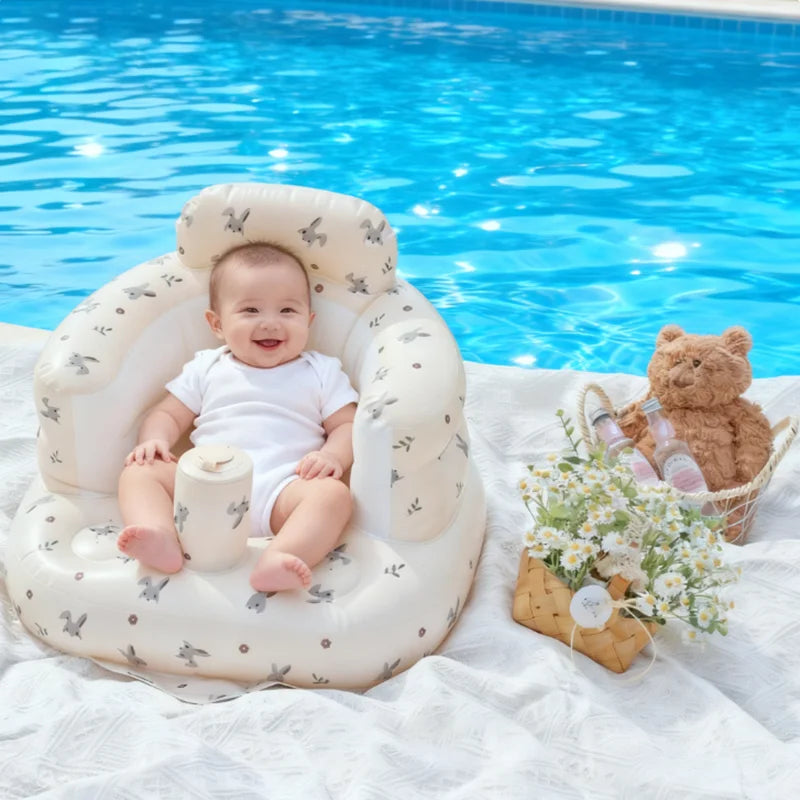
baby can’t sit upright safely • infant support seat • See it in action
Quick answer: When to use support seats
An infant support seat can be helpful once your baby has good head control but still needs assistance maintaining an upright position. These products are designed for short, supervised practice sessions—not all-day seating—and should always complement tummy time, floor play, and active movement rather than replace them.
If your baby tires quickly while practicing sitting, an infant support seat or infant sitting pillow can reduce fatigue, encourage better posture, and provide a stable environment for reaching, grasping, and interacting with toys. Always place the seat on a firm floor surface and stop the session if your baby begins to slump or shows signs of discomfort.
Types of baby sitting support options
Different types of baby sitting support serve different developmental needs. Choosing the right option depends on your baby's current sitting ability, where you plan to use it, and how much support is required.
Infant support seat — lightweight and portable
Best for: Early sitting practice at home, travel, and short supervised sessions.
An inflatable infant support seat offers gentle all-around support while remaining lightweight enough to pack for vacations, family visits, or outdoor activities.
- Pros: Portable, soft cushioning, quick to inflate, easy to wipe clean, compact for storage.
- Cons: Requires a flat floor surface and should never be used without direct adult supervision.
Recommended product: Baby Inflatable Sofa Seat for comfortable, supervised sitting practice whether you're at home or traveling.
Infant sitting pillow
Best for: Babies who need gentle lateral support while enjoying floor play.
Support pillows surround the baby's hips with soft cushioning while allowing freedom to move their arms and explore nearby toys.
- Pros: Soft, comfortable, washable, encourages sensory exploration.
- Cons: Provides less postural support than a structured infant seat.
Infant sit and play center
Best for: Babies who enjoy interactive toys while continuing to build trunk strength.
Activity-based seating combines entertainment with supported sitting, making short practice sessions more engaging.
- Pros: Interactive toys, stable base, encourages reaching and hand-eye coordination.
- Cons: Larger footprint and less portable.
Structured baby upright seat
Best for: Older babies who are close to sitting independently but still benefit from extra stability.
These seats typically include firmer back support and a wider base to help babies practice maintaining proper alignment.
- Pros: Stable posture support, durable construction, longer usable period.
- Cons: Usually heavier and more expensive than inflatable designs.
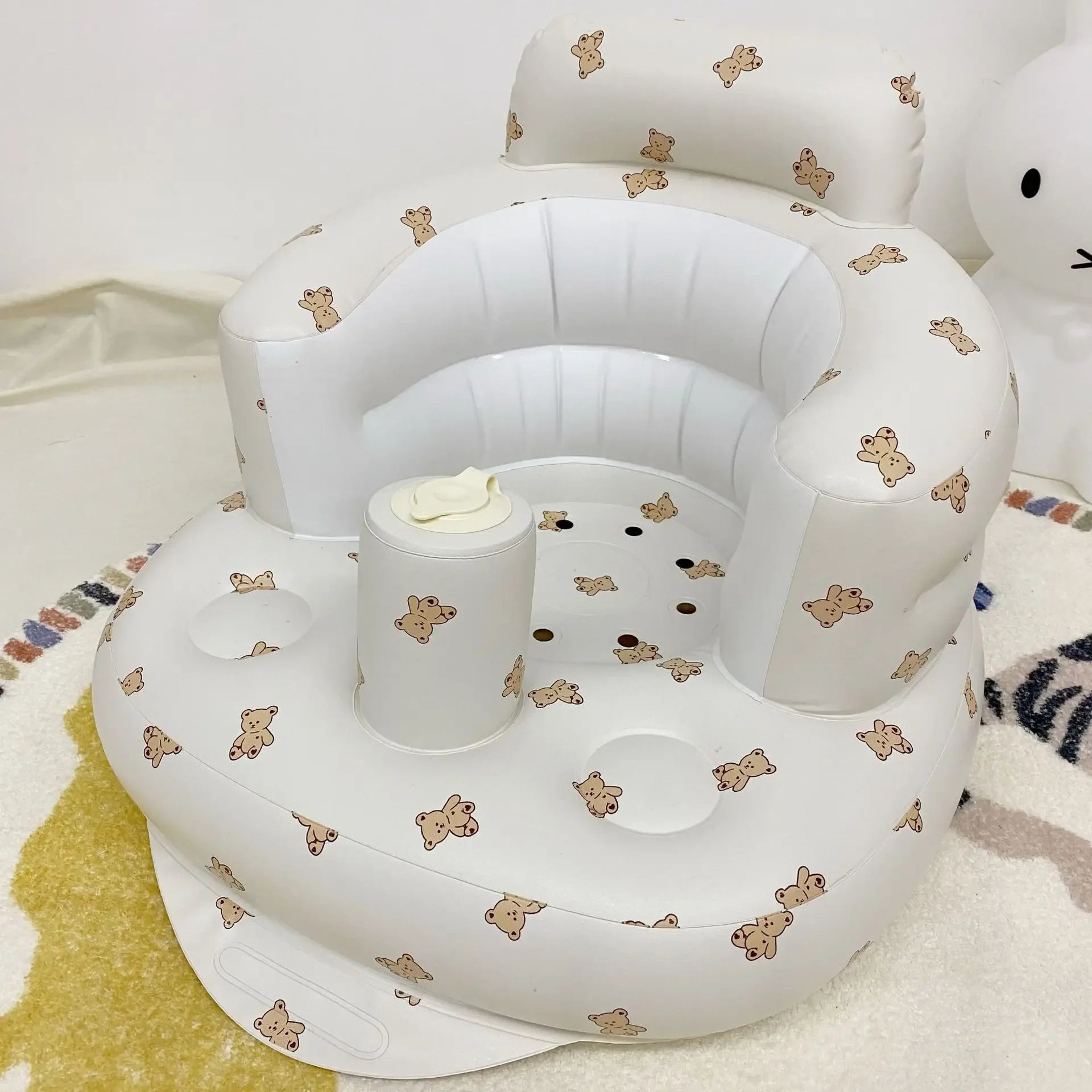
infant support seat • infant sitting pillow • See it in action
How to choose the right infant support seat
The safest baby sitting support combines stability, comfort, and proper sizing. Rather than choosing the softest seat available, focus on products that help your baby maintain a natural upright posture while still allowing active movement.
Safety features
- Wide, stable base that minimizes tipping.
- Low center of gravity for improved balance.
- Non-slip bottom for secure placement on hard floors.
- Appropriate support without forcing an unnatural sitting position.
Comfort and fit
- Breathable fabrics to improve airflow.
- Soft padding around the hips and back.
- Adequate room for natural arm and leg movement.
- Proper sizing for your baby's current developmental stage.
Ease of cleaning
- Machine-washable or removable covers.
- Water-resistant materials that wipe clean easily.
- Durable construction suitable for daily use.
For related gear and accessories that pair well, check Baby Growth & Learning and Mobility & Training .
Comparison: infant support seat vs. sitting pillow vs. sit & play
| Feature | Inflatable Support Seat | Infant Sitting Pillow | Infant Sit & Play |
|---|---|---|---|
| Support level | Moderate, all-around support | Soft lateral cushioning | Firm structured support |
| Portability | Excellent | Good | Limited |
| Comfort | High | Very high | High |
| Best use | Travel and short practice sessions | Calm floor play | Interactive sitting practice |
| Cleaning | Easy wipe-clean surface | Usually machine washable | Depends on model |
| Typical price | $15–$40 | $20–$50 | $40–$120 |
For families looking for a portable option that stores easily and supports early sitting practice, the Baby Inflatable Sofa Seat remains an excellent choice for short, supervised sessions at home or while traveling.
How to use a sit-up seat safely — step by step
Using baby sitting support correctly helps your child practice balance while minimizing unnecessary strain. Follow these simple safety guidelines every time.
Step-by-step setup
- Place the support seat only on a firm, level floor.
- Position your baby so their hips sit fully against the back support.
- Ensure the head and neck remain comfortably aligned without slumping.
- Offer toys slightly in front of your baby to encourage reaching and active trunk control.
- Stay within arm's reach throughout the entire session.
Supervision tips
- Limit practice sessions to about 5–10 minutes for beginners.
- Allow breaks whenever your baby appears tired or frustrated.
- Never place support seats on beds, tables, sofas, or countertops.
- Do not use sitting supports for feeding or sleep.
When to stop using support
As your baby begins sitting independently for longer periods, gradually reduce reliance on support seats and encourage more supervised floor play. Independent movement remains the most effective way to build lasting balance, coordination, and core strength.
Pros & Cons of infant support seats
✅ Pros
- Provides temporary support while babies develop the strength to sit independently.
- Helps maintain a more stable, upright posture during short supervised practice sessions.
- Reduces fatigue so babies can focus on reaching, playing, and improving balance.
- Portable models are convenient for use at home, when traveling, or visiting family.
- Can boost caregiver confidence by offering a secure environment for early sitting practice.
❌ Cons
- Should never replace tummy time, crawling, or other active developmental activities.
- Excessive use may limit opportunities to build natural core strength and balance.
- Not designed for sleeping, feeding, or prolonged daily use.
- Requires continuous adult supervision and should only be used on a flat floor surface.
Pillar Article: Safe Infant Seating Chair for Play: In-Depth Brand Review
Other Related Articles:
Explore More:






Choose baby sitting support products made from non-toxic, easy-to-clean materials with clear care instructions and age recommendations. A stable base, quality construction, and supervised use are far more important than extra features. For additional safety guidance and monitoring solutions, visit Monitoring Devices and Health & Safety .
Frequently Asked Questions
When do babies start sitting up without support?
Most babies sit independently between 6 and 9 months, although some achieve this milestone slightly earlier or later. Development depends on tummy time, muscle strength, balance, and individual growth patterns.
Can newborns sit upright in a support seat?
No. Newborns do not have enough head, neck, or trunk control for upright sitting. They should only be positioned according to safe newborn positioning guidelines and should never remain upright in a support seat for extended periods.
Is an infant support seat necessary?
No. An infant support seat is optional. It can provide additional stability during brief, supervised practice sessions, but it should complement—not replace—daily tummy time, floor play, and opportunities for natural movement.
How long can a baby stay in a support seat?
Limit sessions to about 5–10 minutes when first introducing the seat, increasing gradually if your baby remains comfortable and engaged. Always supervise and stop if your baby begins slumping, becomes tired, or shows signs of discomfort.
How can I practice sitting with my 5 month old?
Practice on a soft floor surface by supporting your baby's hips while encouraging reaching for toys. Short practice sessions, tummy time, and plenty of floor play help strengthen the muscles needed for independent sitting.
What is the difference between an infant sitting pillow and a baby upright seat?
An infant sitting pillow offers soft, cushioned support with greater freedom of movement, while a baby upright seat provides firmer back and side support for babies who are developing better trunk control. Both should always be used under close adult supervision.
What are the signs my baby is ready to sit independently?
Common readiness signs include steady head control, improved trunk strength, pushing up during tummy time, rolling consistently, sitting briefly with minimal assistance, and reaching for toys without immediately losing balance.
When should I be concerned if my baby is not sitting?
If your baby shows little head control after several months, appears unusually floppy or stiff, loses previously acquired skills, or is still unable to sit with support near the end of the expected developmental window, consult your pediatrician or a pediatric physical therapist for an evaluation.
Where can I find a portable, easy-clean option?
The Baby Inflatable Sofa Seat is a convenient travel-friendly choice with a wipe-clean surface and lightweight design, making it suitable for short, supervised sitting practice at home or while traveling.