

Do the best newborn bathing products really make bath time easier for new parents?
Answer: Yes. The best newborn bathing products make bath time safer, faster, and less stressful by combining ergonomic support, reliable temperature monitoring, gentle skin-care essentials, and easy-to-clean designs. A thoughtfully selected newborn bath setup helps reduce slips, simplifies handling, protects delicate skin, and gives caregivers greater confidence from the very first bath.
⏱ 12 min read
Best Newborn Bathing Products: Top Picks, Key Features & Benefits Explained
Choosing the best newborn bathing products is about much more than convenience. During the first months of life, babies have delicate skin, minimal head control, and limited ability to regulate body temperature. The right combination of newborn bath essentials—including a supportive bathtub, gentle cleanser, bath thermometer, and soft accessories—helps create a safer, calmer routine for both baby and caregiver.
In this guide, you'll learn which features matter most, how to compare different product categories, and what separates essential newborn bath items from optional accessories. Whether you're preparing for your baby's first bath or upgrading your current setup, these recommendations focus on safety, comfort, hygiene, and long-term value.
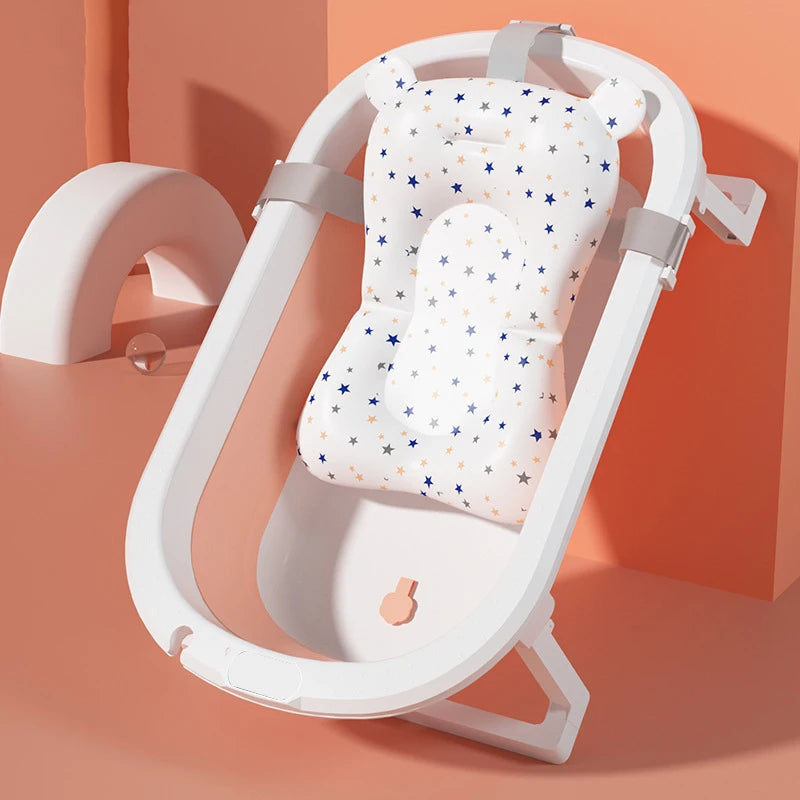
Best newborn bathing products in action. Shop the foldable tub
Why newborn bathing products matter (quick answer)
Newborn bathing products are designed specifically for babies' unique developmental needs. Compared with standard household products, newborn-specific bath gear offers better support, improved temperature control, gentler materials, and easier handling—helping reduce common risks such as slipping, accidental overheating, and skin irritation.
For exhausted first-time parents, small design improvements can make a significant difference. A stable bath support, accurate thermometer, or easy-drain bathtub reduces unnecessary stress and allows caregivers to focus on keeping their baby comfortable throughout the bath.
Core benefits parents notice
- Greater stability when bathing babies with limited head and neck control.
- More consistent water temperature using dedicated bath thermometers or indicators.
- Reduced skin irritation with fragrance-free, pH-balanced cleansers designed for newborns.
- Faster setup and cleanup thanks to compact tubs, drainage systems, and space-saving designs.
- Improved confidence for first-time parents learning safe bathing routines.
How to choose the best newborn bathing products
Rather than buying every available accessory, focus on products that solve real safety and comfort challenges. The best newborn bath essentials combine practical design with materials that are easy to clean, comfortable for babies, and convenient for caregivers.
1. Safety-first design features
- Non-slip bases and textured surfaces to improve stability during bathing.
- Contoured infant supports that help maintain proper positioning.
- Rounded edges and smooth finishes that minimize bumps and pressure points.
- Visible water-level indicators to reduce the risk of overfilling.
2. Temperature control & monitoring
- Built-in thermometers or digital bath thermometers that help maintain approximately 37–38°C (98.6–100.4°F).
- Easy-to-read displays or color-changing indicators for quick temperature checks.
- Reliable monitoring tools that reduce guesswork before placing baby in the water.
3. Material quality & hygiene
- BPA-free, phthalate-free plastics or food-grade silicone materials.
- Smooth, easy-to-clean surfaces that resist mold buildup.
- Quick-drain construction to minimize standing water after each bath.
4. Comfort, ergonomics & household fit
- Foldable tubs that fit apartments, small bathrooms, and travel needs.
- Lightweight designs that are easier to carry while recovering postpartum.
- Comfortable working height when paired with appropriate stands or counters.
5. Long-term value
- Adjustable inserts that accommodate babies as they grow.
- Compatible accessories such as support slings, rinse cups, and drainage systems.
- Durable construction that withstands frequent cleaning and everyday use.
Understanding these essentials makes it much easier to choose products that match your family's space, budget, and bathing routine.
Product showcase & key features
Instead of focusing on brands alone, compare newborn bath products by the problems they solve. The following categories consistently provide the greatest value for safety, convenience, and everyday usability.
Foldable tubs: space-saving meets stability
Best for: Families living in apartments, homes with limited storage, travel, and parents recovering postpartum.
Why it works: Foldable baby tubs combine compact storage with a stable bathing platform. Their reinforced bases reduce wobbling, while collapsible silicone walls allow the tub to fold flat between uses without sacrificing support during bath time.
- Feature: Soft silicone sides with a reinforced rigid base.
- Benefit: Comfortable support for newborns while remaining stable on flat surfaces.
- Ideal user: Parents looking for a portable solution that stores easily after every bath.
- Buying tip: Choose models with non-slip feet, integrated drainage, and clear water-level markings.
For parents wanting a compact bathing solution, explore the baby-foldable-bath-tub .
Infant supports & slings: secure positioning for newborns
Support slings keep newborns in a naturally reclined position, reducing arm fatigue while giving caregivers better control during washing and rinsing.
- Feature: Breathable quick-drying mesh construction.
- Benefit: Improves stability while allowing water to drain efficiently.
- Ideal for: Babies who have not yet developed full head and neck control.
Temperature tools: confidence with every bath
Water that feels comfortable to an adult can still be too warm for a newborn. Digital bath thermometers, floating temperature indicators, and color-changing sensors provide fast, objective readings that help maintain safe water temperatures every time.
Gentle cleansers & rinse cups: protecting the skin barrier
Select fragrance-free, pH-balanced baby cleansers formulated for newborn skin whenever possible. Pairing them with a soft silicone rinse cup allows water to flow gently over the scalp while helping keep soap away from the eyes and face.
Drainage & storage features
Integrated drain plugs, hanging hooks, and quick-drying designs simplify cleanup while reducing moisture buildup that can encourage mold or unpleasant odors. These seemingly small features often make daily bath routines much more convenient.
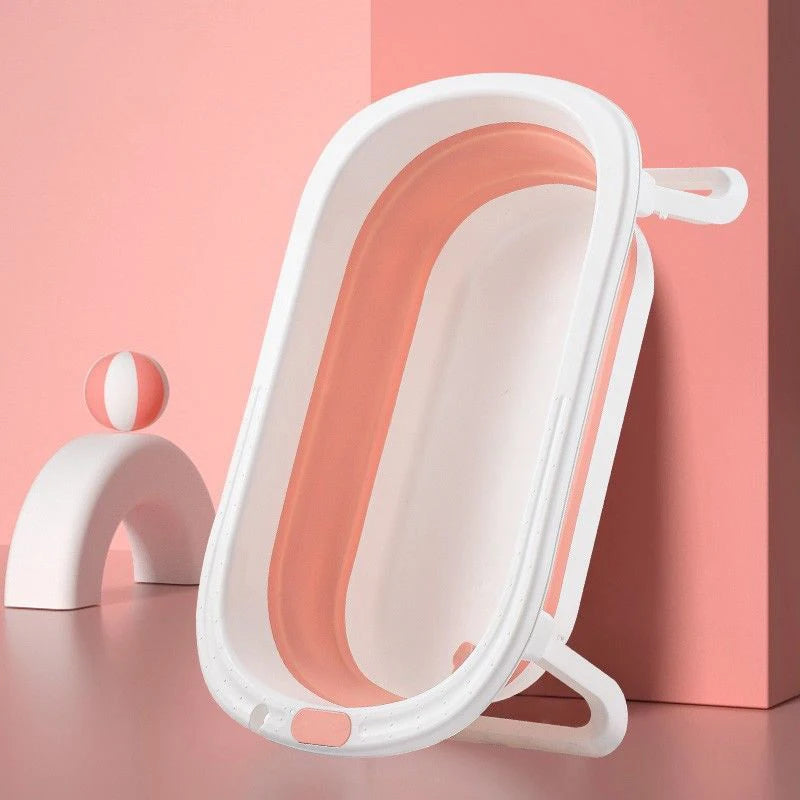
Best newborn bathing products—compact designs help maximize storage while keeping bath time organized.
Quick comparison: tubs, supports, and tools
This comparison highlights the most important newborn bath product categories so you can quickly identify which items belong in your baby's bath kit.
| Product Type | Recommended Age | Primary Safety Feature | Best For | Key Consideration |
|---|---|---|---|---|
| Foldable bathtub | Birth+ | Stable non-slip base with water-level markings | Small homes, travel, everyday bathing | Choose reinforced construction for long-term durability. |
| Infant support sling | Birth to sitting independently | Breathable mesh with ergonomic positioning | Extra head and neck support | Clean and dry thoroughly after each use. |
| Digital bath thermometer | Birth+ | Fast, accurate temperature monitoring | Consistent water temperature checks | Replace batteries and verify accuracy periodically. |
| Gentle baby cleanser | Birth+ | Fragrance-free, pH-balanced formula | Sensitive or easily irritated skin | Select formulas with minimal unnecessary additives. |
How these products improve real newborn bath routines
- Prepare the bath area. Warm the room, gather towels, clean clothing, diapers, cleanser, and all bath supplies before filling the tub. Check the water temperature with a reliable bath thermometer until it reaches approximately 37–38°C (98.6–100.4°F).
- Position your baby securely. Place your newborn in a supportive bath sling or ergonomic infant tub while keeping one hand on them at all times. Position the tub at a comfortable working height whenever possible to reduce caregiver strain.
- Clean gently. Wash with a fragrance-free, pH-balanced baby cleanser using your hand or a soft washcloth. Start with the face using plain water, then clean the body from top to bottom. Use a silicone rinse cup to rinse carefully without pouring water directly over the face.
- Dry and dress promptly. Lift baby out using both hands, wrap immediately in a hooded towel, gently pat the skin dry, moisturize if recommended by your pediatrician, and dress baby in warm clothing.
Practical benefits parents often notice
- Faster setup and cleanup thanks to foldable tubs, integrated drains, and organized bath accessories.
- More confident one-person bathing when ergonomic infant supports provide additional stability.
- Less guesswork because digital thermometers provide consistent water temperature readings.
- Calmer bath routines when babies remain comfortably supported throughout the wash.
Keeping newborns safe — temperature & monitoring
Safe bathing starts with constant supervision and accurate water temperature. Even high-quality newborn bathing products are designed to complement attentive caregiving rather than replace it.
Recommended target temperatures
- Maintain bath water between 37°C and 38°C (98.6°F–100.4°F) for most healthy newborns.
- Use a digital bath thermometer or floating temperature indicator instead of relying only on your wrist or elbow, which may not accurately detect unsafe temperatures.
- Fill the tub with only enough water to safely bathe your newborn according to the manufacturer's recommendations.
Monitoring devices that add an extra safety layer
Floating thermometers, digital bath sensors, and tubs with integrated temperature indicators help caregivers verify water conditions before and during bathing. Models with large, easy-to-read displays are especially useful when one hand is supporting the baby.
Additional newborn bath safety reminders
- Never leave your baby unattended, even for a few seconds.
- Keep all bath supplies within arm's reach before placing your baby in the water.
- Avoid adding hot water while your baby is already in the tub.
- Empty and dry the bathtub immediately after each use.
Gentle cleansing: soaps, shampoos, and rinse techniques
Because a newborn's skin barrier is still developing, choosing gentle baby bath products is just as important as selecting the right bathtub. Overwashing or using harsh cleansers may contribute to dryness and irritation.
Choose low-irritant formulas
- Look for fragrance-free, dye-free, pH-balanced cleansers formulated specifically for newborns.
- Products containing moisturizing ingredients such as glycerin may help support the skin's natural barrier.
- Avoid cleansers containing harsh surfactants such as sodium lauryl sulfate (SLS) whenever suitable alternatives are available.
- If your baby has eczema or particularly sensitive skin, consult your healthcare provider before introducing new skincare products.
Ingredients and materials to avoid when possible
- Strong artificial fragrances that may irritate sensitive skin.
- Alcohol-based formulations that can increase dryness.
- Highly abrasive washcloths or rough bath sponges.
- Products containing unnecessary dyes or multiple cosmetic additives.
Rinse smarter
- Use a soft silicone rinse cup to direct water gently over the scalp while keeping soap away from the eyes.
- For most healthy newborns, full-body baths are generally needed only two to three times per week, with daily cleaning focused on the face, neck folds, hands, and diaper area.
- Pat skin dry instead of rubbing to help protect the natural skin barrier.
Accessories that complete the bath setup
After choosing the essential bath products, a few well-designed accessories can improve convenience, organization, and safety without adding unnecessary clutter.
- Bath thermometers: Digital floating thermometers or color-changing indicators for accurate water temperature.
- Silicone rinse cups: Controlled pouring that helps keep soap away from your baby's face.
- Hooded towels and soft washcloths: Gentle drying while helping newborns stay warm after bathing.
- Non-slip bath mats: Added stability when using larger household tubs for older infants.
- Storage organizers: Keep cleansers, towels, and bathing supplies within easy reach.
For more bath-specific accessories, check Baby Bath Accessories and tools that simplify cleanup at Baby Hygiene Gadgets .
What makes high-quality newborn bath products stand out?
When evaluating newborn bath products, experienced reviewers and pediatric safety recommendations consistently emphasize the same characteristics over decorative features or novelty designs.
- Stable, non-slip construction that improves bathing safety.
- Materials that are durable, easy to sanitize, and free from unnecessary harmful chemicals.
- Ergonomic designs that comfortably support newborn positioning.
- Simple maintenance with quick-drain components and smooth cleaning surfaces.
- Long-term usability that adapts as babies grow through the first year.
Prioritizing these practical qualities helps parents invest in newborn bath essentials that remain useful throughout infancy while supporting safer, more comfortable bath routines.
Pros and Cons: Which Newborn Bath Products Are Worth Buying?
Every newborn bath product offers different advantages depending on your family's space, budget, and bathing routine. Focusing on safety, ease of use, and long-term value helps you avoid buying accessories that add little practical benefit.
| Product Category | Advantages | Potential Limitations |
|---|---|---|
| Foldable baby tub | Compact storage, portable, easy drainage, ideal for small homes | Some budget models offer less structural rigidity than premium tubs |
| Infant bath support | Improves stability, reduces caregiver fatigue, supports proper positioning | Requires regular cleaning and complete drying after use |
| Digital bath thermometer | Provides accurate temperature readings and improves bathing confidence | Battery replacement or occasional calibration may be required |
| Gentle baby cleanser | Supports the skin barrier and minimizes irritation | Premium fragrance-free formulas may cost slightly more |
| Bath accessories | Improve organization and convenience during bath time | Some accessories are optional rather than essential purchases |
Which product should you buy? (practical decision path)
Start by identifying the challenge you want to solve first. Building a newborn bath kit around your actual needs often provides better value than purchasing every available accessory.
- Limited storage space: Choose a foldable bathtub with a sturdy base, integrated drain, and compact folding design.
- Need extra newborn support: Select an ergonomic infant sling or breathable mesh support that helps maintain proper positioning.
- Unsure about water temperature: Invest in a reliable digital bath thermometer or floating temperature indicator.
- Sensitive newborn skin: Prioritize fragrance-free, pH-balanced cleansers and use a gentle bathing routine.
- Planning for long-term use: Look for adjustable tubs or accessories that continue to work as your baby grows.
Shop tubs designed for small spaces: Baby Care Essentials or explore additional safety tools at Health & Safety .
Practical outcomes you can expect
Well-designed newborn bath products do not replace safe caregiving, but they can make daily routines more manageable and consistent.
- Bath preparation becomes quicker when supplies are organized and easy to access.
- Supportive tubs and slings help caregivers maintain a secure grip throughout bathing.
- Accurate thermometers reduce uncertainty when preparing bath water.
- Gentle cleansers and soft accessories help protect delicate newborn skin.
- Space-saving products simplify storage in apartments and smaller bathrooms.
Maintenance & cleaning: keep products safe and long-lasting
Routine cleaning helps extend product life while reducing the risk of mold, mildew, and bacteria buildup. Always follow the manufacturer's care instructions for each individual product.
Cleaning tubs and accessories
- Drain the bathtub immediately after each use and rinse away soap residue.
- Allow foldable tubs to dry fully before folding and storing.
- Wash mesh slings according to the care label and let them air-dry completely.
- Clean rinse cups, bath toys, and storage containers regularly using warm soapy water.
Preventing mold and bacteria buildup
- Store bath products in a well-ventilated area between uses.
- Avoid leaving standing water inside tubs, supports, or accessories.
- Inspect suction cups, drain plugs, and fabric components periodically for signs of wear or mildew.
- Replace damaged or heavily worn products that can no longer be cleaned effectively.
- Wipe digital thermometers or sensors with a damp cloth, taking care not to immerse battery compartments unless specifically designed to be waterproof.
Budgeting: where to splurge (and where to save)
Building a practical newborn bath kit doesn't require purchasing every available accessory. Prioritize products that directly improve safety, comfort, and everyday convenience, then add optional items as your baby's needs change.
Worth investing in
- A sturdy newborn bathtub with a stable, non-slip base.
- A reliable digital bath thermometer for accurate temperature monitoring.
- A supportive infant sling or ergonomic bath insert if additional positioning support is needed.
- Gentle, fragrance-free cleansers formulated specifically for newborn skin.
Items you can purchase later
- Decorative bath toys during the newborn stage.
- Premium grooming accessories that duplicate existing essentials.
- Multiple specialty towels beyond one or two high-quality hooded towels.
- Luxury bath organizers unless storage is limited.
Newborn bath time checklist (printable-ready)
Use this quick checklist before every bath to help create a safe and organized routine.
- Room is comfortably warm and free from drafts.
- Bath water has been checked with a thermometer.
- Bathtub is stable on a flat, secure surface.
- Infant support or bath sling is correctly positioned.
- Gentle baby cleanser and rinse cup are within reach.
- Soft hooded towel, clean diaper, and fresh clothing are prepared.
- All bath supplies are accessible before placing baby in the water.
- Phone calls and other distractions are postponed until bath time is finished.
Quick safety tips for every bath
- Never leave your newborn unattended in or near water, even briefly.
- Always verify water temperature before placing your baby into the tub.
- Support your baby's head and neck whenever lifting them into or out of the bath.
- Keep one hand on your baby throughout the bath whenever possible.
- Empty, rinse, and dry the bathtub immediately after use.
- Stop using any bath product that becomes damaged, cracked, or difficult to clean.
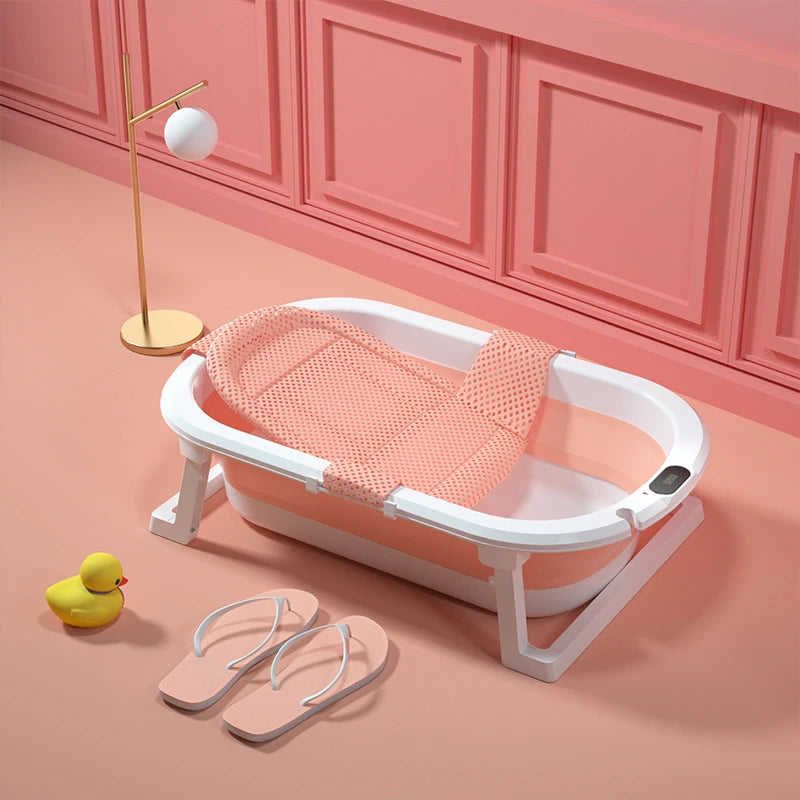
Best newborn bathing products—compact, supportive designs help simplify everyday bath routines.
Integration with other baby gear
Choosing bath products that work well with your existing nursery setup can make everyday care more efficient. Compact bathtubs, stackable storage, and coordinated accessories help create a smoother routine while reducing clutter.
- Select foldable tubs if storage space is limited.
- Choose bath accessories that fit conveniently beside changing stations or laundry sinks.
- Store towels, cleansers, and grooming supplies together so everything is available before bath time begins.
- Look for products that remain useful beyond the newborn stage to maximize long-term value.
Explore complementary items in Baby Growth & Learning , Sleep & Comfort , and Massage & Relaxation to make bedtime routines seamless.
Common newborn bathing situations and practical solutions
Scenario 1 — Small apartment or limited storage
Challenge: Finding space for a dedicated baby bathtub while keeping bath supplies organized.
Practical solution: A foldable bathtub paired with a compact storage basket allows parents to store essential bath items neatly between uses without occupying valuable bathroom space.
Scenario 2 — Newborn with sensitive skin
Challenge: Dryness or irritation after bathing.
Practical solution: Use fragrance-free, pH-balanced cleansers, limit full-body baths to the recommended frequency, rinse gently, and pat the skin dry instead of rubbing.
Scenario 3 — First-time parents building a bath kit
Challenge: Unsure which products are truly essential.
Practical solution: Start with the basics: a safe bathtub, bath thermometer, gentle cleanser, soft towel, and infant support if needed. Additional accessories can be added later as your baby's routine develops.
Frequently Asked Questions About Newborn Bath Products
-
What products are needed for a newborn bath?
A basic newborn bath kit includes a safe baby bathtub or infant support, a digital bath thermometer, a fragrance-free baby cleanser, a soft washcloth, a hooded towel, and clean clothing. Optional accessories such as rinse cups and bath organizers can improve convenience but are not essential for the first weeks.
-
What are the safest bath products for newborns?
Look for products with non-slip designs, BPA-free or food-grade materials, gentle fragrance-free cleansers, ergonomic infant support, and reliable temperature monitoring. Products should be easy to clean and appropriate for newborn use.
-
How often should you bathe a newborn?
Most healthy newborns only need a full bath two to three times per week. Between baths, gently clean the face, neck folds, hands, and diaper area during normal daily care.
-
Are baby bath products with fragrance safe for newborns?
Many pediatric experts recommend fragrance-free products during the newborn period because they are generally less likely to irritate delicate skin, especially for babies with sensitive skin or eczema.
-
When can a newborn use regular baby bath products?
Products specifically formulated for newborns are generally the best choice during the early months. As babies grow and their skin becomes less sensitive, parents can gradually introduce age-appropriate baby products if they are well tolerated.
-
What should be included in a newborn bath kit?
A complete newborn bath kit typically includes a baby bathtub, bath thermometer, gentle cleanser, soft towel, washcloth, infant support if needed, rinse cup, and clean diapers and clothing prepared before each bath.
Final Recommendations: Building the Right Newborn Bath Setup
Best overall setup
- Stable newborn bathtub with non-slip feet and efficient drainage.
- Reliable digital bath thermometer.
- Fragrance-free, pH-balanced baby cleanser.
- Soft hooded towel and gentle washcloth.
- Infant support or mesh sling for additional stability during the first months.
Best budget setup
- Simple newborn bathtub with a secure base.
- Affordable digital thermometer.
- One gentle cleanser suitable for hair and body.
- One quality hooded towel and reusable washcloths.
Best sensitive skin setup
- Supportive bathtub with smooth, easy-to-clean surfaces.
- Fragrance-free, dye-free cleanser formulated for newborn skin.
- Soft cotton washcloths and hooded towel.
- Minimal bathing routine focused on protecting the skin barrier.
The best newborn bathing products are the ones that improve safety, simplify daily care, and fit your family's lifestyle. Prioritize dependable essentials such as a stable bathtub, accurate bath thermometer, supportive bathing accessories, and gentle skincare products before investing in optional extras. If you're looking for a compact, space-saving solution, explore the baby-foldable-bath-tub . You can also browse additional essentials in Baby Bath Accessories and temperature monitoring solutions at Temperature Tools .
Schema-ready FAQ (compact)
- What products are needed for a newborn bath?
- A safe baby bathtub, bath thermometer, gentle cleanser, soft towel, washcloth, and infant support if needed are the core newborn bath essentials.
- How often should you bathe a newborn?
- Most newborns only require two to three full baths per week, along with daily spot cleaning of the face, neck, hands, and diaper area.
- What is the safest water temperature for newborn baths?
- Maintain bath water between 37°C and 38°C (98.6°F–100.4°F) using a digital bath thermometer whenever possible.
- Are fragrance-free bath products better for newborns?
- Fragrance-free, pH-balanced cleansers are generally recommended because they are less likely to irritate delicate newborn skin.
- What should I prioritize when buying newborn bath gear?
- Prioritize safety, ergonomic support, reliable temperature monitoring, and gentle skincare products before purchasing optional accessories.
Related Articles:
- Portable Newborn Bath Tub: Features That Make Travel Easy and Safe
- Foldable Baby Bath Tub: Why It’s the Ultimate Space-Saving Solution
Pillar Articles:





