

Does a wipe warmer stop cold wipes hurting baby?
Yes. A wipe warmer can reduce the discomfort caused by cold wipes during diaper changes by warming wipes to a skin-comfortable temperature. While it won't solve every cause of crying, many parents find that warmed wipes reduce startling, make nighttime diaper changes calmer, and help sensitive newborns stay more relaxed. When used correctly and cleaned regularly, modern wipe warmers can be a safe comfort accessory for everyday diapering.
⏱ 7 min read
Cold wipes hurting baby can quickly turn diaper changes into a stressful experience, particularly during overnight feedings. This guide explains whether wipe warmers are safe, how they work, the benefits they offer, and the key safety practices every parent should follow. You'll also learn when a wipe warmer is worth buying and how to choose a model that fits your family's routine.
Curious about calm, safer gear that supports sleep-friendly routines? Explore thoughtful picks that pair well with wipe warmers.
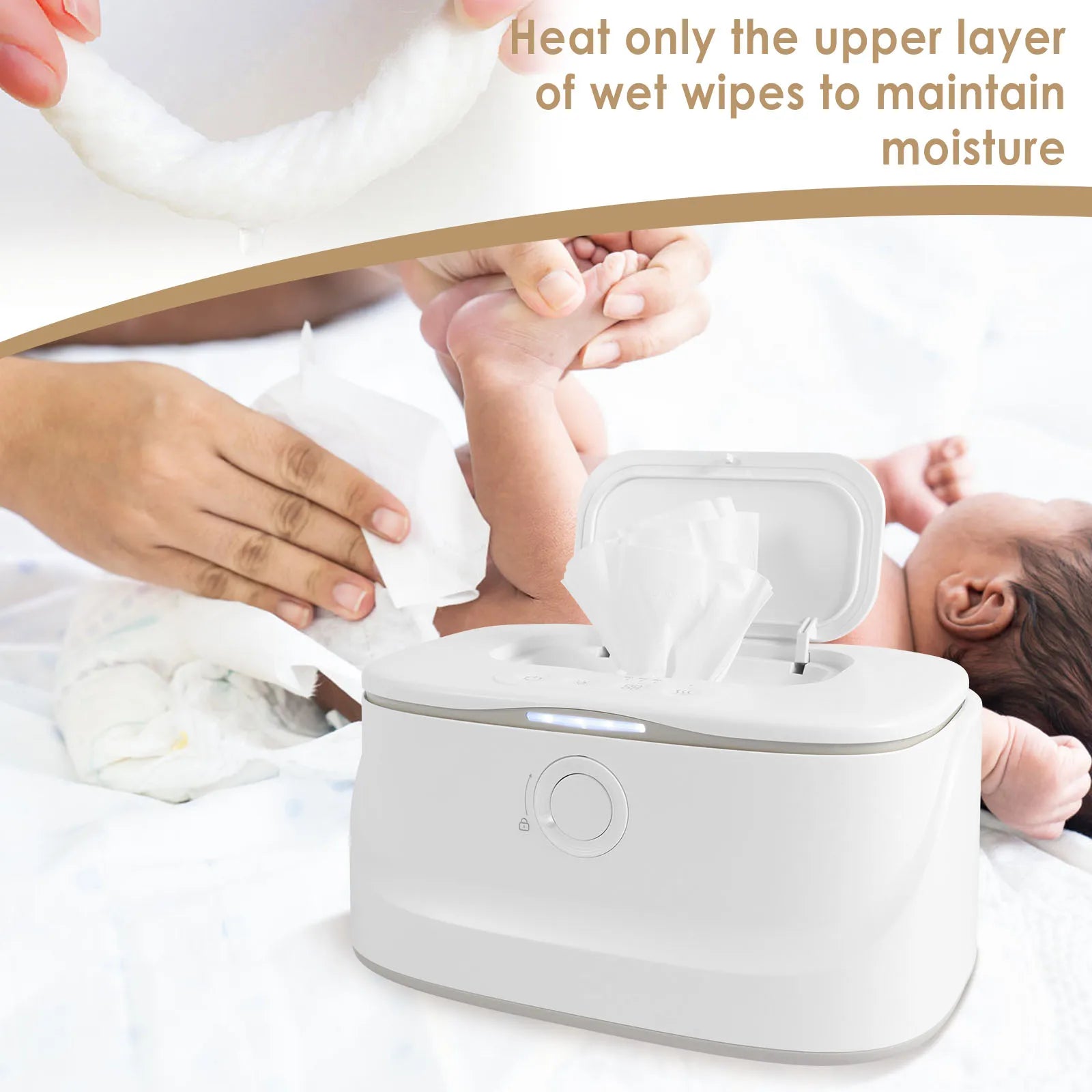
cold wipes hurting baby + do wipe warmers work — See it in action.
Are Wipe Warmers Safe? The Evidence-Based Answer
For most families, the answer is yes. Are wipe warmers safe? Modern wipe warmers are generally considered safe when used according to the manufacturer's instructions. Their purpose is to gently warm baby wipes—not to heat them to high temperatures. Features such as low-temperature heating systems, automatic temperature regulation, and enclosed moisture chambers help improve both comfort and safety.
Quick answer: when wipe warmers are safe
Parents can safely use a wipe warmer when they:
- Follow the manufacturer's setup and cleaning instructions.
- Keep the warmer on a dry, stable surface.
- Test the wipe on the inside of the wrist before use.
- Replace wipes regularly and clean the unit to reduce contamination.
- Inspect cords and power connections for signs of wear.
Used this way, a wipe warmer becomes a convenience product that helps make diaper changes more comfortable without replacing good diaper hygiene or skincare practices.
Who may benefit most from using one
A wipe warmer may be especially useful for:
- Newborns who are easily startled during nighttime diaper changes.
- Babies with sensitive skin who react to cold wipes.
- Families performing frequent overnight diaper changes.
- Parents trying to maintain a calm bedtime routine.
While not medically necessary, many caregivers find that warming wipes reduces fussiness caused by sudden temperature changes and makes overnight routines feel smoother for everyone.
How Do Wipe Warmers Work?
Rather than heating wipes to a high temperature, most wipe warmers gently maintain a slightly warm, moist environment. This reduces the shock of a cold wipe touching delicate skin while helping prevent wipes from drying out between diaper changes.
Heat and moisture explained
Most electric wipe warmers use a low-power heating plate or warming element that gradually transfers gentle warmth throughout the container. Many designs also include a sealed lid to retain moisture so wipes stay soft and ready to use.
- Gentle, consistent warming instead of high heat.
- Moisture retention helps prevent wipes from drying prematurely.
- Designed for repeated daily use with compatible wipe packs.
- Comfort-focused rather than therapeutic.
Why modern designs differ
Newer wipe warmers often include improved temperature regulation, better insulation, and lids that reduce moisture loss. Premium models may also feature soft night lights, energy-efficient heating systems, or automatic shut-off functions for added convenience.
Which baby gear complements wipe warmers?
Pair a wipe warmer with gentle, fragrance-free wipes and a calm nighttime environment. For related tools and safety gear, check Baby Hygiene Gadgets and Sleep & Comfort to build a sleep-friendly routine.
Do Wipe Warmers Grow Bacteria? Separating Myth from Fact
One of the biggest concerns parents have is whether wipe warmers create an environment where bacteria can multiply. The short answer is that properly maintained wipe warmers are unlikely to become a problem . Like any product that combines warmth and moisture, cleanliness—not the warmer itself—is the key factor.
What research says
There are no large clinical studies showing that wipe warmers routinely cause bacterial contamination or health problems. Pediatric guidance instead emphasizes good hygiene practices, including replacing wipes regularly, cleaning reusable baby products, and following manufacturer maintenance instructions. A wipe warmer is designed for comfort rather than medical benefit, so keeping it clean is essential for safe everyday use.
When bacteria can become a problem
Warm, damp conditions can allow bacteria or mold to grow if the warmer is neglected for extended periods. The risk increases when:
- Old wipes remain inside the warmer for long periods.
- Standing moisture collects in the bottom of the unit.
- The interior is rarely cleaned.
- Only partially used wipe packs are repeatedly topped up.
These issues are preventable through regular maintenance rather than avoiding wipe warmers altogether.
How proper maintenance reduces risk
Simple habits help keep a wipe warmer hygienic:
- Clean the interior according to the manufacturer's instructions.
- Replace wipe packs instead of continually adding new wipes to old ones.
- Allow the warmer to dry completely during scheduled cleaning.
- Discard any wipes that appear dry, discolored, or have an unusual odor.
| Safety Feature | Why It Matters |
|---|---|
| Temperature regulation | Maintains gentle warmth without excessive heat. |
| Sealed moisture chamber | Helps keep wipes moist while reducing unnecessary evaporation. |
| Removable interior or easy-clean design | Makes routine cleaning faster and helps reduce residue buildup. |
Want a simple checklist to pick a safe, reliable warmer? Continue reading for practical buying and maintenance tips.
How to Use and Maintain a Wipe Warmer Safely
Using a wipe warmer correctly helps maximize comfort while minimizing hygiene concerns. Following a consistent cleaning routine also extends the life of the warmer.
Cleaning schedule
- Unplug the warmer before cleaning.
- Remove any remaining wipes.
- Wipe the interior with a soft cloth following the manufacturer's recommendations.
- Allow all surfaces to dry before inserting a fresh pack of wipes.
- Repeat cleaning regularly or whenever residue is visible.
Replacing wipes correctly
- Use wipes compatible with your warmer.
- Avoid mixing old and new wipe packs.
- Store unopened wipes in a cool, dry place.
- Replace wipes if they become excessively dry or contaminated.
Daily safety checklist
- Test a warmed wipe on your inner wrist before using it on your baby.
- Keep the warmer on a stable, dry surface away from sinks or bathtubs.
- Inspect the power cable periodically for damage.
- Turn the warmer off when it will not be used for an extended period if recommended by the manufacturer.
- Follow the product manual for routine maintenance and safe operation.
Parents looking for a portable option often choose the USB Baby Wipe Warmer with LED Light , which combines gentle warming with convenient travel-friendly operation.
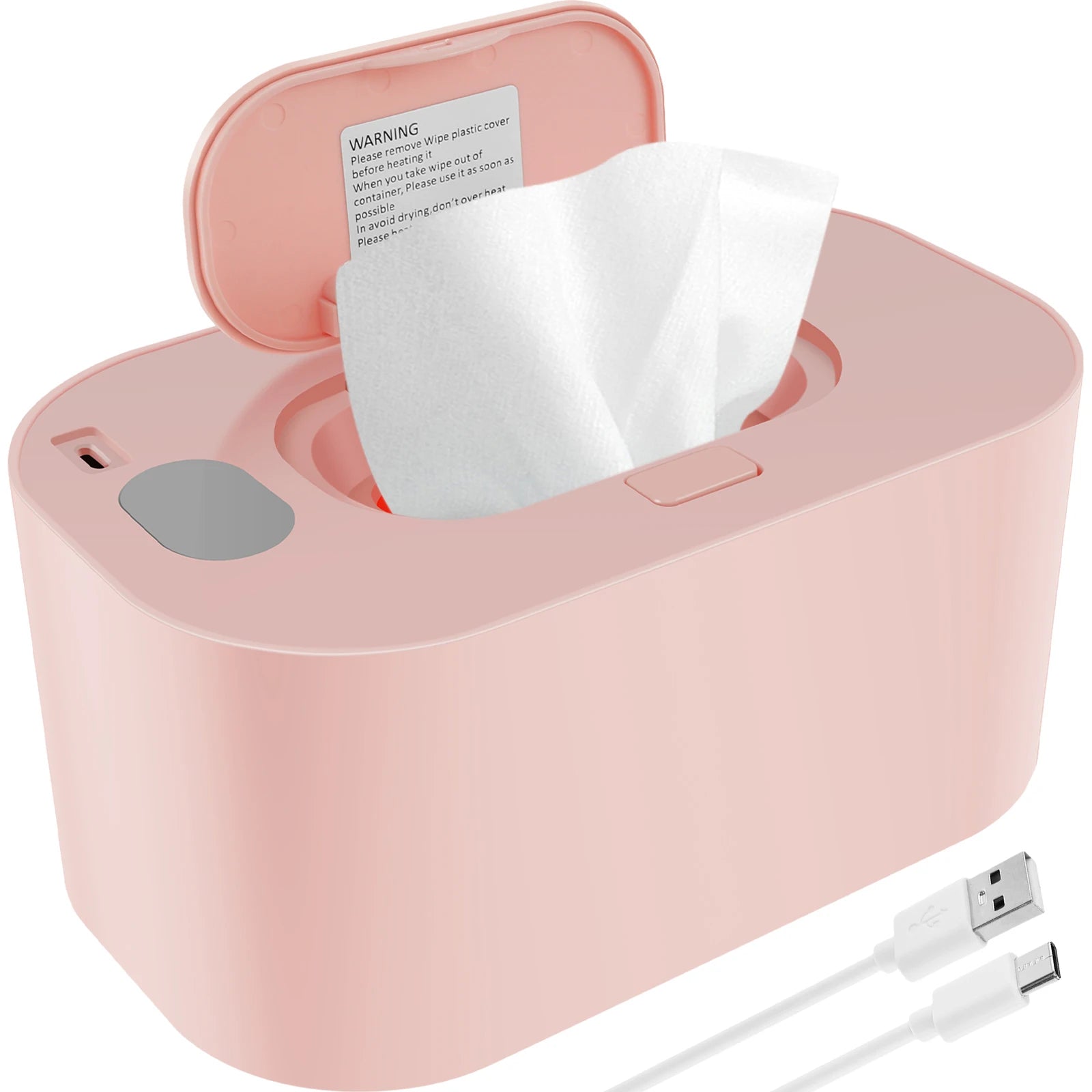
do wipe warmers work + wipe warmers safe — See it in action.
How to Pick the Right Wipe Warmer for Your Routine
The best wipe warmer depends on where and how you change diapers. Focus on features that improve safety, hygiene, and convenience rather than simply choosing the warmest model. If overnight diaper changes are your biggest challenge, prioritize consistent temperature control, easy maintenance, and reliable moisture retention.
Fast checklist
- Night use: Choose a warmer with quiet operation, stable heating, and a soft indicator light that won't fully wake your baby.
- Travel: USB-powered models are easier to use in cars, strollers, hotels, and while visiting family.
- Hygiene: Look for removable liners or wide-opening lids that simplify regular cleaning and help reduce moisture buildup.
- Safety: Automatic temperature regulation is preferable to continuous high heat.
- Capacity: Select a size that matches how quickly your household uses a pack of wipes to help keep them fresh.
- Budget: Basic insulated dispensers cost less but typically provide less consistent warming than electric models.
Complementary nursery items such as a waterproof changing pad, fragrance-free wipes, and a gentle nightlight can make diaper changes smoother. For additional products that support bedtime routines, browse Sleep & Comfort and Temperature Tools .
Frequently Asked Questions
-
Do wipe warmers really grow bacteria?
Wipe warmers themselves do not create bacteria, but any warm, moist environment can encourage bacterial or mold growth if it is not cleaned regularly. Empty the warmer when changing wipe packs, wipe the interior according to the manufacturer's instructions, and avoid leaving old wipes inside for extended periods. -
Do wipe warmers dry out baby wipes?
Some models can allow moisture to evaporate if the lid is left open or the warmer is used incorrectly. Choosing a warmer with good moisture retention, keeping the lid closed, and replacing wipes regularly helps prevent wipes from drying out. -
Are wipe warmers safe for newborns?
Yes. When used correctly, baby wipe warmers are generally safe for newborns. Always test the wipe on the inside of your wrist before use, keep the warmer clean, and follow the manufacturer's operating instructions to avoid overheating. -
Do pediatricians recommend wipe warmers?
Most pediatricians consider wipe warmers a comfort accessory rather than a medical necessity. They may be helpful for babies who are easily startled during diaper changes, but they are not required for healthy diaper care. -
Can a wipe warmer help prevent diaper rash?
A wipe warmer does not prevent diaper rash directly. However, a calmer diaper change may reduce rubbing on irritated skin. The most effective ways to reduce diaper rash remain frequent diaper changes, gentle cleaning, allowing skin to dry, and using a protective barrier cream when appropriate. -
How often should you clean a wipe warmer?
Clean the interior at least once a week or whenever you finish a pack of wipes. If you notice residue, discoloration, or odors, clean it immediately before continuing to use the warmer. -
Are wipe warmers worth buying?
They can be worthwhile if your baby consistently reacts to cold wipes, you frequently change diapers overnight, or you live in a colder climate. If your baby is comfortable with room-temperature wipes, a warmer is more of a convenience than a necessity. -
What features make a wipe warmer safer?
Look for automatic temperature regulation, consistent low-temperature heating, a well-sealed lid to retain moisture, easy-to-clean construction, and reliable power protection. These features improve both safety and long-term performance.
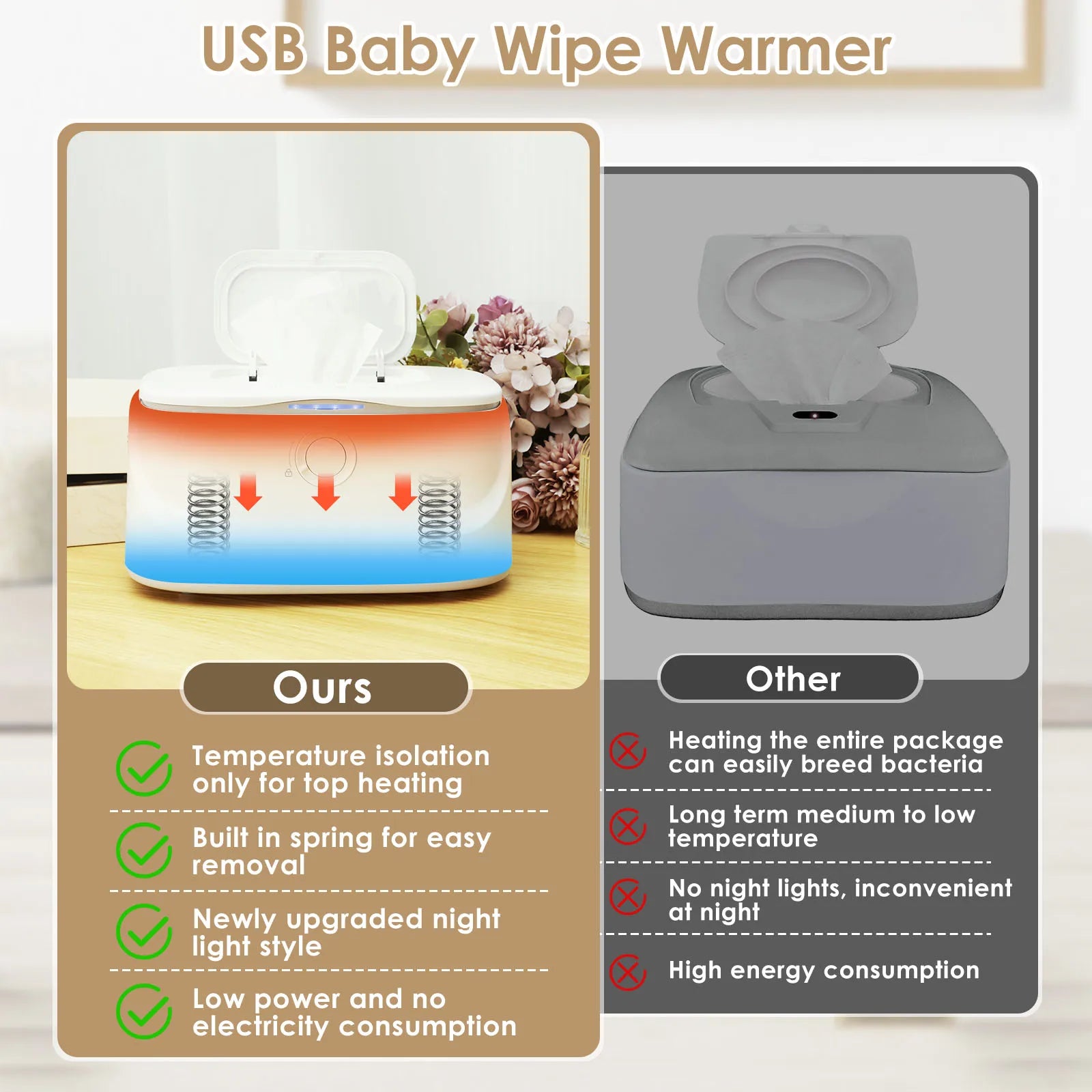
wipe warmers safe + nighttime diaper changes — See it in action.
Ready to make nighttime diaper changes gentler? Explore the USB Baby Wipe Warmer with LED Light . Pair it with accessories from Baby Care Essentials and Sleep & Comfort for a more comfortable nighttime routine.
Quick Decision Guide
If cold wipes are consistently startling your baby, a wipe warmer can be a practical comfort upgrade rather than an essential purchase. The greatest benefits are typically seen during overnight diaper changes, for newborns with sensitive skin, and in colder homes. Choose a model with stable temperature control, maintain it regularly, and always test wipe temperature before use. Used properly, a quality wipe warmer can make diaper changes calmer without replacing good hygiene or proper skin care.
Quick Answers
Q:
Will a wipe warmer stop my baby from crying?
A:
It can reduce crying caused by the sudden shock of cold wipes, but babies may still cry because of hunger, fatigue, gas, or discomfort.
Q:
How often should I clean the warmer?
A:
At least weekly, whenever you replace a pack of wipes, or immediately if you notice residue or unusual odors.
Pillar Article: How to Warm Wipes Safely: Step-by-Step Guide for Calmer Diaper Changes
Other Related Articles:
- Best Temperature for Wipes Explained: Prevent Startles and Nighttime Fuss
- Safe Wipe Warming Tips Every Parent Should Know for Stress-Free Changes
- Keep Baby Wipes Warm Easily: Simple Daily Routine Any Parent Can Follow
Explore More:





