

Hygienic Travel Baby Feeding Tools Breakdown: Why They Keep Bottles Safer
Do hygienic travel baby feeding tools really keep bottles safer?
Yes—hygienic travel baby feeding tools help keep bottles safer by making proper cleaning easier anywhere. A travel baby bottle cleaning kit combines compact brushes, nipple cleaners, storage cases, and travel-friendly accessories that help remove milk residue, reduce contamination risks, and maintain safer feeding routines when parents are away from home.
A portable bottle cleaning kit gives parents a practical way to clean bottles during vacations, flights, road trips, and daily outings. Instead of relying on wipes or quick rinses, these baby feeding travel essentials support a complete rinse, scrub, dry, and store routine that helps protect baby feeding equipment.
⏱ 12 min read
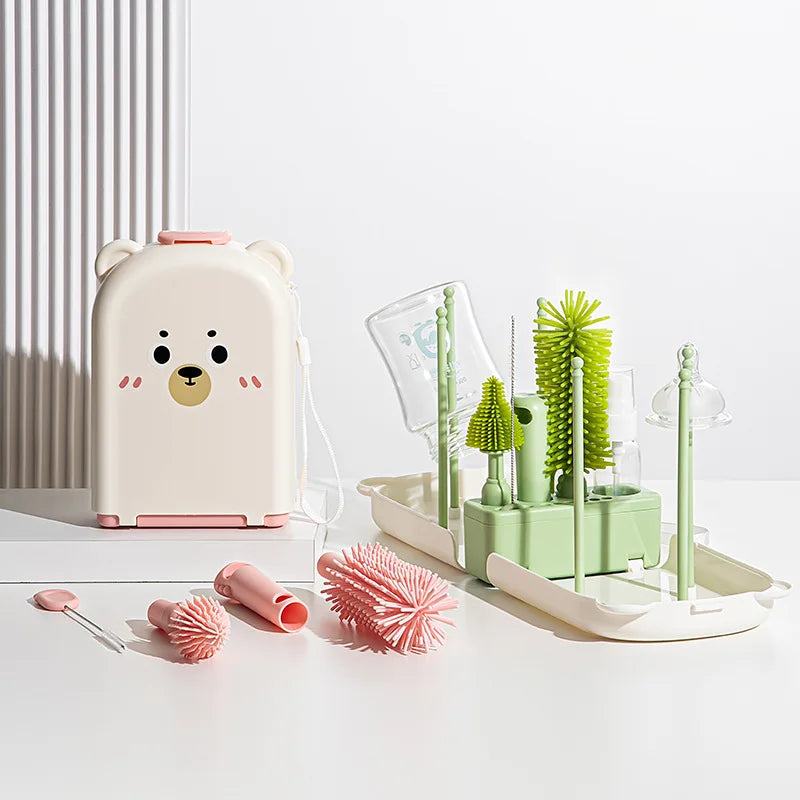
hygienic travel baby feeding tools, travel bottle cleaning kit — See it in action
Best Travel Baby Bottle Cleaning Kits: Quick Comparison
The best travel baby bottle cleaning kit should balance portability, cleaning performance, storage, and convenience. Parents traveling with newborns often need tools that fit inside diaper bags while still reaching bottle corners, nipples, and small feeding parts.
| Kit Type | Best For | Included Features | Travel Benefit |
|---|---|---|---|
| Complete portable bottle cleaning kit | Frequent travelers | Bottle brush, nipple brush, storage case | All-in-one cleaning solution |
| Compact brush set | Flights and short trips | Foldable brush, slim storage | Saves diaper bag space |
| Road trip cleaning kit | Hotels and vacations | Durable brushes, drying accessories | Handles longer travel periods |
| Budget brush set | Occasional travel | Basic bottle brush and nipple cleaner | Affordable everyday option |
Best Travel Baby Bottle Cleaning Kits for Parents on the Go
Best overall portable bottle cleaning kit
The best overall option is a complete portable bottle cleaning kit that includes a bottle brush, nipple cleaner, and protective storage case. This setup works well for families who travel frequently because every essential tool stays organized and ready for use.
The Travel Baby Bottle Brush Set is designed for parents who need compact cleaning support while traveling. It includes a foldable brush, nipple cleaner, and protective case that fits easily into diaper bags and carry-ons.
Best compact kit for flights
For air travel, choose a lightweight baby bottle cleaning brush set with minimal parts. A slim case prevents used brushes from touching other baby items while saving valuable luggage space.
Best kit for road trips and vacations
Road trips require durability and convenience. Look for kits with strong handles, easy storage, and accessories that help maintain bottle hygiene when hotel sinks or outdoor facilities are limited.
Best budget-friendly baby bottle cleaning brush set
A simple brush set can work well for occasional trips. Choose one with a separate nipple cleaner and washable materials instead of relying on disposable wipes that only remove surface residue.
Why Baby Bottle Hygiene Matters While Traveling
Travel introduces new challenges for bottle cleaning. Parents may deal with unfamiliar water sources, limited sink access, crowded environments, and fewer places to safely dry feeding equipment.
Good baby bottle hygiene tips include cleaning bottles immediately after feeding, removing milk residue before it dries, and preventing dirty brushes from mixing with clean baby items.
- Hotel rooms may have limited space for washing and drying bottles.
- Airports and outdoor locations may not provide ideal cleaning conditions.
- Milk residue can collect in bottle threads, nipples, and valves.
- Improvised cleaning methods may leave hidden residue behind.
What Comes in a Good Travel Baby Bottle Cleaning Kit?
A quality travel kit provides the same basic cleaning functions as a home bottle station but in a smaller format. The most useful compact baby feeding accessories include:
- Bottle brush: Reaches inside bottles and removes milk residue from hard-to-reach areas.
- Nipple brush: Cleans narrow openings and small feeding components.
- Storage case: Keeps brushes protected and separated from other travel items.
- Drying tools: Help prevent moisture buildup after cleaning.
- Travel soap container: Makes it easier to carry baby-safe cleaning products.
How to Choose a Portable Bottle Cleaning Kit
Brush quality and bottle compatibility
A good baby bottle cleaning brush set should match the bottles you use. Look for flexible bristles that clean curved bottles without scratching surfaces and smaller attachments for nipples and valves.
Size, storage, and travel convenience
The best travel kits are compact without removing essential tools. A sealed case, detachable brush design, and lightweight construction make packing easier.
Materials and safety standards
Choose materials designed for repeated baby use, such as durable BPA-free plastics and food-grade silicone components. Parts should be easy to wash and resistant to wear.
Cleaning and drying features
Proper drying matters as much as scrubbing. Ventilated cases and separate storage areas help reduce moisture buildup between uses.
How to Clean Baby Bottles While Traveling
Learning how to clean baby bottles while traveling helps parents maintain safe feeding routines even without a full kitchen setup.
- Rinse the bottle immediately after feeding whenever possible.
- Separate the bottle, nipple, cap, and small parts.
- Apply baby-safe soap and scrub with the bottle brush.
- Use the nipple cleaner for smaller areas where milk can collect.
- Rinse thoroughly using safe water.
- Allow parts to air dry before storing them.
For hotels, use a clean sink area and bring your own cleaning supplies. During flights or outdoor trips, pack a compact travel bottle cleaning solution with your brush kit.
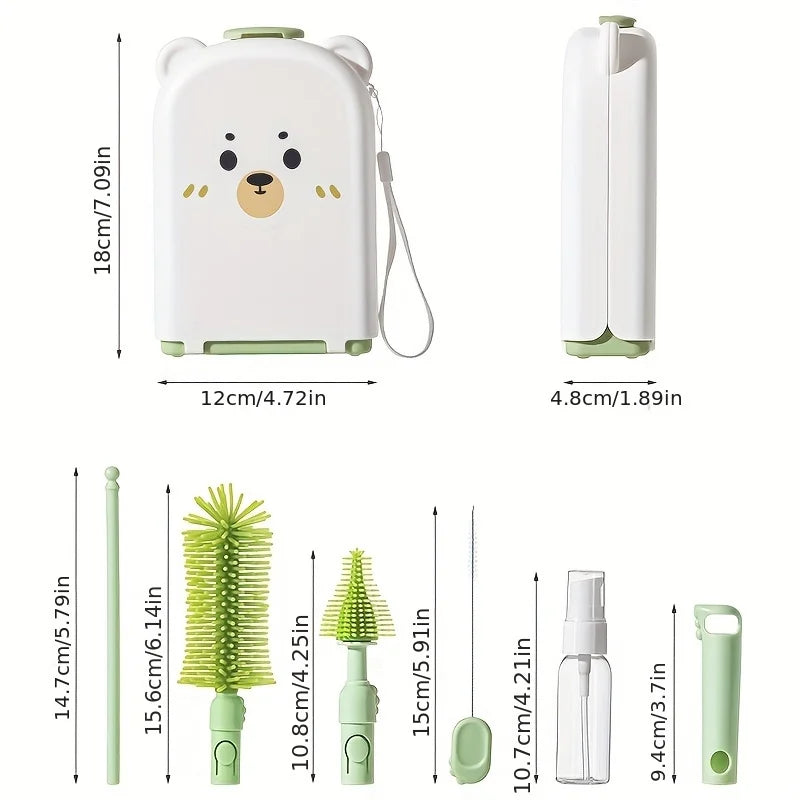
travel bottle cleaning kit, proper bottle cleaning — See it in action
Travel Bottle Cleaning Kit vs. Improvised Cleaning Methods
| Feature | Travel Bottle Cleaning Kit | Improvised Cleaning |
|---|---|---|
| Cleaning reach | Designed for bottle interiors and nipples | Often limited to surface cleaning |
| Organization | Storage case keeps tools together | Items may mix with other belongings |
| Convenience | Reusable and travel-ready | Requires finding replacement supplies |
| Hygiene control | Supports repeatable cleaning routines | More inconsistent results |
What Parents Should Look for Before Buying
Leak-proof storage case
A secure case prevents wet brushes from leaking into diaper bags and keeps cleaning tools separated from clean baby supplies.
Easy-to-clean materials
Choose brushes and accessories that rinse quickly and do not trap moisture after washing.
Drying and organization options
Smart storage features make travel easier. Separate compartments help parents quickly find bottle parts during busy feeding schedules.
Packing Checklist for Baby Bottle Cleaning on Trips
- Compact bottle brush and nipple cleaner
- Protective storage case
- Baby-safe soap or travel cleaning solution
- Small drying cloth
- Extra bottle parts if needed
- Portable sterilizing option for longer trips
Travel Baby Bottle Cleaning Kit Feature Comparison
| Feature | Basic Kit | Premium Kit | Eco-Friendly Kit |
|---|---|---|---|
| Brush design | Standard bottle brush | Multi-purpose brush system | Replaceable components |
| Portability | Compact | Compact with organized storage | Lightweight design |
| Cleaning speed | Basic routine | Faster multi-part cleaning | Simple maintenance |
| Best for | Short trips | Frequent travelers | Sustainability-focused families |
Top Safety Tips for Cleaning Baby Bottles Away From Home
- Clean bottles as soon as possible after feeding.
- Use safe water for rinsing whenever possible.
- Dry bottles completely before storing.
- Replace worn brushes to maintain cleaning performance.
- Avoid storing wet brushes in closed containers for long periods.
Related Baby Feeding Travel Essentials
Explore more baby travel products and guides to build a complete feeding setup:
For additional bottle care information, explore our baby bottle care guides and newborn care resources for more practical routines.
FAQ
How often should I sanitize bottles when traveling?
Sanitize bottles based on your baby’s age, health needs, and travel conditions. Regular cleaning after every feed is essential, while extra sanitizing may be useful for younger infants or when access to clean facilities is limited.
Can I use a travel bottle cleaning kit for formula and breastmilk bottles?
Yes. A travel bottle cleaning kit works for both formula and breastmilk bottles because both require the same basic process: rinse, scrub, clean small parts, and dry completely.
What should a portable bottle cleaning kit include?
A good portable bottle cleaning kit should include a bottle brush, nipple cleaner, storage case, and accessories that make cleaning easier while traveling.
How do I clean baby bottles while traveling without a microwave?
You can clean baby bottles without a microwave by using safe water, baby-safe soap, a bottle brush, and proper air drying. Mechanical cleaning remains the most important step before any additional sanitizing method.
Final Thoughts: Choosing the Right Travel Baby Bottle Cleaning Kit
The right travel baby bottle cleaning kit makes feeding away from home simpler by combining portability, organization, and reliable cleaning support. Parents should focus on practical features like brush quality, storage protection, drying options, and compatibility with their baby’s bottles.
A well-designed kit turns bottle cleaning from a stressful travel task into a quick routine—helping families stay prepared wherever their journey takes them.
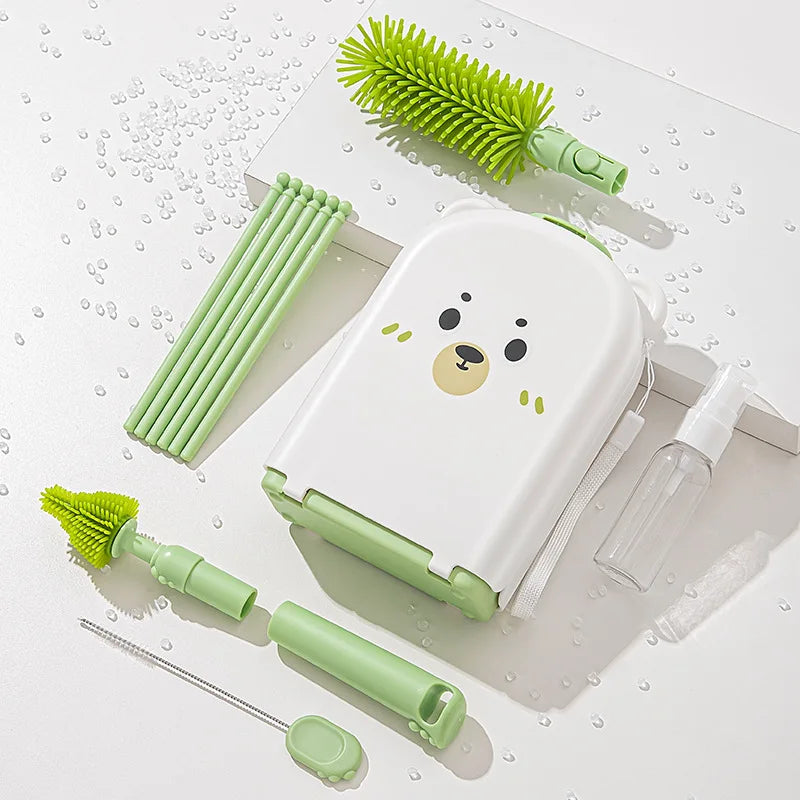
bottle brush kit, travel bottle cleaning kit — See it in action
Want to see a travel bottle cleaning kit up close? Check this product for compact, travel-ready solutions: Travel Baby Bottle Brush Set .
Related collections: Feeding & Nursing · Baby Hygiene Gadgets · Sterilization Devices
Related Articles:
- Compact Newborn Bottle Brush for Travel: The Features That Make Cleaning Easier
- Baby Bottle Cleaning Brush With Case Tutorial: How to Keep Tools Germ-Free
Pillar Articles:





