

How to Clean Baby Bottles Safely: Complete Baby Bottle Cleaning and Sterilizing Guide
⏱ 12 min read
How to clean baby bottles safely for healthy feeding?
To clean baby bottles safely, wash every bottle component after feeding, remove milk residue from hidden areas, sanitize when needed, and store all parts completely dry. A consistent baby bottle cleaning guide helps reduce bacteria buildup, mold risk, and feeding-related hygiene concerns while making daily routines easier for parents.
Milk residue, trapped moisture, and hard-to-reach bottle parts can make feeding cleanup stressful. Many parents wonder whether washing is enough, when sterilizing is necessary, and how to keep bottles sanitary during busy days. This complete guide explains how to clean baby bottles safely, choose a reliable cleaning routine, and avoid common mistakes that can affect bottle hygiene.
Build a safer feeding routine with practical tools for home and travel.
sanitary baby bottle concerns, bottle cleaner and sanitizer — See it in action
How to clean baby bottles safely
Learning how to clean baby bottles safely starts with understanding the difference between cleaning and sanitizing. Cleaning removes milk, formula residue, oils, and visible buildup. Sanitizing or sterilizing reduces microorganisms that remain after washing.
A proper baby bottle cleaning guide follows four basic steps:
- Wash hands before handling clean bottle parts.
- Disassemble every bottle component, including nipples, rings, caps, and valves.
- Wash each part thoroughly with a dedicated bottle brush and safe detergent.
- Dry completely before storing to prevent bacteria and mold growth.
Extra precautions are recommended for newborns, premature babies, babies with weakened immune systems, or households dealing with illness. Always follow your pediatrician’s recommendations and bottle manufacturer instructions.
What you'll need before cleaning
A safe bottle cleaning routine becomes easier when everything you need is prepared before feeding cleanup begins.
Bottle cleaning supplies checklist
- Dedicated bottle cleaning kit for newborns: A bottle brush, nipple brush, and drying accessories designed only for baby feeding items.
- Mild bottle-safe detergent: Helps remove milk fats and proteins without leaving unnecessary residue.
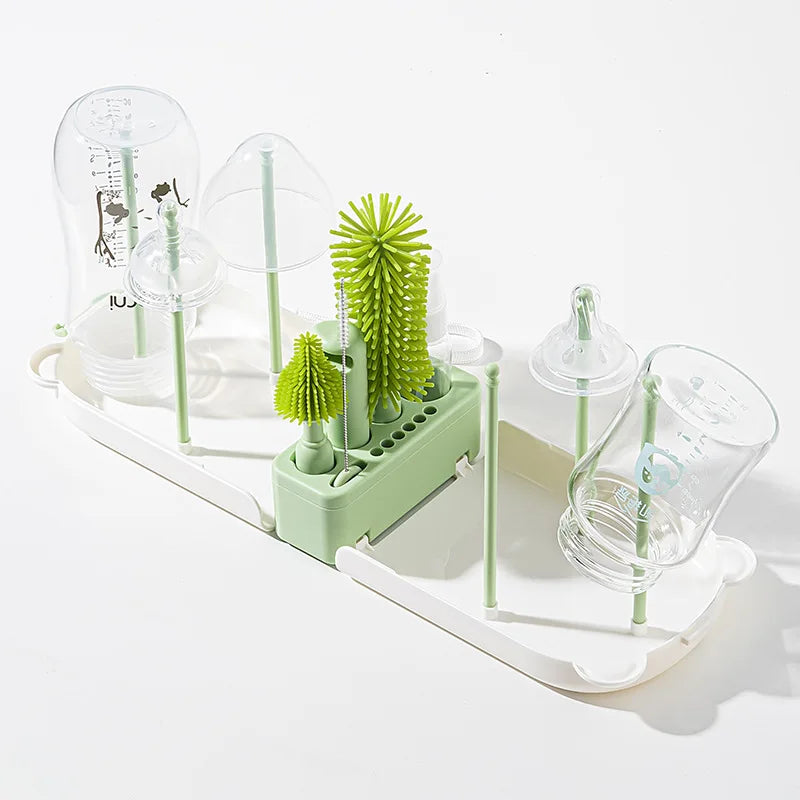
- Clean drying rack: Keeps washed parts separated from household dishes.
- Sanitizing method: Such as steam sterilizer, boiling water, microwave sterilizer, or approved sanitizing solution.
- Replacement parts: Extra nipples, valves, or damaged components ready when needed.
Disassemble bottles correctly
Before washing, separate every removable piece. Milk can collect around bottle threads, nipple openings, vent systems, and silicone inserts. Inspect parts for cracks, cloudiness, discoloration, or signs of wear because damaged pieces can trap bacteria more easily.
How to clean baby bottles step by step
Following proper baby bottle cleaning steps after every feeding helps remove bacteria sources before they become a problem.
Wash by hand
- Wash your hands thoroughly before touching bottle parts.
- Rinse bottles immediately after feeding to prevent dried milk residue.
- Separate all parts and rinse under warm running water.
- Use a dedicated bottle brush to scrub inside the bottle, threads, nipple openings, and small components.
- Rinse all parts carefully until no detergent remains.
- Place components on a clean drying rack and allow them to air-dry fully.
Clean bottles in the dishwasher
Many baby bottles are dishwasher-safe, but check manufacturer instructions first. Place bottles and small components on the top rack and use a dishwasher basket for nipples, valves, and caps. Hand-cleaning small parts may still be helpful when residue collects in narrow areas.
How to sanitize and sterilize baby bottles
Sanitizing baby bottles provides an additional hygiene step after cleaning. The best method depends on your baby’s age, health needs, available equipment, and daily routine.
Boiling water method
Boiling is an affordable way to sterilize baby bottles at home. Place fully washed parts in boiling water according to manufacturer instructions, then remove carefully and allow them to air-dry.
Steam and electric sterilizers
Electric steam sterilizers use high temperatures to sanitize multiple bottles and accessories quickly. They are convenient for families who prepare several bottles daily and want a consistent routine.
Microwave sterilization
Microwave sterilizers can be useful for small spaces, but always confirm that your bottle materials are microwave-safe. Follow the product instructions carefully to avoid overheating or damaging parts.
Chemical sanitizing solutions
Approved cold-water sanitizing tablets can be helpful during travel or situations without access to heat. Use the correct dilution and soaking time listed on the product instructions.
How often should you sanitize baby bottles?
The answer depends on your baby’s age and health situation. Cleaning after every feeding remains essential, while sanitizing frequency can change over time.
Newborns and high-risk babies
Newborns under three months, premature babies, or babies with immune concerns may benefit from more frequent sanitizing. Many healthcare professionals recommend additional precautions during this stage.
Healthy older infants
Older babies who are healthy may not need daily sterilization forever. Thorough washing after every use, proper drying, and occasional sanitizing based on your routine are often sufficient.
Drying and storing bottles safely
Drying is one of the most overlooked parts of baby bottle hygiene. Even clean bottles can develop bacteria if moisture remains trapped inside.
Air-drying best practices
- Use a clean drying rack reserved for baby items.
- Avoid drying with kitchen towels because they can transfer germs.
- Keep bottle parts separated so air can circulate.
- Store bottles only after every component is completely dry.
- Avoid sealing damp bottles because trapped moisture encourages bacterial growth.
Common bottle cleaning mistakes to avoid
- Skipping bottle parts: Small pieces like valves and nipples can collect hidden residue.
- Using worn brushes: Damaged brushes may not clean effectively and can harbor bacteria.
- Leaving bottles wet: Moist storage creates conditions where mold can develop.
- Mixing clean and dirty items: Keep used bottles away from sanitized parts.
- Only rinsing with water: Water alone does not remove milk fats and proteins.
How to remove milk residue, odors, stains, and mold
Milk residue often appears as cloudy film, unpleasant smells, or sticky buildup around bottle openings. These issues usually happen when bottles are not washed soon enough or parts are not fully dried.
- Soak stubborn residue in warm water before scrubbing.
- Use a bottle brush to reach threads and narrow spaces.
- Avoid harsh household cleaners that may leave unsafe residues.
- Replace bottles or nipples that show cracks, permanent discoloration, or mold growth.
Regular cleaning, complete drying, and replacing worn parts are the simplest ways to remove bacteria from baby bottles and prevent repeated buildup.
Travel and daycare bottle cleaning tips
Maintaining bottle hygiene while away from home requires a smaller, more flexible routine. A safe bottle cleaning routine for travel focuses on preparation and preventing contamination.
Portable cleaning checklist
- Travel-size bottle brush or sponge
- Small bottle cleaning kit for newborns
- Foldable drying mat or clean towel
- Approved sanitizing tablets or portable sanitizer
- Extra nipples and bottle parts
- Clean storage bags or containers
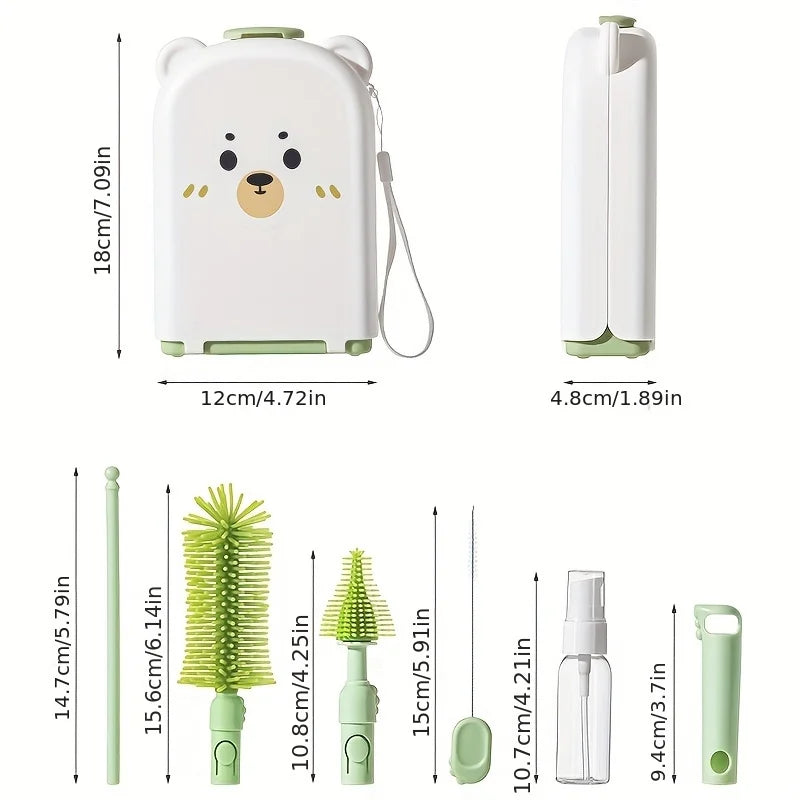
For longer trips, keep a travel kit in your diaper bag so cleaning supplies are always available. A compact option is the Travel Baby Bottle Brush Set .
Quick cleaning checklists and decision guide
Daily vs weekly tasks
| Task | Frequency |
|---|---|
| Wash bottles with detergent after feeding | After every use |
| Air-dry all components | Every cleaning cycle |
| Sanitize newborn bottles | Daily or according to healthcare guidance |
| Inspect nipples and replace worn parts | Regularly |
Cleaning vs sanitizing comparison
| Method | Main purpose | When useful |
|---|---|---|
| Washing | Removes milk residue and visible dirt | After every feeding |
| Steam sanitizing | Reduces microorganisms using heat | Home routines with frequent bottles |
| Boiling | Simple high-temperature sanitizing | Occasional home use |
| Cold-water solutions | Portable sanitizing option | Travel and daycare |
proper bottle cleaning, bottle cleaning kit — See it in action
Frequently asked questions
Do baby bottles need to be sterilized after every use?
No. Washing after every feeding is essential. Extra sanitizing may be recommended for newborns, premature babies, or babies with health concerns.
Is cleaning the same as sanitizing baby bottles?
No. Cleaning removes milk residue and dirt, while sanitizing reduces remaining microorganisms after washing.
Can baby bottles go in the dishwasher?
Many bottles can go in the dishwasher when placed correctly, usually on the top rack. Always check the bottle manufacturer’s instructions.
How do I remove cloudy residue from baby bottles?
Cloudy residue usually comes from milk fats, minerals, or incomplete rinsing. Soaking, scrubbing with a bottle brush, and thorough rinsing can help remove buildup.
How long do sterilized bottles stay sterile?
Sterilized bottles remain cleaner when stored dry and protected from dust. Avoid opening or touching sanitized parts unnecessarily.
When should I replace bottle nipples or bottles?
Replace nipples when they crack, become discolored, feel damaged, or show changes in flow. Bottles should also be replaced if damaged.
Are microwave sterilizers safe for all bottles?
No. Confirm that both bottles and accessories are microwave-safe before using this method.
What's the safest way to clean bottles while traveling?
Bring a portable brush, clean storage container, drying solution, and an approved travel sanitizing method. The goal is to clean thoroughly and prevent contamination until you return home.
How do I know when to replace a nipple?
Replace nipples when you notice cracks, discoloration, damage, or changes in milk flow. Frequent use may require earlier replacement.
Is there a single best sanitizer?
No. The best method depends on your lifestyle. Steam sterilizers work well at home, while portable solutions are useful for travel.
Related Articles:
- PP Baby Nipple Cleaning Tool Uses: Best for Stubborn Residue and Daily Hygiene
- How to Clean Baby Bottles on Travel for Germ-Free Feeding in Any Situation
Pillar Articles:





