

Best Indoor Outdoor Baby Chairs of 2026: Top Picks for Home, Travel, and Outdoor Use
⏱ 12 min read
The best indoor outdoor baby chair makes feeding and supervised sitting easier when your family moves between the kitchen, backyard, park, campsite, grandparents' home, and travel destinations. But not every portable seat is designed for every environment. The right choice depends on age and weight limits, harness design, stability, portability, materials, cleaning needs, and how often you plan to use it away from home. This 2026 guide compares the most important features and explains how to choose a baby chair for indoor and outdoor use that fits your family's routine.
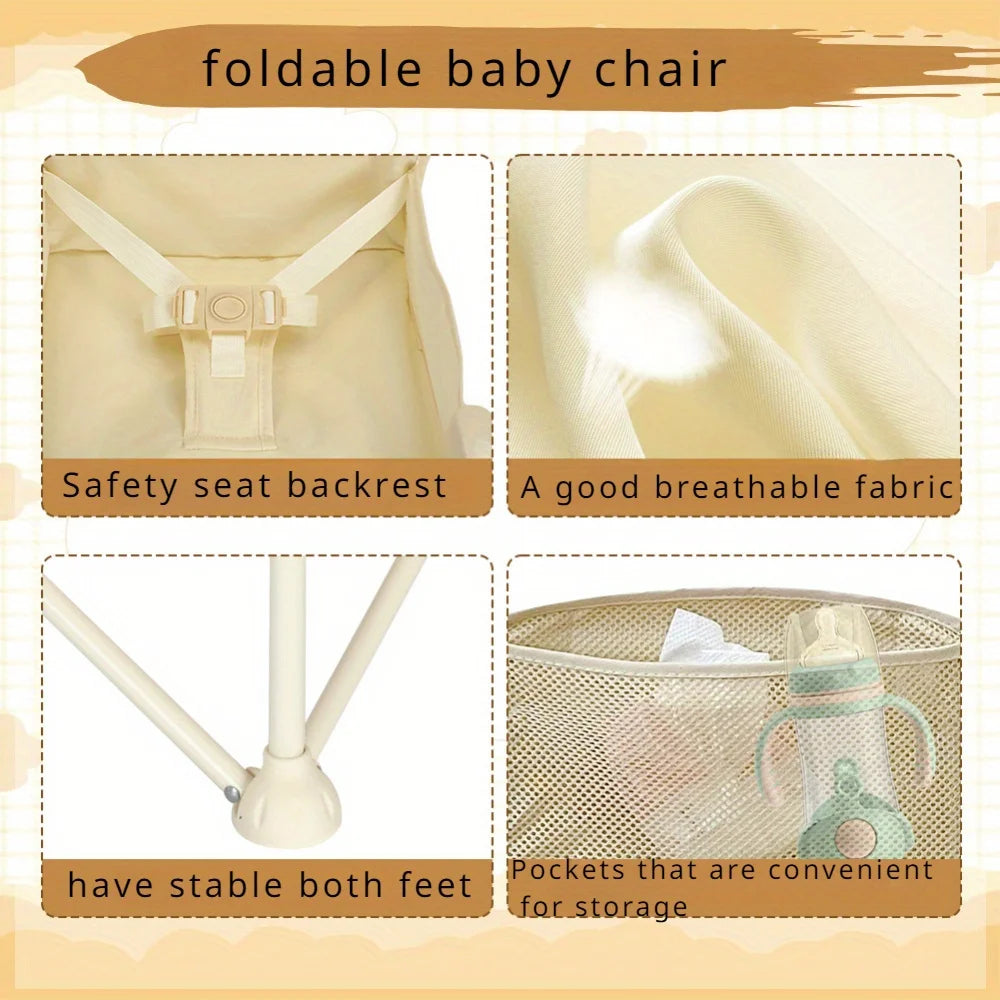
An indoor outdoor baby chair can make feeding and supervised sitting more convenient at home and away.
Best Indoor Outdoor Baby Chairs of 2026
Choosing the best indoor outdoor baby chair is less about finding one universally perfect seat and more about matching the chair to your baby's age, your travel habits, and the environments where you will use it. A chair that works beautifully for everyday meals at home may be too bulky for frequent travel, while an ultralight seat may sacrifice some convenience or support features.
Quick comparison table
| Best for | What to prioritize | Ideal chair profile | Main limitation |
|---|---|---|---|
| Best overall | Balanced safety, comfort, portability, and cleaning | Versatile chair for regular indoor meals and occasional outdoor use | May not be the smallest option for frequent air travel |
| Best for travel | Low weight, compact folding, easy transport | Portable baby chair for travel and flexible dining locations | Compact designs may have fewer comfort features |
| Best budget | Essential restraint and stability features | Simple, lightweight design for occasional use | Fewer premium materials or accessories |
| Best for camping and picnics | Durability, easy cleaning, stable setup | Best portable baby chair for outdoors with a practical footprint | Requires careful placement on uneven ground |
| Best easy-clean option | Wipeable surfaces and removable washable components | Chair designed for frequent messy meals | Some wipe-clean materials can feel less soft than fabric |
Our top picks by use case
- Best overall: Choose a versatile baby chair for indoor and outdoor use with a secure harness, stable base, wipe-clean surfaces, and a folding or detachable design.
- Best for travel: A lightweight portable high chair for baby should fold compactly, carry easily, and set up without complicated assembly.
- Best budget: Prioritize safety-critical features such as an appropriate restraint system and stable construction before paying extra for accessories.
- Best for camping and picnics: Look for durable, easy-clean materials and a footprint that remains stable on firm outdoor ground.
- Best easy-clean option: Select a model with removable pads, accessible seams, and surfaces that can be wiped promptly after food spills.
Our recommended versatile option: The approved portable baby high chair is a practical choice for families looking for a compact seat that can transition between everyday home routines and travel. Before purchasing, confirm the manufacturer's current age, weight, harness, and usage specifications for your child.
Comparison Table: Indoor vs Outdoor Performance
A good foldable baby chair for travel and home needs to perform differently across environments. Indoors, you may prioritize daily comfort and convenient cleaning. Outdoors, stability, weather exposure, portability, and surface conditions become more important. Use the comparison below as a starting point rather than assuming every model has the same specifications.
| Feature | Indoor performance | Outdoor performance | What to check |
|---|---|---|---|
| Age & weight limits | Supports appropriate daily seating when used within manufacturer limits | Same limits apply; outdoor use does not increase capacity | Manufacturer's minimum age, developmental requirements, and maximum weight |
| Stability | Usually easier to position on level floors | More dependent on firm, level ground | Base width, locking mechanisms, and recommended surfaces |
| Foldability and portability | Useful for storage between meals | Important for cars, parks, campsites, and visits | Folded dimensions, carrying weight, and setup time |
| Cleaning and materials | Frequent food spills require convenient daily cleaning | Dirt, grass, sand, moisture, and food debris add maintenance | Wipe-clean surfaces, removable covers, washable fabrics, and drying instructions |
| Weather exposure | Usually minimal | Sun, heat, wind, moisture, and temperature changes matter | Manufacturer guidance on outdoor exposure and storage |
Age & weight limits
Never choose a chair based only on appearance or portability. Check the exact manufacturer's instructions for minimum age, developmental readiness, maximum weight, harness requirements, and whether the chair is intended for feeding or general sitting. A chair designed for a baby who can sit independently may not be suitable for a younger infant who lacks the required postural control.
Foldability and portability
A lightweight portable high chair for baby should be easy for one adult to carry and simple enough to assemble without tools. For frequent travel, compare both the chair's weight and its folded dimensions. A model that is technically portable but awkward to fit in a car or carry through a hotel may not be practical for your routine.
Cleaning and materials
Outdoor use exposes baby chairs to more than food. Grass, dust, sand, sunscreen, moisture, and insects can collect around the seat and frame. Wipeable trays and removable washable covers can make a significant difference, especially for families who use their chair frequently.
How We Tested and Selected These Baby Chairs
Our selection framework focuses on the features that matter most when a baby chair moves between indoor dining and outdoor settings. Rather than treating portability as the only measure of quality, we evaluate how well a chair balances safety, stability, comfort, maintenance, and value.
Evaluation criteria
- Safety: We look for appropriate restraint systems, secure locking mechanisms, clear usage limits, and designs that discourage unsafe positioning.
- Stability: We consider base design and how easily the chair can remain stable when correctly placed on an appropriate level surface.
- Comfort: We assess seat support, available padding, ergonomic positioning, and whether the design is practical for age-appropriate use.
- Portability: We compare folded size, carrying weight, setup complexity, and storage convenience.
- Cleaning: We favor accessible surfaces and removable components that simplify routine food and outdoor messes.
- Durability: We consider frame construction, materials, hardware, and how well the design is suited to repeated setup and storage.
- Value: We compare the practical features offered against the needs of the intended user rather than assuming the most expensive model is automatically the best.
Real-world testing scenarios
We evaluate the usefulness of an indoor outdoor baby chair across common family situations: everyday indoor meals, backyard feeding, park snacks, road trips, visits to grandparents, and outdoor gatherings. Key questions include whether setup is intuitive, whether cleanup is manageable after messy food, whether the chair stores easily, and whether caregivers can maintain a safe setup without unnecessary effort.
For outdoor use, we also consider environmental factors that are easy to overlook: uneven ground, direct sun, wind, moisture, dirt, and temperature. A chair should only be used outdoors in ways permitted by its manufacturer and should never be treated as a substitute for active adult supervision.
Detailed Reviews of the Best Indoor Outdoor Baby Chairs
Best overall
Ideal for: Families who want one versatile chair for regular home meals and occasional outdoor use.
Key features to prioritize: A secure harness, stable base, comfortable seat, wipe-clean tray, removable washable components, and convenient folding or storage.
Pros: A balanced design can reduce the need for separate indoor and outdoor seating, making everyday routines simpler.
Cons: The best all-around designs may be heavier or bulkier than ultra-compact travel seats.
Best choice when: You want a single indoor outdoor baby chair that handles meals at home while remaining practical for patios, yards, and occasional trips.
Best for travel
Ideal for: Families who frequently visit relatives, stay in vacation rentals, or take road trips.
Key features to prioritize: Low carrying weight, compact folded dimensions, fast setup, durable materials, and a secure restraint system.
Pros: A dedicated portable baby chair for travel can reduce the need to rely on unfamiliar seating at destinations.
Cons: The lightest models may offer less padding, smaller trays, or fewer convenience features.
Best choice when: Portability matters more than having a full-size chair with every possible accessory.
Best budget
Ideal for: Families who need a reliable portable seat for occasional trips without paying for premium extras.
Key features to prioritize: Appropriate age and weight limits, secure harnessing, stable construction, and straightforward cleaning.
Pros: A simple design can provide the essential functionality without unnecessary features.
Cons: Lower-cost options may have fewer washable components, less padding, or more basic folding mechanisms.
Best choice when: You need occasional portability and want to focus spending on the features that directly affect safe, practical use.
Best for camping and picnics
Ideal for: Families who spend substantial time outdoors and need a chair that is easy to transport and clean.
Key features to prioritize: Stable construction, easy-clean surfaces, durable materials, compact storage, and compatibility with appropriate firm ground.
Pros: A suitable outdoor-focused chair can make snack and meal routines easier during family outings.
Cons: No baby chair should be assumed safe on every outdoor surface. Sand, slopes, loose soil, and uneven terrain can create stability concerns.
Best choice when: You regularly attend picnics or camping trips and can provide a flat, stable setup area.
Best easy-clean option
Ideal for: Families dealing with frequent spills, purees, finger foods, and outdoor mess.
Key features to prioritize: Smooth wipeable surfaces, removable seat pads, washable covers, minimal food-trapping seams, and accessible hardware.
Pros: Faster cleanup helps keep the chair ready for the next meal.
Cons: Highly wipeable materials may not feel as soft or cushioned as heavily padded fabric seats.
Best choice when: Cleaning speed and hygiene are more important to you than decorative fabrics or plush padding.
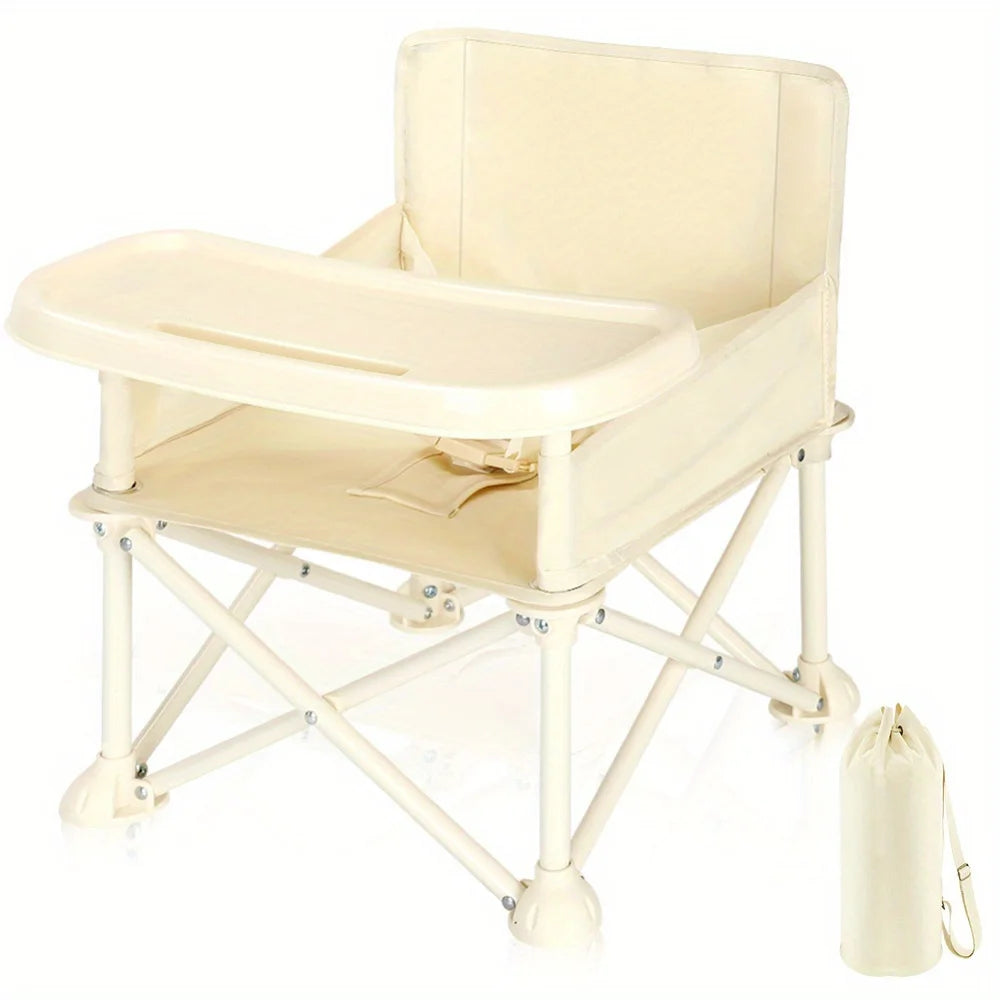
Portable seating can make feeding routines easier during travel and outdoor family activities.
Buying Guide: How to Choose the Right Indoor Outdoor Baby Chair
The right baby chair for indoor and outdoor use should fit both your child and your lifestyle. Before buying, think about where the chair will live, how often it will travel, what surfaces you will use it on, and how much cleaning you are willing to do after each outing.
Safety features
- Choose a chair with a restraint system appropriate for the design and your child's developmental stage.
- Check that harnesses can be adjusted snugly without interfering with comfort.
- Look for secure locking mechanisms on folding frames and trays.
- Follow all manufacturer instructions for use, assembly, and weight limits.
- Never use a baby chair on a table, countertop, elevated platform, or other surface not explicitly approved by the manufacturer.
Materials and weather resistance
For outdoor use, prioritize materials that are easy to wipe and suitable for the conditions you expect to encounter. Remember that weather-resistant does not necessarily mean waterproof or designed for permanent outdoor storage. Unless the manufacturer specifically states otherwise, store the chair indoors after use and allow damp components to dry fully.
Portability and storage
Compare folded dimensions as carefully as overall dimensions. A chair that fits easily in your car may still be inconvenient if it takes several minutes to assemble. For frequent travel, look for a design that one adult can carry, set up, clean, and pack away without assistance.
Age and weight considerations
Always verify current product specifications before purchase. Babies develop at different rates, and age ranges are not a substitute for developmental readiness. Use the chair only when your child meets the manufacturer's requirements, and stop using it when your child exceeds the stated weight limit or when the chair no longer provides a safe fit.
Outdoor Baby Chair Safety Tips
Knowing how to use a baby chair safely outdoors is just as important as choosing the right product. Outdoor environments introduce additional risks, including unstable ground, heat, direct sunlight, wind, insects, and distractions. A safe chair still requires an attentive adult nearby.
Safe feeding setup outdoors
Place the chair on a firm, level surface and inspect the area before seating your baby. Keep food, drinks, and accessories within easy reach of the supervising adult rather than attaching unnecessary objects that could affect stability. Use the chair only for its intended purpose and according to the manufacturer's instructions.
Stable surfaces
Firm, level ground is generally preferable to soft sand, steep slopes, loose soil, or heavily uneven terrain. Grass can be suitable when it is firm and level, but always check whether the chair's feet remain stable. Do not improvise by placing the chair on unstable boxes, coolers, tables, or other elevated surfaces.
Harness use
Use the chair's restraint system exactly as directed. Check the fit every time, particularly when your baby is wearing different layers of clothing. Never assume a tray is a substitute for a harness, and never leave a seated baby unattended.
Sun and weather precautions
Choose shade when possible and avoid prolonged exposure to direct sun or excessive heat. A canopy or umbrella may provide shade only if it is compatible with the chair and cannot create a tipping or entanglement hazard. Watch for changing weather, strong wind, rain, and overheating, and move indoors when conditions are unsuitable.
- Firm, level surface ✔
- Harness correctly secured ✔
- Chair fully locked and assembled ✔
- Adult within immediate reach ✔
- Shade and comfortable temperature ✔
- No elevated or unstable setup ✔
Real-World Use Cases
The biggest advantage of a baby chair for indoor and outdoor use is versatility. Instead of treating it as a single-purpose piece of baby equipment, families can use the same basic setup across different parts of the day—as long as each environment meets the manufacturer's safety requirements.
Backyard meals
For backyard breakfasts or afternoon snacks, place the chair on a firm, level surface in a shaded area. Keep a small cleaning kit nearby so food spills can be handled immediately without carrying a messy chair back indoors.
Camping trips
A portable baby chair for travel can be useful at campsites when there is a suitable firm, level location. Avoid placing the chair near campfires, cooking equipment, steep drop-offs, vehicle traffic, or other hazards. Outdoor convenience should never override safe positioning.
Beach outings
Beach use requires extra caution. Loose sand can affect stability, while direct sun and heat can quickly make a chair and surrounding surfaces uncomfortable. If the manufacturer does not specifically recommend beach use, consider whether the environment is appropriate before bringing the chair. Never leave a baby unattended near water.
Grandparents' house
A portable chair can be especially helpful when grandparents do not keep baby equipment at home. A compact model can be stored between visits and provide a familiar seating routine without requiring a permanent high chair.
Travel and restaurants
For restaurants and vacation rentals, a foldable chair may offer more consistency than relying on whatever seating is available. Check the setup carefully before placing your baby in it, and never attach a portable seat to another chair unless the product is specifically designed for that use and the manufacturer's instructions allow it.
Cleaning, Maintenance, and Storage
Outdoor use can shorten the life of baby gear when dirt and moisture are left on the frame or fabric. A simple routine helps maintain both cleanliness and durability.
Cleaning after outdoor use
To learn how to clean a baby chair outdoors , start by removing visible food, grass, sand, and dirt before they become embedded. Wipe the tray and hard surfaces according to the manufacturer's cleaning instructions. If the chair becomes wet, dry it thoroughly before folding or storing it.
- Wipe food residue from the tray immediately after meals.
- Brush away loose sand and dirt before bringing the chair indoors.
- Clean straps according to the manufacturer's instructions rather than using harsh chemicals that could damage the material.
- Remove washable covers or pads when required for deeper cleaning.
- Allow damp fabric to dry completely before storage.
Fabric and frame care
Inspect seams, straps, hinges, feet, and locking mechanisms regularly. Avoid abrasive cleaners unless specifically approved by the manufacturer. If a component becomes cracked, loose, frayed, or damaged, stop using the chair until it has been assessed or repaired according to the manufacturer's guidance.
Long-term durability
Do not leave a portable baby chair permanently outdoors unless it is explicitly designed for that purpose. Store it in a clean, dry location away from prolonged sunlight and excessive moisture. Periodically review the manufacturer's instructions for maintenance, recalls, and product-specific limits.
Frequently Asked Questions
What age can a baby use an indoor outdoor baby chair?
It depends on the specific chair. Many models are intended for babies who have reached a particular developmental stage, often when they can sit upright with appropriate support, but age alone is not enough to determine readiness. Always follow the manufacturer's stated minimum age, weight limit, harness requirements, and developmental guidance.
Are indoor outdoor baby chairs safe for feeding outside?
They can be safe when the chair is designed or approved for the intended use and is placed on a suitable stable surface. Use the restraint system correctly, maintain close adult supervision, and keep the chair away from hazards such as water, traffic, cooking equipment, steep slopes, and excessive heat.
What features make a baby chair suitable for outdoor use?
Useful features include a stable base, secure restraint system, durable construction, wipe-clean surfaces, removable washable components, and convenient portability. Outdoor suitability also depends on whether the manufacturer permits use in the environments you have in mind.
How do I clean a baby chair after using it outdoors?
Remove loose dirt and food first, then wipe hard surfaces and the tray according to the manufacturer's instructions. Wash removable fabrics as directed, clean straps appropriately, and let all damp components dry completely before storage. Pay special attention to sand and debris around hinges and frame joints.
Can I use a portable baby chair for camping and beach trips?
Possibly, but the environment matters. Camping can work when you have a firm, level setup area away from hazards. Beach conditions are more challenging because sand can reduce stability and direct sun can increase heat exposure. Always follow the product instructions and supervise your baby closely.
What is the difference between a portable high chair and an indoor outdoor baby chair?
The terms can overlap. A portable high chair generally emphasizes compact transport and temporary dining use, while an indoor outdoor baby chair is often marketed around versatility across home and outdoor environments. The important distinction is the individual product's approved use, safety instructions, stability, and portability—not the label alone.
Do foldable baby chairs provide enough stability?
A well-designed foldable chair can be stable when fully assembled, locked, and placed on an appropriate surface. Folding capability does not automatically make a chair unstable, but you should inspect locking mechanisms and follow setup instructions every time. Never use a partially folded or improperly locked chair.
Which baby chair is best for travel and everyday home use?
The best choice is usually a versatile model that combines a manageable carrying weight with reliable stability, a secure harness, easy cleaning, and convenient storage. For families who travel often, the portable baby high chair is one option to consider, provided its current specifications match your child's age, weight, and intended use.
Final Verdict: Which Indoor Outdoor Baby Chair Is Best?
The best indoor outdoor baby chair is the one that safely fits your child, your environment, and your family's routine. There is no single design that is ideal for every household, but a few priorities consistently matter: secure restraints, appropriate weight limits, stable construction, easy cleaning, and practical portability.
Best overall
Choose a versatile chair with a secure harness, stable base, wipeable surfaces, and convenient storage if you want one solution for everyday home meals and occasional outdoor use.
Best value
Choose a straightforward model that meets the required safety and size specifications without paying extra for features you will rarely use. Focus first on stability, restraint, durability, and cleaning.
Best for frequent travel
Choose a lightweight, compact model that one adult can carry and set up easily. If you regularly visit restaurants, relatives, vacation rentals, or outdoor destinations, folded size and setup speed may matter as much as comfort.
Ultimately, the right indoor outdoor baby chair should make family routines easier without compromising safe use. Check the manufacturer's specifications before buying, use the chair only on appropriate surfaces, supervise your baby closely, and store the chair properly between outings. With those basics covered, a portable chair can become a practical part of everyday meals, weekend adventures, and family travel.
Pillar Article: How to Feed Baby Traveling: Step-by-Step Tips for Easy Meals
Other Related Articles:
- Foldable Baby Dining Chair: Easy Assembly and Travel Tips
- Travel Booster Seat Baby: How to Set Up for Restaurants and Trips
- Keeping Baby Seated Safely: A Complete Guide for Parents
Explore More:





