

Infant Head Tilted to One Side: Causes, Signs, and Safe Early Care
An infant head tilted to one side is a common concern during the first months of life. In many newborns, the preference is temporary and improves as neck strength develops. In other cases, persistent head tilting may be linked to congenital muscular torticollis or prolonged positioning, increasing the risk of infant uneven head shape . This guide explains why head tilt happens, when it's considered normal, and when parents should seek medical evaluation to support healthy neck movement and development.
Infant head tilted to one side—understanding common causes and early management.
Infant head tilted to one side: Is it normal?
Yes—an infant head tilted to one side can be normal during the newborn period, especially while neck muscles are still developing. Many babies briefly prefer turning toward one direction because of their position before birth or because they are attracted to light, voices, or familiar caregivers. This temporary preference often improves naturally with regular movement and supervised tummy time.
However, a persistent tilt that remains for several weeks, becomes more noticeable, or limits neck movement deserves evaluation. Early assessment helps identify conditions such as congenital muscular torticollis before they contribute to feeding difficulties or flattening on one side of the head.
When observation is appropriate
- Your baby can comfortably turn the head in both directions.
- The head preference gradually becomes less noticeable over time.
- There are no feeding problems or signs of discomfort.
- Head shape remains symmetrical.
When evaluation is recommended
- The tilt persists beyond 2–4 weeks.
- Your baby consistently looks to only one side.
- You notice flattening on one side of the head.
- Neck movement appears stiff or painful.
- Feeding becomes difficult because of limited neck motion.
What causes an infant's head to tilt to one side?
Several conditions can contribute to baby head tilting one side . Most are treatable, particularly when recognized early.
Congenital muscular torticollis
The most common cause is congenital muscular torticollis, in which one sternocleidomastoid muscle becomes tight or shortened. Babies typically tilt the head toward one shoulder while rotating the chin toward the opposite side. Early stretching exercises and pediatric physical therapy are highly effective for most mild cases.
Positional preference
Some infants simply develop a favorite resting direction without true muscle shortening. Spending extended time in swings, car seats, or other infant containers may reinforce this preference and increase pressure on one area of the skull.
Less common medical causes
Less frequently, persistent head tilt may be associated with eye muscle disorders, neurological conditions, skeletal abnormalities, or injury. These causes are uncommon but should be considered when the pattern is unusual, worsening, or accompanied by other symptoms.
Signs and symptoms to watch for
Not every infant with a head preference has an underlying condition, but certain patterns suggest that closer evaluation is appropriate. Recognizing these early signs allows treatment to begin before neck stiffness or head shape changes become more noticeable.
Normal head posture vs abnormal
- Newborns should gradually become comfortable turning their head in both directions.
- A temporary preference that changes throughout the day is usually less concerning than a fixed tilt.
- Persistent tilting toward one shoulder or consistently looking to one side may indicate muscle tightness.
- Difficulty bringing the head back to the middle position should be discussed with a pediatrician.
Symptoms that often occur together
- Limited neck movement or resistance when turning the head.
- Preference for feeding from one breast or bottle position.
- Flattening on one side of the back of the head (positional plagiocephaly).
- One shoulder appearing slightly higher than the other.
- Increased fussiness during repositioning or tummy time.

Observe neck movement, head position, and symmetry during supervised awake time.
How pediatricians diagnose infant head tilt
Most cases are diagnosed during a physical examination. Your pediatrician will review your baby's birth history, observe resting posture, and evaluate neck movement to determine whether the tilt is positional or related to congenital muscular torticollis.
Physical examination
- Assessment of active and passive neck range of motion.
- Evaluation of head shape and facial symmetry.
- Observation of feeding position and spontaneous head movement.
- Checking developmental milestones appropriate for your baby's age.
- Referral to pediatric physical therapy when neck tightness limits movement.
When imaging is needed
Most infants do not require imaging. Ultrasound, X-rays, or other studies are generally reserved for babies with unusual findings, neurological concerns, significant trauma, or when symptoms do not match typical muscular torticollis.
When to call your pediatrician
Schedule an evaluation promptly if you notice any of the following:
- Head tilt that persists despite regular repositioning and tummy time.
- Limited ability to turn the head in one direction.
- Difficulty feeding because of neck positioning.
- Progressive flattening of one side of the head.
- Delayed motor milestones or reduced movement of the neck and shoulders.
- A sudden head tilt accompanied by fever, injury, vomiting, excessive sleepiness, or unusual eye movements.
Safety notes and common misconceptions
Infant head tilt and mild neck tightness should always be managed with safety first. While positioning strategies may help reduce pressure on one area of the head, they should never replace established safe sleep recommendations or medical evaluation when symptoms persist.
- Always place babies on their backs to sleep on a firm, flat sleep surface without loose blankets, pillows, or soft bedding.
- Positioning products may have a role during supervised awake time only if recommended by your pediatrician or pediatric physical therapist.
- Tummy time, frequent repositioning while awake, and caregiver-guided exercises remain the primary home strategies for improving neck mobility.
- Congenital muscular torticollis often responds well to early treatment, but moderate or severe cases usually require professional assessment.
- If your baby's head tilt suddenly worsens, develops after an injury, or is accompanied by fever, vomiting, weakness, or unusual eye movements, seek medical care promptly.

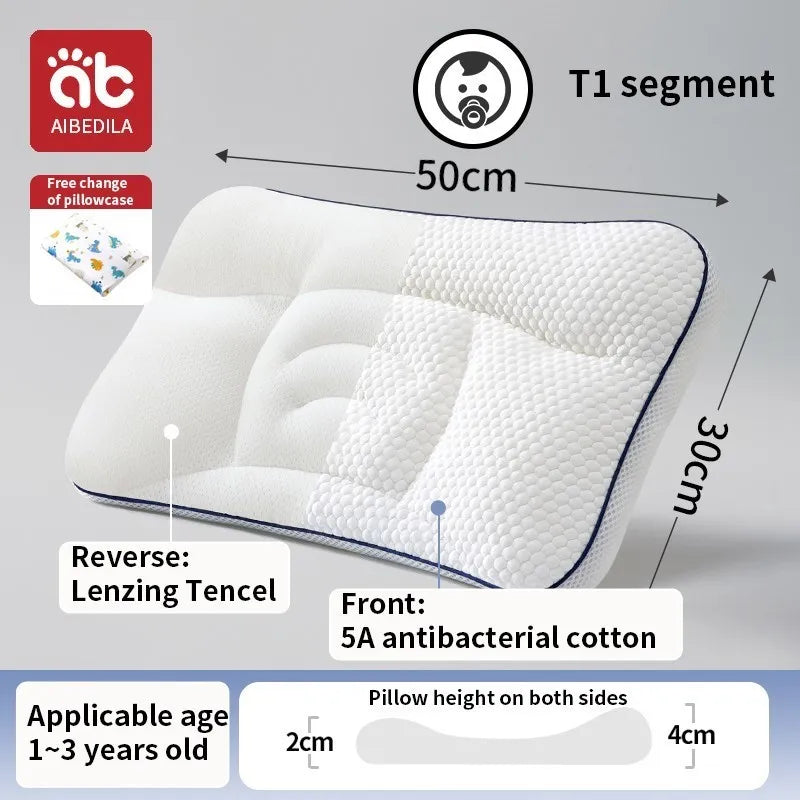
Orthopedic baby neck pillow for supervised positioning and newborn neck support.
Mini-FAQ (quick answers)
Is it normal for an infant's head to be tilted to one side?
Yes. Many newborns briefly prefer looking to one side during the first weeks of life. However, if the head tilt persists, neck movement becomes limited, or flattening of the head develops, your pediatrician should evaluate your baby for conditions such as congenital muscular torticollis.
What causes a newborn's head to tilt to one side?
The most common causes include congenital muscular torticollis, a positional preference developed before or after birth, or muscle tightness from prolonged positioning. Less commonly, neurological, vision, or skeletal conditions may contribute and require medical assessment.
How do you fix baby head tilt at home?
Home care typically includes frequent tummy time, alternating your baby's head position while awake, encouraging looking toward both sides, and performing any stretching exercises recommended by your pediatrician or pediatric physical therapist. Consistency is usually more effective than occasional long sessions.
Can torticollis go away on its own?
Mild positional preferences may improve naturally as babies gain head control. True muscular torticollis often improves most effectively with early stretching, repositioning, and, when needed, pediatric physical therapy.
Is baby head leaning to one side when sleeping dangerous?
A preference for one side is common, but babies should always be placed on their backs to sleep on a firm, flat mattress without pillows or loose bedding. Persistent head tilt or worsening asymmetry should be discussed with your pediatrician.
Can a pillow fix infant torticollis?
No. A pillow cannot treat torticollis on its own. Some positioning products may be used during supervised awake time if recommended by your healthcare provider, but they should never replace medical treatment, stretching exercises, or safe sleep practices.
How long does torticollis treatment take?
Many infants with mild congenital muscular torticollis show noticeable improvement within several weeks of consistent therapy. Recovery time varies depending on the severity of muscle tightness, the baby's age when treatment begins, and adherence to the prescribed exercises.
When should I take my baby to the pediatrician for head tilt?
Arrange an evaluation if your baby's head remains tilted beyond the first few weeks, neck movement appears restricted, feeding becomes difficult, head flattening progresses, developmental milestones are delayed, or you have any concerns about your baby's posture or movement.
Mini-FAQ (schema-ready Q&A)
Is it normal for an infant's head to be tilted to one side?
A mild preference to turn the head to one side is common during the newborn period. If the tilt persists, neck movement is limited, or flattening of the head develops, your baby should be evaluated by a pediatrician.
What causes a newborn's head to tilt to one side?
Common causes include congenital muscular torticollis, positional preference, or muscle tightness. Less commonly, eye, neurological, or skeletal conditions may contribute and require medical assessment.
How do you fix baby head tilt at home?
Daily tummy time, repositioning while awake, encouraging your baby to look toward both sides, and performing exercises recommended by your pediatrician or pediatric physical therapist are the primary home treatments.
Can torticollis go away on its own?
Some mild positional preferences improve naturally as babies develop stronger neck muscles, but congenital muscular torticollis usually benefits from early stretching exercises and physical therapy.
Is baby head leaning to one side when sleeping dangerous?
Babies should always sleep on their backs on a firm, flat mattress without pillows or loose bedding. A persistent head tilt should be discussed with a pediatrician, especially if accompanied by limited neck movement or head flattening.
Can a pillow fix infant torticollis?
No. A pillow alone cannot treat torticollis. Any positioning product should only be used according to your healthcare provider's recommendations and should never replace stretching exercises or medical care.
How long does torticollis treatment take?
Many infants improve within several weeks to a few months when treatment begins early. Recovery depends on the severity of the condition and how consistently the recommended exercises are performed.
When should I take my baby to the pediatrician for head tilt?
Seek medical evaluation if head tilt persists beyond the first few weeks, neck motion is restricted, feeding becomes difficult, head flattening worsens, developmental milestones are delayed, or you notice any sudden or concerning changes.
Tags: infant head tilted to one side, baby head tilting one side, newborn head tilt causes, congenital muscular torticollis, newborn neck support, infant neck tension, flat head syndrome, tummy time, safe sleep, infant development
Related Articles:
- Baby fussiness while sleeping: Real parent reviews of supports that actually help
- Breathable baby pillow for toddlers: Best use cases for cooler, calmer rest
Pillar Articles:





