

Does a compact newborn bottle brush for travel really make cleaning easier?
Answer: Yes. A compact newborn bottle brush for travel makes bottle cleaning faster and more hygienic by combining a slim brush head, a dedicated nipple cleaner, and a space-saving foldable design. The best travel bottle brush reaches narrow bottle necks, removes dried milk residue, dries quickly between uses, and fits neatly inside a diaper bag, making newborn bottle cleaning easier wherever you feed your baby.
⏱ 8 min read
Newborn Bottle Cleaning Guide Roundup: Tools Parents Say Work the Best
Keeping baby bottles clean is one of the most important parts of safe newborn feeding, whether you're at home or away for the day. Parents often struggle with limited sink access, lingering milk residue, and finding cleaning tools that are compact enough to carry without sacrificing performance. This newborn bottle cleaning guide compares the most practical solutions—including travel bottle brushes, nipple cleaning tools, bottle cleaning kits, and portable bottle washers—so you can choose the right option for your routine, travel habits, and budget.
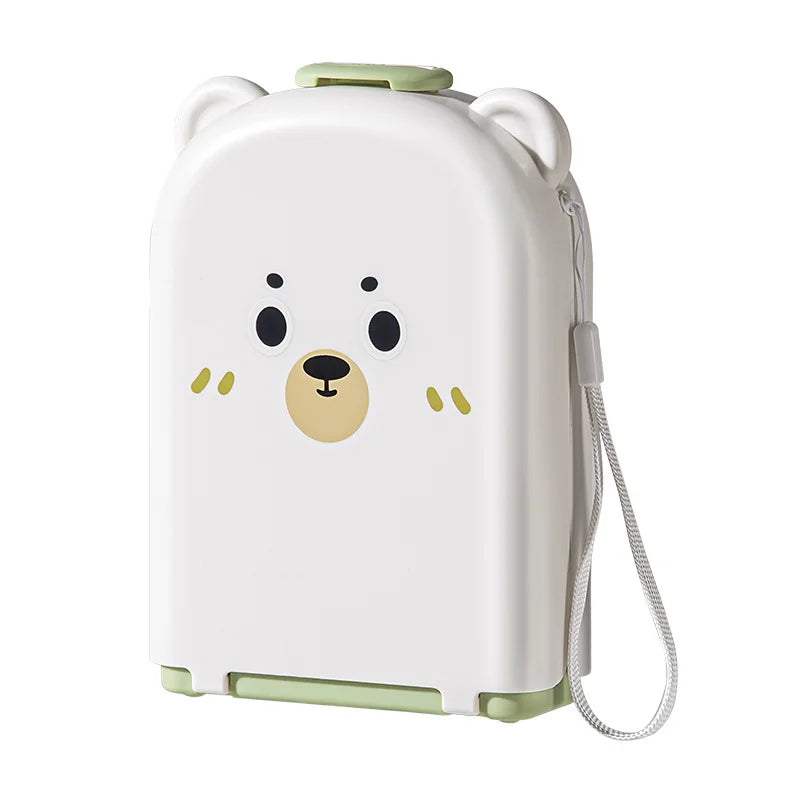
Newborn bottle cleaning guide with a compact travel bottle brush in action.
Why newborn bottle cleaning matters
Newborns have developing immune systems, making proper bottle hygiene especially important during the first months of life. Milk residue left inside bottles, nipples, collars, and vent systems can encourage bacterial growth if bottles are not cleaned thoroughly after every feeding.
A consistent bottle-cleaning routine helps:
- Remove milk film before it hardens and becomes difficult to scrub away.
- Reduce unpleasant odors caused by trapped milk proteins and fats.
- Keep bottle nipples flowing correctly by preventing clogged openings.
- Protect bottle components from residue buildup that may shorten their lifespan.
- Give parents greater confidence during daily feeds and while traveling.
While cleaning removes visible milk residue and debris, bottles should also be sterilized whenever recommended by your healthcare provider or the bottle manufacturer, especially for newborns and babies with higher health risks.
Quick comparison: which tool fits your life?
- Travel bottle brush — Lightweight, compact, and designed for quick cleaning during errands, daycare pickups, flights, or short family outings.
- Nipple clean tools — Small precision brushes that reach bottle nipples, anti-colic vents, valves, and other tight spaces where residue often remains.
- Bottle cleaning kit — A portable organizer that typically combines multiple brushes, a drying mat or rack, storage pouch, and cleaning accessories for overnight trips or vacations.
- Portable bottle washer — Manual or electric systems that reduce scrubbing effort and are ideal for parents who frequently travel or wash multiple bottles away from home.
How this guide picks winners
Rather than focusing on marketing claims alone, this guide evaluates the features parents consistently value in everyday use. We considered:
- Cleaning effectiveness: Ability to reach bottle bottoms, narrow necks, nipples, and vent systems.
- Bottle compatibility: Performance with both standard and wide-neck bottles.
- Drying performance: Materials that dry quickly to reduce lingering moisture.
- Portability: Foldable handles, protective cases, and compact storage for diaper bags.
- Material quality: Silicone heads for gentle cleaning, durable nylon bristles for stubborn residue, and sturdy handles built for repeated use.
- Ease of maintenance: Simple designs that rinse clean without trapping milk or soap residue.
By comparing these practical factors, parents can choose a newborn bottle cleaner that matches their feeding routine instead of paying for features they may never use.
How a travel bottle brush makes life easier
A quality travel bottle brush combines effective cleaning with everyday portability. Instead of carrying a full-size kitchen brush, parents can pack a compact newborn bottle cleaner that reaches bottle bottoms, narrow necks, and threaded collars while taking up very little space. Many travel-friendly designs also include a dedicated nipple cleaner and a protective storage case, helping keep the brush clean between uses.
Whether you're running errands, visiting family, or traveling for several days, choosing a brush that dries quickly and stores neatly makes bottle cleaning more convenient without sacrificing hygiene.
Top benefits
- Compact storage: Foldable or slim designs fit easily into diaper bags, stroller organizers, and travel pouches.
- More complete cleaning: Dedicated nipple cleaning tools reach small openings, vents, and collars that larger brushes often miss.
- Fast drying: Silicone heads and ventilated storage cases help reduce trapped moisture after washing.
- Odor resistance: Quality materials are less likely to retain milk residue or lingering smells with proper cleaning.
- Versatile use: Many sets clean baby bottles, bottle nipples, breast pump accessories, cups, and reusable drink containers.
Side-by-side comparison table
| Tool | Cleaning Method | Bottle Compatibility | Drying Speed | Best For |
|---|---|---|---|---|
| Compact travel bottle brush | Manual scrubbing | Standard & most narrow-neck bottles | Fast | Daily outings and short trips |
| Nipple clean tool | Precision cleaning | Nipples, valves & vent systems | Fast | Detail cleaning |
| Bottle cleaning kit (pouch) | Complete manual kit | Most bottle styles and accessories | Moderate | Overnight stays and family travel |
| Portable bottle washer | Automatic or assisted cleaning | Varies by model | Moderate | Frequent travelers and multi-bottle households |
How We Tested
To compare these bottle-cleaning options fairly, we evaluated the features parents use every day rather than relying on manufacturer claims alone. Each category was assessed for cleaning performance, compatibility with common baby bottle styles, drying efficiency, portability, ease of maintenance, and overall value for regular newborn bottle cleaning.
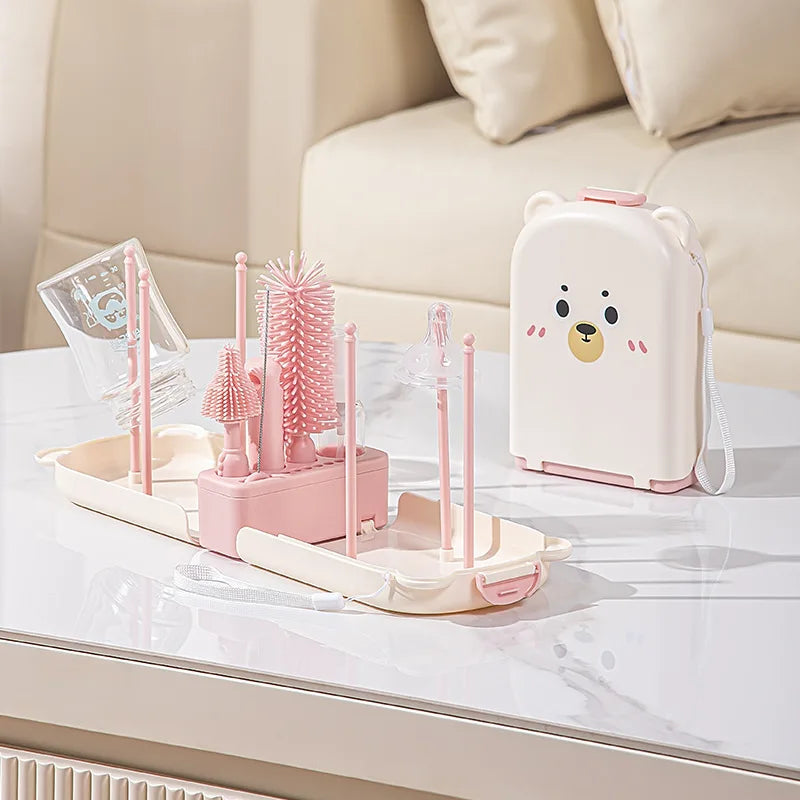
Travel bottle brush and nipple cleaning tool designed for compact newborn bottle cleaning.
Buying Guide: How to Choose the Right Newborn Bottle Cleaner
The best newborn bottle cleaner depends on your family's feeding routine, how often you travel, the types of bottles you use, and how much storage space you have. Instead of choosing the most expensive option, focus on the cleaning tools that match your daily needs.
Manual or electric?
- Manual travel bottle brush: Best for most families. Affordable, lightweight, requires no charging, and works with nearly every bottle style.
- Bottle cleaning kit: A practical choice for parents who want multiple cleaning tools in one organized pouch for vacations or overnight stays.
- Portable electric bottle washer: Worth considering if you clean several bottles every day or travel frequently and want to reduce scrubbing effort.
Must-have accessories
Regardless of which newborn bottle cleaner you choose, these accessories help create a more complete cleaning routine:
- Dedicated nipple cleaning brush for narrow openings and anti-colic vents.
- Ventilated storage case to keep brushes clean while allowing moisture to escape.
- Compact drying mat or rack for bottles and accessories.
- Baby-safe dish soap suitable for feeding equipment.
- Replacement brush heads when supported by the manufacturer.
Parents using both baby bottles and pumping equipment may also prefer tools that clean breast pump flanges, valves, connectors, and milk collection bottles without requiring separate brush sets.
You can view related feeding accessories in the Feeding & Nursing collection and grab compact care tools at Baby Hygiene Gadgets .
Practical packing checklist
- 1 compact travel bottle brush
- 1 nipple cleaning brush or detail cleaner
- Baby-safe dish soap in a travel-size container
- Ventilated brush case or protective pouch
- Portable drying mat or compact drying rack
- Clean microfiber cloth for drying the outside of bottles if needed
Pricing and value: what to expect
Newborn bottle cleaning tools are available across a wide range of price points. The best value comes from choosing a solution that matches your feeding routine rather than simply buying the largest kit.
- Compact bottle brushes: Usually the most affordable option and ideal for everyday cleaning.
- Bottle cleaning kits: Offer better overall value for parents who want multiple tools, organized storage, and fewer separate purchases.
- Portable electric bottle washers: Higher initial investment but can save time for families cleaning multiple bottles every day.
Durable materials, replaceable brush heads, and quick-drying designs often provide better long-term value because they require less frequent replacement and stay hygienic with proper care.
Product recommendations & where they fit
Different newborn bottle cleaners work best for different families. The recommendations below can help narrow your choice based on your feeding routine.
At-a-glance picks
- Best Overall: A complete bottle cleaning kit that combines a bottle brush, nipple cleaner, storage case, and drying accessories.
- Best Budget Pick: Compact travel bottle brush with a dedicated nipple cleaning tool.
- Best for Daily Use: Manual silicone or nylon bottle brush with replaceable cleaning head.
- Best for Frequent Travelers: Bottle cleaning kit with ventilated pouch and portable drying mat.
- Best for Busy Families: Portable electric bottle washer for reduced manual scrubbing.
If you're purchasing your first newborn bottle cleaner, a compact travel bottle brush offers the best balance of portability, cleaning performance, and affordability. Parents who travel regularly can later upgrade to a complete bottle cleaning kit or a portable bottle washer if they need additional convenience.
For a compact all-in-one solution designed for everyday portability, you can view the travel brush set here: /products/travel-baby-bottle-brush-set .
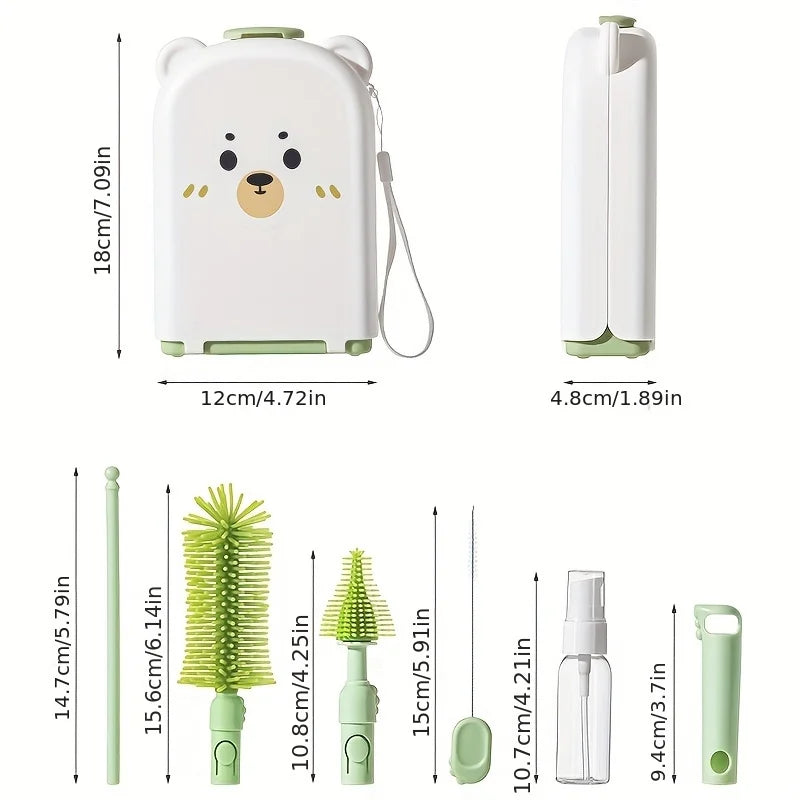
Compact bottle cleaning kit with travel bottle brush for everyday newborn feeding hygiene.
Safety and Hygiene Recommendations
Proper newborn bottle cleaning involves more than removing visible milk residue. Safe cleaning habits help reduce the risk of bacterial growth while extending the life of your bottles and cleaning tools. Follow both your bottle manufacturer's care instructions and your healthcare provider's guidance for cleaning and sterilization.
- Inspect bottle brushes regularly and replace them if bristles become bent, loose, or worn.
- Allow brushes, bottle parts, and cleaning accessories to air-dry completely before storing them to discourage moisture buildup.
- Choose BPA-free bottle brushes and food-contact materials designed for infant feeding equipment.
- Wash bottles, nipples, collars, valves, and breast pump parts thoroughly after each feeding using baby-safe dish soap.
- Rinse away all soap residue before the next use.
- Replace bottle nipples immediately if they show cracks, tears, discoloration, or thinning.
- Keep clean bottle brushes separate from dirty feeding equipment whenever possible.
Frequently Asked Questions
-
What is the best newborn bottle cleaner for daily use?
For most families, a compact manual bottle brush with a dedicated nipple cleaner offers the best balance of cleaning performance, affordability, and compatibility with different bottle styles.
-
Are electric bottle washers worth buying?
Electric bottle washers can save time for households washing several bottles every day. Parents who clean only a few bottles daily often find that a quality manual brush provides excellent results at a lower cost.
-
Can one cleaner be used for breast pump parts and bottle nipples?
Yes, provided the brush is appropriately sized and reaches narrow areas without damaging silicone components. Many bottle cleaning kits include detail brushes specifically designed for valves, flanges, nipples, and other small feeding accessories.
-
How often should you replace a bottle brush?
Replace bottle brushes every 3 to 6 months during regular use, or sooner if the bristles become damaged, permanently bent, or difficult to clean.
-
Do you still need to sterilize bottles after cleaning them?
Cleaning removes milk residue, while sterilization helps reduce remaining microorganisms. Follow your pediatrician's recommendations and the bottle manufacturer's instructions regarding when sterilization is appropriate for your baby.
-
What should you use to clean baby bottles safely?
Use warm water, a baby-safe dish soap, and a dedicated newborn bottle cleaner that reaches bottle interiors, nipples, collars, and vents without scratching feeding equipment.
Final thought: The best newborn bottle cleaner is one you'll use consistently. Whether you choose a compact travel bottle brush, a complete bottle cleaning kit, or a portable bottle washer, selecting tools that fit your family's feeding routine helps make baby bottle cleaning faster, more effective, and easier to maintain every day.
Related reads: Baby Care Essentials · Baby Hygiene Gadgets · Feeding & Nursing
Pillar Article: Cleaning Newborn Bottles Comparison: Best Brushes for Stress-Free Hygiene
Other Related Articles:
- Keeping Baby Bottles Germ-Free Tips Review: Top Products That Truly Help
- Travel Baby Bottle Brush Set Review: Best Compact Kits for On-the-Go Parents
- Silicone Bottle Brush Cleaner Tested: Top Picks for Fast, Gentle Cleaning
- Infant Bottle Brush Reviews: Which Designs Actually Clean Better?
Explore More:





