

Does a silicone bottle brush cleaner really work?
Answer: Yes. A silicone bottle brush cleaner is an excellent choice for everyday bottle cleaning because food-grade silicone is non-porous, quick to dry, resistant to odors, and gentle on baby bottles, reusable water bottles, and insulated drinkware. It removes fresh milk residue and everyday buildup effectively while helping reduce moisture retention compared with sponge brushes. For dried formula or stubborn deposits, soaking the bottle first or using a firmer brush for occasional deep cleaning delivers the best results.
⏱ 7 min read
Silicone Bottle Brush Cleaner Tested: Top Picks for Fast, Gentle Cleaning
A silicone bottle brush cleaner offers a cleaner, more hygienic alternative to traditional sponge and nylon bottle brushes. Whether you're washing baby bottles at home, cleaning reusable water bottles on your commute, or packing a travel bottle cleaning set for vacations, today's food-grade silicone designs make routine cleaning faster while staying gentle on delicate bottle surfaces. Their flexible bristles reach difficult corners without scratching glass, plastic, or stainless steel, making them a practical solution for busy families and frequent travelers.
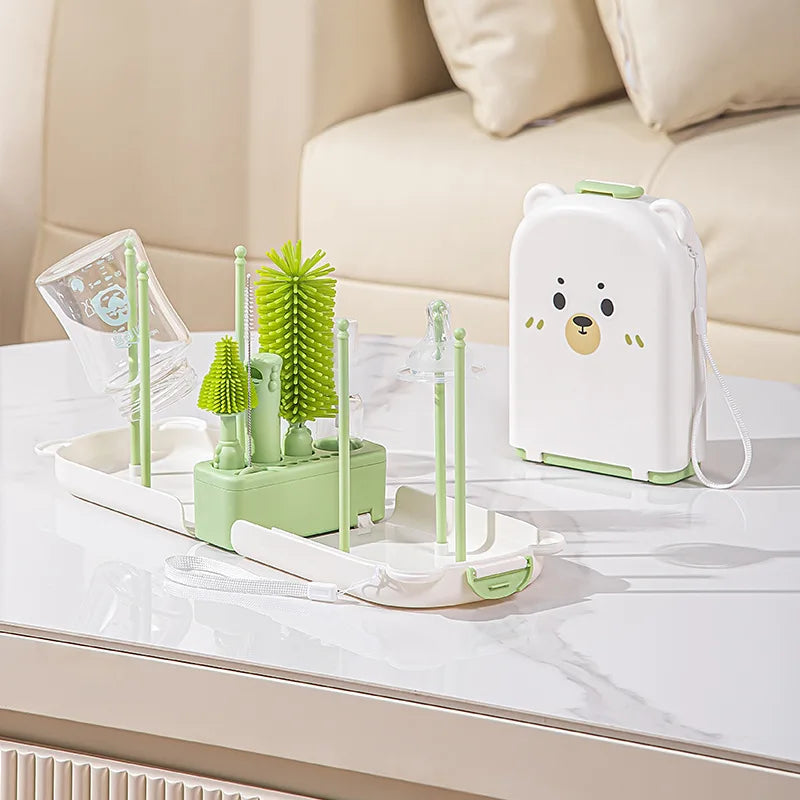
Silicone bottle brush cleaner with a travel bottle cleaning set in everyday use.
What is a silicone bottle brush cleaner?
A silicone bottle brush cleaner replaces traditional nylon bristles or sponge heads with flexible food-grade silicone fins or molded cleaning ridges. Unlike porous materials that can retain moisture, silicone dries quickly, resists lingering odors, and withstands repeated exposure to hot water, dishwashers, and many sterilization methods. These qualities make it especially popular for cleaning baby bottles, bottle nipples, reusable drink bottles, thermoses, and other feeding accessories.
Because silicone bends rather than scratches, it safely follows the contours of narrow-neck and wide-mouth bottles while protecting delicate coatings and glass surfaces.
Do silicone bottle brushes work?
Yes. Silicone bottle brushes work very well for daily cleaning, especially when removing fresh milk residue, formula, juice, and everyday buildup. Their flexible cleaning surfaces maintain excellent contact with bottle walls while remaining gentle enough for glass, stainless steel, and BPA-free plastic bottles.
Like any cleaning tool, they have limits. If residue has dried for several hours or burned onto the bottle, soaking first or following up with a stiffer brush can provide a deeper clean. For most daily washing, however, silicone offers an ideal balance of hygiene, durability, and ease of maintenance.
How silicone bottle brushes clean bottles
Instead of relying on stiff bristles, silicone brushes use flexible fins that glide across the bottle surface while loosening fresh residue. Their non-porous construction also helps them dry faster after washing, reducing the damp environment where unpleasant odors commonly develop.
- Flexible silicone reaches curved interiors and narrow bottle necks without scratching surfaces.
- Non-porous material helps resist trapped moisture, odors, and residue between uses.
- Heat-resistant construction allows many brushes to be cleaned in the dishwasher or sterilized according to manufacturer guidance.
- Silicone heads maintain their shape longer than many sponge or nylon alternatives, reducing replacement frequency.
Which bottle gear should you pair it with? For a complete feeding setup, pair your cleaning routine with Feeding & Nursing essentials and Sterilization Devices to simplify everyday bottle care.
Silicone bottle brush vs regular brush
| Feature | Silicone bottle brush cleaner | Traditional nylon / sponge brush |
|---|---|---|
| Cleaning hygiene | Non-porous material dries quickly, resists odors, and is easy to sanitize in the dishwasher or by sterilization. | Sponge heads and dense bristles can retain moisture, making thorough drying more important. |
| Cleaning performance | Excellent for fresh milk residue, formula, and everyday bottle washing. | Provides stronger scrubbing for dried-on residue but may be harsher on delicate bottles. |
| Durability | Maintains its shape well, resists shedding, and typically lasts longer with routine care. | Bristles may bend over time while sponge heads wear more quickly with frequent use. |
| Scratch protection | Soft silicone helps protect glass, stainless steel, coated, and BPA-free plastic bottles. | Stiffer bristles may leave marks on delicate finishes if excessive pressure is applied. |
| Maintenance | Simple to rinse, quick to dry, and suitable for regular dishwasher cleaning. | Requires careful drying to help prevent trapped moisture inside sponge or dense bristle heads. |
Silicone vs nylon vs sponge vs foam comparison
| Brush type | Cleaning ability | Best bottle types | Replacement frequency | Best use case |
|---|---|---|---|---|
| Silicone | Excellent for daily cleaning | Glass, plastic, stainless steel, insulated bottles | Low | Everyday use and travel |
| Nylon bristle | Strong scrubbing power | Heavily soiled bottles | Moderate | Occasional deep cleaning |
| Sponge | Good on light residue | Wide-mouth bottles | High | Short-term household use |
| Foam | Gentle but limited | Light cleaning tasks | High | Delicate surfaces with minimal buildup |
When silicone bottle brushes work best
The right silicone bottle brush depends on the bottles you clean most often and where you plan to use it.
Best bottle types and accessories
- Busy parents and travelers: A compact travel bottle cleaning set with a folding handle and straw brush easily fits into a diaper bag or backpack.
- Households with multiple bottle styles: Choose a dual-head brush that cleans bottle interiors, nipples, and narrow necks without switching tools.
- Glass, stainless steel, and premium plastic bottles: Soft food-grade silicone minimizes scratching while still providing effective daily cleaning.
- Reusable water bottles and tumblers: Flexible silicone reaches curved interiors and helps clean hard-to-reach bottle walls.
When another brush is a better choice
If bottles regularly contain dried formula, thick smoothies, or residue that has been left overnight, soaking first is recommended. For occasional deep cleaning, a firmer nylon brush can complement a silicone brush without replacing it as your everyday cleaning tool.
How to clean & maintain your silicone bottle brush cleaner
Regular maintenance helps your silicone bottle cleaner stay hygienic and extend its lifespan.
- Rinse the brush immediately after each use to prevent milk or formula from drying.
- Wash with warm water and mild dish soap, or place it on the dishwasher's top rack if the manufacturer recommends it.
- Remove mineral deposits by soaking the brush in a solution of equal parts warm water and white vinegar for 10 to 20 minutes before rinsing.
- Allow the brush to air dry completely between uses.
- Replace the brush if the silicone tears, becomes permanently damaged, or the handle loosens.
Dishwasher and sterilizer safety
Most food-grade silicone brushes tolerate dishwasher cleaning and many sterilization methods, but always follow the manufacturer's care instructions for maximum durability.
When to replace your brush
Unlike sponge brushes that often need frequent replacement, a quality silicone brush can last much longer with proper care. Replace it whenever you notice cracks, tears, or signs of structural wear.
Looking for a complete travel solution? The travel baby bottle brush set combines a bottle brush, straw cleaner, and compact carrying case for convenient bottle cleaning at home, daycare, or while traveling.
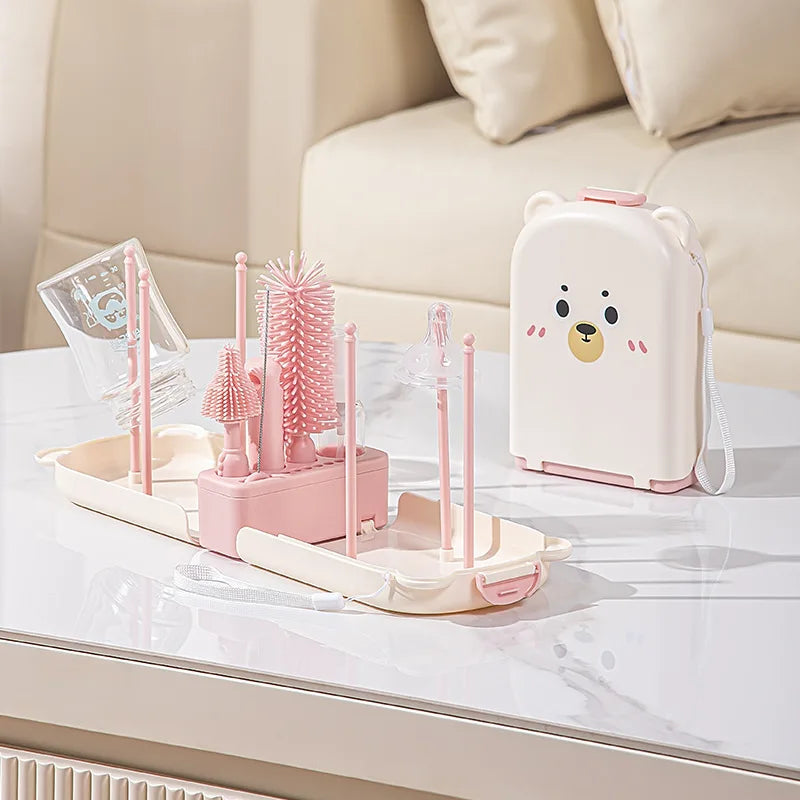
Travel bottle cleaning set with a silicone bottle brush cleaner for convenient everyday use.
How to use a silicone bottle brush cleaner for the best results
Quick answer: Clean bottles as soon as possible after feeding. Rinse away leftover milk or formula, add warm water with a small amount of mild dish soap, scrub the interior and bottle neck with the silicone brush, rinse thoroughly, and allow both the bottle and brush to air dry. For dried residue, soak the bottle before scrubbing.
- Empty the bottle and rinse away loose milk, formula, or drink residue.
- Fill the bottle with warm water and a few drops of mild dish soap.
- Use the larger silicone head to clean the bottle walls and base, then use the smaller brush for nipples, straws, lids, or narrow necks.
- Rinse thoroughly until all soap has been removed.
- Place the bottle on a drying rack and allow the silicone brush to air dry completely.
- Regularly clean the brush in the dishwasher or sterilize it according to the manufacturer's instructions to maintain hygiene.
Helpful cleaning tips
- Wash bottles soon after use to prevent formula or milk from drying onto the surface.
- If you have hard water, soak the brush occasionally in a vinegar-and-water solution to remove mineral deposits.
- Keep a dedicated straw brush for reusable bottles, water bottle lids, and narrow drinking tubes.
- Pack a compact cleaning brush when traveling so bottles can be cleaned before residue has time to dry.
Pros and cons of silicone bottle brushes
Silicone bottle brushes are designed for daily cleaning and long-term durability, but understanding both their strengths and limitations makes it easier to choose the right tool for your routine.
Advantages
- ✅ Non-porous silicone dries quickly and helps resist lingering odors.
- ✅ Gentle on glass, stainless steel, insulated, and BPA-free plastic bottles.
- ✅ Dishwasher-friendly on many models and compatible with routine sterilization.
- ✅ Durable construction means fewer replacements than many sponge brushes.
- ✅ Flexible cleaning heads reach curved bottle interiors without scratching surfaces.
Potential drawbacks
- ❌ Less aggressive than stiff nylon bristles when removing baked-on or heavily dried residue.
- ❌ Some specialty bottles with extremely narrow openings may still require a thin wire-style cleaning brush.
- ❌ Deep stains are usually easier to remove after soaking rather than scrubbing alone.
For most parents, travelers, and anyone who washes reusable bottles every day, a silicone bottle brush offers excellent long-term value thanks to its durability, hygienic design, and ease of cleaning.
Frequently asked questions
-
Do silicone bottle brushes clean bottles as well as nylon brushes?
Yes. Silicone bottle brushes are excellent for everyday cleaning, fresh milk residue, and routine bottle washing. Nylon brushes offer stronger scrubbing for heavily dried residue, so many households use silicone for daily cleaning and nylon only for occasional deep cleaning. -
Are silicone bottle brushes more hygienic than sponge brushes?
Generally, yes. Food-grade silicone is non-porous, dries quickly, and is less likely to retain moisture or odors than sponge heads. Regular washing and complete drying are still recommended after every use. -
Can silicone bottle brushes remove dried formula residue?
They can remove light dried residue, but bottles with heavily dried formula clean more easily after soaking in warm, soapy water before scrubbing. For stubborn buildup, a firmer brush may occasionally be helpful. -
Are silicone bottle brushes dishwasher safe?
Many food-grade silicone bottle brushes are dishwasher safe and can be cleaned on the top rack. Always follow the manufacturer's care instructions for your specific brush. -
How often should you replace a silicone bottle brush?
A quality silicone brush can last for many months or even years. Replace it if you notice tears, cracks, excessive discoloration, or damage to the handle. -
Do you really need a bottle brush?
If you regularly use baby bottles, reusable water bottles, or narrow-neck drinkware, a dedicated bottle brush makes it much easier to clean areas that hands and standard dish brushes cannot easily reach. -
Can silicone bottle brushes be used on glass, plastic, and stainless-steel bottles?
Yes. Silicone is gentle enough for glass, stainless steel, insulated bottles, and most BPA-free plastic bottles, making it a versatile everyday cleaning tool.
Related resources: Baby Care Essentials, Feeding & Nursing, and Sterilization Devices.
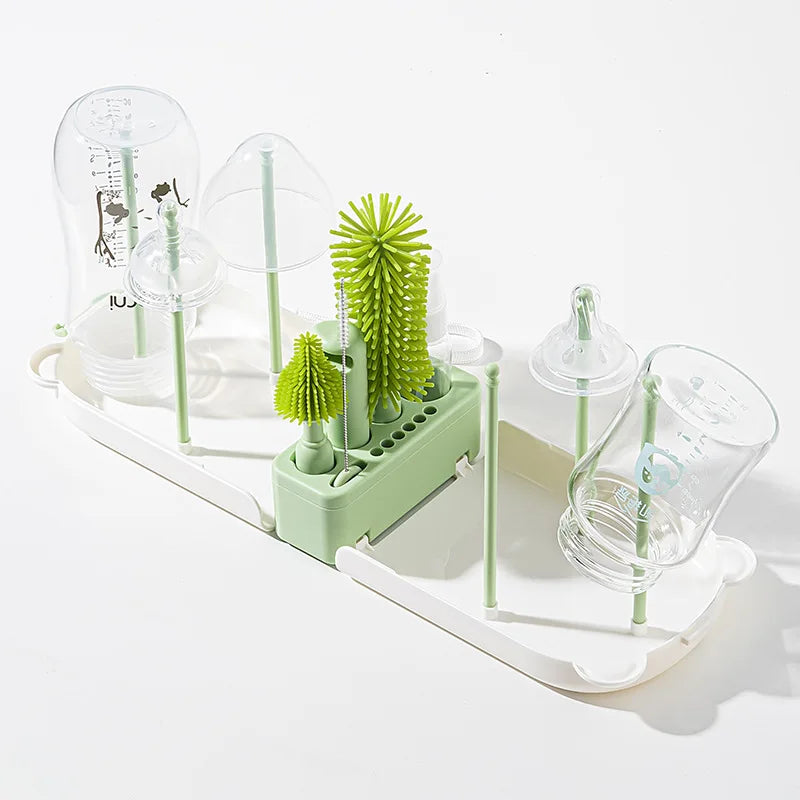
Silicone bottle brush cleaner designed for narrow-neck bottles and travel-friendly cleaning.
Final verdict: Is a silicone bottle brush worth it?
For most households, the answer is yes. A silicone bottle brush cleaner combines effective everyday cleaning with excellent durability, fast drying, and gentle care for glass, stainless steel, and plastic bottles. It is particularly well suited to parents, commuters, travelers, and anyone who regularly cleans reusable bottles.
While silicone brushes are not the most aggressive option for removing heavily baked-on residue, pairing routine cleaning with an occasional soak provides excellent results in most situations. Their long lifespan and hygienic design also make them a cost-effective alternative to frequently replacing sponge brushes.
If you want an all-in-one solution for home, daycare, or travel, the travel baby bottle brush set includes a compact bottle brush, straw cleaner, and protective storage case for convenient everyday use.
Helpful resources: Explore Mom Essentials alongside Baby Hygiene Gadgets to build a practical bottle-cleaning routine.
Ready to simplify bottle cleaning? travel baby bottle brush set — compact, BPA-free, and designed for everyday home and travel use.
Pillar Article: Cleaning Newborn Bottles Comparison: Best Brushes for Stress-Free Hygiene
Other Related Articles:
- Keeping Baby Bottles Germ-Free Tips Review: Top Products That Truly Help
- Newborn Bottle Cleaning Guide Roundup: Tools Parents Say Work the Best
- Travel Baby Bottle Brush Set Review: Best Compact Kits for On-the-Go Parents
- Infant Bottle Brush Reviews: Which Designs Actually Clean Better?
Explore More:





