

How to Build Magnetic Blocks That Stay Strong and Stable
Building Magnetic Blocks: Step-by-Step Creative Play Guide
Building magnetic blocks transforms everyday play into an engaging learning experience that supports creativity, confidence, and early STEM development. Whether your child is creating simple shapes or complex structures, durable magnetic blocks for preschool learning encourage problem-solving, spatial reasoning, and fine motor coordination. In this guide, you'll discover practical building tips, creative project ideas, and expert advice on choosing the best magnetic construction toys for kids so every play session becomes both educational and fun.
⏱ 6 min read
Are you looking for a toy that keeps your child engaged while helping them learn valuable lifelong skills? Many parents want activities that inspire imagination without relying on screens, but finding toys that remain exciting over time can be challenging.
The good news: building magnetic blocks combines open-ended creativity, hands-on exploration, and early learning in one simple activity. Children naturally experiment, solve problems, and gain confidence as their creations become taller, stronger, and more imaginative.
From building a first tower to designing an entire miniature city, magnetic blocks encourage children to think like young engineers while having fun. Keep reading to learn how to make the most of every building session.
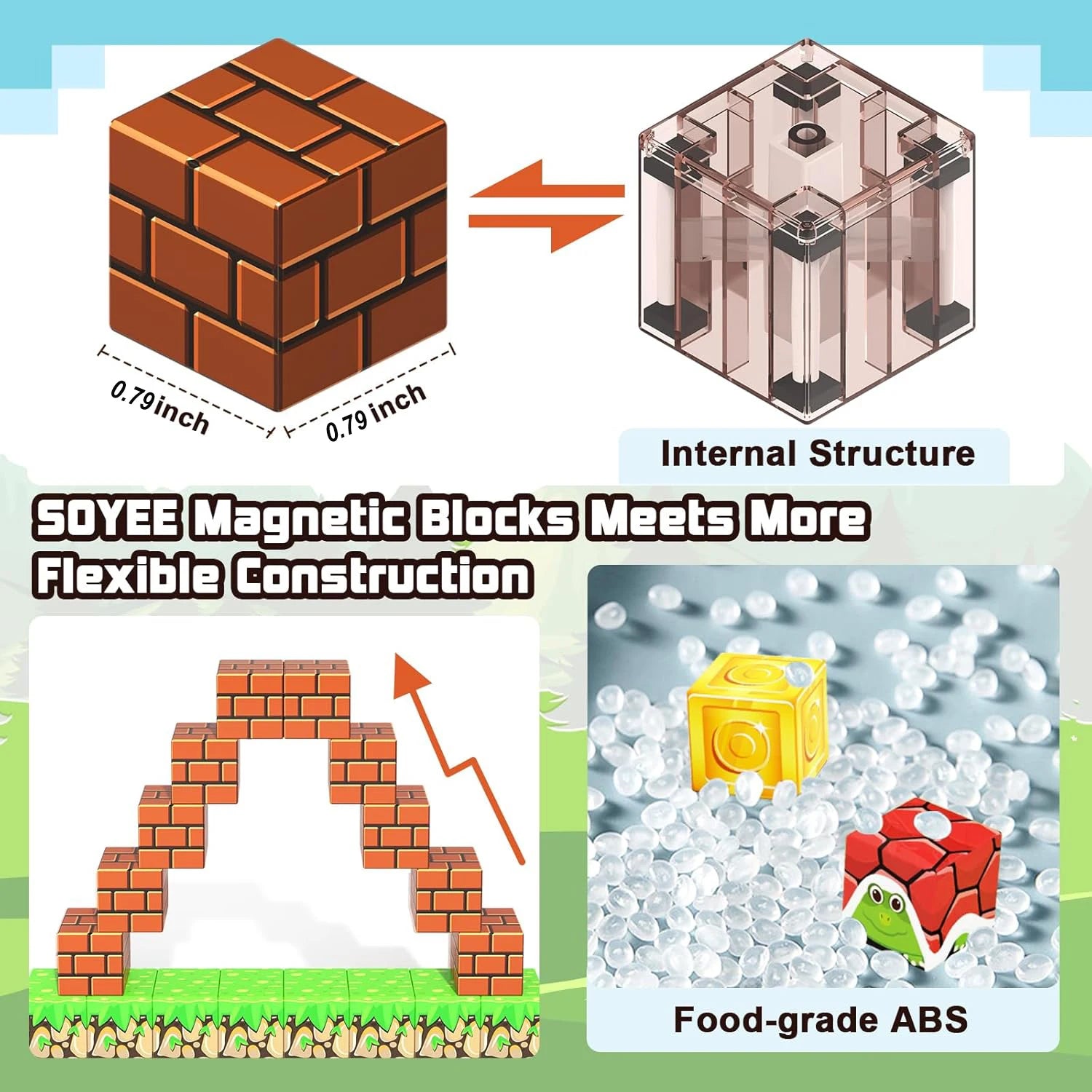
Building magnetic blocks for preschool learning made easy. See it in action.
Discover the safest toys for your child: Explore magnetic blocks set
Benefits of magnetic blocks for child development
Building magnetic blocks offers much more than entertainment. Every connection, adjustment, and completed structure gives children opportunities to explore engineering concepts, strengthen motor skills, and develop creative confidence through hands-on learning.
Unlike toys with a single intended outcome, magnetic construction toys allow children to test ideas, solve problems, and rebuild without frustration. This trial-and-error process supports independent thinking while making learning feel natural.
- Develops fine motor coordination: Connecting and separating pieces strengthens finger muscles, hand control, and hand-eye coordination.
- Builds STEM skills: Children explore balance, geometry, symmetry, magnetism, and simple engineering while constructing different designs.
- Improves problem-solving: Each project encourages children to test solutions, adjust unstable structures, and think critically.
- Encourages creativity and imagination: Open-ended building lets kids create houses, vehicles, animals, castles, and countless original designs.
- Strengthens spatial reasoning: Visualizing how pieces fit together helps children understand size, shape, patterns, and three-dimensional relationships.
- Supports focus and persistence: Completing increasingly challenging builds teaches patience, concentration, and resilience when structures need rebuilding.
Parents and educators often notice that children remain engaged longer with magnetic blocks than with many traditional toys because every completed creation inspires the next challenge. Building together also creates valuable opportunities for conversation, teamwork, and shared problem-solving.
For more engaging learning tools, explore Baby Growth & Learning .
How to build magnetic blocks: step-by-step guide for beginners
Learning how to build magnetic blocks is easiest when children progress from simple designs to more challenging structures. These magnetic building blocks instructions help young builders develop confidence while improving balance, planning, and problem-solving skills.
1. Start with basic shapes
Begin by connecting squares and triangles to create flat patterns. This helps children understand how magnets connect while introducing common geometric shapes.
2. Learn how magnets connect
Encourage your child to gently rotate each piece until it snaps into place. They will quickly discover that magnetic attraction and repulsion affect how pieces fit together, making every build an opportunity to explore simple science concepts.
3. Build strong 2D foundations
Create squares, rectangles, and simple patterns on a flat surface before attempting three-dimensional designs. A solid understanding of basic layouts makes larger projects much easier.
4. Turn flat designs into 3D structures
Fold connected shapes upward to build cubes, towers, and walls. Starting with smaller structures allows children to understand stability before building taller creations.
5. Reinforce your structures
Add triangles to corners or widen the base when towers begin to wobble. Children naturally learn that balanced structures are stronger and less likely to collapse.
6. Build themed projects
Once the basics feel comfortable, encourage your child to build familiar objects such as houses, bridges, rockets, castles, animals, or vehicles. Themed projects inspire storytelling while strengthening creative thinking.
Following these easy magnetic block structures for beginners helps reduce frustration, encourages independent play, and builds confidence with every completed project.
Real parent insight: "My 4-year-old went from knocking pieces over to building full towers in just a week. Starting with simple shapes made all the difference."
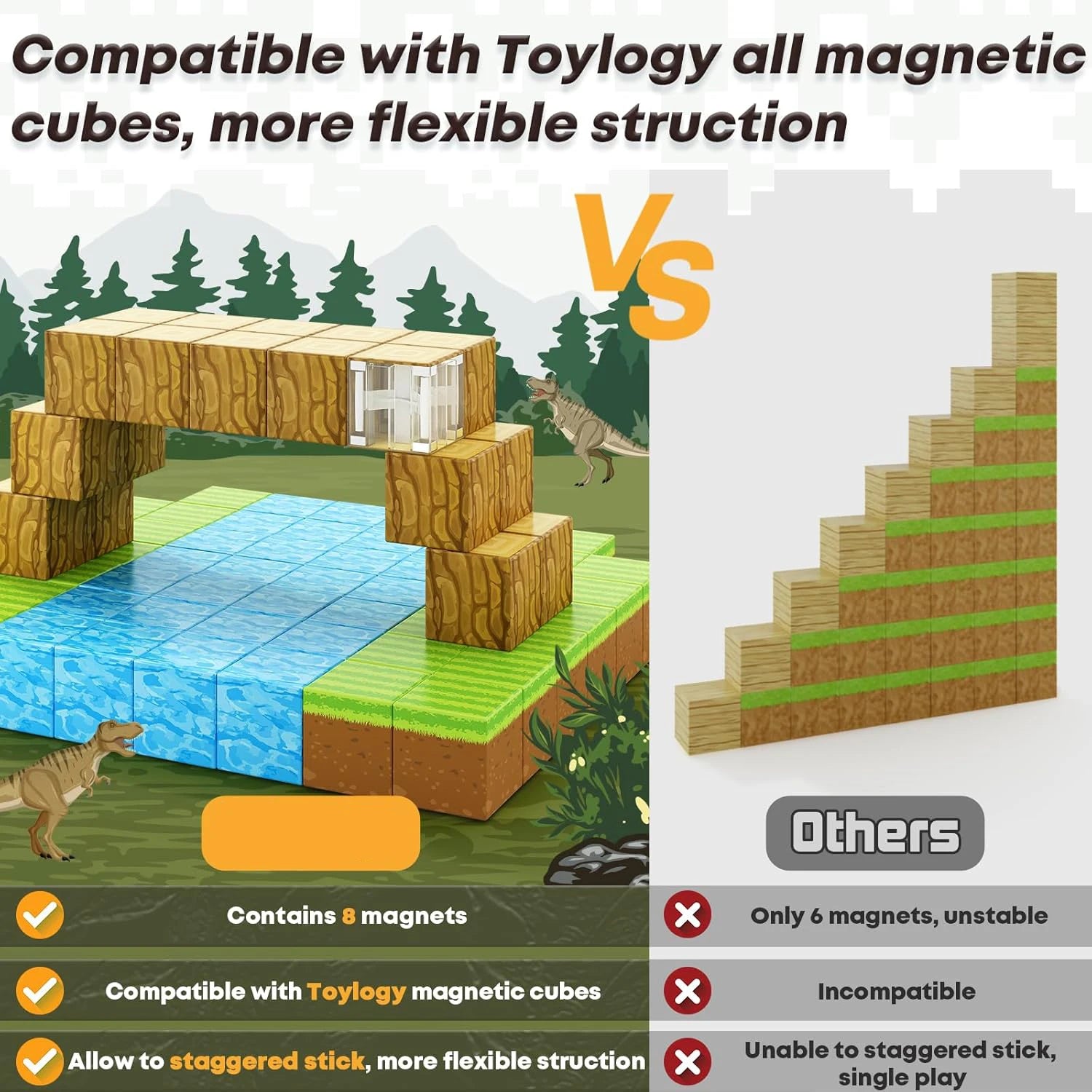
Best magnetic construction toys for kids developing creativity. See it in action.
Learn step-by-step how to build smarter playtime: Start building today
Creative magnetic block building ideas your child will love
After mastering the basics, encourage children to experiment with larger and more imaginative projects. These magnetic block building ideas keep play fresh while reinforcing STEM concepts, creativity, and collaboration.
1. Build a mini city
Create houses, apartment buildings, roads, parks, and towers. Children can invent stories about the people who live there, strengthening both spatial reasoning and imaginative play.
2. Design animals
Challenge kids to build animals such as dinosaurs, fish, birds, or butterflies using geometric shapes. This activity encourages creative thinking and visual problem-solving.
3. Color sorting challenge
Group magnetic tiles by color before building patterns, rainbows, or matching towers. This simple activity reinforces color recognition while improving organization skills.
4. Magnetic bridge strength test
Build a bridge between two stacks of blocks and gradually add lightweight objects to discover how much weight it can support. Children learn about balance, structure, and basic engineering through experimentation.
5. Mirror symmetry game
Create one half of a design and ask your child to recreate the opposite side. This strengthens symmetry recognition, observation, and attention to detail.
6. Build geometric 3D shapes
Experiment with cubes, pyramids, prisms, and other three-dimensional figures. Exploring different shapes helps children understand geometry while expanding their building skills.
For even more sensory-rich activities, check out Sensory Toys .
How to choose the best magnetic blocks for preschoolers
Selecting the right magnetic construction toys for kids is about more than choosing the largest set. High-quality magnetic blocks should be safe, durable, and versatile enough to grow with your child's skills from simple beginner builds to more advanced STEM projects.
- Safety certifications: Choose sets made from BPA-free, non-toxic plastic with securely sealed magnets and smooth, rounded edges to reduce safety risks.
- Strong, durable construction: Crack-resistant pieces withstand repeated drops and everyday play, making them a better long-term investment.
- Reliable magnet strength: Strong magnets help structures stay together while remaining easy for preschoolers to assemble and separate independently.
- Wide variety of shapes: A mix of squares, triangles, rectangles, wheels, and specialty pieces encourages more creative building possibilities.
- Appropriate piece count: Smaller sets work well for beginners, while larger collections allow children to build taller towers, larger cities, and more detailed structures.
- Compatibility: Expandable sets that work with additional magnetic tiles provide greater value as your child's building skills develop.
The magnetic blocks 100-piece set offers an excellent balance of durability, shape variety, and strong magnetic connections, making it suitable for both beginner builders and growing preschool learners.
While premium brands often feature higher manufacturing quality and stronger magnets, the most important considerations remain safety, durability, and age-appropriate design rather than brand name alone.
For safety-focused essentials, explore Health & Safety .
How magnetic toys help child development in everyday play
Open-ended magnetic play supports multiple areas of child development at the same time. As children plan, build, test, and rebuild their creations, they naturally strengthen important cognitive, physical, and social skills through hands-on exploration.
- STEM learning: Children explore engineering concepts, geometry, balance, symmetry, and simple physics while experimenting with different structures.
- Spatial reasoning: Visualizing how pieces connect improves three-dimensional thinking, pattern recognition, and problem-solving abilities.
- Fine motor coordination: Connecting, rotating, and separating magnetic pieces strengthens finger control, hand-eye coordination, and dexterity needed for writing and other everyday tasks.
- Creativity and imagination: Open-ended building encourages children to invent original designs, tell stories, and think creatively without fixed instructions.
- Communication and teamwork: Building with parents, siblings, or classmates promotes cooperation, turn-taking, and collaborative problem-solving.
- Confidence and perseverance: Successfully rebuilding a collapsed tower or completing a challenging project teaches resilience and celebrates progress through practice.
Many families also find that engaging magnetic construction activities naturally reduce recreational screen time because children stay focused on creating, experimenting, and improving their own designs.
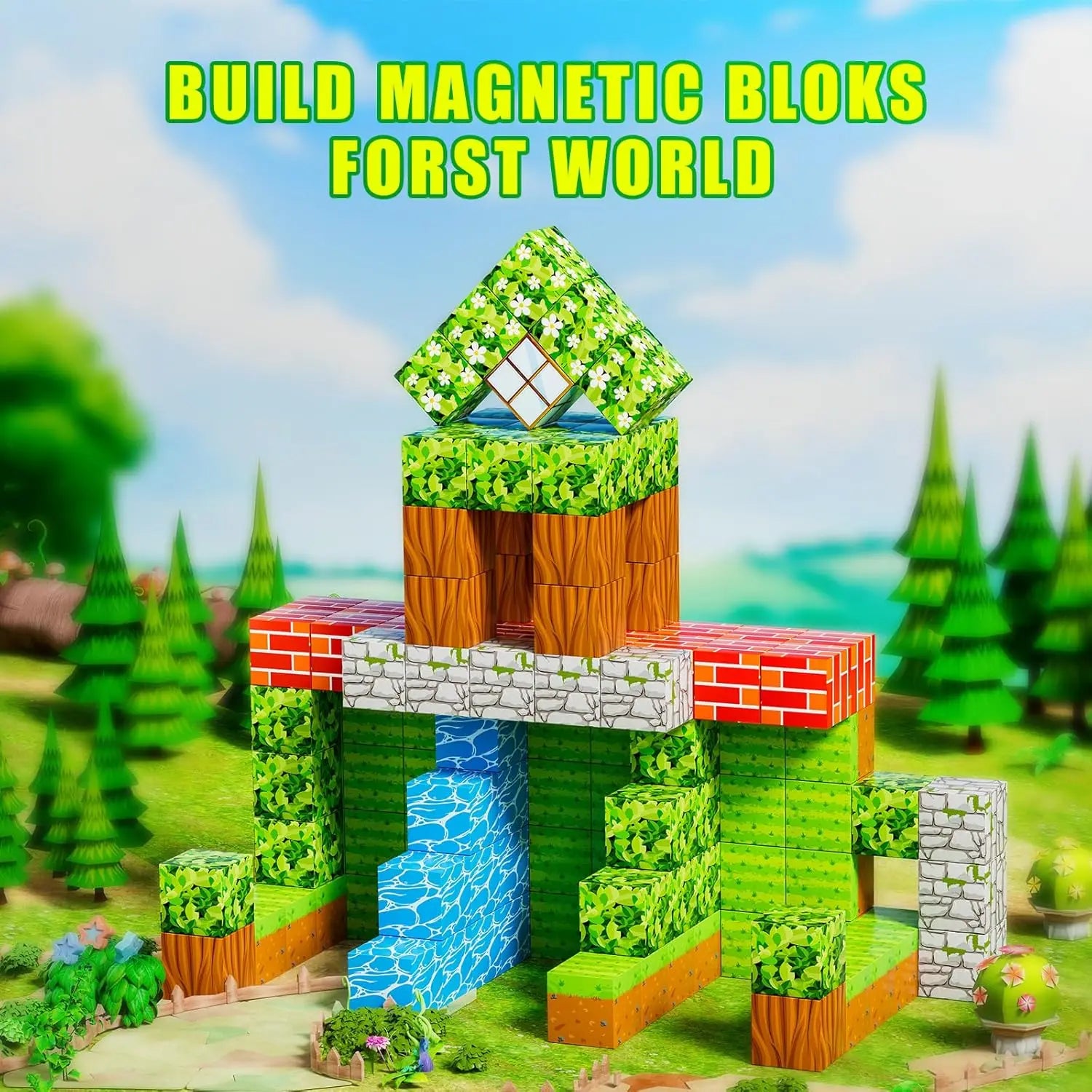
Durable magnetic blocks for preschool learning and creative play. See it in action.
Get yours now — limited stock: Shop magnetic blocks today
Frequently asked questions
1. Are magnetic blocks safe for toddlers?
High-quality magnetic blocks are generally recommended for children aged 3 years and older. Choose sets with securely sealed magnets, durable construction, rounded edges, and always follow the manufacturer's age recommendations. Adult supervision is important for younger children.
2. How many magnetic blocks do beginners need?
A set containing 40 to 60 pieces is enough for simple towers and basic shapes. Families who want to build larger houses, bridges, castles, or collaborative projects often find that 80 to 100 pieces provide much greater creative freedom.
3. What can preschoolers build first?
Start with easy magnetic block structures for beginners such as squares, cubes, towers, simple houses, bridges, and pyramids. As confidence grows, children can move on to animals, vehicles, geometric 3D shapes, and imaginative city layouts.
4. How do magnetic blocks stay together?
Each block contains enclosed magnets that naturally attract opposite magnetic poles. Stronger magnets and well-designed connection points help structures remain stable while still allowing children to easily separate and rebuild pieces.
5. How can I make magnetic block towers stronger?
Build on a flat surface, create a wide base, reinforce corners with triangular pieces, and add height gradually. Keeping heavier sections near the bottom improves stability and reduces the chance of towers collapsing.
6. What magnetic block activities are best for preschoolers?
Color sorting, shape matching, counting games, building letters, bridge challenges, animal creations, and storytelling with miniature cities all combine learning with imaginative play while supporting preschool development.
Building magnetic blocks is more than an enjoyable activity—it helps children develop creativity, resilience, spatial reasoning, and early STEM skills through hands-on exploration. With safe, high-quality materials and plenty of opportunities for open-ended play, every building session becomes a valuable learning experience that grows alongside your child.
Pillar Article: Hands On Activities for Preschool: Easy Daily Learning Guide
Other Related Articles:
- Hands On Math Activities Preschool: Teach Numbers Fast
- Magnetic Toys for Preschoolers: How to Use Them Safely
- Magnetic Block Ideas: 10 Fun Ways to Build and Learn
Explore More:





