

Learning Toys Preschool: Find the Right Fit for Every Skill
Do Learning Toys Help Preschoolers Learn Faster?
Yes—well-designed learning toys preschool options can support early learning by giving children opportunities to practice skills through active, meaningful play. Educational toys can help preschoolers explore counting, language, patterns, problem-solving, fine motor control, and creativity, but they are not a shortcut to instant learning. Children benefit most when toys are developmentally appropriate, interesting to them, and supported by simple adult guidance.
For preschoolers, the goal is not to make children learn faster at any cost. It is to create repeated opportunities to practice skills while keeping learning enjoyable, manageable, and connected to everyday experiences.
Learning Toys Preschool: Best Fits for Different Child Needs
⏱ 5 min read
Choosing among preschool learning toys can feel overwhelming because different toys target different developmental skills. The best choice is usually not the toy with the most features. It is the one that matches your child’s age, interests, current abilities, and next learning goal.
Whether you are shopping for math, literacy, STEM, creativity, or fine motor development, this guide explains what to look for and how to choose a toy that can grow with your preschooler.
Discover a simple hands-on tool for early counting practice
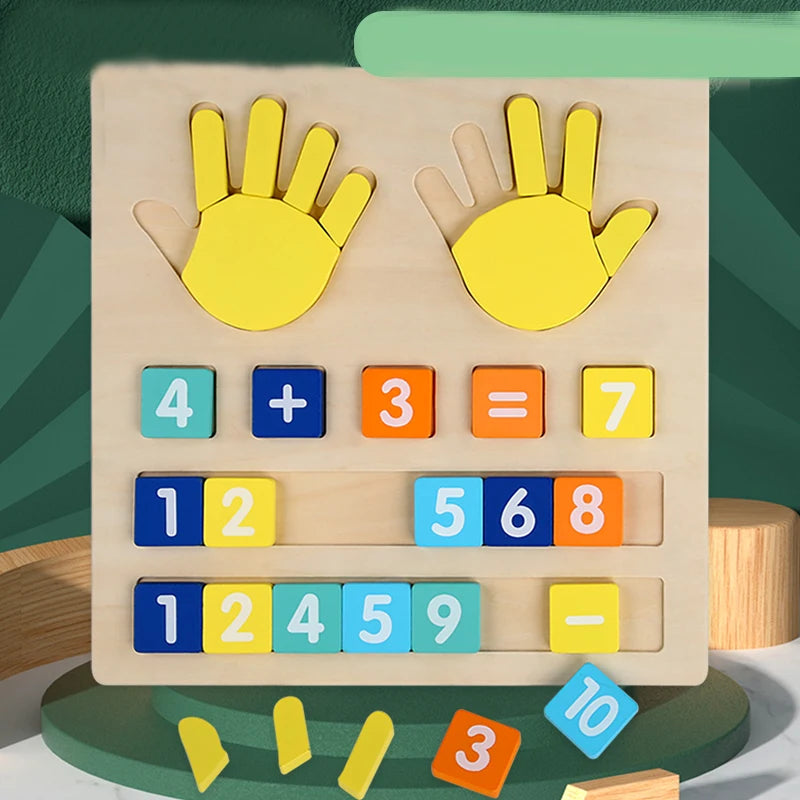
See it in action - learning toys preschool / best ways to teach preschool math, teaching toddlers math using tactile toys, early childhood math learning strategies parents, improve number recognition through play-based learning
Best Learning Toys for Preschool by Developmental Skill
The best learning toys for preschool are easier to choose when you start with the skill you want to encourage. Rather than buying toys simply because they are labeled educational, consider whether the toy gives your child repeated opportunities to practice a meaningful developmental skill.
Best Math Learning Toys
Math-focused preschool learning toys can make quantities, counting, patterns, sorting, and simple comparisons easier to explore. Look for toys that allow children to physically move or organize objects instead of only asking them to identify numbers on a screen or card.
- Counting toys: Help children connect number words with actual quantities.
- Sorting toys: Encourage classification by color, size, shape, or other attributes.
- Pattern toys: Introduce repetition, sequencing, and early logical thinking.
- Number manipulatives: Give children something concrete to touch while practicing early math concepts.
The wooden finger counting toy is a useful option for hands-on counting practice because children can physically interact with the counting mechanism while connecting actions with numbers.
Best Literacy & Reading Toys
Early literacy toys should encourage children to listen, speak, recognize symbols, build vocabulary, and experiment with sounds. Good choices include letter manipulatives, story-based games, picture matching activities, and toys that encourage children to describe what they see.
- Choose picture and letter activities that encourage naming and conversation.
- Look for games that build vocabulary rather than simply testing memorization.
- Use story-based toys to encourage sequencing and comprehension.
Best STEM & Problem-Solving Toys
STEM-oriented educational toys for preschoolers can introduce early engineering and reasoning concepts without requiring formal lessons. Building blocks, construction sets, simple puzzles, matching games, and cause-and-effect toys can encourage children to predict, test, adjust, and try again.
- Building toys: Encourage spatial reasoning and experimentation.
- Puzzles: Develop visual problem-solving and persistence.
- Construction toys: Let children test how pieces fit and balance.
- Cause-and-effect toys: Help children connect an action with an observable result.
Best Fine Motor & Creativity Toys
Fine motor and creativity toys give preschoolers opportunities to strengthen hand control while expressing ideas. Drawing tools, threading activities, building pieces, clay, and age-appropriate craft materials can support coordination and creative thinking at the same time.
- Choose activities that involve grasping, pinching, threading, stacking, or manipulating pieces.
- Allow children to create their own solutions instead of requiring one correct result.
- Favor open-ended materials that can be used in several ways.
Quick Comparison Table: Best Preschool Learning Toys
| Toy Type | Primary Skills | Typical Age | Best For | Value Overview |
|---|---|---|---|---|
| Counting Toys | Counting, number sense, fine motor skills | 3–5 years | Home or classroom | High value when used regularly for short practice sessions |
| Letter & Literacy Toys | Vocabulary, letter recognition, phonological awareness | 3–5 years | Home or classroom | Useful for repeated language and reading practice |
| Building & STEM Toys | Problem-solving, spatial reasoning, creativity | 3–5 years | Home or classroom | Strong long-term value when pieces support open-ended play |
| Fine Motor & Creative Toys | Hand control, coordination, creativity | 3–5 years | Primarily home, also classroom | Versatile for independent and guided activities |
Age ranges are general starting points rather than strict rules. Always follow the manufacturer's recommended age and supervision guidance, especially when toys contain small parts.
Do Learning Toys Help Preschoolers Learn Faster?
Learning toys can support preschool learning, but they should not be viewed as a guaranteed way to make children learn faster. Their value comes from giving children repeated, hands-on opportunities to practice concepts in a context that feels like play.
Research on early childhood learning supports the importance of active engagement, play, and interaction. Educational toys can contribute to this process when children use them purposefully rather than simply having them available.
- Hands-on practice: Manipulating objects can make abstract ideas more concrete.
- Repetition: Children can practice the same skill repeatedly without the experience feeling like a worksheet.
- Feedback: Puzzles, matching activities, and manipulatives can provide immediate clues about whether an approach works.
- Guided play: A parent or teacher can extend learning by asking questions and introducing new challenges.
There are also limits. A toy cannot replace conversation, books, outdoor play, social interaction, creative activities, or responsive adult support. The strongest early learning experiences generally combine child-led exploration with occasional guidance that helps children notice patterns, explain their thinking, and try new strategies.
Why Learning Toys Matter During the Preschool Years
Educational toys for preschoolers can contribute to school readiness because preschool is a period when children rapidly develop language, motor, cognitive, social, and self-regulation skills. A well-chosen toy gives children a practical reason to use those abilities.
- Supports school readiness: Games involving counting, matching, sorting, listening, and following simple directions can reinforce foundational classroom skills.
- Builds confidence: Completing a puzzle, creating a structure, or solving a counting challenge gives children opportunities to experience success.
- Encourages persistence: Open-ended activities let children experiment, make mistakes, and try again.
- Strengthens coordination: Manipulating objects can support fine motor development needed for everyday tasks.
- Encourages communication: Play creates natural opportunities for adults to ask questions and children to explain what they are doing.
For ages 3–5, the most useful early childhood learning toys are often those that can be used repeatedly and adapted as a child's abilities develop.
Explore more developmental tools in Baby Growth & Learning to support your child’s progress holistically.
How to Choose the Right Learning Toy
Choosing learning toys preschool families can use successfully starts with developmental fit. A toy should be challenging enough to encourage learning but simple enough that your child can understand how to begin.
Choose by Age (3 Years)
Three-year-olds often benefit from simple, concrete activities involving matching, sorting, basic counting, colors, shapes, and fine motor manipulation. Choose toys with clear actions and limited rules so your child can begin exploring independently.
- Simple counting and sorting toys
- Large-piece puzzles
- Basic matching games
- Stacking and building activities
Choose by Age (4 Years)
Four-year-olds can often handle more complex patterns, sequencing, counting challenges, construction activities, and games that involve following several steps. Look for toys that encourage children to explain their choices and experiment with different solutions.
- Pattern and sequencing games
- More advanced counting activities
- Construction and problem-solving toys
- Letter and vocabulary activities
Choose by Age (5 Years)
Five-year-olds may be ready for learning toys that require more planning, classification, early addition or subtraction concepts, letter-sound practice, and multi-step problem-solving. The ideal toy should extend existing abilities rather than repeat skills the child has already mastered.
- More challenging puzzles and logic games
- Early math manipulatives
- Beginning reading and word activities
- STEM construction and experimentation
Choose by Learning Goal
If your child has a specific developmental goal, start there rather than choosing a toy based solely on appearance or popularity. For example, choose a counting manipulative for early number sense, a threading or construction activity for fine motor practice, or a puzzle for problem-solving.
Also consider your child's interests. A dinosaur-loving preschooler may engage more readily with a counting activity involving dinosaurs, while a child who loves building may learn mathematical concepts naturally through construction.
Avoid overstimulation when possible. Toys with excessive lights, sounds, or competing features can sometimes distract from the skill you want the child to practice. A focused toy with a clear learning opportunity can be just as valuable as a highly complex one.
Best Play-Based Learning Activities with Educational Toys
Play-based learning toys become more effective when parents and teachers turn them into short, flexible activities rather than formal lessons. The goal is to follow the child's interest while introducing small learning challenges.
- Turn counting into everyday play. Count blocks, toy animals, snacks, stairs, or fingers together. Ask your child to show you a particular quantity using objects.
- Practice sorting. Ask your child to group objects by color, shape, size, or another visible characteristic, then ask why they belong together.
- Build simple patterns. Create a repeating sequence with blocks or other objects and invite your child to continue it.
- Make reading interactive. During story time, ask your child to identify familiar objects, predict what might happen next, or retell part of the story.
- Encourage creative construction. Give children building materials and ask them to make a bridge, tower, house, or other structure without prescribing exactly how it must look.
- Support independent learning. Once your child understands the basic activity, step back and let them experiment. Return with questions when they need a new challenge.
Short, enjoyable sessions can be more sustainable than long lessons. Follow your child's attention span and stop or change activities when frustration becomes persistent.
For more helpful tools, explore Sensory Toys that support hands-on learning experiences.
How We Evaluated These Preschool Learning Toys
To identify best learning toys for preschool options, evaluate more than whether a product carries an educational label. A useful preschool toy should provide a clear opportunity to practice a developmentally appropriate skill while remaining practical for everyday use.
- Educational value: Does the toy provide meaningful practice in math, literacy, STEM, fine motor, creativity, or another developmental area?
- Age appropriateness: Can the intended age group understand and safely interact with the toy?
- Hands-on engagement: Does the child actively manipulate, explore, build, sort, create, or solve?
- Safety: Are materials, construction, edges, fasteners, and component sizes appropriate for the intended age?
- Durability: Can the toy withstand repeated handling, storage, and ordinary play?
- Parent usability: Can caregivers introduce the activity without needing complicated lesson plans?
- Classroom usability: Can the toy support individual, small-group, or guided activities when appropriate?
- Long-term usefulness: Can the activity become more challenging as the child develops?
These criteria help distinguish a toy that simply looks educational from one that creates useful opportunities for learning through play.
Comparison: Which Preschool Learning Toy Is Right for Your Child?
| Toy Type | Best Skill Match | Budget Consideration | Home vs. Classroom | Long-Term Value |
|---|---|---|---|---|
| Counting Manipulatives | Number sense and early math | Often affordable | Excellent for both | High when activities become progressively harder |
| Literacy Toys | Language, vocabulary, and early reading | Varies by format | Excellent for both | High when content grows with ability |
| STEM & Construction Toys | Problem-solving and spatial reasoning | Moderate to high depending on set | Excellent for both | Very high when open-ended |
| Fine Motor & Creative Toys | Coordination and creativity | Low to moderate | Especially useful at home | High when materials support many activities |
For many families, a small collection of complementary toys is more useful than a large collection of toys that teach the same skill. Choose a few options that cover different developmental areas and rotate them to maintain interest.
Recommended Pick: A Versatile Preschool Learning Toy
For families looking for a simple tool focused on early math practice, the wooden finger counting toy is a versatile option. Its primary purpose is hands-on counting, making it particularly suitable for preschoolers who benefit from physically connecting number words with quantities.
- Key feature: Hands-on finger-based counting interaction.
- Learning benefit: Provides concrete practice with early number concepts.
- Ideal age: Appropriate for preschool-age children when used according to the product's safety and age guidance.
- Best use: Short counting sessions, guided parent-child activities, and repeated independent practice after the child understands the activity.
Pros: Simple to introduce, tactile, focused on early counting, and suitable for repeated practice.
Considerations: It is primarily a counting-focused tool, so families may want to pair it with literacy, STEM, creative, and fine motor activities for broader preschool development.
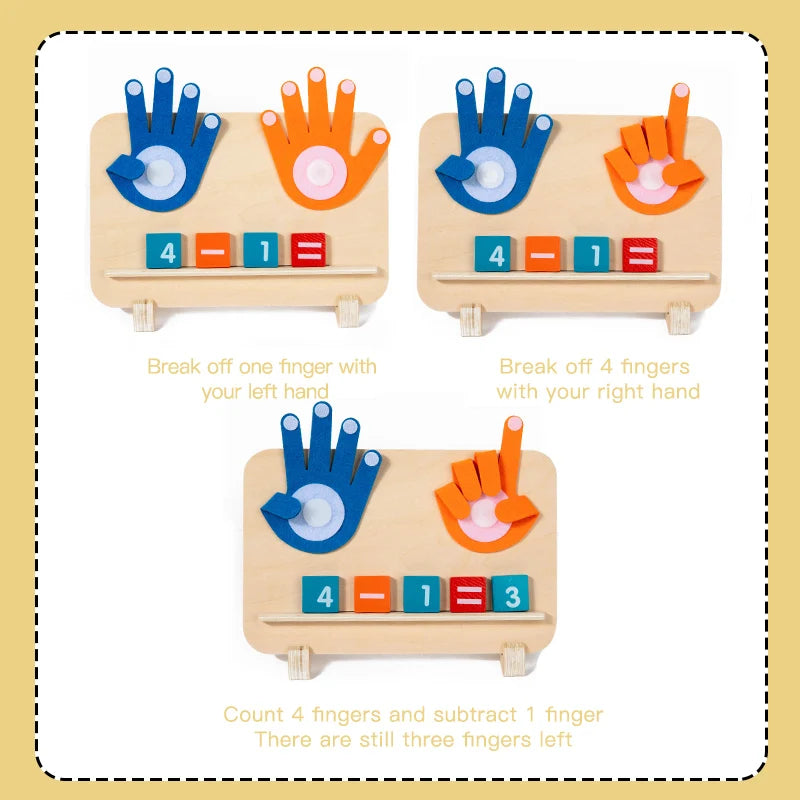
See it in action - learning toys preschool / best ways to teach preschool math, teaching toddlers math using tactile toys, early childhood math learning strategies parents, improve number recognition through play-based learning
Make early counting practice more hands-on
Toy Safety, Materials, and Durability
Safety should be part of every preschool learning toy decision. An educational benefit does not make an otherwise unsuitable toy safe. Before purchasing, check the manufacturer's age recommendation and inspect the toy regularly for damage.
- Choose age-appropriate toys: Follow the stated age range and supervision recommendations.
- Check for small parts: Keep toys containing small components away from children who may still put objects in their mouths.
- Inspect construction: Look for cracks, loose pieces, sharp edges, splinters, or damaged components.
- Consider materials: Follow manufacturer information about materials, finishes, and intended use rather than assuming that a material is automatically safer because it is marketed as natural.
- Clean appropriately: Follow the manufacturer's cleaning instructions to avoid damaging finishes or materials.
- Store safely: Keep toys organized and remove damaged items from circulation.
Durability also affects value. A toy that can be used in several ways and withstand normal preschool play may provide more practical value than a highly specialized toy that loses relevance after a short period.
How Learning Toys Can Support Different Child Needs
Children do not need to be placed into rigid “learning style” categories to benefit from different types of play. Instead, offer varied experiences and observe what keeps your child engaged.
- Children who enjoy manipulating objects: Try counting tools, construction sets, puzzles, and sorting activities.
- Children who enjoy pictures and stories: Add picture matching, books, sequencing, and vocabulary games.
- Children who need movement: Combine counting, sorting, and language activities with walking, jumping, or collecting objects.
- Children who enjoy creating: Offer open-ended building, drawing, crafting, and pretend-play materials.
The aim is to provide multiple ways to practice the same underlying skill. For example, early counting can happen with a dedicated manipulative, blocks, snacks, steps, or toys around the house.
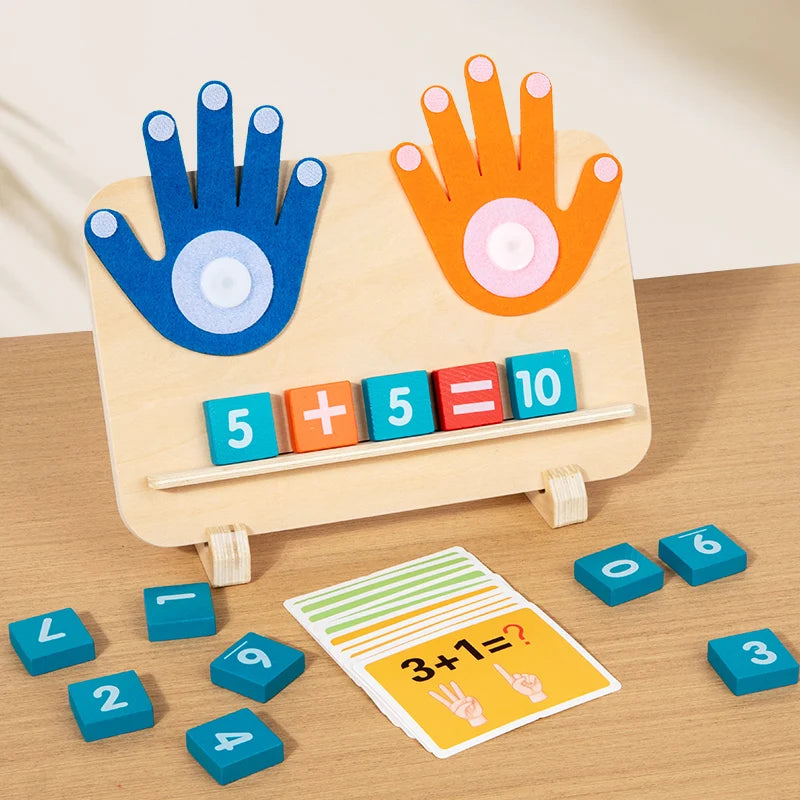
See it in action - learning toys preschool / best ways to teach preschool math, teaching toddlers math using tactile toys, early childhood math learning strategies parents, improve number recognition through play-based learning
Give preschool learning a simple, hands-on starting point
Frequently Asked Questions
What are the best learning toys for preschoolers?
The best preschool learning toys depend on the developmental goal. Counting manipulatives support early math, literacy toys support language and early reading, construction toys encourage problem-solving, and fine motor or creative toys build coordination and creativity. Choose toys that match the child's age, interests, abilities, and next learning challenge.
How do educational toys support preschool learning?
Educational toys support preschool-aged children by giving them opportunities to practice skills through active play. Depending on the toy, children may count, sort, match, build, communicate, solve problems, strengthen hand control, or experiment with cause and effect. Adult interaction can extend the learning by asking questions and encouraging children to explain their thinking.
Which learning toys are best for 3-, 4-, and 5-year-olds?
At age 3, prioritize simple counting, matching, sorting, puzzles, and fine motor activities. At age 4, consider more complex patterns, sequencing, construction, literacy, and early math games. At age 5, look for toys that introduce more challenging problem-solving, early academic concepts, and multi-step activities. Always follow the individual child's development and the manufacturer's age guidance.
What learning toys help prepare children for kindergarten?
Toys that encourage counting, language, listening, problem-solving, fine motor control, following directions, persistence, and independent play can contribute to school readiness. The most useful options are not necessarily the most academic. Open-ended construction, puzzles, sorting games, books, creative activities, and simple number or letter manipulatives can all provide valuable practice.
How do I choose a preschool learning toy based on developmental goals?
Start with one specific goal. For early number sense, choose counting and quantity manipulatives. For fine motor development, look for activities involving grasping, threading, stacking, or manipulating pieces. For problem-solving, consider puzzles and construction toys. For language, choose story, picture, vocabulary, or letter activities. Then select a toy that is appropriately challenging without being frustrating.
Are wooden learning toys better than plastic?
Not automatically. Material alone does not determine educational value or safety. A wooden toy can be durable and tactile, while a plastic toy may offer features that support a particular activity. Evaluate the design, age suitability, safety information, durability, ease of cleaning, and actual learning opportunities instead of choosing based only on material.
How many learning toys should a preschooler have?
There is no ideal number. A smaller selection of varied, age-appropriate toys can be more useful than a large collection that overwhelms the child or leaves many toys unused. Rotate options when interest declines and prioritize toys that support different skills or can be used in multiple ways.
Can one toy teach multiple skills?
Yes. A well-designed toy can support several skills when adults vary how it is used. A counting toy, for example, can support number recognition, counting, one-to-one correspondence, fine motor practice, language, and simple comparison activities. The learning value often depends as much on how the toy is used as on the toy itself.
Are play-based learning toys worth the investment?
They can be, especially when a toy is durable, developmentally appropriate, reusable, and capable of supporting repeated play. Instead of focusing on how many skills appear on the packaging, consider whether your child will actually use the toy and whether it creates meaningful opportunities to practice a skill.
Related Articles:
- Fine motor skills toys for preschoolers: Best use cases explained
- Preschoolers and math: Choosing toys for learning styles
Pillar Articles:





