

Baby Bath Pipe Set Features That Turn Water Play Into Learning
⏱ 8 min read
Does a baby bath pipe set really help learning?
Yes. A baby bath pipe set supports early learning by encouraging cause-and-effect thinking, fine motor development, problem-solving, and sensory exploration. As children pour water through connected pipes, funnels, and spinning wheels, they observe immediate results, helping them build early STEM skills while making bath time more engaging and enjoyable.
Bath time can be much more than a daily routine. The right baby bath pipe set transforms ordinary water play into hands-on learning through simple experiments that children naturally enjoy. Whether you're comparing bathtub pipe toys, searching for an educational bath toy, or looking for a gift that keeps toddlers engaged, understanding the features that matter makes it easier to choose a set that combines safety, durability, and developmental value.
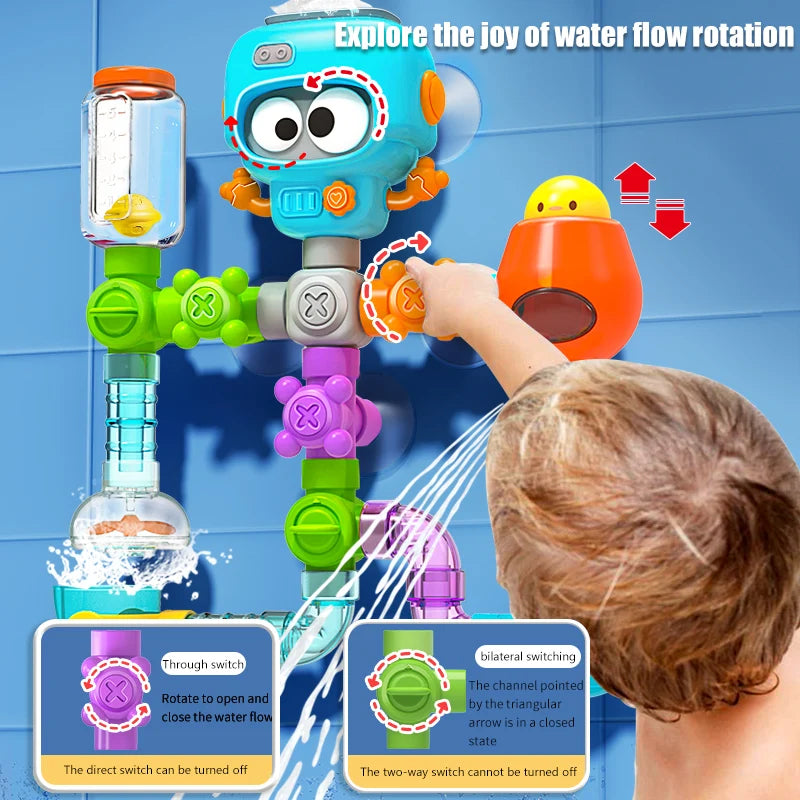
Baby bath pipe set and bathtub pipe toys in action.
Why pipe-based bath toys beat basic floaters
Traditional floating bath toys encourage splashing and imaginative play, but a baby bath pipe set adds an extra layer of discovery. By connecting pipes, adjusting water flow, and watching moving parts react, children actively test ideas instead of simply observing. This interactive approach keeps toddlers engaged for longer while introducing foundational concepts in science, engineering, and problem-solving.
Unlike simple floating ducks or boats, pipe systems reward experimentation. Every adjustment changes how water moves, giving children immediate visual feedback that reinforces learning through repetition.
Learning outcomes you can see
- Cause-and-effect understanding: Children learn that every action produces a predictable result.
- Fine motor development: Connecting pipes, turning valves, and attaching suction cups strengthen hand coordination.
- Spatial reasoning: Rearranging pieces helps toddlers understand direction, positioning, and simple construction.
- Language development: Bath play naturally introduces words such as "pour," "flow," "spin," "empty," and "full."
- Longer focused attention: Interactive features encourage children to stay engaged through repeated experimentation.
Key features that drive learning (and why they matter)
Not every bath pipe toy offers the same educational value. The best designs combine durable construction with interactive components that encourage repeated experimentation while remaining easy for young children to use independently.
Modular construction: build to experiment
Snap-together pipes and interchangeable connectors allow children to create new water routes every bath. Rebuilding the system encourages creative thinking, flexible problem-solving, and repeated experimentation. Choose pieces that connect securely while remaining easy for little hands to separate.
Valves & flow control: teach patience and prediction
Valves, gates, and adjustable spouts introduce simple prediction exercises. Children quickly discover how opening or closing a valve changes water speed and direction, reinforcing observation skills and introducing basic engineering concepts through play.
Visual feedback: wheels, funnels, and bubbles
Spinning wheels, funnels, rotating paddles, and bubbling chambers provide instant visual rewards. Immediate feedback helps children connect their actions with outcomes, making learning more memorable while encouraging longer periods of focused play.
Safe, durable materials: repeated play without worry
Look for BPA-free, non-toxic plastics with rounded edges and sturdy construction. Well-made components withstand frequent assembly and disassembly while reducing the risk of cracks where moisture can collect over time.
Easy storage & suction mounts: convenience increases use
Reliable suction cups keep pieces securely attached to smooth bathtub walls, allowing children to build larger water pathways without frustration. Compact storage and quick attachment also make it easier for parents to include the toy in everyday bath routines, increasing opportunities for learning.
How to use a baby bath pipe set for focused learning
A few minutes of guided interaction can transform ordinary splashing into meaningful STEM-inspired play. Encourage curiosity by asking simple questions and allowing children to test their own ideas as they explore how water moves through different pipe arrangements.
Step-by-step play routines
- Build a simple setup using three or four pipe sections and one funnel.
- Demonstrate how water travels through the system while describing each action aloud.
- Invite your child to rearrange one piece and observe what changes.
- Ask prediction questions such as, "Which path will make the wheel spin faster?"
- Repeat with small adjustments to encourage observation, experimentation, and confidence.
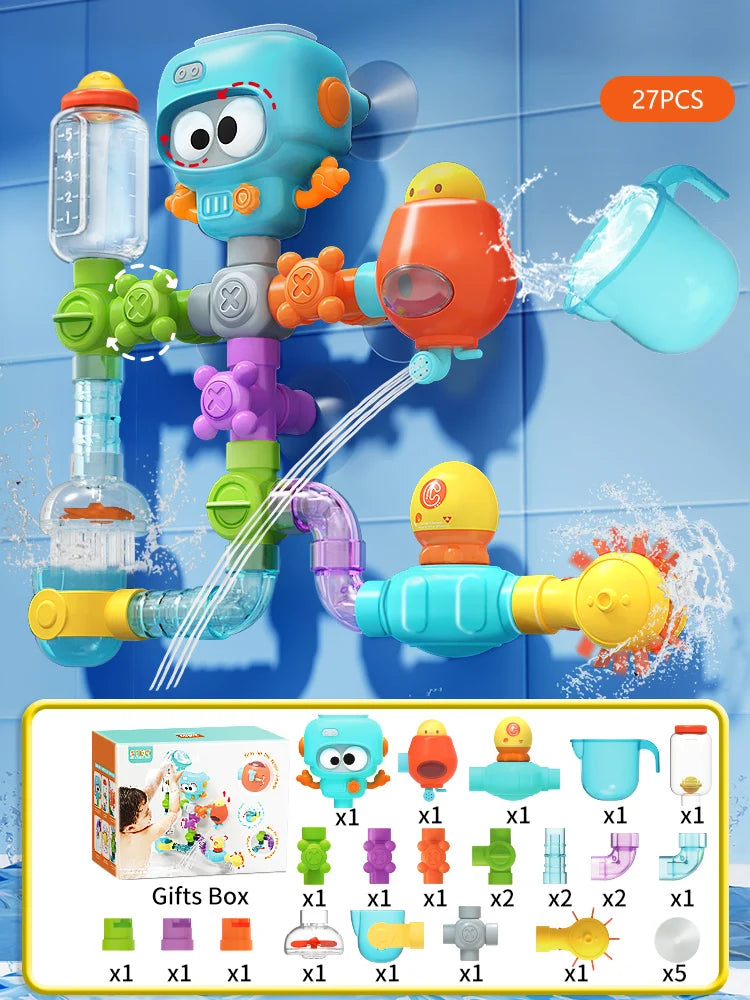
Bathtub pipe toys showing interactive water flow during bath play.
Quick play ideas by age
- 6–12 months: Demonstrate pouring water through a single funnel while naming colors, sounds, and movements.
- 12–24 months: Let toddlers connect two or three pipe pieces independently and practice simple action words.
- 2–3 years: Challenge children to build the longest water pathway, compare flow speed, and predict which design works best.
Quick comparison and pros/cons
If you're deciding between a bath pipe toy and traditional floating bath toys, the biggest differences come down to learning potential, engagement, and maintenance. Interactive pipe systems encourage experimentation, while classic floaters are designed primarily for imaginative splash play.
| Feature | Baby Bath Pipe Set | Basic Floating Bath Toys |
|---|---|---|
| Learning value | High — encourages STEM concepts, problem-solving, and experimentation | Primarily sensory and imaginative play |
| Engagement time | Long — multiple ways to build and explore water flow | Moderate — repetitive play patterns |
| Fine motor practice | Excellent — assembling pipes, turning valves, attaching pieces | Limited — mostly grasping and squeezing |
| Storage | Moderate — multiple pieces to organize | Easy — fewer individual parts |
| Cleaning | Requires complete draining and occasional disassembly | Usually quick to rinse and dry |
Pros & Cons
- ✅ Encourages early STEM learning through hands-on water exploration.
- ✅ Develops fine motor coordination, problem-solving, and creativity.
- ✅ Keeps toddlers engaged longer than many traditional bath toys.
- ✅ Supports interactive parent-child play and conversation.
- ❌ Requires more thorough cleaning than single-piece floating toys.
- ❌ Multiple components require organized storage.
- ❌ Lower-quality sets may lose suction or crack after repeated use.
Safety, cleaning, and durability: what to check
A high-quality bath pipe toy should remain safe after repeated exposure to warm water. Before purchasing, check that all pieces are made from BPA-free materials, feature smooth rounded edges, and include designs that allow trapped water to drain completely. Durable suction cups should remain firmly attached during play without leaving residue on bathtub walls.
Because moisture can become trapped inside enclosed components, proper drying is just as important as washing. Selecting toys with removable drain plugs or open pipe sections makes long-term maintenance much easier and helps reduce mold growth.
Cleaning checklist
- Separate removable pipe sections after every bath.
- Drain all enclosed chambers completely.
- Wash with warm soapy water and rinse thoroughly.
- Allow every piece to air dry before storing.
- Inspect suction cups regularly for wear or damage.
- Deep clean monthly using a diluted vinegar solution or another manufacturer-approved cleaning method.
How to compare models (quick buying checklist)
Choosing the right bath pipe toy is about more than the number of pieces included. The best sets combine safe materials, strong construction, reliable suction, and interactive features that grow with your child's developmental stage.
- Material safety: Choose BPA-free and phthalate-free plastics that are designed for children's bath toys.
- Mold-resistant design: Look for open-ended pipes, drain holes, or removable plugs that allow every piece to dry completely.
- Easy assembly: Snap-fit connectors should stay securely attached while remaining simple for small hands to connect and separate.
- Suction performance: Strong suction cups help keep the pipe system firmly attached to smooth bathtub walls throughout play.
- Age-appropriate complexity: Younger babies benefit from fewer, larger pieces, while older toddlers enjoy additional valves, wheels, and interchangeable connectors.
- Long-term durability: Thicker plastic components typically resist cracking, fading, and repeated assembly better than lightweight alternatives.
You can check compatible bath accessories in Baby Bath Accessories and related developmental toys in Sensory Toys . For broader child development items, browse Baby Growth & Learning .
Shop the baby bath pipe set
Mini FAQ
- 1. At what age is a baby bath pipe set appropriate?
- Most bath pipe toys are recommended for babies from around 6 months with close adult supervision. As children grow into toddlerhood, they can safely enjoy more advanced building and water-flow activities. Always follow the manufacturer's recommended age range.
- 2. How do you prevent mold inside a bath pipe toy?
- Choose models with drain holes, removable plugs, or open pipe sections whenever possible. After each bath, separate the pieces, rinse with clean water, drain completely, and allow them to air dry before storage. Periodic deep cleaning helps maintain hygiene.
- 3. Do bath pipe toys really help children learn?
- Yes. Water pipe toys encourage cause-and-effect thinking, strengthen fine motor coordination, improve problem-solving, and introduce simple STEM concepts as children experiment with different pipe arrangements and water flow.
- 4. Do suction bath pipe toys work on every bathtub?
- Suction cups perform best on smooth, clean, non-textured surfaces such as acrylic, fiberglass, porcelain, and many tile walls. They may not adhere well to rough or heavily textured finishes.
- 5. What should I look for in a quality bathtub pipe toy set?
- Prioritize BPA-free materials, durable construction, reliable suction cups, mold-resistant drainage, easy-to-connect pieces, and interactive features such as valves, funnels, and spinning water wheels that encourage repeated exploration.
Final thoughts
A quality baby bath pipe set offers much more than entertainment. By combining water flow, construction play, and simple experimentation, it helps children strengthen fine motor coordination, develop early STEM thinking, and stay engaged throughout bath time. Choosing a model with durable BPA-free materials, dependable suction cups, and easy-to-clean components ensures the toy remains both safe and enjoyable for everyday use.
If you're ready to expand your child's bath-time routine, explore helpful products in Baby Care Essentials or discover more developmental activities in Baby Growth & Learning .
- Age-appropriate design and clear safety labeling
- Strong suction cups that stay attached during play
- Drainable pipe sections or mold-resistant construction
- Durable BPA-free, non-toxic materials
- Easy-to-connect pieces sized for small hands
- Funnels, water wheels, and interchangeable pipe sections for extended learning
More questions from parents
Q:
Will my child lose interest quickly?
A:
Most children stay engaged when they can continually rebuild the pipe layout, experiment with different water paths, and discover new ways to make wheels spin or funnels flow. Rotating pieces and introducing simple challenges helps maintain curiosity.
Q:
Is a bath pipe toy better than traditional bath toys?
A:
For developing problem-solving, fine motor skills, and early STEM concepts, bath pipe toys generally provide more interactive learning than floating toys. Many families enjoy using both types together for a balanced bath-time experience.
Q:
Are bath pipe toys safe for babies?
A:
Yes, provided you choose an age-appropriate set made from BPA-free materials and always supervise bath time. Regular cleaning and complete drying also help maintain safe use.
Q:
How do bath pipe toys help STEM learning?
A:
Children naturally explore gravity, water flow, prediction, sequencing, and cause-and-effect as they build different pipe arrangements and observe how each change affects the movement of water.
Pillar Article: Bath Toys for Toddlers Benefits: Why These Features Matter Most
Other Related Articles:
Explore More:





