

What is infant mucus removal and does it help breathing?
Yes. Gentle infant mucus removal can temporarily improve comfort when baby nasal congestion makes it harder to breathe through the nose, feed, or sleep. Saline drops can loosen thick mucus, while a bulb syringe or infant nasal aspirator can help clear it from the front of the nostrils. Most congestion is temporary, but breathing difficulty, poor feeding, or other warning signs require prompt medical attention.
⏱ 8 min read
Infant Mucus Removal: How to Clear a Baby’s Congested Nose Safely
A stuffy nose can make an otherwise comfortable baby suddenly fussy, wakeful, and frustrated during feeds. Because infants have small nasal passages and cannot blow their own noses, even a modest amount of mucus can feel disruptive. This guide explains why babies get congested, how to remove mucus from a baby nose safely, when to use saline or suction, how to clean nasal suction tools, and which warning signs mean it is time to call a doctor.
Explore helpful devices designed to make everyday infant care simpler and more manageable.

baby blocked nose remedy + hospital nasal aspirator — See it in action. Shop the electric nasal aspirator
What is infant mucus removal and does it help breathing?
Infant mucus removal means gently clearing excess mucus from a baby's nasal passages so air can move more easily through the nose. Depending on the baby's age and the thickness of the mucus, parents may use plain saline drops, a bulb syringe, or an infant nasal aspirator .
Baby nasal congestion is common because infants primarily breathe through their noses, particularly during feeding. When the nasal passages become blocked, a baby may have trouble coordinating breathing with sucking and swallowing. Clearing excess mucus may therefore make feeding and sleeping more comfortable, although it does not treat the underlying cause of congestion itself.
Normal congestion vs. concerning symptoms
Occasional snuffling, noisy nasal breathing, and a runny or stuffy nose can occur with a common cold, exposure to dry air, or other minor irritants. In many cases, supportive care and time are enough.
Congestion becomes more concerning when it is accompanied by signs of breathing difficulty, a significant decrease in feeding, dehydration, unusual sleepiness, or a fever in a very young infant. The goal of mucus removal is comfort and easier nasal breathing—not to repeatedly suction a baby's nose until it is completely dry.
Why babies get congested (and how mucus forms)
Baby nasal congestion can have several causes. Babies have narrow nasal passages, so a small amount of swelling or mucus can noticeably affect airflow. Their developing immune systems also mean that respiratory infections are common during infancy.
- Immature nasal passages: Infant nasal passages are small, making mucus and swelling more noticeable than they may be in older children or adults.
- Colds and respiratory infections: Viral illnesses can increase mucus production and cause inflammation inside the nose.
- Dry air: Dry indoor air may make nasal secretions thicker and more difficult to clear naturally.
- Irritants: Smoke, strong fragrances, dust, and other airborne irritants can aggravate sensitive nasal passages.
- Environmental allergens: Allergens may contribute to nasal symptoms in some babies, although allergies are less common in very young infants than viral congestion.
Mucus itself is not the enemy. It helps trap particles and supports the body's natural defense system. The problem occurs when mucus becomes excessive or thick enough to interfere with comfortable nasal breathing, feeding, or sleep. Since babies cannot reliably blow their noses, gentle mucus removal for infants can provide temporary comfort when congestion is interfering with normal routines.
How to remove mucus from a baby’s nose safely (step-by-step)
The safest approach is usually to start with the gentlest method that works. For many babies, saline drops for baby nose congestion can loosen dried or thick mucus before suction is attempted. If mucus remains, parents can use a bulb syringe or an appropriately designed nasal aspirator according to the device instructions.
Using saline drops for baby nose
- Wash your hands before handling the baby's nose or suction equipment.
- Use plain, sterile saline intended for nasal use. Avoid medicated nasal decongestants unless a healthcare professional specifically recommends them.
- Place the baby in a comfortable position with the head supported.
- Apply the amount of saline recommended on the product label or by your healthcare professional.
- Wait briefly for the saline to soften thick mucus.
- If mucus is still blocking the nostril, gently clear it with a bulb syringe or infant nasal aspirator.
Saline does not remove congestion by itself in every case, but it can soften secretions and make subsequent suction easier. It is often particularly helpful when mucus is dry or sticky.
Suctioning newborn with bulb syringe
A bulb syringe creates suction when the bulb is compressed and then released. To use one, compress the bulb before placing the tip at the entrance of the nostril, then gently release it to draw out mucus. The tip should not be pushed deeply into the nose.
Bulb syringes are simple and inexpensive, but they require careful cleaning and can be less predictable in suction strength. Follow the manufacturer's cleaning instructions and avoid repeatedly suctioning if the baby's nose becomes irritated.
Using an infant nasal aspirator
An infant nasal aspirator is designed specifically to help remove mucus from a baby's nose. Depending on the model, suction may be generated manually or by an electric motor. Electric models may offer adjustable suction levels, soft silicone tips, collection chambers, and rechargeable operation.
- Wash your hands and assemble the clean device.
- Choose the correct soft tip for your baby's age and the manufacturer's instructions.
- Use saline first if mucus is thick or dried.
- Place the tip gently at the entrance of the nostril rather than inserting it deeply.
- Begin with the lowest effective suction setting if the device offers adjustable power.
- Use short suction sessions and stop if the baby becomes significantly distressed or the nasal tissue appears irritated.
- Clean and dry the removable components after use according to the manufacturer's instructions.
For most babies, mucus removal is most useful when congestion interferes with feeding or comfort. It is not necessary to suction the nose routinely when the baby is breathing comfortably.
Bulb syringe vs nasal aspirator: which is better?
There is no single best mucus-removal tool for every family. The right choice depends on how often you expect to use it, how well your baby tolerates suction, how easy the device is to clean, and whether you need a portable option.
| Method | Advantages | Limitations | Best suited for |
|---|---|---|---|
| Bulb syringe | Simple, affordable, no batteries required | Suction can vary; interior may be difficult to clean thoroughly if moisture remains trapped | Occasional use and parents who prefer a basic manual tool |
| Manual nasal aspirator | Direct control over suction; often compact | Requires more hands-on technique; some designs use replaceable filters | Parents who want a portable, manually controlled option |
| Electric nasal aspirator | Consistent powered suction, adjustable settings on some models, convenient for repeated home use | Requires charging or batteries and careful cleaning of removable parts | Families prioritizing convenience and controlled suction |
Pros and cons of each method
Bulb syringes are easy to keep in a diaper bag and do not require charging. However, some parents find it difficult to judge suction strength, and certain bulb designs can be challenging to dry completely after washing.
Nasal aspirators can provide more controlled mucus removal, especially when they have soft tips and adjustable suction. Electric models may be easier for some parents to operate one-handed, but they still require proper cleaning and should always be used according to the manufacturer's instructions.
When to use each tool
For occasional mild congestion, saline alone may be sufficient. A bulb syringe can be a practical choice when a small amount of mucus needs to be removed. An infant nasal aspirator may be preferable when parents want more consistent control, a visible collection chamber, or a rechargeable device for frequent at-home use.
Age alone does not determine which method is safest. Always choose a device designed for infants and follow its instructions. The technique—gentle, brief, and shallow—is just as important as the tool itself.
Safety tips for infant mucus removal
Safe mucus removal for a baby depends on gentle technique, limited suction, and good hygiene. Nasal tissue is delicate, so more suction is not necessarily better.
How often is safe?
There is no universal number of times every baby can be suctioned safely. Use suction only when congestion is interfering with breathing through the nose, feeding, or comfort, and follow the instructions for your specific device. Repeated suctioning in a short period can irritate the nasal lining and potentially increase swelling.
If your baby needs frequent suctioning to breathe comfortably, or congestion is persistent or worsening, contact a pediatric healthcare professional for guidance rather than simply increasing suction frequency.
Common mistakes to avoid
- Do not insert the tip deeply: Keep the tip at or near the nostril opening unless the device instructions specifically state otherwise.
- Do not use maximum suction automatically: Start gently and use the lowest effective setting on adjustable devices.
- Do not suction continuously: Short sessions are generally more appropriate than prolonged suction.
- Do not share uncleaned equipment: Clean reusable components between uses as directed.
- Do not ignore breathing problems: A nasal aspirator should not be used as a substitute for medical care when a baby is struggling to breathe.
- Do not use medicated nasal products without advice: Plain saline is different from medicated decongestant sprays or drops, which may not be appropriate for infants.
Cleaning and maintaining nasal suction tools
Cleaning is an essential part of using an infant nasal aspirator . Mucus and moisture can remain on removable components, creating an environment where bacteria or mold may grow if parts are not cleaned and dried correctly.
Daily cleaning routine
- Disassemble only the parts identified as washable in the manufacturer's instructions.
- Rinse mucus-contact components promptly after use.
- Wash reusable parts with the recommended soap and water or cleaning method.
- Rinse thoroughly to remove soap residue.
- Allow components to air-dry completely before reassembly.
- Store the device in a clean, dry location.
If the device uses disposable or replaceable filters, change them according to the manufacturer's instructions. Do not wash components that are not designed to be submerged or cleaned with water.
How to prevent mold and bacteria
Moisture is one of the biggest problems when maintaining baby mucus removal tools. Avoid storing a device while it is still damp, and check small chambers, tubing, valves, and seals for trapped moisture when the design allows inspection. Replace worn, cracked, discolored, or damaged components as recommended by the manufacturer.
Never assume that a device is clean simply because the outside looks dry. Follow the product-specific cleaning instructions, particularly for electric models with internal components that should not come into contact with water.
Other baby congestion relief methods (no suction)
Suction is only one part of baby congestion relief methods . In many cases, simple environmental and comfort measures can help reduce irritation and make breathing easier without repeatedly suctioning the nose.
- Use a cool-mist humidifier: Adding moisture to dry indoor air may help keep nasal secretions from becoming overly thick. Clean and maintain the humidifier exactly as directed to prevent microbial growth.
- Offer regular feeds: Breast milk or formula provides hydration for young infants. If congestion makes feeding difficult, smaller, more frequent feeds may be easier for some babies.
- Clear the nose before feeding: If congestion interferes with sucking, gentle saline and mucus removal shortly before a feed may help the baby breathe more comfortably.
- Keep the environment free of irritants: Avoid cigarette smoke, vaping aerosols, strong fragrances, and other airborne irritants around the baby.
- Use safe sleep practices: Always place babies on their backs on a firm, flat sleep surface. Do not use pillows, wedges, inclined sleepers, or other positioning devices to treat congestion during sleep unless specifically directed by a healthcare professional.
Steam from hot water can cause serious burns, especially around babies and young children. Avoid placing a baby near bowls of hot water or using hot steam as a direct congestion treatment. If you use a bathroom with warm shower air for comfort, keep the baby away from hot water and supervise closely.
When to see a doctor for baby congestion
Most uncomplicated baby nasal congestion improves with time and supportive care. However, parents should seek medical advice when symptoms are severe, persistent, or accompanied by warning signs.
Warning signs that need medical care
- Breathing difficulty: Fast or labored breathing, persistent wheezing, grunting, significant chest retractions, pauses in breathing, or blue or gray coloring around the lips or face require urgent medical attention.
- Feeding problems: Seek advice if congestion or illness makes it difficult for the baby to take enough breast milk or formula.
- Signs of dehydration: Fewer wet diapers, a very dry mouth, unusual lethargy, or other concerning signs should be evaluated promptly.
- Fever: Fever in a young infant can require prompt medical assessment. For babies younger than 3 months, contact a healthcare professional promptly for a rectal temperature of 100.4°F (38°C) or higher.
- Persistent or worsening symptoms: Contact your pediatric healthcare professional if congestion is not improving, keeps returning, or is accompanied by other concerning symptoms.
- Unusual behavior: Extreme sleepiness, difficulty waking, marked irritability, or a baby who appears significantly unwell warrants medical evaluation.
For very young newborns, it is especially important to have a low threshold for contacting a healthcare professional when symptoms seem unusual. If you are unsure whether your baby's breathing is normal, seek medical advice rather than relying on home suction alone.
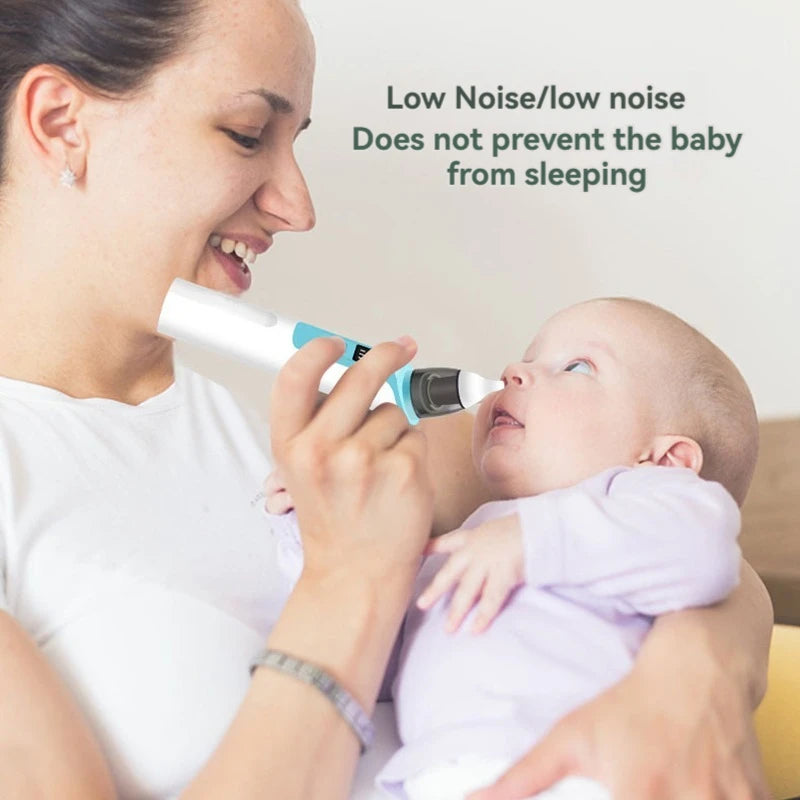
portable nasal aspirator + hospital nasal aspirator — baby blocked nose remedy in practice. See it in action.
A gentle tool for at-home mucus removal
For parents who prefer an electric option, the Baby Electric Nasal Aspirator is designed to support at-home infant mucus removal with features such as adjustable suction, soft silicone tips, a visible collection chamber, and rechargeable portability. These features can make routine nasal care more convenient, particularly when a baby is congested before feeding or bedtime.
The device should still be used gently and according to its instructions. Product features do not replace proper technique, cleaning, or medical evaluation when a baby has serious symptoms.
Find it here: Baby Electric Nasal Aspirator .
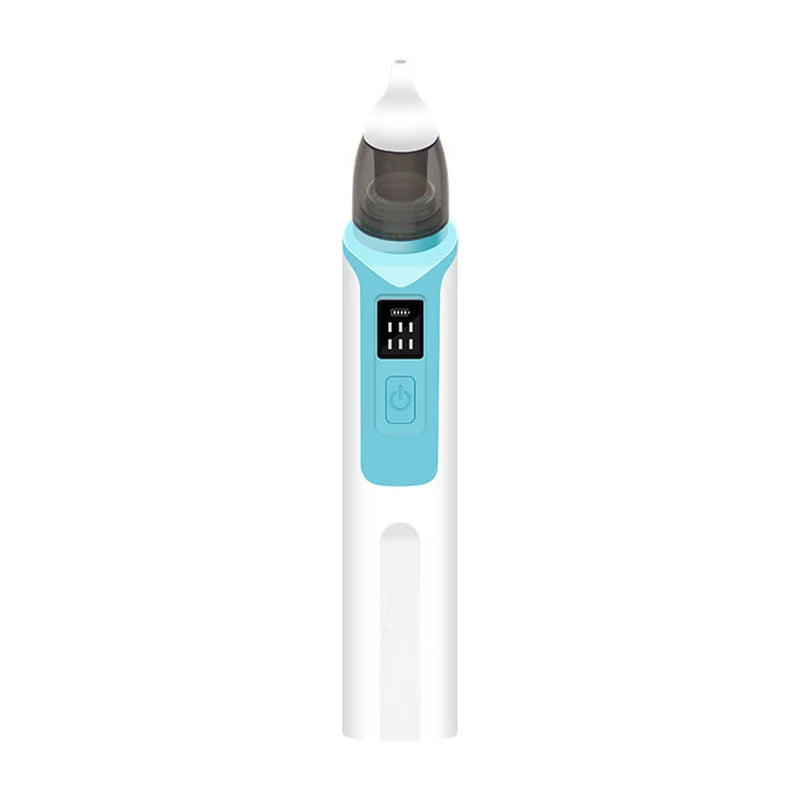
newborn congestion treatment + portable nasal aspirator — baby blocked nose remedy in real life. See it in action.
For parents comparing everyday health and care devices, explore Body Care and Health Devices .
Infant mucus removal FAQ
How often should I suction my baby’s nose?
Use suction only when it is needed to help with nasal breathing, feeding, or comfort, and follow the instructions for your specific aspirator. Avoid repeated or aggressive suctioning because it can irritate delicate nasal tissue. If your baby needs frequent suctioning to breathe comfortably, ask a pediatric healthcare professional for advice.
Can I use saline drops every day for my baby?
Plain saline nasal drops or spray are commonly used to loosen mucus, but the appropriate frequency depends on your baby's needs and the product instructions. If you find yourself needing saline and suction repeatedly every day for persistent congestion, discuss the symptoms with your child's healthcare professional.
Is it safe to use a nasal aspirator on a newborn?
Many nasal aspirators are designed for use with newborns, but they must be used gently and exactly as directed. Choose an infant-appropriate device, use a soft tip, avoid deep insertion, and limit suction to short sessions. If your newborn has breathing difficulty, poor feeding, a fever, or appears seriously unwell, seek medical care instead of relying only on nasal suction.
What are signs my baby’s congestion is serious?
Seek urgent medical attention for significant breathing difficulty, blue or gray lips or face, pauses in breathing, severe chest retractions, or a baby who is difficult to wake. Contact a healthcare professional promptly for poor feeding, signs of dehydration, worsening symptoms, or fever in a young infant. For babies younger than 3 months, a rectal temperature of 100.4°F (38°C) or higher requires prompt medical assessment.
What is the safest way to remove mucus from an infant?
The safest approach is usually gentle and minimal: wash your hands, use plain saline to loosen thick mucus when needed, then use an infant-appropriate bulb syringe or nasal aspirator with the tip positioned only at the nostril entrance. Use short, gentle suction sessions and stop when the baby's nose is comfortably clear. Clean and dry the equipment after use, and seek medical advice if congestion is severe or persistent.
How do I remove mucus from a baby nose without suction?
Plain saline can soften dried or thick mucus, after which some mucus may drain naturally or can be gently wiped from around the nostril with a clean, soft cloth. Keeping the environment comfortably humidified may also help with thick secretions. Never insert cotton swabs or other objects into a baby's nostril.
Pillar Article: Infant Electric Nasal Aspirator Benefits Explained: Why Modern Suction Works Better
Other Related Articles:
Explore More:





