

Does a newborn-safe bottle cleaning set really keep bottles hygienic?
Yes. A newborn-safe bottle cleaning set helps keep bottles hygienic by removing milk residue, oils, and hidden buildup that ordinary rinsing often leaves behind. When paired with warm soapy water, thorough rinsing, complete air drying, and sterilizing when appropriate, a dedicated baby bottle cleaning kit makes proper bottle cleaning faster, more consistent, and better suited for newborn feeding equipment.
⏱ 8 min read
Newborn-Safe Bottle Cleaning Set Reviews: Which Kits Offer the Best Hygiene?
Choosing a newborn-safe bottle cleaning set is about more than convenience. The right bottle brush kit or bottle cleaning travel kit helps remove stubborn milk film, reaches difficult bottle corners, cleans nipples and valves thoroughly, and supports better hygiene for baby bottles throughout daily feeding routines. In this guide, you'll learn which features matter most, what should be included in a complete baby bottle cleaning kit, and how to choose the best option for your family's needs.
Why baby bottle hygiene matters
Maintaining good hygiene for baby bottles is especially important during the newborn stage because leftover milk proteins and fats can cling to bottle walls, nipples, collars, and valves after every feeding. If residue is not removed completely, it can create unpleasant odors, clog bottle components, and make routine cleaning more difficult over time.
A newborn bottle cleaning kit helps parents clean every feeding accessory more consistently by providing tools designed for narrow openings, bottle bases, and small silicone parts. While cleaning tools do not sterilize bottles by themselves, they improve the effectiveness of washing by removing residue before sanitizing when needed.
Consistent cleaning also extends the life of feeding equipment. Thorough washing followed by complete air drying on a clean drying rack helps prevent moisture from remaining inside bottle parts, reducing the chance of persistent odors and keeping bottles ready for the next feed.
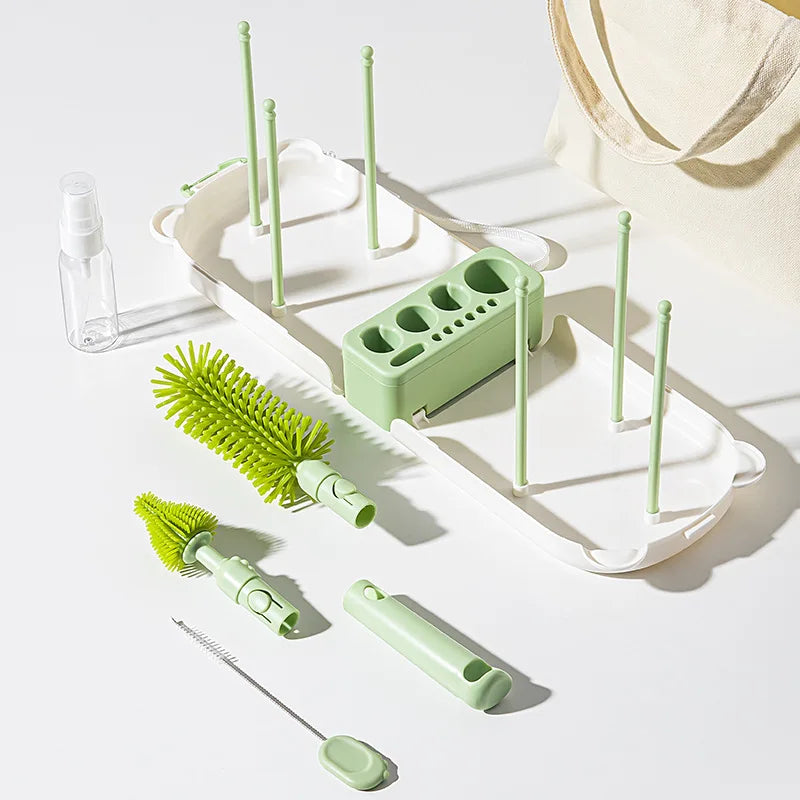
newborn-safe bottle cleaning set + bottle cleaning travel kit — See it in action.
What should a complete baby bottle cleaning set include?
A quality baby bottle cleaning kit includes more than a single brush. The best sets provide specialized tools that clean every part of modern baby bottles, whether you use standard bottles, wide-neck bottles, anti-colic systems, glass bottles, or straw cups.
Essential tools every bottle cleaning kit needs
- Long bottle brush: Cleans the full interior of both narrow-neck and wide-neck bottles.
- Nipple brush: Removes milk residue from bottle nipples, vents, and feeding valves without damaging silicone.
- Straw or tube brush: Useful for straw cups, vent tubes, and reusable feeding accessories.
- Drying rack or drying basket: Allows cleaned parts to air dry separately instead of trapping moisture.
- Travel case: Keeps brushes clean inside a diaper bag when using a bottle cleaning travel kit.
- Optional accessories: Sponge tips, silicone scrubbers, replacement brush heads, and bottle tongs for handling sanitized items.
Does a newborn-safe bottle cleaning set protect my baby? (Short answer)
A newborn-safe bottle cleaning set supports safer feeding by helping remove milk residue that ordinary rinsing may miss. Used with warm water, baby-safe dish detergent, careful rinsing, and manufacturer-recommended sterilizing when appropriate, these tools improve cleaning consistency without replacing proper sanitation practices.
Key features we evaluate in the best baby bottle cleaning sets
Cleaning performance and brush design
- Full-length reach: Brushes should easily clean both the base and curved sides of bottles.
- Dense, flexible bristles: Remove residue without scratching plastic or glass.
- Dedicated nipple cleaners: Reach tiny openings and anti-colic valves effectively.
- Comfortable grip: Ergonomic handles improve control during daily washing.
Material safety and durability
- BPA-free materials: Safe baby bottle cleaning products should use food-contact-safe plastics or silicone.
- Replaceable brush heads: Extend product life while maintaining effective cleaning.
- Dishwasher-safe components: Simplify routine maintenance where manufacturer instructions allow.
Ease of storage and drying
- Ventilated storage: Drying racks and travel cases should promote airflow.
- Compact organization: Portable kits fit diaper bags without contaminating clean brushes.
- Quick-drying design: Tools that dry efficiently help maintain better hygiene between uses.
Quick comparison: travel kit vs. home kit vs. brush kit
The best baby bottle cleaning set depends on where you clean bottles, how often you feed, and the types of bottles your baby uses. This comparison highlights the strengths and limitations of each option.
| Kit type | Best for | What's typically included | Advantages | Considerations |
|---|---|---|---|---|
| Bottle cleaning travel kit | Travel, daycare, vacations, diaper bags | Compact bottle brush, nipple brush, travel case | Portable, hygienic storage, easy between-feed cleaning | May not include a drying rack or full-size brush for larger bottles |
| Home bottle brush kit | Daily newborn feeding routines | Full-size brushes, nipple cleaner, drying rack, accessory brushes | Best overall cleaning coverage and easier daily maintenance | Requires countertop storage space |
| Minimal brush-only kit | Occasional bottle use or families with a sterilizer | Primary bottle brush only | Affordable, simple, compact | Additional tools may be needed for nipples, vents, and straw components |
How to clean bottles properly — step-by-step
Using a baby bottle cleaning kit correctly is just as important as choosing the right one. Following a consistent routine helps remove milk residue before it dries and becomes more difficult to clean.
- Rinse bottles soon after feeding with warm water to prevent milk residue from drying onto the surfaces.
- Disassemble every component, including nipples, collars, valves, caps, and vent systems.
- Wash each part with warm, soapy water using the long bottle brush to reach the base and curved sides.
- Clean nipples, vents, and narrow openings with the dedicated nipple or straw brush.
- Rinse thoroughly under clean running water until no soap remains.
- Place every component on a clean drying rack so air can circulate freely around each piece.
- For newborns, premature infants, or babies with specific medical needs, sterilize bottles according to your healthcare provider's advice and the bottle manufacturer's instructions.
Quick checklist for effective daily bottle cleaning
- Choose a brush that reaches every part of the bottle without excessive bending.
- Use a separate nipple brush for silicone nipples and anti-colic valves.
- Allow bottles and accessories to dry completely before storing.
- Replace worn brushes promptly to maintain effective cleaning performance.
- Keep travel brushes inside a clean protective case between uses.
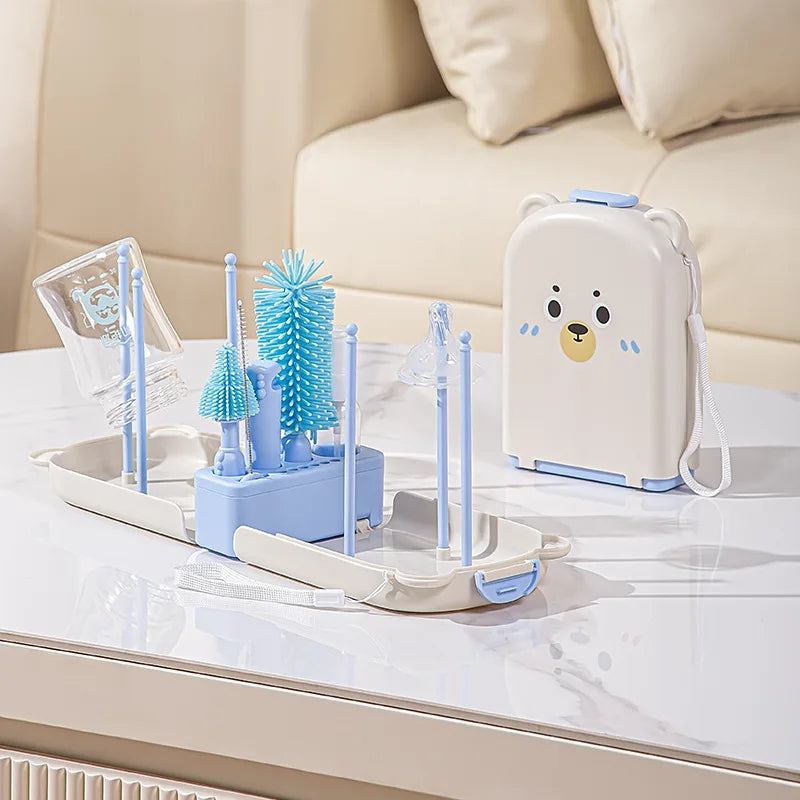
bottle brush kit + bottle cleaning travel kit — See it in action.
Cleaning performance and practical observations
Dedicated bottle cleaning sets are designed to improve cleaning consistency by reaching areas that standard kitchen brushes often miss, including bottle bases, narrow necks, silicone nipples, and anti-colic components. Complete kits also make it easier to keep cleaning tools organized and separated from general household cleaning supplies.
Performance varies by design. Kits with ergonomic handles, dense bristles, dedicated nipple brushes, and well-ventilated storage generally provide a more thorough and convenient daily cleaning experience than basic brush-only options.
Pros & cons at a glance
✅ Pros
- Designed to remove milk residue from hard-to-reach bottle components.
- Separate cleaning tools improve hygiene by reducing cross-contamination.
- Travel kits keep brushes protected during outings and daycare use.
- Complete kits support consistent daily cleaning for most bottle styles.
❌ Cons
- Brushes require periodic replacement as bristles wear over time.
- Compact travel kits may not include every accessory needed for home use.
- Higher-quality complete kits typically cost more than basic brush-only options.
- Cleaning tools themselves should be washed and dried regularly to maintain hygiene.
Buying guide: choose the right kit for your routine
The best baby bottle cleaning set depends on your feeding routine, bottle style, storage space, and how often you clean bottles each day. Rather than choosing the largest kit, focus on the accessories that match your baby's feeding equipment.
Choose based on bottle type and feeding stage
- Daily newborn feeding: Choose a complete baby bottle cleaning kit with a full-size bottle brush, nipple brush, drying rack, and replacement brush heads for frequent use.
- Parents who travel often: A bottle cleaning travel kit with a protective carrying case keeps brushes clean inside diaper bags, daycare bags, and luggage.
- Glass bottle users: Look for soft, non-scratching bristles that clean thoroughly without damaging bottle surfaces.
- Wide-neck bottles: Select a brush with a rounded head that reaches the bottom and sides without excessive force.
- Straw cups and sippy cups: Choose a set that includes narrow straw brushes for cleaning tubes and small drinking components.
- Occasional bottle use: A basic bottle brush set paired with proper drying may be sufficient if bottles are used infrequently.
For parents looking for a compact everyday solution, the Travel Baby Bottle Brush Set offers portable storage and dedicated cleaning tools that fit easily inside diaper bags and are convenient for daycare, vacations, and everyday outings.
Feature checklist before you buy
- Durable, non-shedding bristles that maintain their shape after repeated use.
- Comfortable ergonomic handle with enough reach for both standard and wide-neck bottles.
- Dedicated nipple brush plus straw or vent cleaning brush for modern bottle systems.
- BPA-free materials suitable for regular contact with baby feeding accessories.
- Ventilated storage case or drying solution that allows brushes to dry completely.
- Replaceable brush heads or readily available replacement accessories.
- Easy-to-clean components that resist trapped moisture after washing.
When to replace bottle brushes and cleaning accessories
Even the best bottle brush for baby bottles should be replaced once the bristles become bent, frayed, flattened, or difficult to clean. Worn brushes remove residue less effectively and can trap debris between damaged bristles.
- Replace frequently used bottle brushes approximately every 3 to 6 months, or sooner if wear is visible.
- Replace nipple and straw brushes whenever they lose their shape or become difficult to clean thoroughly.
- Wash cleaning tools regularly with warm soapy water and allow them to air dry completely between uses.
- Inspect travel cases periodically and clean them to prevent moisture buildup.
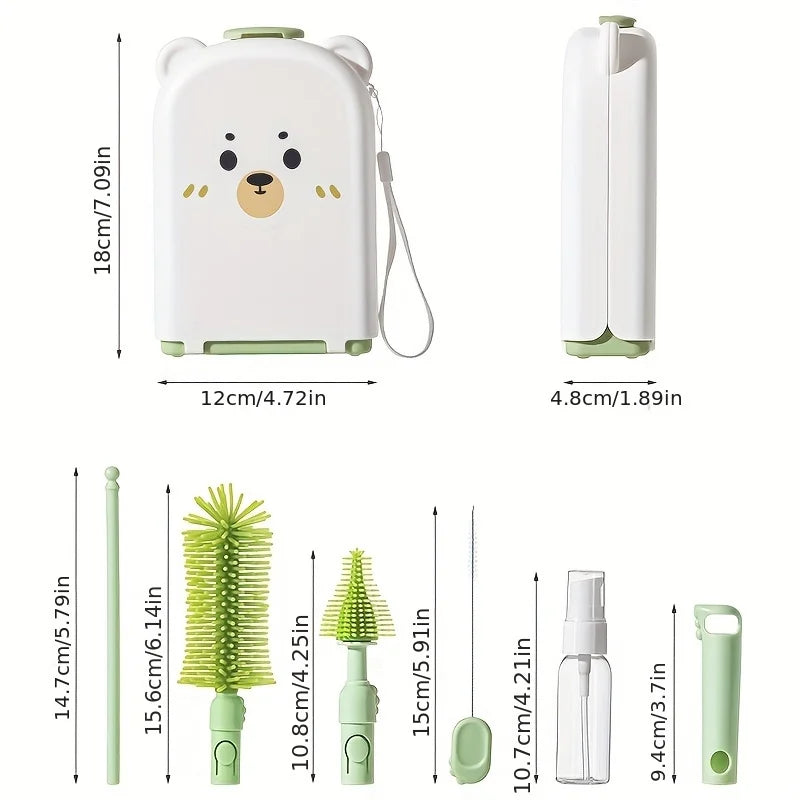
bottle brush kit + proper bottle cleaning — See it in action.
Helpful related collections
These resources and collections can help you build a complete bottle cleaning and feeding routine:
- Feeding & Nursing — Bottles, nipples, feeding accessories, and practical guidance for everyday feeding.
- Sterilization Devices — Additional sanitizing solutions for newborn feeding equipment when recommended.
- Baby Hygiene Gadgets — Drying racks, cleaning accessories, and organization tools that complement bottle cleaning kits.
Evidence, safety & expert considerations
Effective bottle hygiene depends on combining thorough mechanical cleaning with appropriate sanitizing practices when recommended. Bottle brushes remove milk residue, fats, and protein buildup that simple rinsing may leave behind, allowing subsequent sanitizing methods to work more effectively.
When comparing safe baby bottle cleaning products, prioritize BPA-free materials, durable non-shedding bristles, and designs that allow brushes to dry completely between uses. Cleaning tools should also be washed regularly and replaced when worn to maintain consistent hygiene for baby bottles.
For newborns, premature infants, or babies with specific health concerns, always follow your pediatrician's guidance and the bottle manufacturer's recommendations regarding sterilization frequency and bottle care.
Frequently asked questions about baby bottle cleaning sets
What is the best baby bottle cleaning set for newborns?
The best baby bottle cleaning set for newborns includes a full-size bottle brush, a dedicated nipple brush, a straw or vent brush if needed, hygienic storage or a drying rack, and BPA-free materials. A complete kit makes it easier to clean every feeding component thoroughly.
What should be included in a complete bottle cleaning kit?
A complete baby bottle cleaning kit typically includes a bottle brush, nipple brush, straw brush, drying rack or storage solution, and a protective travel case for portable use. Some kits also include replacement brush heads and bottle tongs.
Are BPA-free bottle cleaning tools safer for babies?
BPA-free cleaning tools are generally preferred because they are manufactured without bisphenol A. Choosing durable, food-contact-safe materials also helps maintain brush performance through repeated washing.
How often should baby bottle brushes be replaced?
Most bottle brushes should be replaced every 3 to 6 months, or sooner if the bristles become bent, frayed, discolored, or difficult to clean. Nipple and straw brushes may require replacement more frequently with heavy daily use.
Can a baby bottle cleaning travel kit stay hygienic while traveling?
Yes. A travel bottle cleaning kit can remain hygienic when brushes are cleaned after use, allowed to dry as much as possible, and stored inside a clean protective case with adequate ventilation.
Final verdict: choosing the right baby bottle cleaning set
The best baby bottle cleaning set is the one that matches your family's feeding routine while making thorough cleaning easy to maintain every day. Parents who clean bottles frequently often benefit from a complete bottle brush set with dedicated accessory brushes and a drying solution, while travel-friendly kits are ideal for daycare, vacations, and feeding away from home.
Focus on durable BPA-free materials, brushes that reach every bottle surface, hygienic storage, and replaceable cleaning heads rather than unnecessary accessories. With the right tools and a consistent cleaning routine, maintaining hygienic feeding equipment becomes faster, simpler, and more reliable.
Ready for a compact everyday solution? Try the Travel Baby Bottle Brush Set for convenient cleaning at home, while traveling, or during daycare drop-offs.
Pillar Article: How to Sanitize Baby Accessories Safely: A Simple Step-by-Step Guide
Other Related Articles:
- Best Way to Wash Baby Bottles at Home: Step-by-Step for New Parents
- Portable BPA-Free Bottle Cleaning Kit Guide: Clean Bottles Anywhere
- Silicone Baby Bottle Cleaning Brush Tips: How to Clean Bottles Faster
Explore More:





