

Toy Suction Cups Hacks: Make Bath Walls a Fun Play Zone
⏱ 6 min read
Toy suction cups make it easy to transform smooth bath walls into an engaging play space that encourages exploration without creating unnecessary clutter. Combined with bath toy pipes, funnels, scoops, and other water sensory toys, they help toddlers strengthen fine motor skills, practice hand-eye coordination, and discover simple STEM concepts like gravity, water flow, and cause-and-effect. Whether you're introducing bath play for the first time or expanding an existing collection, the right suction-based setup can make bath time calmer, more interactive, and more enjoyable for both children and parents.
What Are Suction Cup Bath Toys and Why Kids Love Them
Toy suction cups are flexible silicone or soft-rubber attachments designed to hold bath toys securely on smooth surfaces such as tile, bathtubs, and shower doors. Unlike floating toys that drift around the tub, suction cup bath toys stay in place, allowing children to build vertical water courses using pipes, funnels, wheels, and cups.
This style of play supports multiple areas of early development. As toddlers pour water through connected pipes or rearrange pieces on the wall, they naturally improve grip strength, bilateral coordination, hand-eye coordination, and problem-solving skills. Watching water travel through different paths also introduces basic STEM concepts including gravity, flow, sequencing, and cause-and-effect in an age-appropriate way.
Parents also appreciate that wall-mounted play keeps most activities contained in one area, making cleanup easier while encouraging longer periods of focused, independent play.
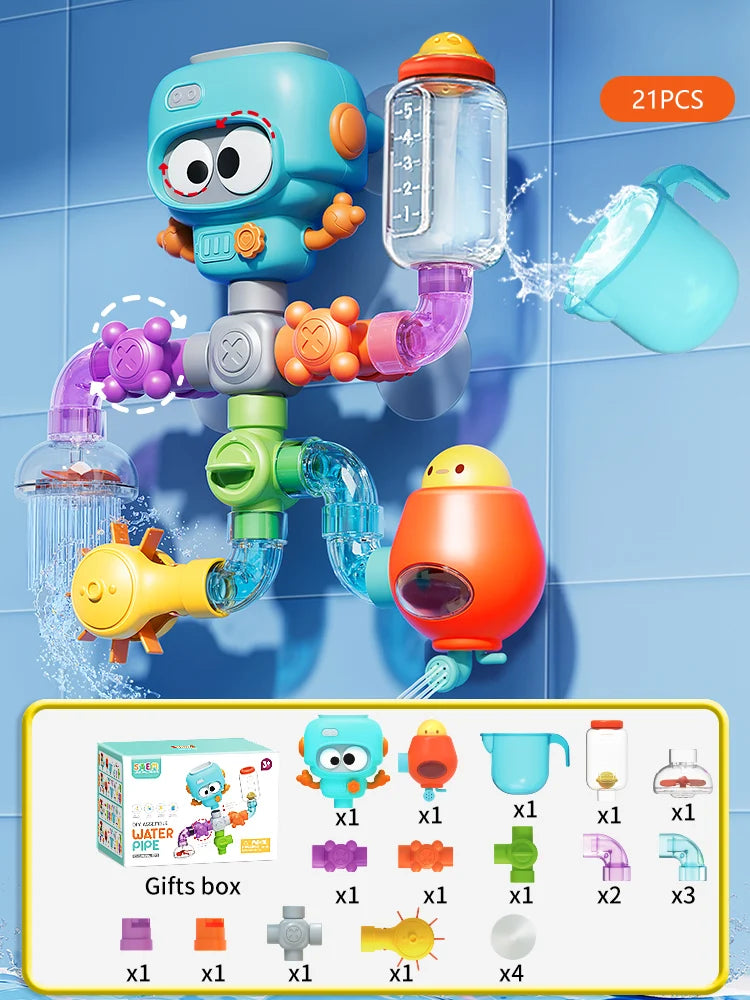
toy suction cups + bath toy pipe + water sensory toys — See it in action
Bath Toy Suction Cups Hacks and DIY Bath Play Ideas
Creative bath activities keep children engaged while strengthening fine motor skills, encouraging independent exploration, and reducing bath-time resistance. These simple, low-mess ideas require only a few suction cup bath toys and everyday accessories.
Pipe wall challenge
- Attach a funnel to the highest suction cup and connect one or two pipe sections below it.
- Invite your child to pour water repeatedly and observe how changing the pipe direction affects the flow.
- Count each successful pour together to reinforce early language and number recognition.
Water maze
- Create a zig-zag path using curved pipe pieces attached with suction cups.
- Drop a lightweight floating ball or small stream of water into the top and encourage your toddler to predict where it will exit.
- Rearrange the layout together to introduce simple problem-solving and experimentation.
Sensory splash station
- Combine cups, funnels, and a mesh strainer to create different water patterns.
- Encourage children to compare gentle drips, fast pours, and sprays while describing each sensation using words such as "slow," "fast," "soft," or "strong."
Color sorting and scoop game
- Arrange colored cups around the bath wall and provide matching scoops.
- Ask your child to transfer water into matching colors while naming each color aloud.
- Add simple counting challenges to extend the activity as coordination improves.
Safety, Materials & Cleaning Tips
Key safety points
- Always supervise children during bath time. Suction cup bath toys are designed for interactive play but should never replace adult supervision.
- Choose toys made from food-grade silicone or BPA-free materials that are durable, flexible, and designed for repeated exposure to warm water.
- Attach toys only to smooth, clean tile, glass, or tub surfaces for the strongest hold.
- Position toys at your child's chest or shoulder height to encourage comfortable reaching without climbing or stretching.
- Inspect suction cups regularly and replace any pieces that become cracked, sticky, or permanently misshapen.
Quick cleaning routine (2–3 minutes)
- Rinse every toy thoroughly with warm, clean water after each bath to remove soap residue.
- Allow all pieces to air-dry completely before storing to reduce moisture buildup.
- Once a week, soak suction cups and accessories in warm water with mild dish soap for about 10 minutes, rinse well, and dry completely.
- If the manufacturer labels the toys as dishwasher-safe, use the top rack for occasional deep cleaning.
- Discard any toy that develops mold inside enclosed parts or cannot be cleaned completely.
Where to Start — Product Pick & Matching Accessories
If you're building a bath wall play station for the first time, begin with a simple setup rather than a large collection. A compact kit lets your child explore water play while making it easy to discover which activities they enjoy most.
A practical starter combination includes:
- One set of silicone toy suction cups.
- A short bath pipe run with interchangeable pieces.
- Two small scoops or measuring cups.
- A funnel for experimenting with water flow.
- A non-slip bath mat for additional safety.
| Feature | Suction cup bath toys | Traditional floating toys |
|---|---|---|
| Mess control | High — activities stay on the wall | Lower — toys move throughout the tub |
| Learning opportunities | Excellent for cause-and-effect, pouring, and problem-solving | Good for imaginative play |
| Storage | Many pieces remain attached or store compactly | Usually requires a separate storage basket |
| Play variety | Expandable with pipes, funnels, and accessories | Depends on individual toy designs |
Pair your setup with gentle sensory toys from our Sensory Toys collection to extend hands-on learning beyond bath time.
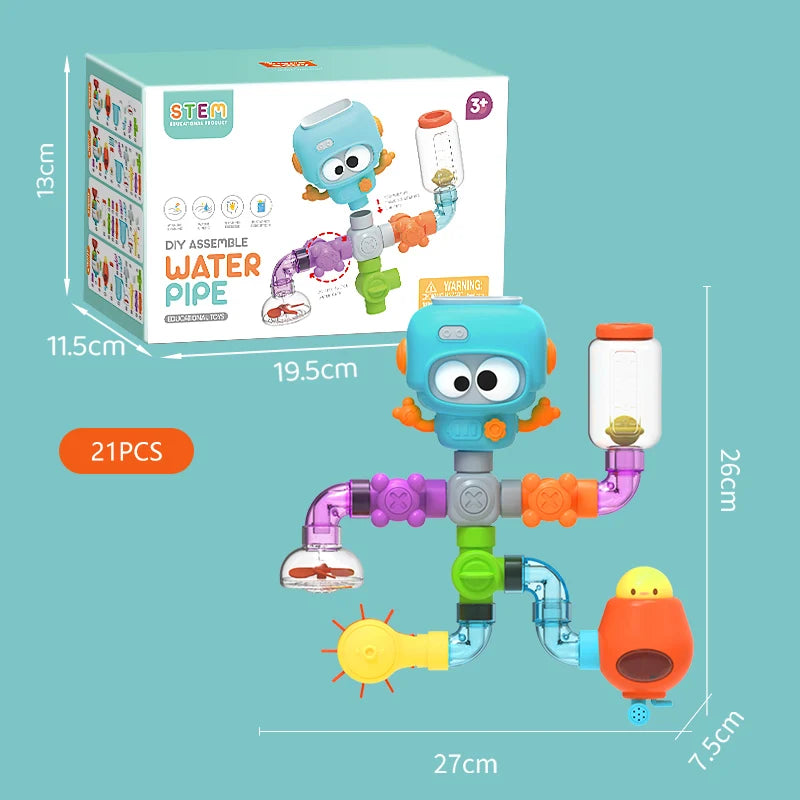
toy suction cups + DIY water play ideas + bath toy pipe — See it in action
How to Choose the Right Suction Cups and Accessories
Choose by material and suction performance
- Look for soft silicone suction cups that maintain flexibility after repeated use.
- Prioritize BPA-free, phthalate-free materials intended for children's bath toys.
- Larger suction cups generally provide better grip on tile, acrylic tubs, and glass.
- Select modular pipe systems that allow additional pieces to be added as your child grows.
Match the set to your child and bathroom
- Compact bathrooms benefit from smaller starter kits with fewer wall-mounted pieces.
- Children who enjoy building activities often stay engaged longer with expandable pipe systems.
- For younger toddlers, choose larger pieces that are easy to grasp and reposition.
- Ensure accessories fit comfortably within your available wall space without crowding the bathing area.
Looking for an easy starter solution? The DIY Water Pipe is designed for compact bathrooms and can be expanded with additional compatible suction pieces as your child's interest grows.
Cleaning, Mold Prevention and Maintenance
Regular cleaning and proper storage help suction cup bath toys stay hygienic, maintain strong suction, and last through years of everyday play. Because bath toys are frequently exposed to warm water, soap residue, and humidity, a simple maintenance routine goes a long way toward preventing mold and extending product life.
- Allow every suction cup, pipe, funnel, and scoop to air-dry completely after each bath.
- Store accessories in a ventilated caddy or basket with drainage holes so excess water can escape.
- Deep-clean toys weekly using warm water and mild soap, paying special attention to enclosed pipe sections.
- If your toys are labeled dishwasher-safe, place them on the top rack for occasional sanitizing.
- Inspect suction cups regularly and replace any components that become cracked, warped, or difficult to clean.
- Rotate different bath toys every few weeks to maintain your child's interest while reducing daily wear on individual pieces.
Frequently Asked Questions
- What are the best suction cup bath toys for toddlers?
- Expandable pipe systems, funnels, spinning water wheels, and modular suction cup play sets are among the most popular choices because they encourage creative water play while supporting fine motor development.
- How do you make suction cup toys stick better in the bathtub?
- Clean both the suction cup and the mounting surface before use. Slightly dampening the suction cup can also improve its seal on smooth tile, glass, or acrylic tubs.
- Are suction cup bath toys safe for babies and toddlers?
- Yes. Choose BPA-free or food-grade silicone products from reputable manufacturers, supervise children during bath time, and replace damaged parts promptly.
- How do you clean suction cup bath toys to prevent mold?
- Rinse toys after every bath, allow them to dry completely, and deep-clean them weekly with mild soap and warm water. Pay extra attention to enclosed pipe sections where moisture can collect.
- What age are suction cup bath toys suitable for?
- Many suction cup bath toys are designed for toddlers beginning around 12 months, although manufacturers may recommend different age ranges depending on the toy's size and complexity.
- Do suction cup bath toys help with fine motor skills?
- Yes. Attaching pieces, pouring water, connecting pipes, and repositioning accessories strengthen hand muscles, coordination, and early problem-solving skills.
- Which suction cup bath toys are best for travel?
- Compact modular pipe sets with a small number of interchangeable pieces are easy to pack, quick to install, and suitable for hotel bathrooms with smooth tile or glass surfaces.
- Can suction cup bath toys stick to tile and glass?
- Yes. They perform best on smooth, non-porous surfaces such as ceramic tile, glass shower doors, acrylic tubs, and polished plastic. Rough grout or textured walls may reduce suction strength.
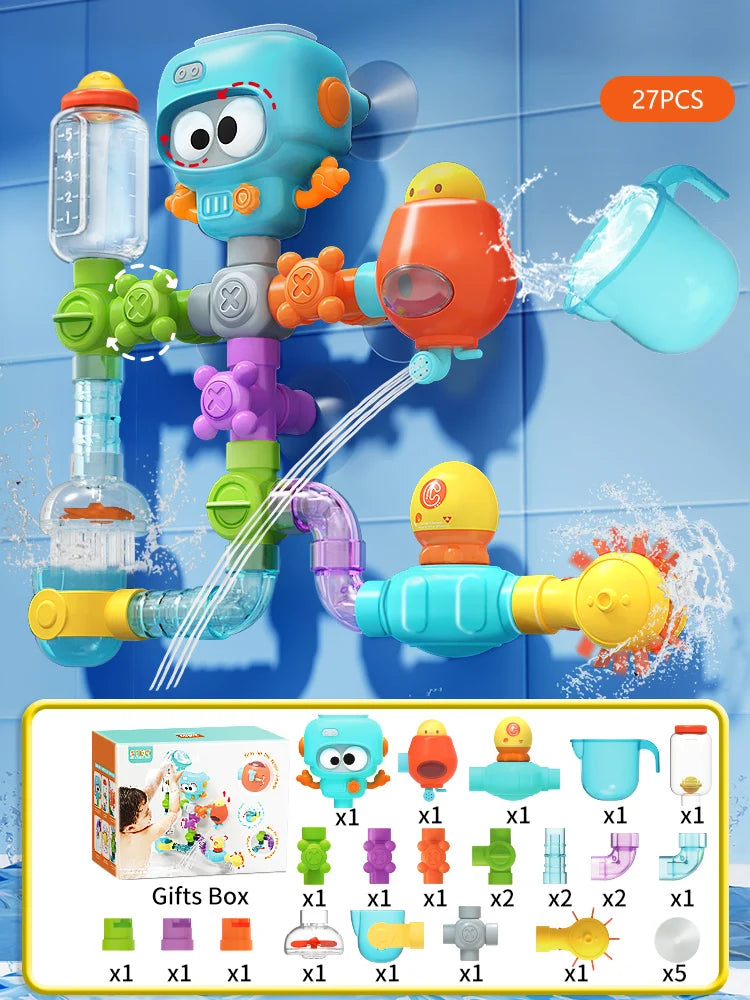
toy suction cups + water sensory toys + bath pipe toys — See it in action
Related collections to explore for a complete bath-time setup: Baby Bath Accessories , Sensory Toys , and Baby Growth & Learning .
Pillar Article: Not Found
Other Related Articles:
- Bath Toys Holder Setup Guide: Keep Toys Dry, Clean, and Within Reach
- Boon Pipes Bath Toys How-To Guide for Creative Water Play
- Bathtub Toy Storage Tips That Make Cleanup Fast and Kid-Friendly
- Bath Toys Newborn Review: Gentle Starter Sets Parents Trust
Explore More:





