

Math Interactive Tools: Make Abstract Concepts Click
Do math interactive tools really improve learning?
Yes. Well-designed math interactive tools help children develop number sense by turning abstract ideas into experiences they can see, touch, and manipulate. Research in early childhood education consistently shows that hands-on learning supports deeper conceptual understanding before children move to mental math and written calculations. Rather than simply memorizing answers, children build a stronger understanding of how numbers work.
Math interactive tools: Key features that improve learning
⏱ 8 min read
Many parents notice frustration, short attention spans, or confusion when math exists only on worksheets. The right interactive math learning tools encourage children to explore numbers through play, helping them build confidence while making early math feel less intimidating.
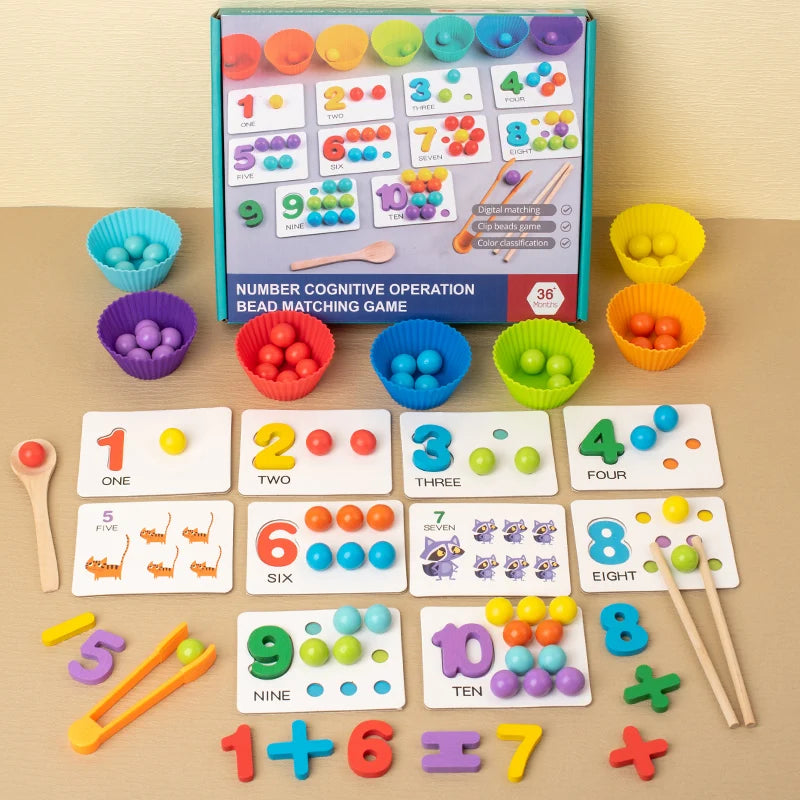
See it in action - math interactive tools / interactive math learning tools for parents, early learning math manipulatives wooden set, preschool math frustration and slow progress, teach addition subtraction using manipulatives
Explore the Montessori wooden math set
What Are Math Interactive Tools and Why Do They Matter?
Math interactive tools are physical or digital resources that encourage children to actively explore mathematical ideas instead of simply memorizing answers. These include counting blocks, number rods, bead strings, fraction pieces, pattern tiles, interactive apps, and other hands-on math learning tools designed for early learners.
Unlike traditional worksheets, interactive math learning tools encourage children to experiment, make predictions, recognize patterns, and correct mistakes through exploration. This active participation strengthens conceptual understanding and helps children connect mathematical symbols with real quantities.
Interactive tools generally fall into two categories:
- Hands-on tools: Wooden manipulatives, counting cubes, number cards, pattern blocks, and other physical materials children can touch and move.
- Digital tools: Educational apps, virtual manipulatives, and interactive whiteboard activities that simulate mathematical concepts.
Both approaches can support learning, but many educators recommend combining digital experiences with hands-on math learning tools because physical manipulation helps young children build stronger mental models of numbers.
How Math Interactive Tools Improve Learning
Interactive math learning tools help children become active participants in the learning process. Instead of memorizing procedures, they develop an understanding of why mathematical relationships work.
Build Number Sense
Children learn that numbers represent actual quantities rather than symbols on a page. Counting objects, grouping sets, and comparing amounts helps develop foundational number sense that supports later arithmetic.
Support Visual Learning
Color-coded pieces, ten frames, number lines, and manipulatives allow children to visualize mathematical relationships. Seeing "5 + 3" become a group of eight objects often makes the concept easier to remember.
Encourage Independent Problem Solving
Many math tools for children allow learners to check their own work by rearranging pieces, testing ideas, and discovering mistakes without constant adult correction. This builds confidence alongside mathematical understanding.
Increase Engagement
Movement, exploration, and play naturally hold children's attention longer than repetitive worksheets. Interactive learning also supports different learning styles by combining visual, tactile, and kinesthetic experiences.
Types of Math Interactive Tools by Learning Goal
Number Sense and Counting
For preschoolers, early learning math manipulatives such as counting bears, beads, number rods, and counters develop one-to-one correspondence, sequencing, and number recognition.
Children can physically combine and separate groups, making it easier to teach addition and subtraction using manipulatives before introducing written equations.
Fractions and Place Value
Older elementary students benefit from fraction circles, place-value blocks, and base-ten cubes that make larger mathematical concepts easier to visualize.
Geometry and Measurement
Pattern blocks, tangrams, measuring tools, rulers, and shape puzzles help children explore spatial reasoning, symmetry, and measurement through hands-on investigation.
Patterns and Early Algebra
Sorting games, colored cubes, sequencing activities, and repeating patterns introduce logical thinking that prepares children for later algebraic reasoning.
| Learning Goal | Recommended Tool | Typical Age | Example Activity |
|---|---|---|---|
| Counting | Counting beads or cubes | 3-5 years | Match numbers to quantities |
| Addition & Subtraction | Number rods and counters | 4-7 years | Build and separate groups |
| Place Value | Base-ten blocks | 6-9 years | Represent tens and ones |
| Geometry | Pattern blocks | 5-9 years | Create shapes and designs |
| Patterns | Colored manipulatives | 4-7 years | Complete repeating sequences |
Related family resources: Baby Growth & Learning | Sensory Toys | Smart Baby Gadgets
Choosing the Right Math Interactive Tools by Age
Preschool
Focus on counting, sorting, matching, colors, and simple patterns. Large manipulatives that are easy to hold encourage independent exploration while supporting fine motor development.
Kindergarten
Introduce addition, subtraction, number bonds, sequencing, and early measurement using math learning tools for preschoolers that gradually connect concrete objects with written numbers.
Elementary
Expand into place value, multiplication arrays, fractions, geometry, and measurement. Children can begin balancing hands-on materials with carefully selected digital activities as concepts become more abstract.
How Parents Can Use Interactive Math Learning Tools at Home
- Keep sessions short. Ten to fifteen minutes of focused play is usually more productive than lengthy practice.
- Use everyday routines. Count snacks, compare toy groups, or sort household objects during daily activities.
- Teach through games. Build simple addition and subtraction challenges using manipulatives rather than worksheets alone.
- Encourage discussion. Ask children to explain how they found an answer instead of focusing only on correctness.
- Track progress. Celebrate growing confidence, new strategies, and persistence as much as correct answers.
Short, enjoyable practice sessions often help children maintain interest while reinforcing preschool math learning activities over time.

See it in action - math interactive tools / interactive math learning tools for parents, early learning math manipulatives wooden set, preschool math frustration and slow progress, teach addition subtraction using manipulatives
See how this wooden set supports counting and early equations
Why Hands-On Math Manipulatives Remain Essential
Although educational apps can reinforce learning, physical manipulatives continue to play an important role during early childhood because children can directly interact with mathematical ideas. Moving pieces, building groups, and rearranging objects strengthens understanding in ways that screen-based experiences alone may not provide.
High-quality early learning math manipulatives also support multiple concepts with a single set, allowing families to practice counting, sorting, place value, patterns, and teach addition and subtraction using manipulatives as children progress.
Real-Life Example
A preschooler who hesitates during worksheet practice may enthusiastically build towers of five blocks, compare groups of objects, or create simple equations using manipulatives. Over time, these playful experiences often make written math activities feel more familiar because the child already understands the underlying concepts.
Helpful family categories: Mobility & Training | Feeding Tools | Health & Safety
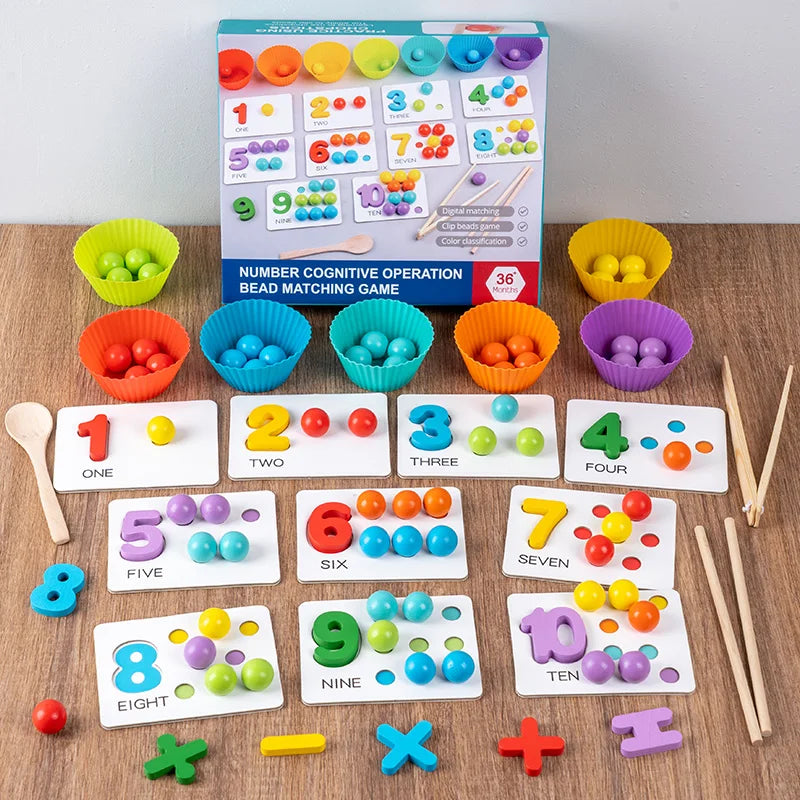
See it in action - math interactive tools / interactive math learning tools for parents, early learning math manipulatives wooden set, preschool math frustration and slow progress, teach addition subtraction using manipulatives
How to Choose the Best Math Interactive Tools
When selecting interactive math learning tools, consider your child's current developmental stage rather than choosing the most advanced option available.
- Match the tool to your child's current learning goals.
- Choose versatile materials that support multiple mathematical concepts.
- Balance digital activities with hands-on exploration.
- Look for durable materials suitable for frequent use.
- Consider whether the tool fits classroom learning, homeschooling, or supplemental home practice.
- Select accessible materials that children can use independently whenever possible.
Well-designed math tools for children should encourage curiosity, invite repeated exploration, and continue supporting learning as new skills develop.
Get yours now while available
FAQ
What are math interactive tools?
Math interactive tools are physical or digital resources that help children explore mathematical concepts through active participation. Examples include counting cubes, number rods, pattern blocks, virtual manipulatives, and interactive learning apps.
Which interactive math tools are best for preschoolers?
Preschool math manipulatives such as counting bears, wooden number sets, stacking blocks, bead strings, and sorting games are excellent choices because they support early number recognition, counting, and pattern building.
How do math manipulatives improve conceptual understanding?
Manipulatives allow children to physically model mathematical ideas. By building groups, comparing quantities, and rearranging objects, they better understand why mathematical operations work instead of memorizing procedures.
Can parents teach addition and subtraction using manipulatives at home?
Yes. Simple activities such as combining counters for addition or removing objects for subtraction help children visualize operations and strengthen understanding before moving to written equations.
What is the difference between virtual and hands-on math learning tools?
Virtual tools provide interactive digital practice, while hands-on math learning tools involve physical materials children can touch and manipulate. Many educators recommend using both together, especially during the early elementary years.
How do I choose the right math tool for my child's age?
Choose materials that match your child's developmental stage and current learning goals. Preschoolers benefit from counting and sorting activities, while older children can progress to place value, fractions, geometry, and measurement tools.
Pillar Article: Educational toys math: Key features that boost early skills
Other Related Articles:
Explore More:





